
 News


This review may contain spoilers
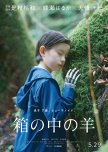
This Movie Is the Sheep in the Box
This review contains spoilers.
Hirokazu Kore-eda has made some beautiful films, with profound scripts and performances that feel so genuine and flawless that they reach straight into your soul. These are the kinds of works that stay with you, in both your mind and your heart, for a lifetime. Films like Nobody Knows and Shoplifters, for which he also wrote the screenplays, or Monster, which he only directed.
For this reason, anything bearing his name, whether a film or a series, is always met with a certain degree of anticipation. Not only because his name is practically synonymous of quality, but also because of the fond memories of the works each of us holds dear. Of course, throughout his extensive filmography, there are works that have come and gone without leaving much of an impression, either because their overall premise doesn't measure up to his masterpieces, or simply because they don't align with our personal tastes or interests. And that's perfectly fine.
So, now it's time to take a look at this particular film...
Visually, it's impeccable and conveys a wonderful sense of peace. The performances are also very good. The real question, however, lies in the story it tells, how it tells it, and what lies beneath the surface.
At first glance, it's a story about loss and the difficulty of coming to terms with the death of a child. All those "what ifs": What if I had done something differently? What if I hadn't done this? What if I hadn't been there? What if I hadn't arrived late? What if that person hadn't come?
The robot child, serving as a substitute, opens up several possibilities. Is it a temporary replacement until you find the strength to accept the reality that this "thing" isn't your child, that your child is gone, and that you can finally move on? Or is it something you use to shut out reality and retreat into your own little bubble of self-deception?
For the main couple, it was a peaceful mixture of both. But that's only one facet of this story. There are others.
One of them is Kakeru, the robot child. He behaves just like the child he's supposed to be, but he also has a much more mature inner world. He absorbs everything he sees, learns, and hears in the small world inhabited by his parents and the people around them, then processes it in his own way, through a more philosophical perspective, especially when he comes into contact with the other children.
And this brings me to the point I really want to discuss → that little group of robot children.
At first glance, the reason they came together seems simple enough (we've seen this before, even in A.I. Artificial Intelligence): they're the discarded ones, the mistreated ones, the unwanted ones. Now they're free, and they have plans of their own. That much is understandable. So is their habit of removing the GPS devices from their bodies to regain freedom of movement beyond their owners' designated range, which explains how they can wander around without being detected.
But inevitably, a few questions come to mind:
• These are humanoid robots powered by AI. They're valuable!
I find it hard to believe that the company supplying them wouldn't keep track of its own products, check on their condition, or monitor whether their owners are being negligent, abandoning them, or simply discarding them without making any attempt to retrieve them. These are high-tech robots, not washing machines.
• The robot girl who was walking with her parents, only for them to keep going until they left her behind, out of range, is perhaps the most implausible thing in the entire film.
No ordinary person, no matter how fed up they might have been with her presence, would simply leave her there without coming back for her. Again, this isn't a toy. It's an expensive piece of high technology. Even if her parents had obtained her for free (presumably, like Kakeru's parents did), logic would suggest there must have been some kind of replacement policy or contractual obligation.
And even if there wasn't... considering Japan's attitude toward cleanliness and public spaces, are we really supposed to believe that nobody passing by noticed a robot lying on the steps and picked her up? Not even an ordinary passerby?
Strange.
• The children's utopian plan to live in the forest and build the house Kakeru designed.
At first glance, it's a beautiful and hopeful idea. But when you think about it, we don't really know how feasible it would be.
Would the energy they could harness from the river be enough to recharge them? Wouldn't they deteriorate more quickly in the natural environment? What about the river itself and the rain? And what about the human children who went along with them? They're far more vulnerable to the elements than the robots.
The entire ending left me feeling rather uneasy, to be honest. Because I genuinely don't know whether this story was written with a certain degree of naivety, or whether I should simply approach it as a fairy tale, a fable that isn't meant to be examined logically, and just allow myself to be carried away by the emotions and the message it conveys.
It's difficult to do that when I can't shake the feeling that there might be a much deeper story hidden underneath. Almost as if the company's original plan had been to deliberately allow this situation with the robots to unfold. Perhaps to see just how far they could go using their own resources, logic, and reasoning. To study how humans behave around them: those who purchase them, those who interact with them on a daily basis knowing they're robots, and those who do so without knowing what they really are. Or to observe the bonds they might form under the most unlikely circumstances, such as the one between the mistreated children and the robot kids.
-----------------------------------------------
Then there's the reflection on the sheep in the box that Kakeru's mother shares with him.
Who does it apply to? To her? To him? To the story as a whole?
I've given it some thought, but I still feel it's an abstract idea that I can't quite grasp. I hope you can come to a better understanding of it than I have.
Was this review helpful to you?


