
 Editorials


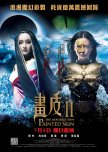
Painted Skin: The Resurrection is a film steeped in longing, not just for love, but for identity, recognition, and the fragile comfort of being truly seen. Wrapped in the finery of high fantasy and visual spectacle, it tells a deeply human story about the ache of incompleteness. And while its ambition occasionally exceeds its emotional coherence, the result is still something haunting, imperfect, and unexpectedly tender.
At its core, the film is less about demons and princesses and more about the desperate negotiations we make to feel worthy, of love, of attention, of ourselves. Zhou Xun’s Xiaowei, a fox spirit yearning for a human heart, gives the film its spiritual anchor. Her longing is never played as monstrous; instead, it's heartbreakingly familiar, a desire to be accepted, to feel pain, to be loved without condition. Zhou’s performance is mesmerizing not for its theatricality, but for its restraint. Her quiet devastation lingers long after the scene has ended.
Opposite her, Zhao Wei’s Princess Jing is the emotional centerpiece. Disfigured by a bear attack and hiding behind a golden mask, Jing’s journey is one of internal collapse and fragile defiance. Her love for General Huo (Chen Kun) is complicated by pride, shame, and a growing awareness that her scars, physical and emotional — define her in the eyes of others far more than they should. Zhao Wei brings rawness to a role that could have easily slipped into melodrama. Her pain is palpable, but so is her dignity.
And yet, for all this emotional potential, the film doesn't always trust itself to stay grounded in it. There is a tendency to lean on spectacle, ornate battle sequences, CGI-enhanced landscapes, and secondary plotlines that dilute rather than deepen the central conflict. The love triangle, while thematically rich, sometimes feels structurally uneven. Chen Kun’s portrayal of General Huo, though sincere, never quite reaches the emotional clarity of the women around him. His character is asked to carry too much symbolic weight and too little personal nuance.
The film also falters in its tonal shifts, particularly in the inclusion of comedic side characters and mythic subplots that feel imported from a different kind of story. These moments break the spell, drawing attention to the artifice in a film that otherwise strives for emotional authenticity.
Still, when Painted Skin: The Resurrection slows down, when it lets two women sit in silence, measuring their worth against the love of the same man, or when it allows a demon to quietly yearn for the impossible, it becomes something more than a fantasy. It becomes a mirror for how we see ourselves, and how cruelly we can love one another when we’re afraid we are unlovable.
It is not flawless, structurally uneven and occasionally overreaching but its heart beats loudly through the gold and ice. For those drawn to stories where love is as much about pain as passion, Painted Skin: The Resurrection offers a beautifully rendered, emotionally resonant experience. One that lingers not because it is perfect, but because it dares to be vulnerable.
At its core, the film is less about demons and princesses and more about the desperate negotiations we make to feel worthy, of love, of attention, of ourselves. Zhou Xun’s Xiaowei, a fox spirit yearning for a human heart, gives the film its spiritual anchor. Her longing is never played as monstrous; instead, it's heartbreakingly familiar, a desire to be accepted, to feel pain, to be loved without condition. Zhou’s performance is mesmerizing not for its theatricality, but for its restraint. Her quiet devastation lingers long after the scene has ended.
Opposite her, Zhao Wei’s Princess Jing is the emotional centerpiece. Disfigured by a bear attack and hiding behind a golden mask, Jing’s journey is one of internal collapse and fragile defiance. Her love for General Huo (Chen Kun) is complicated by pride, shame, and a growing awareness that her scars, physical and emotional — define her in the eyes of others far more than they should. Zhao Wei brings rawness to a role that could have easily slipped into melodrama. Her pain is palpable, but so is her dignity.
And yet, for all this emotional potential, the film doesn't always trust itself to stay grounded in it. There is a tendency to lean on spectacle, ornate battle sequences, CGI-enhanced landscapes, and secondary plotlines that dilute rather than deepen the central conflict. The love triangle, while thematically rich, sometimes feels structurally uneven. Chen Kun’s portrayal of General Huo, though sincere, never quite reaches the emotional clarity of the women around him. His character is asked to carry too much symbolic weight and too little personal nuance.
The film also falters in its tonal shifts, particularly in the inclusion of comedic side characters and mythic subplots that feel imported from a different kind of story. These moments break the spell, drawing attention to the artifice in a film that otherwise strives for emotional authenticity.
Still, when Painted Skin: The Resurrection slows down, when it lets two women sit in silence, measuring their worth against the love of the same man, or when it allows a demon to quietly yearn for the impossible, it becomes something more than a fantasy. It becomes a mirror for how we see ourselves, and how cruelly we can love one another when we’re afraid we are unlovable.
It is not flawless, structurally uneven and occasionally overreaching but its heart beats loudly through the gold and ice. For those drawn to stories where love is as much about pain as passion, Painted Skin: The Resurrection offers a beautifully rendered, emotionally resonant experience. One that lingers not because it is perfect, but because it dares to be vulnerable.
Was this review helpful to you?


