

 2
2 1
1 1
1


Blood, Egos, and Ideals
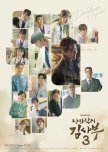
Dr. Romantic may sound like a romance drama from its title, but across all three seasons, romance is really secondary. At its core, the series is about Master Kim Sabu and his uncompromising belief that patients should be saved at all costs — regardless of hospital politics, personal sacrifice, or financial reward.
Season 3 turns the intensity up another level. The surgical and trauma scenes are relentless, graphic, and surprisingly convincing. On the occasions I looked up the medical terms and procedures mentioned in the drama, they matched the conditions being portrayed remarkably well. The production clearly had an excellent trauma or surgical consultant behind the scenes. Some operations are so bloody and visceral that viewers who are squeamish about surgery may struggle to get through them.
What keeps the drama from becoming emotionally exhausting is its humour. Amid the chaos are genuinely funny moments: mistaken assumptions about a homosexual relationship, confusion over fatherhood, and one hilarious scene where a hopeful suitor asks a colleague who the woman he likes is dating — only for the colleague to calmly reply, ''You are looking at him.” Then there is the unforgettable entrance of the resident clown of the series walking through the doors while everyone is lined up to solemnly welcome the new Trauma Centre head.
The child actors also deserve praise. Dr In-su’s daughter is not merely there to look adorable — she is expressive, natural, and memorable enough to steal scenes from the adults.
One of the drama’s strengths is how sharply it portrays personalities within the medical profession. There is the arrogant young doctor desperate to prove himself while terrified of appearing incompetent — something very believable among inexperienced professionals still learning the ropes. There are senior doctors too proud to admit weakness, and endless clashes between stubborn, strong-willed personalities and the guilt of a doctor when a healthy young patient dies. Master Kim and Dr Seo are both brilliant but impossibly obstinate. The power struggles between the Trauma Centre leadership, senior doctors, and nurses even escalate into boycotts and stand-offs.
Of course, the drama has its share of melodramatic nonsense. If phone calls fail, surely someone could send a text. And scenes like Dr Seo and Nurse Park entering the basement of a collapsing building are pure drama logic — saving patients should not mean recklessly creating more victims. The trapped surgeon storyline was clearly designed for suspense because everyone knows a surgeon’s hands are their career.
There are moments where the melodrama becomes excessive. Kim hearing the imagined voice of a woman during a fire evacuation and wandering off — triggering a search operation while the hospital is under threat — feels absurd for someone normally so rational. And when Nurse Oh finally finds him, the two pause to reminisce instead of evacuating immediately. Likewise, the relationship crisis between Dr Yoon and Nurse Park is prolonged by some spectacularly bad advice from people around them.
One amusing distraction throughout the drama is the hairstyle choice for some characters — especially Seo and Jang — with thick fringes hanging heavily over their eyes like teenage-era Prince Harry. It constantly gives the impression of people trying to hide from the world while performing life-saving surgery.
Still, beneath all the theatrics lies a sincere moral core. The drama repeatedly asks what medicine should really stand for: prestige and power, or patients. Dr Kang Dong Ju’s aspiration that no patient should ever be turned away because of lack of care made me wish the New Zealand health system could uphold the same uncompromising vision, especially given the long waiting times many patients face for treatment. Of course, reality is far more complicated — in a publicly funded healthcare system, the unavoidable question is always: where will the money come from, especially when a country’s coffers are already stretched thin?
Three seasons of surgeries, blood, shouting, collapsing buildings, and hospital politics can admittedly feel overwhelming at times. Yet the series remains highly entertaining because it combines adrenaline-filled medical drama with genuine ethical questions about what makes a good doctor. We have all encountered doctors more interested in prestige and money than patients — but this drama is a tribute to those who still practise medicine with humanity, compassion, and conviction, like Master Kim.
Season 3 turns the intensity up another level. The surgical and trauma scenes are relentless, graphic, and surprisingly convincing. On the occasions I looked up the medical terms and procedures mentioned in the drama, they matched the conditions being portrayed remarkably well. The production clearly had an excellent trauma or surgical consultant behind the scenes. Some operations are so bloody and visceral that viewers who are squeamish about surgery may struggle to get through them.
What keeps the drama from becoming emotionally exhausting is its humour. Amid the chaos are genuinely funny moments: mistaken assumptions about a homosexual relationship, confusion over fatherhood, and one hilarious scene where a hopeful suitor asks a colleague who the woman he likes is dating — only for the colleague to calmly reply, ''You are looking at him.” Then there is the unforgettable entrance of the resident clown of the series walking through the doors while everyone is lined up to solemnly welcome the new Trauma Centre head.
The child actors also deserve praise. Dr In-su’s daughter is not merely there to look adorable — she is expressive, natural, and memorable enough to steal scenes from the adults.
One of the drama’s strengths is how sharply it portrays personalities within the medical profession. There is the arrogant young doctor desperate to prove himself while terrified of appearing incompetent — something very believable among inexperienced professionals still learning the ropes. There are senior doctors too proud to admit weakness, and endless clashes between stubborn, strong-willed personalities and the guilt of a doctor when a healthy young patient dies. Master Kim and Dr Seo are both brilliant but impossibly obstinate. The power struggles between the Trauma Centre leadership, senior doctors, and nurses even escalate into boycotts and stand-offs.
Of course, the drama has its share of melodramatic nonsense. If phone calls fail, surely someone could send a text. And scenes like Dr Seo and Nurse Park entering the basement of a collapsing building are pure drama logic — saving patients should not mean recklessly creating more victims. The trapped surgeon storyline was clearly designed for suspense because everyone knows a surgeon’s hands are their career.
There are moments where the melodrama becomes excessive. Kim hearing the imagined voice of a woman during a fire evacuation and wandering off — triggering a search operation while the hospital is under threat — feels absurd for someone normally so rational. And when Nurse Oh finally finds him, the two pause to reminisce instead of evacuating immediately. Likewise, the relationship crisis between Dr Yoon and Nurse Park is prolonged by some spectacularly bad advice from people around them.
One amusing distraction throughout the drama is the hairstyle choice for some characters — especially Seo and Jang — with thick fringes hanging heavily over their eyes like teenage-era Prince Harry. It constantly gives the impression of people trying to hide from the world while performing life-saving surgery.
Still, beneath all the theatrics lies a sincere moral core. The drama repeatedly asks what medicine should really stand for: prestige and power, or patients. Dr Kang Dong Ju’s aspiration that no patient should ever be turned away because of lack of care made me wish the New Zealand health system could uphold the same uncompromising vision, especially given the long waiting times many patients face for treatment. Of course, reality is far more complicated — in a publicly funded healthcare system, the unavoidable question is always: where will the money come from, especially when a country’s coffers are already stretched thin?
Three seasons of surgeries, blood, shouting, collapsing buildings, and hospital politics can admittedly feel overwhelming at times. Yet the series remains highly entertaining because it combines adrenaline-filled medical drama with genuine ethical questions about what makes a good doctor. We have all encountered doctors more interested in prestige and money than patients — but this drama is a tribute to those who still practise medicine with humanity, compassion, and conviction, like Master Kim.
Was this review helpful to you?


