
 Celebrity


 2
 1
 1


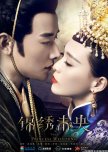
Power-struggle, romance and jealousy
This drama will capture your attention within a short time into the first episode. The usual hygiene factors rolled in: handsome actors, beautiful actresses, good acting skills, great on-screen chemistry between the leads, exciting story, lovely cinematography and lovely ending theme song. I certainly put it among the top dramas I had watched.54 episodes is a good length for this story – sufficient to cover the story in sufficient depth with only a few lull moments. I had seen worse ones with draggy time-fillers.
Tiffany Tang and Luo Jin had this amazing chemistry and on checking the Internet they were married in 2018, no doubt falling in love while acting together in the numerous dramas they shared.
In this story, there were two classes of villains – the totally evil like the ChiYun family and the deceptive third sister whom you would hate throughout the drama, and those who showed a bit of conscience like the Tuoba Yu whom I empathised with at moments.
Storyline was quite sensible and realistic – no far-fetched scenes, at least none of those magical cure by internal energy transfer kind of crap, although there was a couple flying scenes in the first episode but the 'flyer' was aided by someone. These are interesting in fantasy dramas but spoil a period drama.
There were a few lovely music pieces like the ending theme song but the melody in the opening theme song is a little lacklustre.
However I must say a lot of similar themes were repeated over and over in Chinese dramas and in this – heros/heroines got framed again and again, disguise was so good they fooled everyone – wonder why no one picked up the difference in the voice, the villains were always lucky in their evil ways, and of course revenge which is a beaten to death theme in Chinese drama. If a couple of the framing scenarios were removed and the drama was shortened, it could work better.
I have a bit of a spoiler here – it had a sad ending although I cannot say it is a tragedy. The prelude of each episode gave away too much of how the story concluded although not the entire final ending.
Was this review helpful to you?
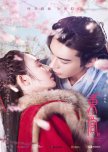
Excellent for most part except the end
This drama was excellent for the first 42 episodes. In my mind then, I was going to rate it a full 10. On the positive aspects, the lead actress was stunningly pretty and the lead actor very handsome, and they had amazing on-screen chemistry which made their flirting scenes very romantic and sometimes amusing. The story was interesting, romantic and full of suspense, characters were complex and the cinematography was great. If there had been a tightening of the plot, this drama could have rivaled some of the other top drama productions.But after the 42nd episode, it started going downhill, the plot weakened and it ended with a ridiculous ending. It was melodramatic. Xiao Feng spent a lot of time with Gu Jian but the two did not have much on-screen chemistry. There was a lot of screaming and shouting at each other. The three lead characters were going absolutely crazy, each insisting on getting ahead with their own ways and refusing any compromise. The ending was meant to be dramatic but it ended up as an anti-climax. After all that ChengYin did for her, I was expecting Xiao Feng would eventually be won over. It reminded me of the ending in 'The Rise of Phoenixes' - a let-down.
The christian teaching of forgive and forget could give the characters a life. The princess was so driven by hatred, she did not know how to love properly. The crown prince was so possessive and vindictive. Had he cut some slack, the princess might have been won over.
If you absorbed by the tearjerking you may overlook some of the flaws in the plot.
Chinese dramas always mixes in some ridiculous wuxia medical methods which always mysteriously cure someone of severe injuries. And this drama is no exception. I can accept this in a fantasy (xianxia) story. For a supposedly historical romance epic, it spoils the realism of it. And the 'forget thy love' ravine was a further strain on this.
Additionally, there was some major illogical views - the crown prince pretended to be nasty to the crown princess in order to keep her from harm. I do not understand this logic as no one was planning to harm her. In fact, it made the empress more angry with his concubine and made enemies out of the princess and the concubine.
There were a lot of stupidity in the story. The crown prince was plotting for the empress to fall into his trap of trying to assassinate him. Yet there were no hidden bodyguards near enough to protect him and he ended up severely injured.
A weak script spoiled it for the production team. However, it is still worth watching if you are not too critical.
I thought I was going to re-watch it but after the ridiculous ending, I decided not to because it had spoiled my mood and impression of the drama.
Was this review helpful to you?
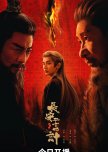
Suspenseful, Sinister and Fatalistic: A Bloody Vendetta
The Vendetta of An is not a drama for anyone looking for romance, light-hearted moments, or a comforting happy ending. This is a dark and often brutal tale of revenge, political ambition, betrayal, and bloodshed, in which almost no one seems safe. From the beginning, the drama makes it clear that power is won and maintained not by virtue, but by cunning, loyalty, manipulation, and a willingness to sacrifice others.I have to give the English title, The Vendetta of An, full marks for capturing the essence of the drama. This is, at its heart, a vendetta — a long, bloody, and deeply personal campaign for revenge, played out against a backdrop of political intrigue, shifting loyalties, and ruthless ambition.
At the centre of the story is Xie Huai An, the son of a prince and a capable general, whose life is destroyed as a child. He witnesses the betrayal of his father's army by his deputy, Yan Feng Shan, the massacre of his family, and his father's murder. Yan Feng Shan seizes power and places the young Xiao Wen Jing on the throne as his puppet. Growing up with this trauma and a burning desire for revenge, Huai An vows to destroy everyone responsible.
Years later, Prince Wu Yang recaptures Chang'an, the capital, and summons Huai An back to court to assist him. However, the political situation is far from stable. Wu Zhong Heng, leader of the Northern Tiemo Tribe, is waiting to exploit the chaos, stir up internal conflicts and seize the kingdom.
The drama's greatest strength is its suspense. Rather than simply presenting Huai An as a powerful hero who can overcome every obstacle, it places him constantly at a disadvantage. Surrounded by enemies, political rivals, traitors, and hidden infiltrators, he has to rely on intelligence, deception, and an increasingly elaborate network of spies and former loyalists to his father. The various subplots are woven effectively into the main story, keeping viewers guessing not only about how Huai An will achieve his objectives, but sometimes what his real objective is in the first place.
It is particularly gripping to watch Huai An's tactics and strategies unfold. He is not a conventional righteous hero. His childhood trauma has clearly left its mark on him, making him seem at times almost half-psychopathic. He is masochistic and fatalistic, repeatedly choosing the most dangerous path, even when one wrong move could lead to death or horrific torture. This makes the drama constantly tense because Huai An never seems to take the safe option. There is something immensely satisfying about watching how he goes about achieving his ends - although at times it does backfire as the young emperor can be an unhelpful baggage.
Cheng Yi is excellent as Xie Huai An. With his dark eye makeup and sinister appearance, he brings an unsettling quality to the character that suits the role perfectly. Huai An is a deeply damaged man, and Cheng Yi successfully conveys both his intelligence and his emotional detachment, while allowing glimpses of the pain beneath his calculated exterior. He looks rather fuller in the face than I remember from some of his earlier dramas, but this does not detract from his performance.
Be warned, however: this drama is extremely bloody. The writer appears to have a particular fascination with burning people alive, and there are scenes that can be genuinely disturbing. There is little attempt to soften the consequences of ambition and war. Innocent people die, loyal people are sacrificed, and sometimes those who deserve to survive are killed while the truly wicked continue to prosper.
That is also what makes the drama emotionally effective. Beneath all the plotting and bloodshed is a painful reflection on the human cost of individual ambition and obsession. Yan Feng Shan's ambition for power and Wu Zhong Heng's determination to bring his people south to kinder weather and more fertile land leave a trail of destruction behind them. The drama repeatedly reminds us that when powerful people pursue their ambitions, it is often ordinary and innocent people who pay the price.
There are also some interesting observations about power and human nature:
Even villains can inspire unwavering loyalty from their followers.
Bringing down one tyrant does not necessarily mean freedom; another tyrant may simply take his place.
The person who eventually sits on the throne may be an absolute fool, elevated there by circumstance rather than merit.
I rank The Vendetta of An highly for its suspense, political intrigue, and emotional intensity. It is an emotional roller coaster, full of moments that make you sigh in anguish when an innocent person falls or when someone you hoped would survive is killed. The constant sense of danger keeps the drama compelling, while Huai An's unpredictable and self-destructive nature makes him a fascinating central character.
Do not expect romance. Do not expect a gentle love story. Expect betrayal, political manoeuvring, revenge, torture, death, and an absolute bloodbath.
And if that sounds like your kind of historical drama, The Vendetta of An is well worth watching.
Was this review helpful to you?
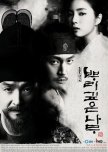
Power, Language and the Cost of Change
Tree with Deep Roots is a richly layered and compelling historical drama that is both intellectually engaging and emotionally resonant. Centred on King Sejong—the monarch credited with the creation of Hangul—it offers not only a gripping narrative but also a fascinating gateway into the origins of the modern Korean writing system. For viewers unfamiliar with the language, the drama does an excellent job of sparking genuine curiosity about how Hangul transformed literacy in Korea. While the Minbon secret society is fictional, it is woven into the story in a way that feels plausible and thought-provoking.The story opens with the tragic childhood of Ddol Bok and Dam Yi, whose lives are shattered by a political conspiracy. A tampered royal message leads to accusations of treason, resulting in the execution of their families. Believing that King Sejong is responsible, Ddol Bok grows up consumed by a desire for revenge. The separation of the two children—once deeply connected—sets up one of the drama’s most compelling emotional threads. As they grow into adults on opposing sides, the tension builds beautifully. Viewers are left in constant anticipation: when will they meet again, will they recognise each other, how will they convince each other and what will they do when faced with the truth?
At the heart of the drama lies the ideological battle surrounding the Minbon society. Claiming to uphold the teachings of Jeong Do-jeon, they advocate for a state governed by Neo-Confucian scholars, reducing the king to a symbolic figurehead. This philosophy stands in stark contrast to the royal authority upheld by King Taejong and later challenged by Sejong’s own vision of leadership. The drama uses this conflict to explore deeper questions about power, governance, and who should hold the right to shape a nation’s future.
Parallel to this political struggle is King Sejong’s revolutionary mission: to create a writing system based on Korean phonetics rather than borrowed Chinese characters. The significance of this cannot be overstated. By making literacy accessible to common people, he was effectively redistributing power—something the elite class perceived as deeply threatening. The drama captures this tension brilliantly, illustrating how knowledge itself can become a battleground.
One of the most striking character arcs is that of Jeong Ki-joon. What begins as a principled commitment to preserving his uncle’s ideology gradually descends into obsession and moral corruption. His fear of losing intellectual and social dominance drives him to increasingly extreme actions. In his eyes, Hangul is not a tool of empowerment but a dangerous equaliser. His descent into fanaticism is chilling and, at times, disturbingly relatable.
The Minbon society’s actions—ranging from manipulation to outright violence, including planned assassinations—highlight how ideology can be twisted to justify cruelty. The drama also subtly exposes the fragility of such movements. Beneath their philosophical rhetoric lies ambition, insecurity, and a hunger for control. When tested, their unity fractures, revealing that their convictions are not as steadfast as they claim.
Watching this in a modern context, it is difficult not to draw parallels with contemporary extremism. The way individuals become radicalised, convinced of their moral superiority while committing acts of violence, feels all too familiar. This adds an additional layer of relevance to the story.
The drama builds to a poignant conclusion, marked by the loss of remarkable individuals whose integrity and talent make their sacrifices all the more painful. These moments linger, reminding viewers of the cost of progress and conviction.
The performances are outstanding across the board. Shin Se-kyung delivers a particularly memorable performance, especially in her final scenes, where her physical portrayal of suffering is both convincing and heartbreaking. The three leads anchor the drama with depth and emotional intensity, bringing complexity to their roles.
Overall, Tree with Deep Roots is a well-crafted and deeply satisfying drama that combines historical insight with compelling storytelling. It is certainly worth watching, especially for those who appreciate narratives that challenge both the mind and the heart.
If there is one minor drawback, it is that the repeated scheming of the Minbon society can at times feel frustrating, particularly when set against the nobility of Sejong’s vision. However, even this serves to reinforce the central theme: that meaningful change is rarely achieved without resistance, often from those most invested in preserving the status quo.
If this story captivates you, I would highly recommend Six Flying Dragons, which serves as a prequel to Tree with Deep Roots. It delves deeper into the political foundations and key figures that shaped the world you see in this drama. In my view, it is an exceptional production—one I would confidently rate a perfect 10.
Was this review helpful to you?
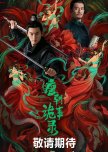
I Almost Skipped This Drama—Now I Cannot Wait for the Next Sequel
This drama sat on my plan-to-watch list for quite some time. I had assumed it was heavy on the supernatural, a genre that does not usually appeal to me, so I kept putting it off. However, I was pleasantly surprised to discover that it is actually an ancient detective series, cleverly wrapped in layers of seemingly supernatural occurrences that always turned out to be crimes masked by deception and intricate scheming. The sub-plots were full of surprises.The story follows Lu Ling Feng, the proud and impulsive Deputy Commander-in-Chief of the imperial capital’s army. Hailing from a noble lineage and a staunch supporter of the Crown Prince, Lu Ling Feng carried himself with confidence—sometimes bordering on arrogance. In contrast, Su Wu Ming came from a humble background but was the prized disciple of the legendary detective Di Ren Jie, who once served under Empress Wu. Su Wu Ming was calm, calculating, and always thinking one step ahead. He was backed by the Grand Princess, the ambitious aunt of the Crown Prince, who dreamed of becoming the next Empress Regnant—just like her mother once did. The Crown Prince and the Grand Princess were political rivals locked in a silent power struggle.
On the surface, Lu Ling Feng and Su Wu Ming seemed destined to clash—each serving opposing factions, each embodying a different temperament. Yet fate tied them together when two seemingly unrelated cases they were working on revealed a shared thread. As they dug deeper, the pair must set aside their differences and rely on each other to unravel a far-reaching conspiracy. Along the way, another secret came to light: Lu Ling Feng and the Grand Princess shared a deeper bond than either of them ever suspected.
What impressed me most was how well the multiple plotlines were woven together. The mystery was layered and unpredictable, and the storytelling was smart and captivating. With an intriguing premise, strong performances by the leads, and a solid supporting cast, this drama exceeded all my expectations. I highly recommend it—and rate it very highly.
When I reached the end of the drama, I was thrilled to discover that it had two sequels. The second series had already aired, and I jumped into it right away. The third installment is still in the pipeline, and I sincerely hope it does not get delayed by unnecessary red tape. There have been rumours that a new regulation requires at least a one-year gap before sequels can be released—that feels far too long. Even a six-month wait would be frustrating. Ideally, I hope to see sequels released within three months of the previous season. That kind of continuity keeps the momentum alive and the audience fully engaged.
Was this review helpful to you?
This review may contain spoilers
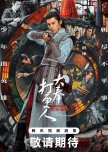
Intriguing Plot and Strong Lead Actor, but a Rush to the Finish Leaves Unanswered Questions
Out of all the dramas I’ve watched, this one has been the hardest to rate. On one hand, it checked all the right boxes with beautiful costumes, a star-studded male lead (Dylan Wang), a talented cast, and stunning special effects. The story was captivating, drawing me in with its intriguing premise. But despite all of this, something about it just didn’t quite hit the mark.The plot kicks off with Yang Ling (played by Dylan Wang) and his colleagues stumbling into a gaming arcade after a night of drinking. When he wakes up, he finds himself in the body of Xu Qi-An, an orphan raised by his uncle and aunt. He later becomes a Guardian of Dafeng, part of an elite imperial investigation bureau filled with skilled fighters. As the drama progresses, Xu Qi-An grows, mastering skills, defeating enemies, and solving complex crimes. But things take a darker turn when he becomes the vessel for Shen Shu, a powerful spirit with extraordinary abilities. With Shen Shu's power at his disposal, Xu Qi-An's journey to uncover the truth becomes more complicated than he ever imagined.
Dylan Wang’s portrayal of Xu Qi-An was a departure from his previous roles in Love Between Fairy and Devil and Unchained Love, where he played dignified, proud characters. Xu Qi-An, in contrast, was goofy, money-minded, and far from the usual heroic type. It was only as the story unfolded that the righteous side of him began to surface, eventually transforming him into a more typical hero.
As for the female lead, Princess Lin-An, I found her a bit underwhelming. She was cute, but her character came across as somewhat dim-witted, which didn’t quite fit my idea of a strong heroine. I could have accepted her as a quirky second lead, but as the main protagonist’s love interest, it detracted from the drama. I personally would have preferred if Huai-Qing had been given more screen time, as she felt like a more fitting match for Xu Qi-An.
However, one actor who really tugged at my heartstrings was Feng Hui, who played the governor Zheng Xing Huai. His performance was nothing short of heartbreaking when he described how much he loved the city he had devoted his life to, only for it to be destroyed by the villain. Worse still, he was framed by the Emperor he served and ultimately tortured to death. His story was a powerful portrayal of a man whose entire life’s work was erased, a tragic miscarriage of justice that stayed with me long after the episode ended.
Now, I hadn’t read the original novel, so I rated the drama based on its own merits. The overall experience was a bit of a mixed bag, with plenty of room for nitpicking. For one, the humor often felt forced, relying mostly on making characters look stupid. This style might appeal to some, but for me, it didn’t quite hit the mark. There were moments, like when Xu Qi-An mistook Princess Lin-An for her rival and swore allegiance to Huai-Qing, that made me chuckle, but these moments were too few and far between. This subplot stretched on too long, and often Xu Qi-An’s convoluted schemes backfired in ways that felt more contrived than funny.
The pacing also posed a problem. After episode 10, I was about to drop the drama altogether, but a friend suggested I try watching at a faster speed, so I bumped it up to 1.25x on WeTV. Suddenly, the pacing felt much more manageable, and I enjoyed episodes 11 through 39 much more. If I were to rate those episodes at the faster speed, I’d give them a solid 9.5.
Episodes 1 to 10, on the other hand, felt like just another average detective story, something I’d probably rate around a 7. It wasn’t until episode 11 that things started to pick up, and the cases began to tie into a larger conspiracy. But even then, the drama left me with more questions than answers.
The final episode opened up a Pandora’s box of new mysteries, leaving me wondering about Xu Qi-An’s father and his true intentions, whether Wei-Yuan would be resurrected, and who Shen Shu really was. The Emperor’s role in the story remained largely unaddressed, with only a public self-confession to his wrongdoings—nothing substantial. And the whole arc involving Xu Qi-An’s forgotten existence felt a bit underwhelming. The drama started with a mysterious gaming arcade, yet that thread was never fully explored, leaving a sense of unresolved mystery.
The Emperor remained largely unpunished, his defiance at his brother’s statue and his actions in the temple felt disconnected from the main plot. The drama seemed to hint at a deeper political or philosophical commentary, but never fully delivered on that front. It felt like the story was building up to something grand, but then rushed to an unsatisfying conclusion.
While I would have loved a sequel to explore these unanswered questions, there’s no word on one, and given China's track record with sequels, it’s unlikely. So, with the drama leaving me with a sense of unfulfilled potential, I have to rate it a 7 for the first 10 episodes and a 9.5 for episodes 11 to 39. Taking into account the lackluster ending, I’ve averaged it out to an 8.5, which feels more generous than my kisskh rating.
Despite its flaws, I’d still recommend this drama, especially for die-hard Dylan Wang fans. With Tencent’s promotional effort and his massive fanbase, the drama certainly garnered attention, and for fans of his previous work, it’s worth a watch. Just don’t expect a perfectly polished story.
Was this review helpful to you?
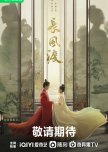
Feel good factor
The best part of this drama was the outstanding cast. Chemistry among them was great - the married couple (main leads), the sworn brothers and sister - of which there were many. Liu YueYi was outstanding in the portrayal of the villain and he got me really hating the character. Aside from this, the story on the whole was interesting although you could find numerous illogical parts in them and too many coincidences.Gu JiuSi 's parents were in a hurry to find him a bride before the emperor's decree arrived for him to marry the princess. Mistaking the joke he played on Liu YuRu who he actually disliked as an expression of true affection, his parents hurriedly arranged for them to get married. The marriage was immediately accepted by YuRu's greedy parents as the Gus were very wealthy. They were married much to each others anguish. YuRu was in love with another and JiuSi thought she was a very scheming girl. There were numerous funny incidents arising from this.
However, their lives were thrown together as they had to weather through thick and thin, first trying to escape the predatory Yangzhou governor who were out for their wealth and then in YouZhou where they had to fight to defend the provincial capital from the attack of Prince Liang. Their paths finally took them to high positions in the country capital where more dangers awaited them.
There were many illogical parts which you could poke holes at. Why would the Empress Dowager insisted on marrying the Princess to JiuSi who was already married by then, when there were so many eligible bachelors including the Crown Prince of the new dynasty? Why did the emperor appoint the treacherous Luo Zishang as the Grand Tutor when there were better choices? What kind of medicine could make a person looked dead and then revived? This seemed to be a favourite tact in Chinese dramas and was so cliche. Why chose to stay at an inn which was obviously owned by the governor? The explanation that it was to be right under his nose so he would overlook was so illogical. And just by selling cosmetics, one can get so rich in so short a time, really?
And there were too many convenient coincidences. JiuSi and YuRu fainted on arriving in YouZhou just as Zhou Ye arrived to find them. YuRu arrived back in YangZhou just as Ye ShiAn was at the checkpoint to let them through. YuRu's mother fell of the cliff to be rescued by Ye ShiAn. If it happened otherwise, they would be toast. Always at the edge of danger, rescue came. Coincidences happened in life but just not so frequent and so fortunate.
Many things were not explained. How did Luo ZiShang rise from an orphaned beggar to be so influential? Why did he mistook the wrong father?
There were however some suspenseful parts which would make you clench your teeth and swear at the foolishness and stubbornness of some of the characters: General Zhou's wilful rejection of the emperor's attempt to connect, and the young Crown Prince's stupidity in not being able to see through and handle the Grand Tutor's scheming.
Finally, there was the feel good factor at the end. The capable and righteous became emperor, not yet another child emperor who was there because of lineage.
Overall, in spite of my nitpicking, I think this drama was very entertaining and worth watching.
Was this review helpful to you?
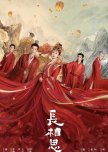
A woman with four suitors
It is a really good production: an excellent cast who acted well, good looking actors and actresses, CGI is good, cinematography is great and costumes are lovely. So all the hygiene factors are there.What I like about this drama?
1. Yang Zi had excellent chemistry with her 4 suitors. And she acted according to her relation to them: fear of the demon lord yet fond of him, anger with the betrayal of her real lover and dignified jealousy of his fiancee, gentleness and devotion to her lost cousin when she discovered him, and polite respect for her last suitor on the scene, who demonstrated his fondness of her. I think she was at one of her best. And she looked stunning dressed as the princess.
2. The story was well paced and interesting enough to keep me pursuing the drama to the end. Out of the 39 episodes, I can only recall one episode which was a little draggy. And this was probably because I had mistakenly skipped this episode and went back to catch up with it and I knew what was going to happen next.
What I dislike about this drama?
1. I felt that while Xiao Yao's selected fiance was a good choice, his relationship with her was the most shallow. So I felt it is a bit of a shame.
2. And since the drama ended prematurely, the conspiracy behind the Tushan family was unexplained and the lover's betrayal was not clarified - poor guy who was so much in love with Xiao Yao and had done so much for her.
But overall, I would give this drama a thumb up and highly recommend it.
It looks like there is a part 2 to this drama. Frankly when I watched some of the trailers of the follow-on, it looked trashy, with the main character Xiao Yao (Yang Zi) nearly marrying every of her suitors, and two of them died. I do not like tragedies. I like to have a good feeling after watching a drama, not sick in the stomach.
However, if I should ever write the ending of this drama, I would give it a twist and end it like this:
Cang Xuan ascended the throne on the support of the clans in the central plain. He fulfilled his promise to Xiang Liu and gave one of the mountains as a burial ground for the dead ChenRong warriors. Hong Liang, the ChenRong last defending general was impressed. He proposed a peace truce on the condition of a marriage alliance with the heir apparent (would be Crown Prince if the kingdom had not fallen) of the ChenRong royal family and Xiao Yao who was both a princess of HaoLing and a close cousin of the new emperor, therefore representing both kingdoms. The heir-apparent's identity and whereabout had been kept secret all these years to protect him from assassination. And he requested for all treasures of the ChenRong's royal family and the rebuilt ChenRong palace to be returned as a dowry for the princess and all the remnant ChenRong warriors to be pardoned.
CangXuan did not like the idea that an heir apparent existed and could potentially gain support for the re-built of the ChenRong kingdom. While Xiao Yao tried to get in touch with Xiang Liu to find out what was going, but he passed a message to her that the heir apparent was good looking, capable and in love with her, and encouraged her to agree to the marriage.
Before any decision, Cang Xuan revealed his love for Xiao Yao and promised that if XiaoYao should marry him, she would be the new empress as his current wife was only a concubine. Possibly, the old emperor was leaving the empress position for Xiao Yao when he decreed that Shen was to be the concubine and not the queen. Xiao Yao replied that she loved him as a brother and did not have any romantic feeling for him but want to support him with all her ability to bring prosperity to his kingdom.
Saddened by the news that her real lover had just fathered a child, Xiang Liu's indifference and her shallow relationship with her fiance, she agreed to the marriage alliance to bring peace to Cang Xuan's kingdom. Her father, King of HaoLing, supported her decision to breakup her current engagement and marry the ChenRong heir apparent. Her fiance was heart broken. Cang Xuan however promised only the palace as dowry as the treasures of the ChenRong kingdom had long been awarded to the different mandarins who helped in the overthrow of ChenRong and to pardon all the remnant warriors if they lay down their arms. But the King of Haoling backed his daughter up with a generous dowry.
On the wedding day, the ChenRong heir apparent fetched XiaoYao from the ChenRong's mansion in a red cloak with a hood covering his face and a crystal mask. At the ceremony altar at the palace, Xiao Yao could see through her veil that he looked familiar. Xiyan anti-ChenRong faction with the silent approval of Cang Xuan and her ex-fiance, attempted to assassinate the heir apparent. In the fight, the red hood and mask was lifted from his head and it was revealed that the heir apparent is Xiang Liu! Xiao Yao was surprised and stunned for a moment but stepped in to defend Xiang Liu. The assassination failed as Cang Xuan ordered his guards in to protect her. Xiao Yao suspected that it was Cang Xuan's conspiracy to murder her husband and left with Xiang Liu to QingShui where they lived in seclusion. Her real lover, after realising his marriage is a sham, arrived only to see her leave with Xiang Liu. So Xiao Yao was lost to Cang Xuan, her ex-fiance and real lover forever.
Like my review or ending, give it a thumbs up. Let me know which you like in the comments. lol
Was this review helpful to you?
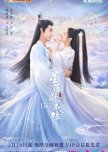
This drama has a very young cast - the key leads are mostly less than 30 years old. It seems the China drama industry is replacing an entire generation of older established well-known artistes who are now in their late 30s or older, with a younger generation of new heartthrobs.
The male lead Chen Xing Xu does a great job acting 4 different characters. I must say the make-up specialist/s did a great job too. If you observe carefully, the four characters look slightly different with YouQin looking a bit more chubby, Mei looks much thinner, La Mu very scruffy and Wen Ren very refined, in their features.
With a theme of a mixed up in the wedding carriage, you would expect a lot of humour, and it does provide a lot of comic relief. And the drama is packed with actions.
Of the Chinese dramas I have watch post pandemic (but did not check whether they are produced pre or post), numerous are very good productions. This drama, Till the End of the Moon (still my favourite post pandemic production), The Blood of Youth and so on are all very good.
Improvements I must say the Chinese drama production needs are
1. New themes and creativity. The Chinese drama industry is seriously in need of this. After watching the huge number of Chinese dramas as I had, the dramas started to look the same although the storyline might be different. Boredom is somewhat setting in. This is of course going to be a big challenge. Producers like to emulate the themes of successful earlier productions and what have been tested, succeed and allowed in the greatly politically controlled environment. This is precisely why The Untamed did so well - of course the leads did fabulously well but most importantly the storyline was quite unlike the rest.
2. For this drama, it is overall very good but lack memorable moments like Nirvana in Fire and Ten Mile of Peach Blossom, or intense emotional expressions like those of Luo YunXi in Till the End of the Moon and Ashes of Love.
Was this review helpful to you?
This review may contain spoilers
It's a pretty dark ending
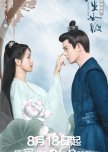
If you have depression, do not watch this drama. The ending is very dark: no couples are eventually happy, the country is thrown into chaos and yet another child emperor ascends the throne.On a positive note, the support cast is good looking and does a very good job. There are some good music pieces.
I come across a lot of positive reviews of this drama but I think it is mainly because of Bai Lu and Ren Jia Lun, the current popular heartthrobs. The chemistry between the leads is excellent.
For most part of the drama, it is the romance between Cui ShiYi (Bai Lu) and Zhou ShengChen (Ren JiaLun), so there are a lot of building up of their romance and emotions. It is mainly all the lovey-dovey moment - loving each other and could not express and having to hold back, each with their constraints. If you are not into these, it is also very slow moving. Battle scenes are quite lacklustre as these are just secondary.
There are a lot of comments that the story is great but I differ in my opinion. I say the production and directing are great as it brings out a lot of emotions - if the ending is that dark, with good directing it is hard not for anyone to cry although I did not.
The story is rather strange and rather unrealistic. And here are why I say that:
1. Minister Cui Guang supported the child emperor to the throne expecting his niece Cui Shi Yi to become the next empress only to find to his horror that the new Empress Dowager has other plans - to keep her as crown princess by appointing the child emperor's elder cousin as crown prince. She has become the fiancee of the new crown prince instead. Unless this story is not of Chinese background but of some minority tribe - passing a fiancée to a cousin is hardly acceptable in Chinese culture much less appointing an elder to become a successor. But with a surname Liu, it is implying the Chinese Han dynasty. And why appoint an older successor - just to avoid marrying the mute Cui ShiYi?
2. Minister Cui then requests for Prince Zhou Sheng Chen to become his niece Shifu (teacher). Again very weird: pushing a young girl into the care of a bachelor prince although he might have vowed to stay single and not to have children. Perhaps for the protection of the Prince for the Cui family?
3. Prince Zhou stubbornly refuses to leave the entrapment when the conspirators uses the Liu royal family and court as hostages. Why would a general with a peerless track record of success on the battlefield be suddenly so stupidly bigoted. His military advisor arrives in time to save him. If his advisor is smart enough to come to the rescue, surely Zhou knows better to leave at the urge of his own team and his hostages. Eventually the hostages are massacred and he dies of torture. Why would a big 'killer' be so easily swayed especially since these hostages are not close to him? I expect him to be a better strategist.
4. When someone important jumps from the city tower, why do the soldiers not try to help but instead concentrate on driving helpers away.
These are all important turning points in the story. The development of the story is not naturally and is very obviously to dramatise. All movies and dramas dramatises, but there is a difference between doing it realistically or creating obvious conveniences, and this story sounds more like the latter - it needs great skills to do that realistically.
Was this review helpful to you?
Ancient Terrorism
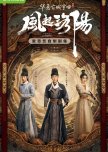
I think this drama is underrated on Mydramalist. It is an excellent production and a very enjoyable drama.A father and his daughter tried to approach Baili HongYi (acted by Wang YiBo) to report a conspiracy and were killed in a back street of Luoyang. HongYi's father was a commoner who rose to become the Minster of Works. Subsequent to the event, HongYi's father was murdered on HongYi's wedding night. Were the incidences related?
Gao BingZhu (acted by Huang Xuan) grew up in the Ignoble Ghetto where criminals and their descendents were condemned and placed under restricted movements. Seven of his mates who were his best friends were killed by a group of mysterious masked attackers when they left the Ghetto with him on a stealthy fun trip.
Wu SiYue (Victoria Song), an imperial guard and niece of the Empress regnant and therefore a nobility, was escorting Princess YongChuan when armed fighters tried to assassinate the Princess.
These three different individuals from vastly different background were investigating these three different crimes. Their paths crossed and they realised that the crimes were linked to the same terrorist group - the Spring-Autumn organisation. This terrorist organisation was supposed to be exterminated years ago and the head of the movement was imprisoned and had gone insane. Who was now leading the group? And what were they up to? In his insane babble, he mentioned a Hidden Phoenix.
The style of the drama footage and cinematography reminded me of the 24 hours in Changan - with the crowded narrow streets and rather dark background - a very realistic portrayal of an ancient China city.
The drama would keep you intrigued as each investigation led to dead ends as the people involved were either killed or committed suicide, or there were more than met the eye every time it seemed they had found the 'mastermind'. And there were always the unexpected attacks as the culprit tried to fool and kill HongYi and BingZhu.
The final revelation of the Hidden Phoenix was a surprised although I had suspected he was associated with the terror group earlier in the drama but did not expect him to be so high in command. As BingZhu said to him at the last episode, he hid himself well.
The theme songs were alright. I particularly like 天机 (Heavenly) - the melody and the lyrics very aptly set the mood and described the story.
What makes this story more appealing is it is realistic and probable. The madness that drives a group of people to kill individuals and mass murder resembles the terrorist movements today. The emotional riots that happened in many cities, that were either politically motivated or instigated by rumours and conspiracy theories, and hijack suicide flights into buildings are all examples of the modern day terrorism. A group of people who believes they are marginalised by society or the enemies, or has ambitions beyond reality can all fall victims to extreme actions. Also, there were no flying swordsmen or ridiculous strange energy transfer remedies for a change - these add more interest to fantasy dramas but look rather strange in historical dramas.
I watched the drama a second time before I wrote this. I must say that I appreciated the story and cinematography more. However, since I already knew the real mastermind and what was going to happen next, it took the suspense out of it. And without the glamour of beautiful sceneries and backdrop, it did seem a bit more dull. The head dress for the Empress regnant was also a bit dull.
The cast portrayed the character they acted very well. As for the popular Wang YiBo, he did very well acting the serious nerdy engineer who was very bright in science and analysis, but did not quite know how to handle social situations. He was however more glamourous as the the Lan WangJi in the Untamed and more handsome in the Legend of Fei where he smiled a lot more.
Aside from the lead actors/actresses, the support cast was really good too. Bai Lang (Jiang Long) who was the friend and sidekick of BingZhu was funny and added a lot of humour to the drama. Prince Dong Chuan (Liu Duan Duan) was the most upright, well-meaning and capable out of the bureaucrats but was always undermined by the terror group. They were among the outstanding ones.
However, the last episode is a bit of a let down. I think they killed the wrong person - someone capable and righteous. I would have chosen to kill the mastermind or the whiny feather-head who always got into trouble instead. And the idiotic murderer got away from death sentence - it was all so wrong.
Was this review helpful to you?
Could have been better
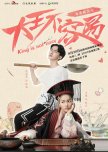
This drama has an interesting start to the story - a swap of souls between the emperor and a maid. This leads to a lot of hilarious moments as the maid is infatuated with an imperial guard captain. Demonstrating her affection in the body of the emperor, it causes a lot of misunderstanding that the emperor is gay.The story goes on to give a twist - there is a double conspiracy going on. The maid is not who she thinks she is, and the emperor has other hidden agenda. This twist is interesting if the transition is properly developed, but unfortunately it is a bit awkward.
But the second twist in last episode was the worst. There seems to be this obsession with time travel, crossing dimension type of science fiction in Chinese drama. When it is not well developed and does not flow naturally with the story, it really spoils the drama as it stands out like a sore thumb.
For 20 episodes of half hour each, this is a very short drama. If you are not too concern about the flaws in the story and are in just for a laugh, this makes a light-hearted comical entertainment.
Was this review helpful to you?
If you like soap operas, this is for you...
The cast has this ''cry-on-demand'' ability and comprises very good actors/actresses. I watched this drama because of the lead actor Kim Ji Han (aka Jin Yi Han) as I was mesmerised by his performance in Empress Ki - he speaks not only through words but also his facial expressions - and of course his good looks. And for the guys, there are plenty of good looking actresses.The story centred around 3 ''orphans'' from different backgrounds - one is actively searching for his roots having lost his memory, one knows his roots and has a secret to hide, and the third is kept in the dark by the father who refuses to reveal the truth. Complications arise as they meet each other, fall in love, unaware of how their past lives have crossed and how they are related.
You would be glued to the drama as you pursue the mystery of what happens in the past and what is going to happen to the different characters. Get ready your handkerchief for the sobbing moments. Romance, sadness, humour - you will experience all these watching this drama. It is a trigger for a wide range of emotions.
What I really appreciate of this drama, aside for the range of emotions it evokes, is the diverse combination of personalities portrayed: kind and considerate but naive, kind but outwardly cold and smart, a ''bum'' but actually has an outstanding hidden skill, appears calculating but actually is very caring inside, scheming but has a soft emotional side, evil and non-repentant, brash and unpretentious but upright, and the list goes on. A very realistic portrayal of human personalities - none of those perfect non-existence character who is good in everything. The story as a whole is very well woven together.
However, the story is not entirely realistic - the bad guys seem to conveniently overhear important secrets at the right moment so they could scheme. Similarly the good guys would overhear those same secrets to be shocked or find out the truth. Since I cannot even figure out what my colleagues are talking about across the office, I could not see how people could pick up secrets so easily. Characters are always just keeping secrets and telling a white lie in the premise of saving others from getting hurt by the truth, or as they are too proud to admit their pain - this theme is so cliche, or is it cultural?
This was a long 122 episodes melodramatic soap drama although each episode is only a short half hour long. Still that would make over 60 episodes of the typical hour long drama series. There are a lot of draggy moments. I tapped the 10s forward icon a lot when the conversation got lengthy and not a lot was happening, when watching the drama. The ending is not quite strong - so very typical of long dramas. The evil ones should be punished heavier. It seems like writers and directors are just happy to have hold your attention to the end and not quite care how they end it.
In spite of some shortcomings, this is a very entertaining drama. If you like romantic soap operas, this is for you.
Was this review helpful to you?
What impressed me most was the special effects and the cast acted well.
You would see how the main character, Xiao Yan, overcame the schemes and attacks of his enemies with unexpected help through the drama. At every crisis, you wonder how was he going to get through this one.
You would might be reminded of Harry Potter, Jumanji, Alice in Wonderland, so in terms of originality, it did not measure high.
The drama was interesting but lacked an element of surprise and mystery. It was very clear who were on the good side and who were on the bad, so there was not much of a surprise. However, it made you clutch your fist when the bad guys were winning and were blaming and punishing the good guys for crimes they did not commit. You feel like punching them, if only you were there.
The title translation 'Fights break Sphere' is terrible. 'Battle through Heaven' without 'the' would be much better.
The final battle was exciting but the attempt to turn out a surprise at the very end did not work too well. Many Chinese dramas have terrible endings - perhaps you should start the story with the end in mind.
I would rate it among the top league although not quite in the ultra top like The Untamed, Nirvana in Fire or Ten Mile Peach Blossom - they set a standard difficult to beat.
But as you know this is the first season, so you would expect a sequel and an ending that was not conclusive.
Was this review helpful to you?
Quite average
This drama is short compared to most Chinese drama and makes quite light-hearted entertainment. The drama started well but become yet another run-of-the-mill later in the story. There are not much heart rending moments and bad times pass quickly. If you are looking for a drama for some casual entertainment and not some heavy-hearted emotional roller coaster, this is it.Contemporary Chinese dramas tend to present heroines who are shrews and strong headed and this is one of them. The heroine is pretty and won the heart of the hero, but she is such a strong-headed shrew - appeal to the feminism of this era. But if i were a man, i would find her a pain to be with.
This drama is overrated on Mydramalist. There are other better dramas which are much better than this, which deserves better ratings. I begin to wonder whether ratings were rigged by some viewers, or i have preferences that differ from the masses. Just cannot understand why such an average drama is rated at 8.1 when Legend of Fei and Legend of Xiao Chuo rated below 8; they are way better than this drama.
Was this review helpful to you?


