




This review may contain spoilers
Delivering some Street Justice to Bullies
My rating 10/10
Review
This drama ranks now as one of my favorite all time dramas. And I have watched over 400 dramas at this point. I loved the premise not only because it was unique and compelling but it also shines a light on a very real problem—not only in South Korea, but in many developed countries. Though the issue is on an undeniably greater scale in South Korea than in most places, it is an issue that is present worldwide. While the subject matter is incredibly serious, the drama manages to present it in a way that is consistently entertaining without losing site or downplaying how the severe issue with bullying in all forms.
Anyone who has ever been bullied—whether at home, at school, or even in the workplace—is probably going to find themselves cheering internally as the bullies are confronted in some of the most satisfying ways imaginable. The central premise asks a fascinating question: What if there were a group with the authority to step in where everyone else had failed? What if victims actually had a voice and knew someone would listen?
I also appreciated how broadly the series approached bullying. It doesn't focus solely on the stereotypical schoolyard bully. It explores physical violence between students, cyberbullying, adults abusing their authority, and even the systems that allow those behaviors to continue unchecked. It also branches into related issues such as drug use, gambling, and other criminal activities that often accompany intimidation and exploitation.
The action is excellent, the pacing stays consistently engaging, and despite tackling some very heavy themes, the drama never becomes weighed down by them. Instead, it balances its social commentary with exciting investigations, memorable characters, and some outstanding fight choreography.
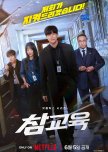
Despite being primarily an action drama, there is also just enough romance to satisfy hopeless romantics like me without ever distracting from the central story. The budding relationship between Bong Geun-dae (deputy director and field investigator) and Im Han-rim (field inspector) was absolutely adorable. It never takes over the plot, but the small moments they share provide a welcome bit of warmth and humor amid the much heavier subject matter. It was exactly the right amount.
Other viewers have also praised the drama for its satisfying action sequences and willingness to tackle difficult social issues. While some questioned whether its methods were overly idealized, I think that heightened premise is exactly what makes it so entertaining. I would absolutely recommend this series to anyone who enjoys action dramas, crime stories, or stories where justice is finally served.
Spoilers
One of my favorite aspects of the entire series was the concept behind the Teachers' Rights Protection Agency (TRPA). The idea that there could be an organization with the legal authority to step in and do whatever was necessary to stop bullies was incredibly satisfying to watch.
When I was younger, that was often how school bullies were dealt with. It was the classic "meet me behind the bus yard" kind of street justice. More often than not, it took someone bigger, stronger, or simply unwilling to tolerate the bully anymore to finally put an end to it. That isn't necessarily an ideal solution, but it was often the reality.
The TRPA takes that idea and imagines what it might look like if society actually empowered people to intervene before victims were completely broken. Because the agency had the authority to act physically when necessary, the fight scenes became some of the most rewarding moments in the series. Watching the bullies receive a taste of their own medicine was immensely satisfying.
Did I think it permanently changed most of them? Not really.
People who habitually bully others rarely change overnight. School bullies often grow into workplace bullies, and sometimes even into bullies in retirement communities. More often than not, they simply stay in check when there's someone stronger keeping them accountable. What I appreciated about the TRPA was that it wasn't portrayed as a one-time solution. It was made clear that the agency would come back if necessary, and students always had somewhere to report abuse knowing they would actually be heard.
One storyline I wish had gone a little further involved the mothers giving their children drugs to improve academic performance. I appreciated that the drama clearly called it what it was—child abuse—but I wish the legal consequences had been much stronger. I wanted to see those parents prosecuted and sent to jail. That was one area where I thought the series treated a very serious issue a little too gently.
I also think the popularity of this drama says something important. So many people recognize that bullying has become a significant problem, and in many places the traditional ability to defend yourself or others has been removed without an equally effective replacement. That leaves victims feeling powerless.
To have such a heavy topic and yet be able to integrate some more light hearted moments and have them fit naturally was a testament to how masterfully this series was scripted. As mentioned before, I also ended up loving the subtle romance between Bong Geun-dae and Im Han-rim. She was this incredibly tough former special forces operative who could intimidate just about anyone, yet underneath all that she was genuinely caring. Geun-dae, on the other hand, was intelligent, sweet, and had a quieter personality that balanced her perfectly. They brought out the best qualities in each other. I looked forward to the scenes between them and it felt as a positive addition to, rather than detraction from, the main story.
One of my favorite scenes was at the cemetery when they were bickering back and forth in that unmistakably flirtatious way. Choi Gang-seok looked at them and wondered what was going on, and Na Hwa-jin immediately replied that they simply liked each other and didn't know it yet. He called it exactly as the audience was thinking it, and it made the entire scene even more charming. Watching that relationship slowly develop in the background was one of the drama's sweetest surprises.
I also really appreciated the relationship between Na Hwa-jin and Choi Gang-seok. Even though Gang-seok was technically his superior—and would have officially been his father-in-law had he married his daughter—you could tell he genuinely thought of Hwa-jin as family. One of the moments that really drove that home for me was when Gang-seok learned that Cho Gyu-cheol, the same violent offender who had murdered Hwa-jin's fiancée years earlier, had returned and stabbed Hwa-jin as well. Up until then, he had remained remarkably composed and professional in dealing with Gyu-cheol. The instant he realized Hwa-jin had been attacked, though, you could see that professionalism disappear. His reaction was pure protective father. It was one of the most heartfelt moments in the series because it showed that, though the wedding could never happen, he still considered Hwa-jin his son.
The drama also did a good job showing how the school violence committees themselves could be manipulated and corrupted. Simply creating another committee isn't enough if the people running it can be influenced by money, status, or politics. The series makes it very clear that those systems alone are not always capable of delivering justice.
Obviously, I don't think a real-world solution would be as extreme as the TRPA. This is still a television drama. But I do think it raises worthwhile questions about what should replace systems that clearly aren't working. Stricter consequences for serious juvenile crime would be a start. If someone repeatedly commits violent acts, there should be meaningful consequences instead of endless chances with little accountability. Likewise, having specially trained personnel assigned to schools with enough authority to immediately intervene when students are being victimized could go a long way toward protecting those who often feel they have nowhere to turn.
Even if the drama exaggerates its solution for entertainment purposes, the problems it highlights are very real. That combination of exciting action, compelling characters, and thoughtful social commentary is what made this such an easy 10/10 for me.
Review
This drama ranks now as one of my favorite all time dramas. And I have watched over 400 dramas at this point. I loved the premise not only because it was unique and compelling but it also shines a light on a very real problem—not only in South Korea, but in many developed countries. Though the issue is on an undeniably greater scale in South Korea than in most places, it is an issue that is present worldwide. While the subject matter is incredibly serious, the drama manages to present it in a way that is consistently entertaining without losing site or downplaying how the severe issue with bullying in all forms.
Anyone who has ever been bullied—whether at home, at school, or even in the workplace—is probably going to find themselves cheering internally as the bullies are confronted in some of the most satisfying ways imaginable. The central premise asks a fascinating question: What if there were a group with the authority to step in where everyone else had failed? What if victims actually had a voice and knew someone would listen?
I also appreciated how broadly the series approached bullying. It doesn't focus solely on the stereotypical schoolyard bully. It explores physical violence between students, cyberbullying, adults abusing their authority, and even the systems that allow those behaviors to continue unchecked. It also branches into related issues such as drug use, gambling, and other criminal activities that often accompany intimidation and exploitation.
The action is excellent, the pacing stays consistently engaging, and despite tackling some very heavy themes, the drama never becomes weighed down by them. Instead, it balances its social commentary with exciting investigations, memorable characters, and some outstanding fight choreography.
Despite being primarily an action drama, there is also just enough romance to satisfy hopeless romantics like me without ever distracting from the central story. The budding relationship between Bong Geun-dae (deputy director and field investigator) and Im Han-rim (field inspector) was absolutely adorable. It never takes over the plot, but the small moments they share provide a welcome bit of warmth and humor amid the much heavier subject matter. It was exactly the right amount.
Other viewers have also praised the drama for its satisfying action sequences and willingness to tackle difficult social issues. While some questioned whether its methods were overly idealized, I think that heightened premise is exactly what makes it so entertaining. I would absolutely recommend this series to anyone who enjoys action dramas, crime stories, or stories where justice is finally served.
Spoilers
One of my favorite aspects of the entire series was the concept behind the Teachers' Rights Protection Agency (TRPA). The idea that there could be an organization with the legal authority to step in and do whatever was necessary to stop bullies was incredibly satisfying to watch.
When I was younger, that was often how school bullies were dealt with. It was the classic "meet me behind the bus yard" kind of street justice. More often than not, it took someone bigger, stronger, or simply unwilling to tolerate the bully anymore to finally put an end to it. That isn't necessarily an ideal solution, but it was often the reality.
The TRPA takes that idea and imagines what it might look like if society actually empowered people to intervene before victims were completely broken. Because the agency had the authority to act physically when necessary, the fight scenes became some of the most rewarding moments in the series. Watching the bullies receive a taste of their own medicine was immensely satisfying.
Did I think it permanently changed most of them? Not really.
People who habitually bully others rarely change overnight. School bullies often grow into workplace bullies, and sometimes even into bullies in retirement communities. More often than not, they simply stay in check when there's someone stronger keeping them accountable. What I appreciated about the TRPA was that it wasn't portrayed as a one-time solution. It was made clear that the agency would come back if necessary, and students always had somewhere to report abuse knowing they would actually be heard.
One storyline I wish had gone a little further involved the mothers giving their children drugs to improve academic performance. I appreciated that the drama clearly called it what it was—child abuse—but I wish the legal consequences had been much stronger. I wanted to see those parents prosecuted and sent to jail. That was one area where I thought the series treated a very serious issue a little too gently.
I also think the popularity of this drama says something important. So many people recognize that bullying has become a significant problem, and in many places the traditional ability to defend yourself or others has been removed without an equally effective replacement. That leaves victims feeling powerless.
To have such a heavy topic and yet be able to integrate some more light hearted moments and have them fit naturally was a testament to how masterfully this series was scripted. As mentioned before, I also ended up loving the subtle romance between Bong Geun-dae and Im Han-rim. She was this incredibly tough former special forces operative who could intimidate just about anyone, yet underneath all that she was genuinely caring. Geun-dae, on the other hand, was intelligent, sweet, and had a quieter personality that balanced her perfectly. They brought out the best qualities in each other. I looked forward to the scenes between them and it felt as a positive addition to, rather than detraction from, the main story.
One of my favorite scenes was at the cemetery when they were bickering back and forth in that unmistakably flirtatious way. Choi Gang-seok looked at them and wondered what was going on, and Na Hwa-jin immediately replied that they simply liked each other and didn't know it yet. He called it exactly as the audience was thinking it, and it made the entire scene even more charming. Watching that relationship slowly develop in the background was one of the drama's sweetest surprises.
I also really appreciated the relationship between Na Hwa-jin and Choi Gang-seok. Even though Gang-seok was technically his superior—and would have officially been his father-in-law had he married his daughter—you could tell he genuinely thought of Hwa-jin as family. One of the moments that really drove that home for me was when Gang-seok learned that Cho Gyu-cheol, the same violent offender who had murdered Hwa-jin's fiancée years earlier, had returned and stabbed Hwa-jin as well. Up until then, he had remained remarkably composed and professional in dealing with Gyu-cheol. The instant he realized Hwa-jin had been attacked, though, you could see that professionalism disappear. His reaction was pure protective father. It was one of the most heartfelt moments in the series because it showed that, though the wedding could never happen, he still considered Hwa-jin his son.
The drama also did a good job showing how the school violence committees themselves could be manipulated and corrupted. Simply creating another committee isn't enough if the people running it can be influenced by money, status, or politics. The series makes it very clear that those systems alone are not always capable of delivering justice.
Obviously, I don't think a real-world solution would be as extreme as the TRPA. This is still a television drama. But I do think it raises worthwhile questions about what should replace systems that clearly aren't working. Stricter consequences for serious juvenile crime would be a start. If someone repeatedly commits violent acts, there should be meaningful consequences instead of endless chances with little accountability. Likewise, having specially trained personnel assigned to schools with enough authority to immediately intervene when students are being victimized could go a long way toward protecting those who often feel they have nowhere to turn.
Even if the drama exaggerates its solution for entertainment purposes, the problems it highlights are very real. That combination of exciting action, compelling characters, and thoughtful social commentary is what made this such an easy 10/10 for me.
Was this review helpful to you?


