



This review may contain spoilers
wherein the plot serves the characters more than the characters serve themselves
I did not go into Blossoms of Power expecting to be blown away, particularly since I had just finished Blossom (which I believe shares a production team/one director) and came out of it with middling feelings. But this drama was... certainly something! Entertaining, yes, and quite fun to watch but not anything spectacular.
What stuck out to me most was the extreme sense of characters driving the narrative - not necessarily in the sense that a character's actions move the plot, but rather the plot moves itself to serve and facilitate character development, particularly of our main leads. Most conflicts were resolved within an episode or two, and the interconnecting narrative threads were very thin, resulting in a plotline that is clunky and episodic. What should have been important narrative points were often communicated through dialogue discussing events off-screen (see: the northwestern conflict, an army of 3million if I remember correctly, being defeated by Shen Xihe's brother, which we learn of through a letter). Quite early on, I felt as though the purpose of the plot was purely to serve and facilitate the main characters' relationship development and provide hurdles for them to stumble and cushions for them to fall on. Stakes were mild where they should have been high and it made the wider world feel empty.
Xiao Huayong's illness was the primary connective thread but this was not nearly explored enough to make it compelling. Without spoilers, the 'whodunit' of it all was anticlimactic and predictable despite a complete lack of foreshadowing and/or hints throughout - of course it's possible I just missed these, but I do not care to rewatch and find out - plus, as with many 'sickly' MLs, his illness seemed to wax and wane in an awfully convenient pattern of 'I am extremely strong despite my illness' 'I am actively dying' 'my fiancee's dad is in trouble so I'm strong again' whenever suited.
The story as a whole was thematically void, other than some half-formed ideas of power, lineage, and loyalty to which the ML was an unfortunate victim of. I won't even speak on the final 'reveal' concerning the ML because it is still so ridiculous why they would choose to cheapen what was a fairly tearful finale with such an inexplicable 'twist.'
What made this drama worth finishing, however, was the characters. For all this show lacked in plot, it made up for in rich and diverse character dynamics.
The FL pursues power tyrannically to prevent the tragedy of her previous life - this certainly made an impression and I was glad to see that, although her character softened somewhat over time, her ruthlessness to her enemies remained. Meng Ziyi's acting was not hugely dynamic, but her portrayal of Shen Xihe's cold cutthroat nature definitely made an impact at the outset, and I was relatively impressed with her more emotional scenes also - one in particular reflected well the idea of such a collected and meticulous person with the flood gates set loose. In terms of writing, Shen Xihe definitely could have had clearer motives - she wants a foothold of power enough to protect herself and her family, but it seems to be an unspoken thing that she wants more than just safety, which I wish they had delved into more explicitly. Such ruthlessness would not be fuelled by the need to protect, not when her refusal to bend often put more targets on her and those around her. This is something that, had the plot been more substantial, could have been woven into a very compelling character arc. The foundations are there, but unfortunately the execution fell short.
As for the ML, he has spent years secretly gaining a more understated kind of power in order to find the truth of his poisoning, which again the plot fails to deliver on. We know he is investigating the culprit, but aside from speaking to a few prisoners and receiving a few letters, this investigation is not ever shown on screen. Of course, he is a weak and forlorn prince who cannot be seen wielding the power he has, so he has others to do it for him, but even that could have been woven into a significant plotline. Regardless, He Yu's acting was a delight to watch and made Xiao Huayong such a fun character, the only one who truly made me laugh. His early interactions with Xihe were such a joy to watch, two great minds going head to head, and later as his feelings grew, I began thinking I was secretly watching a comedy. It's safe to say, I began watching for the FL, but the ML was the one that kept me around. I have no complaints about their relationship development, though I wouldn't say it was the main thing I was there for.
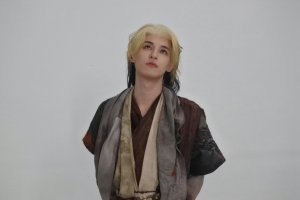
That would instead be - Bu Shulin. What a character. From the moment she appeared I knew I would not be able to drop this show - honestly, I would recommend watching purely for Bu Shulin and Cui Jinbai because these two were such a joy from beginning to end. Electric chemistry. I was surprised that, censorship-wise, they were able to get away with a man professing his love to someone who looked visually male (let alone an off-screen sex scene before we ever saw Bu Shulin dressed as a woman), but it definitely seems like a step forward! In a world of such anti-queer censorship, a crossdressing character is such an excellent vehicle to explore gender and sexuality and, although they could not be too explicit in it, Bu Shulin's conflict over wanting to live as herself but not wanting to give up the freedoms that being perceived as a man gave her hits the nail right on the head. Unfortunately these characters did not get the screentime that they deserved, but by the end I felt I knew them far better than I knew either of our main leads, and I was most definitely more endeared towards them.
Finally, aside from Bu Shulin, there was one other character that truly stuck out to me, though judging from some other responses, this may be a controversial opinion. I found Prince Xin, Xiao Changqing, to be fascinating. He was a character in constant conflict with himself. His love for his brothers (most obviously Prince Lie/Xiao Changying, but later on also Xiao Huayong, even if he himself is conflicted and loathe to admit even if it is true) vs his devotion to the returned Gu Qingzhi (regardless of how she feels on the matter) is the most obvious, but it runs deeper.
Prince Xin, groomed for the throne, primed to carry the weight of the Empire; and Xiao Changqing, husband and mourner. Doomed from the start, really. He was raised to hold power and protect it, make the horrible choices that a ruler has to make, and that is the first thing we see him do - leading the execution of the Gu family, trying to protect Gu Qingzhi and instead stifiling and suffocating her, so that her final act of autonomy is to orchestrate her own death. As Shen Xihe says, what he deems as 'love' and 'protection' is instead 'possession.' She kills herself to shift blame to those who harmed her family, but I also think a part of it is punishment to this terrible husband of hers. You have tried so hard to keep me, but no amount of power can move death. Or so she thought!
When it comes to reincarnation (or adjacent in this case) plotlines, there should always be a reason. 'So FL can meet ML and fall in true love' is fine, if not a bit stale; 'redemption for the failures of her previous life' is definitely the most obvious driving force for our FL. Gu Qingzhi meets the old Shen Xihe on a bridge in, presumably, the underworld - Chinese mythology is not my expertise, but bridges are often representative of progress, transition, and moving on. The previous Shen Xihe moves on into the afterlife - Gu Qingzhi chooses to return to the mortal world. It's a similar issue to that I had with her character overall, in that I wish the narrative would be more upfront about her selfishness and greed, as it's my interpretation that she did not choose to return solely for redemption, but also for revenge. And she certainly gets it. (Also controversial, but the small kindness she showed him in the end, I truly did like. Their relationship was so fascinating, and for all the wrong he did to her, that she can offer such sympathy shows a breadth of character that many 'cold' characters are deprived of.)
He is a terrible person who gets what he deserves (the writing falls apart strikingly at the end, but if one ignores the huge narrative gaps, there is a semblance of what they were trying to get across). He was truly destined for madness, and his relationship with our FL is a mirror for what his rein as Emperor would have been - power turned to possession and devotion turned to obsession. Again, a thrilling idea failed by poor execution. Xu Zhengxi was by far my favourite actor of the entire show. He also plays another fantastically insane character in Whispers of Fate, which, for all its many flaws, I have to recommend if only for the cast's excellent performances.
Overall, a flimsy and far-away plot, upon which a series of could-be fantastic characters bob along, while the writers throw rubber ducks and foam pool noodles in their path. Nothing mind-blowing, but full of potential!
What stuck out to me most was the extreme sense of characters driving the narrative - not necessarily in the sense that a character's actions move the plot, but rather the plot moves itself to serve and facilitate character development, particularly of our main leads. Most conflicts were resolved within an episode or two, and the interconnecting narrative threads were very thin, resulting in a plotline that is clunky and episodic. What should have been important narrative points were often communicated through dialogue discussing events off-screen (see: the northwestern conflict, an army of 3million if I remember correctly, being defeated by Shen Xihe's brother, which we learn of through a letter). Quite early on, I felt as though the purpose of the plot was purely to serve and facilitate the main characters' relationship development and provide hurdles for them to stumble and cushions for them to fall on. Stakes were mild where they should have been high and it made the wider world feel empty.
Xiao Huayong's illness was the primary connective thread but this was not nearly explored enough to make it compelling. Without spoilers, the 'whodunit' of it all was anticlimactic and predictable despite a complete lack of foreshadowing and/or hints throughout - of course it's possible I just missed these, but I do not care to rewatch and find out - plus, as with many 'sickly' MLs, his illness seemed to wax and wane in an awfully convenient pattern of 'I am extremely strong despite my illness' 'I am actively dying' 'my fiancee's dad is in trouble so I'm strong again' whenever suited.
The story as a whole was thematically void, other than some half-formed ideas of power, lineage, and loyalty to which the ML was an unfortunate victim of. I won't even speak on the final 'reveal' concerning the ML because it is still so ridiculous why they would choose to cheapen what was a fairly tearful finale with such an inexplicable 'twist.'
What made this drama worth finishing, however, was the characters. For all this show lacked in plot, it made up for in rich and diverse character dynamics.
The FL pursues power tyrannically to prevent the tragedy of her previous life - this certainly made an impression and I was glad to see that, although her character softened somewhat over time, her ruthlessness to her enemies remained. Meng Ziyi's acting was not hugely dynamic, but her portrayal of Shen Xihe's cold cutthroat nature definitely made an impact at the outset, and I was relatively impressed with her more emotional scenes also - one in particular reflected well the idea of such a collected and meticulous person with the flood gates set loose. In terms of writing, Shen Xihe definitely could have had clearer motives - she wants a foothold of power enough to protect herself and her family, but it seems to be an unspoken thing that she wants more than just safety, which I wish they had delved into more explicitly. Such ruthlessness would not be fuelled by the need to protect, not when her refusal to bend often put more targets on her and those around her. This is something that, had the plot been more substantial, could have been woven into a very compelling character arc. The foundations are there, but unfortunately the execution fell short.
As for the ML, he has spent years secretly gaining a more understated kind of power in order to find the truth of his poisoning, which again the plot fails to deliver on. We know he is investigating the culprit, but aside from speaking to a few prisoners and receiving a few letters, this investigation is not ever shown on screen. Of course, he is a weak and forlorn prince who cannot be seen wielding the power he has, so he has others to do it for him, but even that could have been woven into a significant plotline. Regardless, He Yu's acting was a delight to watch and made Xiao Huayong such a fun character, the only one who truly made me laugh. His early interactions with Xihe were such a joy to watch, two great minds going head to head, and later as his feelings grew, I began thinking I was secretly watching a comedy. It's safe to say, I began watching for the FL, but the ML was the one that kept me around. I have no complaints about their relationship development, though I wouldn't say it was the main thing I was there for.
That would instead be - Bu Shulin. What a character. From the moment she appeared I knew I would not be able to drop this show - honestly, I would recommend watching purely for Bu Shulin and Cui Jinbai because these two were such a joy from beginning to end. Electric chemistry. I was surprised that, censorship-wise, they were able to get away with a man professing his love to someone who looked visually male (let alone an off-screen sex scene before we ever saw Bu Shulin dressed as a woman), but it definitely seems like a step forward! In a world of such anti-queer censorship, a crossdressing character is such an excellent vehicle to explore gender and sexuality and, although they could not be too explicit in it, Bu Shulin's conflict over wanting to live as herself but not wanting to give up the freedoms that being perceived as a man gave her hits the nail right on the head. Unfortunately these characters did not get the screentime that they deserved, but by the end I felt I knew them far better than I knew either of our main leads, and I was most definitely more endeared towards them.
Finally, aside from Bu Shulin, there was one other character that truly stuck out to me, though judging from some other responses, this may be a controversial opinion. I found Prince Xin, Xiao Changqing, to be fascinating. He was a character in constant conflict with himself. His love for his brothers (most obviously Prince Lie/Xiao Changying, but later on also Xiao Huayong, even if he himself is conflicted and loathe to admit even if it is true) vs his devotion to the returned Gu Qingzhi (regardless of how she feels on the matter) is the most obvious, but it runs deeper.
Prince Xin, groomed for the throne, primed to carry the weight of the Empire; and Xiao Changqing, husband and mourner. Doomed from the start, really. He was raised to hold power and protect it, make the horrible choices that a ruler has to make, and that is the first thing we see him do - leading the execution of the Gu family, trying to protect Gu Qingzhi and instead stifiling and suffocating her, so that her final act of autonomy is to orchestrate her own death. As Shen Xihe says, what he deems as 'love' and 'protection' is instead 'possession.' She kills herself to shift blame to those who harmed her family, but I also think a part of it is punishment to this terrible husband of hers. You have tried so hard to keep me, but no amount of power can move death. Or so she thought!
When it comes to reincarnation (or adjacent in this case) plotlines, there should always be a reason. 'So FL can meet ML and fall in true love' is fine, if not a bit stale; 'redemption for the failures of her previous life' is definitely the most obvious driving force for our FL. Gu Qingzhi meets the old Shen Xihe on a bridge in, presumably, the underworld - Chinese mythology is not my expertise, but bridges are often representative of progress, transition, and moving on. The previous Shen Xihe moves on into the afterlife - Gu Qingzhi chooses to return to the mortal world. It's a similar issue to that I had with her character overall, in that I wish the narrative would be more upfront about her selfishness and greed, as it's my interpretation that she did not choose to return solely for redemption, but also for revenge. And she certainly gets it. (Also controversial, but the small kindness she showed him in the end, I truly did like. Their relationship was so fascinating, and for all the wrong he did to her, that she can offer such sympathy shows a breadth of character that many 'cold' characters are deprived of.)
He is a terrible person who gets what he deserves (the writing falls apart strikingly at the end, but if one ignores the huge narrative gaps, there is a semblance of what they were trying to get across). He was truly destined for madness, and his relationship with our FL is a mirror for what his rein as Emperor would have been - power turned to possession and devotion turned to obsession. Again, a thrilling idea failed by poor execution. Xu Zhengxi was by far my favourite actor of the entire show. He also plays another fantastically insane character in Whispers of Fate, which, for all its many flaws, I have to recommend if only for the cast's excellent performances.
Overall, a flimsy and far-away plot, upon which a series of could-be fantastic characters bob along, while the writers throw rubber ducks and foam pool noodles in their path. Nothing mind-blowing, but full of potential!
Was this review helpful to you?


