
 Editorials




The Ending We Deserved, Just Not Enough of It
Some series you watch to pass the time. Others stay with you in a way that is harder to explain — less like entertainment and more like something that quietly becomes part of how you understand yourself.Yumi’s Cells has always been the second kind. I have followed Yumi through two relationships and four years of waiting, and when Season 3 finally arrived, I did not go in with high expectations. I went in hoping simply that the ending would feel like it meant something.
It did.
THE SYNOPSIS
Yumi has reinvented herself as a successful romance novelist, but her inner world has gone quiet. The cells that once drove her through heartbreak and recovery have settled into routine, and love — for a long time — has not seemed worth the disruption. Then Shin Soon-rok arrives: unhurried, emotionally clear, and entirely unlike the men who came before him. What unfolds is not the kind of romance that announces itself loudly. It is the kind that builds in the background until you realize, somewhere around the middle of the season, that you have already fallen for both of them.
THE CAST
Kim Go-eun (Kim Yumi): She has been playing this character for years, and it shows — not in the sense of repetition but in the sense of deep familiarity. The Yumi of Season 3 carries herself differently from the woman we first met. She is more settled, more deliberate, quicker to recognize what she actually wants and what she no longer has patience for. Kim Go-eun does not announce this growth. She simply inhabits it, and by the time the final episode ends, you feel the full distance the character has travelled without ever being told to notice it.
Kim Jae-won (Shin Soon-rok): What makes Soon-rok work as a character is that he is not trying to win anyone over. He is not performing affection or manufacturing urgency. There is a clarity to how he moves through the season — he knows what he feels, and he does not complicate it unnecessarily. Kim Jae-won plays this with a quietness that suits the character perfectly. He is relatively early in his career, and standing opposite Kim Go-eun is not a small thing. He holds his own in every scene they share.
WHAT THIS SEASON UNDERSTANDS
The earlier seasons gave us relationships driven largely by the other person — Yumi responding, adjusting, finding her way inside someone else’s emotional landscape. Season 3 reverses that. Here, Yumi is the one who falls first. She is the one who has to sit with uncertainty while Soon-rok takes his time arriving at his own feelings. By the time he does, the dynamic has shifted in a way that feels like the most honest version of her yet.
Soon-rok’s approach to love is also worth paying attention to. He does not crowd Yumi. He does not push the relationship forward through sheer will. He is patient in a way that feels less like strategy and more like character — someone whose emotional centre is steady enough that he does not need the relationship to reassure him constantly. For the first time, Yumi is with someone whose capacity for love matches her own. That alignment makes everything between them feel unusually grounded.
The cellular world inside Yumi’s mind remains one of the most inventive creative choices in the series. Now in its third iteration, it has only grown warmer and more expressive. The animation has improved, the comedy has sharpened, and the cells continue to do something quietly remarkable — they make Yumi’s interior life feel like a place worth spending time in, not just a device for explaining her behaviour.
The soundtrack deserves a mention too. It does not overstate the emotion of any given scene. It simply accompanies it — tender where tenderness is needed, light where the story wants to breathe. It is the kind of music you find yourself returning to long after the episodes are over.
WHAT IT DOES NOT GET RIGHT
The season is eight episodes long. For a series that gave two previous relationships more space to develop than this final one, that imbalance is genuinely difficult to set aside.
The buildup to Soon-rok and Yumi is handled with patience and care. But once they reach each other, the season begins wrapping up almost immediately. The early, unsteady happiness of a new relationship — the ordinary moments that accumulate into something solid — arrives briefly and then is gone. You spend the season wanting more of what you have barely been given.
It is not a fatal flaw. The eight episodes that exist are good. But the awareness of what is missing sits alongside every scene in the second half of the season, and it is hard not to feel that this particular story, of all the stories in the series, deserved the most room to breathe.
FINAL THOUGHTS
Yumi’s Cells Season 3 is the quietest chapter of the series, and somehow the most affecting. It does not have the raw emotional intensity of Season 1 or the complicated moral weight of Season 2. What it has is something more difficult to manufacture — a sense of arrival. Of someone finally being in the right place, with the right person, at the right time in her life.
It ends too soon. That is both its greatest flaw and, in a strange way, part of its honesty. Good things rarely last as long as you want them to. Yumi would probably understand that better than anyone.
This one stays with you.
Was this review helpful to you?
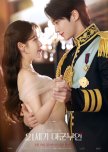
Perfect Crown Review: Finding Quiet Comfort in a Modern Joseon Rom-Com
Sometimes, we do not need a narrative to challenge us with heavy palace politics, intricate plots, or deep angst. Sometimes, we simply need a story to offer a quiet, fluttering romance and a place to rest. Perfect Crown is exactly this kind of rare rom-com gem. It is silly, cute, and fluffy, carrying the nostalgic warmth of the classic romantic comedies we used to love so much.The Synopsis
Set against the interesting premise of a modern-day Joseon dynasty governed by a constitutional monarchy, the story unfolds within the rigid social hierarchies dividing nobles and commoners. Seong Huiju is a stubborn, strong-willed woman who fights not necessarily for sweeping social equality, but fiercely for what she deems her own right. Opposite her is Prince I-An, a seemingly perfect, regal romantic who has spent his life dimming his own shine so as to not overshadow others. Together, their journey moves past the straightforward tropes of the genre to become a quiet, fierce pursuit of personal freedom.
The Cast & Chemistry
The drama does not bank on strict naturalism, instead relying on exaggerated scenarios and expressions to create its comedy. Yet, the leads carry this weight effortlessly, anchoring the emotional depth of the series.
IU (Seong Huiju): She plays Huiju as someone kind in her own way, yet unapologetically selfish in her own right. Her character is not necessarily written to be relatable, but IU makes her undeniably enjoyable to watch.
Byeon Woo-seok (Prince I-An): He brings a palpable chemistry to the screen, balancing the sassy, dramatic moments with sincere vulnerability. He beautifully captures the quiet exhaustion of a prince who harbors unspeakable desires for power, understood only by Huiju.
The Good & The Bad
The Good:
- The drama is visually pleasing, offering beautiful cinematography and stunning costumes that seamlessly fuse traditional and modern styles.
- The narrative makes the structurally perfect and shocking choice to abolish the monarchy in the finale. This political shift seamlessly erases the class divide, serving as a profound, full-circle victory for Huiju's younger self.
- The resolution illustrates that I-An’s heart never truly yearned for the heavy burden of the throne, giving him a beautiful, poetic ending.
- The comedy actually delivers, providing enough suspense and laughter to keep the straightforward story moving at an enjoyable pace.
The Bad:
- For a premise with such huge potential for complex political exploration, the narrative leaves those depths largely untouched, which may disappoint some viewers.
- The writing unfortunately fumbles near the end, with the final arc suffering from shaky pacing.
- Given the strong buildup of the first eight episodes, the ending leaves a few loose ends unattended, and certain character motives fall flat.
The Verdict: 8.5/10
If you approach Perfect Crown expecting an intricate plot and complex characters, you will find yourself analyzing a story that never promised to be a gripping political thriller. It is an imperfect journey; it has its fair share of flaws, and the final arc leaves behind a slight feeling of dissatisfaction.
If you approach Perfect Crown expecting an intricate plot and complex characters, you will find yourself analyzing a story that never promised to be a gripping political thriller. It is an imperfect journey; it has its fair share of flaws, and the final arc leaves behind a slight feeling of dissatisfaction.
Was this review helpful to you?

Finding Quiet Humanity in a 1999 Superhero Comedy
There is a strange, heavy expectation that comes with the end of a millennium. The Wonderfools sets its foundation in 1999, leaning into the quiet dread and apocalypse vibes of a world waiting for an ending. It is a superhero comedy, a genre that often rushes toward loud, chaotic spectacle. Yet, beneath the Marvel-esque mutant storyline , the drama manages to find a grounded, emotional rhythm, relying on its cast to carry the narrative whenever it begins to wobble.The Synopsis
The narrative centers on a group of misfits navigating sudden, inexplicable powers. Rather than treating these abilities merely as a gimmick, the script attempts to give each character a real emotional arc. Director Yoo In-shik carefully balances this tonal mashup, making the absurd elements of the story feel grounded within the familiar, quiet anxieties of ordinary people facing the turn of the century.
The Cast & Chemistry
The people inhabiting this world carry their roles with a delicate balance of humor and hidden exhaustion, creating an ensemble chemistry where you can tell they genuinely like each other.
- Park Eun Bin (Chaeni): She delivers a superb performance that serves as a primary reason to embark on this journey. Chaeni is loud and chaotic, yet Park Eun Bin makes the transition into revealing her character’s deep, quiet hurt look completely effortless.
- Cha Eun Woo (Unjeong): He plays a mysterious, fairy-tale boy carrying trauma he can barely articulate. It is perhaps the most disciplined and restrained work he has shown recently. Instead of playing the emotion loudly, he lets it accumulate in his eyes and tiny shifts in his breathing, making the moments he finally cracks land with profound, hard-earned weight.
- Choi Dae Hoon and Im Sung Jae: They provide a necessary lightness, elevating the comedy multiple levels as a duo of comedic relief characters.
The Good & The Bad
The Good:
- The 1999 setting is not merely an aesthetic choice; the millennium dread bleeds organically into the characters’ lives in unexpected ways.
- The production balances its elements beautifully, offering clean action while ensuring the emotional beats actually hit their mark.
- The comedy consistently lands, providing a comforting, grounded charm to the heavier emotional arcs.
The Bad:
- The serious, overarching narrative remains highly predictable, and the drama might have found more peace leaning fully into its comedy rather than attempting a Marvel-esque action route.
- The villains are forgettable, and their story arcs wrap up much too neatly for the buildup they were given.
- The narrative struggles with consistency, scaling the heroes’ powers by the convenience of the moment rather than grounding them in solid, deliberate writing.
The Verdict
If you approach The Wonderfools expecting a flawless, tightly plotted superhero epic, you will likely find yourself frustrated by the predictable serious storyline and the inconsistent scaling of powers. It is, in many ways, an imperfect journey that occasionally falls flat when it tries to be too serious.
However, if you simply sit with the story for its superb ensemble and the quiet heart beneath its comedy, it becomes a genuinely beautiful watch. It is a must-watch for those who appreciate Marvel-esque stories, and a deeply enjoyable, comforting one-time journey for everyone else.
Was this review helpful to you?

This review may contain spoilers
This is not a love story.
As a long-time admirer of Park Hyung Shik’s typically bright and bubbly on-screen persona, the allure of “Buried Hearts” lay squarely in witnessing his venture into a darker, more complex role. This departure from his usual fare was the primary reason I tuned in, and I can unequivocally state that his performance as Dongju was nothing short of captivating. He masterfully embodied the simmering rage and internal conflict of a man consumed by vengeance, proving his impressive range as an actor. This is Park Hyung Shik as you’ve never seen him before, and it’s absolutely superb.The initial episodes of “Buried Hearts” grabbed my attention immediately with a compelling and fast-paced narrative. Dongju’s quest for revenge was gripping, and the unfolding mysteries surrounding his family’s tragedy were expertly crafted. However, as the drama progressed, I couldn’t shake the feeling that the plot’s momentum began to wane. Dongju’s character, initially so driven and focused, seemed to become increasingly bogged down by his emotions.
This shift raised some significant questions for me regarding the plausibility of his actions. [Spoiler Alert!] Is it truly believable that Dongju, after witnessing the brutal murder of his sister and father at the hands of the despicable Yeom Jangseon, would ultimately choose not to take definitive action against him? Similarly, considering Deokhui’s direct order to his father, Ildo, which resulted in the attempted murder of Dongju and the actual murder of his mother, could Dongju realistically just… let it go? The latter part of the series seemed to suggest that the weight of everything became too much for him, leading to a sense of resignation rather than continued aggressive pursuit. While emotional depth is crucial, this perceived lack of decisive action against those directly responsible felt somewhat jarring given the initial intensity of his revenge plot.
Despite this narrative deceleration in the latter half, “Buried Hearts” does offer a refreshing dose of realism in its conclusion. [Spoiler Alert!] Not every story culminates in a saccharine happy ending. Dongju’s relationship with Eunnam doesn’t reach a blissful resolution, and the shocking moment where Seonhu pushes Taehyun off the building serves as a stark reminder of the brutal consequences of their actions. This refusal to shy away from difficult outcomes adds a layer of authenticity that many dramas often avoid. Furthermore, the several loose ends, such as the ambiguous future of certain characters, undeniably leave the audience craving a second season.
In terms of character development, “Buried Hearts” offers some interesting arcs. [Spoiler Alert!] Eunnam’s gradual emergence as a capable figure within Daesan Energy was a welcome development, showcasing her resilience and intelligence. Dongju’s eventual decision to entrust the vault code to the other three directors also hinted at a potential shift in his priorities and a move towards a more collaborative future for the company.
However, the most significant dangling thread, and the one that screams for a season two, is the mystery surrounding the substantial 2 trillion fund. [Spoiler Alert!] What exactly happened to it? Its disappearance remains a major unanswered question, leaving a significant plotline unresolved and ripe for further exploration.
In conclusion, “Buried Hearts” is a compelling drama primarily driven by Park Hyung Shik’s exceptional performance in a darker and more intense role. While the narrative pacing and some of Dongju’s later actions may raise questions regarding believability, the drama’s commitment to a more realistic, often unsettling conclusion, coupled with intriguing character development and significant unresolved plot points – particularly the enigma of the missing 2 trillion fund – undeniably leaves the viewer hoping for a second season to delve deeper into the buried secrets and lingering consequences.
Was this review helpful to you?

I Am Nobody: The Showdown Between Yin & Yang
0 people found this review helpful
This review may contain spoilers
More intense fight scenes than S1.
I have completely forgotten S1 when I started watching. I just remembered them slowly as the episodes moved on. Finished the season in 2 days - as we have to work too. But this is better than S1. I feel like they were able to explain the backstory of the new characters. We still don't see romance between the main leads but there's definitely growth in their relationship. Although this is a filler story, I think it's still a must-watch if you follow the series.Was this review helpful to you?

This review may contain spoilers
Secretive Starts, Satisfying Hearts
"A Moment but Forever" strolls onto the xianxia scene with a breath of fresh air, immediately whispering secrets and hinting at intriguing characters. Our main duo, the oh-so-mature Yuan Zhong (played with a knowing glint by Liu Xue Yi) and the seemingly sweet but secretly sharp Ji Tanyin (the ever-charming Tang Yan), totally draw you in. Yuan Zhong? Think cunning with a dash of adorable simplicity. Ji Tanyin? An empathetic powerhouse with a beautiful brain who can definitely hold her own in a magical showdown. These two aren't about dramatic, over-the-top declarations; instead, Liu Xue Yi and Tang Yan nail the subtle glances and quiet understandings, proving those years of acting chops are pure gold. The drama smartly lets their trust and feelings for each other simmer and grow, exploring cool ideas about finding yourself, living your best life, and maybe even falling in love – a grown-up vibe that even the side characters seem to get in on.Okay, so maybe the first few episodes look like they borrowed the CGI budget from a slightly older game, and the visuals are just... there. BUT! Stick with it, folks, because you're about to tumble into a seriously cool world. Imagine the human realm got a super stylish steampunk makeover thanks to our engineer goddess Wushuang (surprise! It's Ji Tanyin!). Think ancient robes hanging next to awesome gadgets – magic and tech holding hands and causing all sorts of plot twists.
The real heart-eyes emoji of this drama? Definitely Yuan Zhong and Ji Tanyin. Yuan Zhong starts off all broody and skeptical (past trauma, you know?), but Ji Tanyin slowly melts his icy exterior with her maturity, logic, and unwavering sense of what's right. Their relationship is less about passionate stares and more about deep chats and helping each other grow. She teaches him to embrace the world; he keeps her grounded. It's a love built on "I've got your back, always," which is pretty darn sweet. Liu Xue Yi and Tiffany Tang absolutely kill it, giving their characters so much depth.
We also get a fun bunch of sidekicks who add a lot to the adventure. Special shoutout to the complicated war demon Qian Lin, who was super interesting at the beginning! And the soundtrack? Chef's kiss! The music perfectly sets the mood.
Now, not everything is pure magic dust. Some of the supporting characters who seemed promising kind of... wander off and don't do much. The second couple's potential also feels a bit wasted, which is a bummer. And Qian Lin's story kind of plateaus, while the villain's plotline feels a little bumpy.
But overall? "A Moment but Forever" is totally worth your time for its super creative world, those brainy philosophical moments, and especially for the wonderfully mature and believable romance between the leads, brought to life by the amazing Liu Xue Yi and Tiffany Tang. It's like a chill "slice-of-life" xianxia at first with some fun mysteries and giggles, but it sneaks in some serious emotional punches and makes the characters face some real stuff. The result? A love story that's all about sticking together and truly understanding each other.
Was this review helpful to you?
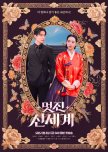
Not the most original premise, but the leads make it worth every minute so far.
Someone mentioned it had the same energy as Mr. Queen, and that was enough. I loved Mr. Queen — the sharp humor, the body-swap chaos, the way it somehow managed to be ridiculous and genuinely moving at the same time. That drama set a high bar for the genre, and I have been chasing that feeling ever since.I will be honest — Lim Ji-yeon was not the reason I clicked play. But Heo Nam-jun was. After Perfect Crown wrapped and left a quiet gap in my watch list, I needed something to fill the space. This felt like the right kind of gamble.
The cast
Lim Ji-yeon (Shin Seo-ri / Kang Dan-sim): She was not on my radar coming in, but she carries the dual role with more confidence than I expected. There is something in the way she shifts between the modern Seo-ri and the Joseon Dan-sim — a stillness in one, a controlled ferocity in the other — that makes the possession premise feel less gimmicky than it has any right to be.
Heo Nam-jun (Cha Se-gye): This is the performance I came for, and so far he has not disappointed. He plays arrogance without making it exhausting, which is a harder balance than it looks. There is something quietly watchable about him — a restrained quality that makes you lean in rather than tune out.
Episodes 1–4
The first four episodes move fast, almost defiantly so, and the comedy lands more often than it misses. The Joseon villainess adjusting to modern Seoul is the kind of premise that could easily tip into tired repetition, but the writing keeps finding new angles — a binged drama series here, a confrontation that goes sideways there. It does not take itself too seriously, and that lightness carries it through the moments where the plot feels familiar.
The premise is not new. Spirit possession, time displacement, enemies circling each other until something shifts — we have seen this shape before. But familiarity is not always a flaw. Sometimes it is simply the container, and what matters is what gets poured into it.
The love story has not fully bloomed yet. But there is something there — a tension in the early scenes between the leads that feels earned rather than manufactured. I am watching for what happens when the walls start coming down.
Was this review helpful to you?

This review may contain spoilers
Si-eun Returns: Weak Hero Class 2 Kicks Things Up a Notch (Maybe Too Quickly!)
Get ready, because Weak Hero Class 2 is here, and it's like Season 1 hit the fast-forward button! Our favorite brainy brawler, Yeon Si-eun, is navigating a new school, new frenemies, and way bigger threats. The quiet, slow-burn tension of the first season often takes a backseat to flashier, more frequent, and definitely more brutal action sequences.This season throws Si-eun into a new crew – Hu-min (played charismatically by Ryeoun), Hyun-tak, and Jun-tae form an unlikely squad you can't help but root for. Watching these bonds form is definitely a highlight! But just as things get cozy, the imposing Baek-jin starts making trouble, threatening their newfound peace.
At its core, the show still explores Si-eun's struggle – fighting only when he absolutely has to, using smarts and strategy over sheer muscle. However, some fans might miss the deep dives into his tactical genius from Season 1, as this round feels a bit more focused on high-octane, punch-kick action.
Okay, deep breaths everyone, because things move fast. Like, really fast. With only eight episodes to cover a mountain of story (especially for webtoon readers!), some felt the plot was speed-running through character backstories and villain motivations. It sometimes feels like we're hopping from one showdown to the next without fully catching our breath or understanding why everyone's suddenly throwing hands. The big bads, while visually cool (shoutout to Jun Young's awesome Geum Seong Je!), might feel a tad underdeveloped or less menacing than they could have been due to the breakneck pace.
While the show still hits those emotional notes, especially when reminding us of Su Ho's impact on Si-eun, the rushed feeling can sometimes make the deeper friendship moments feel a little less impactful than in the first season. And eagle-eyed viewers might notice a slight shift in the production style – think brighter colors and less of that gritty S1 vibe.
So, is Weak Hero Class 2 a knockout? It delivers big on action, introduces a great new group dynamic, and keeps you hooked. It definitely raises the stakes and expands the world. However, be prepared for a much faster pace that sometimes sacrifices the emotional depth and calculated tension that made Season 1 so unique. If you're ready for a whirlwind ride packed with fights and friendship, jump in – just maybe keep your finger near the pause button!
Was this review helpful to you?


