


This review may contain spoilers
A free app that comes with a deadly cost
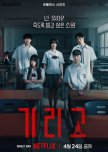
A drama revolving around themes common to growing-up teenagers: love, hate, drama, betrayal, and of course the involvement of social media and the immediate subsequences. Meanwhile, the app, called Girigo and initially only created for a school project, grants everyone a wish, but demands the users life within 24 hours. It captures the ambigious effect of the phone and its app's integrated into it. These serve as a quick satisfaction for its user but fades as quickly within its transcience existence as an entertaining reality. Consequently, the app articulates a warning message: to not indulge in short-term pleasure and hasty decisions. As such, the drama gets it quite right and loads the phone with the proper signifiers: realities shifted into social media, exposure through phones, swift fullfilment aided by apps. However, these seemingly positive aspects share the common consequences which engender hatred, violence and mobbing.From a narrative perspective, the app and the message it conveys are therefore entirely compelling. However, one key aspect that the drama simply overlooks is the world-building. The world feels cut off, and all the actions feel isolated. Generally speaking, the events seem to lack consistency and appropriate detail: were the school or the girls from the past not investigated, and has everything remained untouched between their suicide and the moment when the teenagers from the present solve the mystery? A huge leap on the part of the creators, in which the police, parents, school staff and people in general do not seem to act in accordance with the events happening around them and affecting them. Only the main characters take action, whilst the rest continue as if nothing has happened
Was this review helpful to you?
This review may contain spoilers
A dysfunctional friendship connected through their past
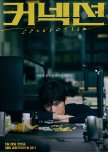
Connection has an intriguing premise: What happens when the leading investigator in the drug department is forcibly addicted to the very substance he routinely hunts down? Situated among a group of friends who have known each other since school and remain connected into adulthood, bound by a paradoxical relationship between affection and resentment, Connection sets up a mystery that repeatedly questions and places these bonds under scrutiny.The show performs very well for about nine episodes, connecting multiple plotlines that are intrinsically linked from different angles. After that point, however, the trick behind the series becomes visible and reveals the inherent flaws the thriller stubbornly tries to brute-force its way through in order to maintain progression. At one stage, the drama repeatedly relies on the same mechanisms to move the plot forward, whether through eavesdropping, a character coincidentally arriving at the right moment, or the use of surveillance cameras.
Overall, the drama balances positive and negative elements, which makes it a worthwhile watch, even though it cannot fully conceal its weaknesses. Characterisation, as well as the dynamics and development between characters, particularly the main lead's, are handled well. While the mystery often points toward one particular figure, the drama continues to raise questions that demand resolution.
This leads to the ending and one major gripe the series normalises, which renders the friendship trope somewhat unsettling. The main characters nonchalantly accept that their deceased friend was cheated on by his wife, and not only do they continue to support her and attempt to maintain a friendship, but they also financially assist her using the money they inherited from their late friend. Aside from this issue, the resolution of the central mystery is largely satisfactory, though it should have occurred four episodes earlier. But it reflects a broader issue within K-dramas, where extended episodes often harm the quality.
Was this review helpful to you?

This review may contain spoilers
Artificial Intelligence, Nature, and the Question of Creation in The Great Flood
The Great Flood begins in media res. The viewer is thrown into the chaos and, throughout the film, is given very little exposition about the characters or the incidents that shape the story. This is a clever way of introducing a world that feels dreamlike, especially in its sense of beginning and creation, an origin that remains unknown and unstable.While the film is not as bad as many disappointed viewers have claimed, largely because its title subverts genre-expectations, it does also have its weaknesses.
Overall, it is a solid movie that engages with contemporary social and cultural concerns, particularly questions of creation, whether through technological advancement such as artificial intelligence or through natural reproduction. The film therefore functions as an allegory. It reflects on the creation of the world, its mutability, and the connections between different systems of cause and effect. Yet it remains unclear whether AI represents progress, or whether natural processes such as DNA and genetics are the true forces driving advancement.
Throughout the movie, the viewer repeatedly encounters different numbers attached to the protagonist, suggesting multiple attempts, alternative outcomes, and repeated chances that all converge on the same goal of creation. Although AI appears to be the primary means of achieving this goal, the film includes two moments that emphasize the significance of family bonds. In both instances, the flood recedes and sunlight emerges, visually linking nature and humanity and suggesting an ecological vision of coexistence.
As a Korean film, the allegory may also allude to the country’s declining birth rates and the broader social hesitation toward forming families. This is a theme worth reflecting on, and although the film could have developed these ideas more fully, it still offers a thoughtful and engaging perspective.
Was this review helpful to you?
This review may contain spoilers
Painted in Clichés: The Art of A Promising Start that Drops in Quality
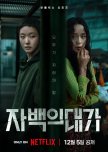
A good summary of my experience watching KDramas. A promising start to a show that gradually drops in quality and deteriorates into a convoluted and contrived plot.Although the show has a very good cast, it is a fairly clichéd programme that offers nothing fresh and instead uses the usual - often annoying - tropes: An innocent and morally upright main character who is desperate but gets drawn into the world of crime, a dark and mysterious second main character with a dual identity and a background that shows her inherent good side, a cop/lawyer who doesn't do his job well, and the main culprit behind the plot who is part of the institution that serves the law. Then of course there's all the prison shenanigans with bullies and all the other usual aspects.
Even though I can suspend my beliefs for a fictional show, at some point there were too many circumstantial encounters and incidents to move the plot forward. Not a compelling writing for a thriller in my opinion.
The music is decent and fits the overall atmosphere of the series; the cinematography is good, especially in the dark and gritty first episodes; the characters are well portrayed by the actors, except for the melodramatic and sometimes over-the-top performance of Mo Eun.
While the beginning of the series provides enjoyable viewing, it fails to maintain this level until the end.
Was this review helpful to you?

This review may contain spoilers
No Way Out: A Portrait of Suffocation
A gripping commentary on the hardships and cruelty many women endure. As You Stood By delivers a powerful depiction of patriarchal relations that suffocate and render life a space that routinely subjugates, suppresses, and systematically denies traumatized voices any escape from the repetitiveness of their hell-like experiences.While the story is not ground-breaking, its realistic portrayal, grounded in restrained and convincing performances, creates heightened awareness. The drama is not an easy watch, particularly in the first five episodes. Because the acting is executed remarkably well, the viewer empathizes deeply with the character suffering from domestic violence. One feels the anxiety, fragility, hopelessness, and claustrophobia she experiences. Lee You-mi masters her role by credibly conveying this anxiety-ridden state, while the surrounding cast complements her performance and forms a strong ensemble.
What further intensifies the discomfort and grittiness of the drama is the excellent cinematography, which understands how to visualize psychological tension and emphasize emotional states.
The length of the drama is largely well handled. However, the doppelgänger storyline fails to reach the quality established by the earlier episodes. Although the trope of doubles is an intriguing narrative element, it remains underdeveloped and at times convenient.
One aspect that ultimately feels unrewarding is the repeated emphasis on combat training. These scenes suggest Eun-so’s growing understanding of self-defense, yet in moments where such skills would be necessary, she never overcomes a male attacker. The drama misses a strong opportunity to grant her a redeeming scene in which she decisively confronts the violence directed at her.
Overall, the drama is deeply unsettling. It offers a relevant commentary on domestic violence, control, and surveillance, issues that remain widespread and well documented across the world.
Was this review helpful to you?

This review may contain spoilers
Beyond the Bar: Guilty of Great Acting, Charged with Predictability
Overall, Beyond the Bar offers a compelling drama. It's fun to watch as new cases unfold in each episode that are engaging to watch. But more importantly, it makes the viewer think about moral and social issues that everyone hears and sees in their everyday lives. Regardless of whether one agrees or disagrees with the judgements and decisions, the point of the series is that law, ethics and morality are surrounded by grey areas that extend beyond a simplistic division of good and evil.What is probably the strongest element of the series are the actors. Charming, thoughtful, intelligent, but also serious and occasionally fuelled by anger and intensity. They give the main characters authenticity and a fresh perspective on their humanity as opposed to robotic lawyers playing by strict playbooks.
While the episodes are interesting in their own right, the second half of the series suffers from overlapping subplots that aren't as interesting , diverting attention to diverse plots happening at the same time. As a result, the drama plays catch-up towards the end, wrapping up plot points very quickly , just not as compelling as it could have been.
That raises an important issue. The good guys win, but at what cost? Beyond the Bar positions itself clearly on the question of how the cases are to be processed. Even though the stakes are high, the main characters ultimately have the upper hand and seem to overcome every obstacle. The main lead is portrayed from the outset as an adept who can immediately take on the more experienced lawyers. Although her character develops as a lawyer, her side seems too good and uncontested, which makes the cases predictable. Therefore, the drama suffers from a formulaic approach that missed the opportunity to raise the bar in the trials
Was this review helpful to you?


