
 K-Drama

 3
3


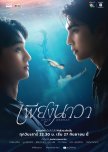
Monsters are unnatural. So are queers. And that's the point of the story.
The eight episodes that comprise Lover Merman rely on recycled plot and character beats to unspool the series’ three romances. Any Regular Viewer of BL will have encountered the story elements dozens of times over. Much of the time, Lover Merman feels like a retread. Still, over reliance on tried and true BL narrative elements guarantees Merman can become a guilty pleasure for many. Producers enhanced that potential by securing the dulcet tones of Boy Sompob to sing the title track. His pipes always add value. Yet amidst this sea of unoriginality, the series manages to deliver an allegorical angle whose emotional and intellectual wallop counts as a genuine surprise.
Two principal romances carry the narrative. Later, a guest side couple pop-up for a few episodes. None of these relationships introduce anything innovative or remarkable for the BL genre. The relevant dramatis personae hail from a familiar catalog of BL stock characters: the “bi-curious playboy” (Phurich), the “wise voice of reason” (Phana), the “naïve youth in need of instruction or protection” (Nava), and the “intern who falls for the boss” (Ping). The guest side couple supply the umpteenth example of a “step-/adopted brother romance” (but we shall leave their story aside for the rest of this review). To introduce a jealousy-riven triangle, the writers throw in another stock type, the “unrequited crush guy who forgot for years to confess his attraction to his friend lest such confession ruin the friendship” (Prapai). When the object of the unrequited crush (Nava) inevitably encounters a new suitor (Phana), the last persona morphs into a variation on the theme: “jealous guy with unrequited crush who has been permanently friend zoned before he could confess.” To be more accurate, in this case he morphs into “psychotic, homicidal jealous guy who refuses consignment to the friend zone.” Of course, in the annals of Thai BL even “jealous homicidal maniac” counts as a stock character.
The setting on a Thai island offers mild relief from the predictable. The island is the sort of place where locals subsist by catering to the tourist trade. The Regular Viewer of BL has seen their fair share of these locations, too, but any show that sets itself away from Bangkok and away from a university campus can feel fresh by default. In this instance, Merman utilizes well the resort setting. A beachfront bar co-owned by Phana and Phurich serves as the central hub of action. The other characters either work there or pass through it frequently. Daily workplace interactions yield romantic sparks—let the standard-issue BL tropes commence! The stock characters’ efforts to court one another, bed one another, and build relationships with one another play out replete with all the false starts, misunderstandings, and failures to communicate that the Regular Viewer of BL will expect to encounter. Like any BL series, the writers leaven these melodramatic moments with an assortment of cuddly scenes, sudden kisses, and promises to “take care of you forever.” Naturally, anytime someone utters a version of that last quote, the Regular Viewer of BL will feel their stomach convulse in anxiety as they anticipate the imminent onset of some fresh melodrama liable to cut “forever” down to “we’re over.” On account of just how predictably the series assembles its tropey elements, Lover Merman should not merit a review. Except for one teeny tiny twist.
Perceptive as the Regular Viewer of BL tends to be, many can deduce this twist from the title. Surprise, surprise! Some of the characters happen to be mermen. The island has long been a place where merfolk and humans mingle. In story context, the merman culture exists right alongside the human. On land, at least, it is impossible to discern which people are not the same as which other people, their point of difference invisible to the eye. We might say, they can pass. The small handful of humans aware of this secret society fall into two categories: those who accept the merfolk despite the difference, and those who want to eradicate them because of the difference. The merfolk choose to remain hidden so that they can live their lives unmolested by humans who believe they should not exist. We might say, they are closeted. The worldbuilding stew concocted around the merfolk establishes a poisonous degree of anti-merfolk bias and legacies of frequent human-on-merman violence. Because contemporary audiences are well-steeped in franchises whose plots revolve around biases against non-humans (vampires, werewolves, extra-terrestrials), many viewers will perceive this storyline as nothing more than the latest example of monster-of-the week narrative storytelling in action. And, to be fair, this description probably suffices to explain the dramatic tension invested into the Phurich-Nava-Prapai triangle. “You can’t fall for a human! He will never accept you because you’re different!” is the standard refrain in such tales, and a merman-specific take on that thinking clearly frames the trinagularity. Accordingly, Merman’s recycled fantasy elements mightnot merit a review either. Except for one teeny tiny meta-twist.
Perceptive as the Regular Viewer of BL tends to be, many missed this one: while the merfolk subplot yields familiar tropes about “monsters among us,” it also doubles as an allegory for the second-class citizenship endured by queer people. Yes, Lover Merman—a series chock full of gay characters—has a lot to say about anti-gay bias and homophobia, even though no literal anti-gay bias or homophobia ever manifests to spoil the mood of happy courtship that suffuses the gay romancing. Queers on the island are simply accepted as part of the social fabric. Instead, the hate is reserved for the merfolk. The clever way the show presents these biases in action isn’t simply dramatic, it is outright allegorical.
The slings and arrows of second-class existence that effectively renders the mermen as Other, mirrors the kinds of hostility that rendered queer people as Other. In particular, it resembles the kind of existence led by many gay men and lesbians in the middle decades of the 20th century, before the dawn of the gay pride era. In those years, a thriving queer subculture might exist in urban areas, but it was largely invisible to respectable folk living in the same areas. Keeping one’s sexuality secret was actually possible. Among the comparative points:
• Mermen live among regular people but no one can tell just by looking.
• Mermen marry human brides without the latter having any clue of her husband’s true nature. It can be quite the nasty shock when the truth emerges.
• Young mermen may themselves not realize their difference until the onset of adolescence.
• Parents have no preparation with how to deal with a monster child. Disowning a monstrous child seems logical to them.
• Ah, “monster.” Literally true here (look up the definition of “monster” if you doubt this. “Literary monster” not the regular dictionary definition). Monsters are reviled because they are unnatural. The word “unnatural” was often used to describe queerness in mid-century culture. (This condemnation has not entirely disappeared, of course!)
• Children disowned may chose to disappear forever from home, whether by seeking out greener pastures elsewhere (err, bluer seas?), or by suicide.
• The mermen sub-culture thrives, but out of sight from those not in the know.
• Some humans accept the monsters with grace while many more believe the stereotypes. Bigotry in society is real.
Without question, the mermen storylines represent the underwater breathers who dared not speak their name. Much of the weight of allegory manifests via Ping, the intern stock character. Ping fears rejection by his family for being different. “All this time, I saw myself as a monster,” asserts Ping (e 7 21:00) in one of many instances the monster analysis is explicit. This type of internalized contempt for his own identity represents another stock character, but this one is found not in fiction but in history: the self-loathing homosexual. Prior to the pride era, when no counter-narrative existed to the dominant cultural belief that queerness was either a sin or a sickness, such self-perception was common among gay men and lesbians. Here, the writers want the audience to empathize with Pring, and they build out his plight effectively. So effectively, that many viewers perceive only the injustice of treating the monsters differently. To be fair, the mermen rank among the protagonists in this tale; so a surface level reading of Ping’s story works to explain how so many missed seeing the allegory. For those conversant with queer history, however, the coded aspects of the merfolk plot prove hard to miss.
For all its reliance on tropes, curtailed character arcs, and underexplained plot twists, Lover Merman ends up supplying, in the form of allegory, one of the more potent statements against anti-gay bias any BL series has delivered. And that is the aspect that inspired this review. If a series that resonates queer authenticity appeals to you, then Lover Merman will be worth the time to sample. Just understand that while waiting for the clever allegorical parts to manifest, the actual BL portions will serve up a lot of stuff you can see coming from miles away. But at least the boys are pretty to look at. In that way, at least, Lover Merman is absolutely in line with the genre as a whole.
Two principal romances carry the narrative. Later, a guest side couple pop-up for a few episodes. None of these relationships introduce anything innovative or remarkable for the BL genre. The relevant dramatis personae hail from a familiar catalog of BL stock characters: the “bi-curious playboy” (Phurich), the “wise voice of reason” (Phana), the “naïve youth in need of instruction or protection” (Nava), and the “intern who falls for the boss” (Ping). The guest side couple supply the umpteenth example of a “step-/adopted brother romance” (but we shall leave their story aside for the rest of this review). To introduce a jealousy-riven triangle, the writers throw in another stock type, the “unrequited crush guy who forgot for years to confess his attraction to his friend lest such confession ruin the friendship” (Prapai). When the object of the unrequited crush (Nava) inevitably encounters a new suitor (Phana), the last persona morphs into a variation on the theme: “jealous guy with unrequited crush who has been permanently friend zoned before he could confess.” To be more accurate, in this case he morphs into “psychotic, homicidal jealous guy who refuses consignment to the friend zone.” Of course, in the annals of Thai BL even “jealous homicidal maniac” counts as a stock character.
The setting on a Thai island offers mild relief from the predictable. The island is the sort of place where locals subsist by catering to the tourist trade. The Regular Viewer of BL has seen their fair share of these locations, too, but any show that sets itself away from Bangkok and away from a university campus can feel fresh by default. In this instance, Merman utilizes well the resort setting. A beachfront bar co-owned by Phana and Phurich serves as the central hub of action. The other characters either work there or pass through it frequently. Daily workplace interactions yield romantic sparks—let the standard-issue BL tropes commence! The stock characters’ efforts to court one another, bed one another, and build relationships with one another play out replete with all the false starts, misunderstandings, and failures to communicate that the Regular Viewer of BL will expect to encounter. Like any BL series, the writers leaven these melodramatic moments with an assortment of cuddly scenes, sudden kisses, and promises to “take care of you forever.” Naturally, anytime someone utters a version of that last quote, the Regular Viewer of BL will feel their stomach convulse in anxiety as they anticipate the imminent onset of some fresh melodrama liable to cut “forever” down to “we’re over.” On account of just how predictably the series assembles its tropey elements, Lover Merman should not merit a review. Except for one teeny tiny twist.
Perceptive as the Regular Viewer of BL tends to be, many can deduce this twist from the title. Surprise, surprise! Some of the characters happen to be mermen. The island has long been a place where merfolk and humans mingle. In story context, the merman culture exists right alongside the human. On land, at least, it is impossible to discern which people are not the same as which other people, their point of difference invisible to the eye. We might say, they can pass. The small handful of humans aware of this secret society fall into two categories: those who accept the merfolk despite the difference, and those who want to eradicate them because of the difference. The merfolk choose to remain hidden so that they can live their lives unmolested by humans who believe they should not exist. We might say, they are closeted. The worldbuilding stew concocted around the merfolk establishes a poisonous degree of anti-merfolk bias and legacies of frequent human-on-merman violence. Because contemporary audiences are well-steeped in franchises whose plots revolve around biases against non-humans (vampires, werewolves, extra-terrestrials), many viewers will perceive this storyline as nothing more than the latest example of monster-of-the week narrative storytelling in action. And, to be fair, this description probably suffices to explain the dramatic tension invested into the Phurich-Nava-Prapai triangle. “You can’t fall for a human! He will never accept you because you’re different!” is the standard refrain in such tales, and a merman-specific take on that thinking clearly frames the trinagularity. Accordingly, Merman’s recycled fantasy elements mightnot merit a review either. Except for one teeny tiny meta-twist.
Perceptive as the Regular Viewer of BL tends to be, many missed this one: while the merfolk subplot yields familiar tropes about “monsters among us,” it also doubles as an allegory for the second-class citizenship endured by queer people. Yes, Lover Merman—a series chock full of gay characters—has a lot to say about anti-gay bias and homophobia, even though no literal anti-gay bias or homophobia ever manifests to spoil the mood of happy courtship that suffuses the gay romancing. Queers on the island are simply accepted as part of the social fabric. Instead, the hate is reserved for the merfolk. The clever way the show presents these biases in action isn’t simply dramatic, it is outright allegorical.
The slings and arrows of second-class existence that effectively renders the mermen as Other, mirrors the kinds of hostility that rendered queer people as Other. In particular, it resembles the kind of existence led by many gay men and lesbians in the middle decades of the 20th century, before the dawn of the gay pride era. In those years, a thriving queer subculture might exist in urban areas, but it was largely invisible to respectable folk living in the same areas. Keeping one’s sexuality secret was actually possible. Among the comparative points:
• Mermen live among regular people but no one can tell just by looking.
• Mermen marry human brides without the latter having any clue of her husband’s true nature. It can be quite the nasty shock when the truth emerges.
• Young mermen may themselves not realize their difference until the onset of adolescence.
• Parents have no preparation with how to deal with a monster child. Disowning a monstrous child seems logical to them.
• Ah, “monster.” Literally true here (look up the definition of “monster” if you doubt this. “Literary monster” not the regular dictionary definition). Monsters are reviled because they are unnatural. The word “unnatural” was often used to describe queerness in mid-century culture. (This condemnation has not entirely disappeared, of course!)
• Children disowned may chose to disappear forever from home, whether by seeking out greener pastures elsewhere (err, bluer seas?), or by suicide.
• The mermen sub-culture thrives, but out of sight from those not in the know.
• Some humans accept the monsters with grace while many more believe the stereotypes. Bigotry in society is real.
Without question, the mermen storylines represent the underwater breathers who dared not speak their name. Much of the weight of allegory manifests via Ping, the intern stock character. Ping fears rejection by his family for being different. “All this time, I saw myself as a monster,” asserts Ping (e 7 21:00) in one of many instances the monster analysis is explicit. This type of internalized contempt for his own identity represents another stock character, but this one is found not in fiction but in history: the self-loathing homosexual. Prior to the pride era, when no counter-narrative existed to the dominant cultural belief that queerness was either a sin or a sickness, such self-perception was common among gay men and lesbians. Here, the writers want the audience to empathize with Pring, and they build out his plight effectively. So effectively, that many viewers perceive only the injustice of treating the monsters differently. To be fair, the mermen rank among the protagonists in this tale; so a surface level reading of Ping’s story works to explain how so many missed seeing the allegory. For those conversant with queer history, however, the coded aspects of the merfolk plot prove hard to miss.
For all its reliance on tropes, curtailed character arcs, and underexplained plot twists, Lover Merman ends up supplying, in the form of allegory, one of the more potent statements against anti-gay bias any BL series has delivered. And that is the aspect that inspired this review. If a series that resonates queer authenticity appeals to you, then Lover Merman will be worth the time to sample. Just understand that while waiting for the clever allegorical parts to manifest, the actual BL portions will serve up a lot of stuff you can see coming from miles away. But at least the boys are pretty to look at. In that way, at least, Lover Merman is absolutely in line with the genre as a whole.
Was this review helpful to you?


