

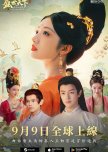
You begin as a young nobody, striving to make a name for yourself while navigating the vipers’ nest that is the Imperial Palace, climbing one precarious rung at a time up the social ladder. But danger lurks everywhere—many are eager to pull you back down. Every graceful lady greets you with a smile while hiding a knife behind her back, and the men are just as cunning.
Was this review helpful to you?
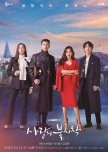
Son Ye-jin is radiant as Yoon Se-ri, portraying both vulnerability and strength with natural grace. Hyun Bin as Captain Ri Jeong-hyeok is stoic yet tender, his quiet devotion expressing more than words ever could. Their chemistry is simply magical — every glance, every pause, every small smile holds entire worlds of emotion. Together, they embody a love both impossible and undeniable.
The writing is rich and layered. Beyond the romance, it offers a rare, humane look at life in North Korea, portraying friendship, loyalty, and humor amid hardship. The supporting cast — especially the lovable village women and Ri’s loyal soldiers — bring warmth and laughter, turning the series into a complete emotional universe.
Visually, “Crash Landing on You” is stunning: vast landscapes, snow-dusted mountains, and soft lighting that amplifies the show’s tender tone. The soundtrack, filled with emotional ballads and nostalgic piano themes, enhances every heartbeat of the story.
What truly makes this drama unforgettable is its sincerity. It doesn’t just tell a love story — it tells a human story about compassion, courage, and connection beyond borders.
“Crash Landing on You” is funny, thrilling, and heartbreakingly beautiful. A once-in-a-generation romance that reminds us: even when fate divides, love finds a way.
Was this review helpful to you?
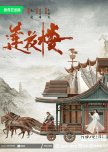
Cheng Yi delivers a career-defining performance as Li Lianhua — once a brilliant swordsman, now a wandering healer hiding his pain behind serenity. His portrayal is beautifully restrained; every look, every faint smile carries the weight of regret and the grace of forgiveness. Joseph Zeng as Fang Duobing brings youthful energy and idealism, perfectly complementing Cheng Yi’s stillness. Their dynamic — master and student, friends and foils — is one of the most endearing partnerships in recent wuxia storytelling.
The writing is poetic yet precise. Each case in the series feels like a parable — a reflection on loyalty, ambition, and the cost of obsession. The mystery elements are engaging, but it’s the emotional resonance that makes each resolution meaningful. The dialogue often reads like quiet philosophy disguised as conversation.
Visually, “Mysterious Lotus Casebook” is stunning. The cinematography captures both the grandeur of rivers and mountains and the intimacy of small human moments. The choreography is elegant rather than flashy — every sword fight feels like a dance between life and death.
What sets this drama apart is its soul. It teaches that true strength lies not in winning, but in understanding when to let go.
Subtle, soulful, and masterfully acted, “Mysterious Lotus Casebook” is a serene journey through pain, wisdom, and the enduring beauty of the human spirit.
Was this review helpful to you?
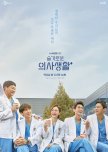
The ensemble cast shines — each character has his own history, flaws and dreams, and the show gives them all space to breathe. Their friendship feels real; not perfect, but reliable. You believe that they’ve known each other for decades and that in the face of hard days at work, they lean on each other.
The medical cases serve more than plot mechanics — they reveal humanity. Some episodes bring hope, some bring sorrow, but none feel gratuitous. The way the series balances the humor of everyday hospital life with the emotional weight of illness is masterful.
Visually and tonally, it’s gentle: warm lighting, realistic backgrounds, scenes built around coffee breaks or shared dinners as much as operating rooms. It trusts the viewer to value the quiet moments as much as the big ones.
If there is a critique, it might be that for audiences looking for adrenaline or intense drama, this feels slower-paced. But that is also its strength. It invites you to live with the characters.
In the end, the show teaches us that healing isn’t only about medicine — it’s about connection. “Hospital Playlist” is comfort, laughter, heartache and hope packaged into a series. It’s the kind of show you finish and wish you could keep watching the same friends for years.
Was this review helpful to you?
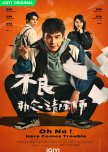
Chou Yi-hsien delivers a moving performance as Pu Yi-yong — awkward, stubborn, yet irresistibly human. His journey from a reluctant troublemaker to someone who helps wandering souls find peace is both hilarious and heartbreaking. Alongside him, Tseng Jing-hua and Vivian Sung create a trio full of warmth, sarcasm, and genuine emotion. Their chemistry is natural, carrying both youthful energy and quiet sorrow.
The writing is sharp and unpredictable. It balances absurd humor with emotional truth — one moment you’re laughing at the characters’ antics, and the next, you’re holding back tears. Each ghost’s story feels personal and meaningful, reflecting the regrets and desires that linger after death.
Visually, the drama is gorgeous. The color palette shifts between dreamlike tones and grounded realism, creating a perfect contrast between the fantastical and the ordinary. The soundtrack enhances every scene, from moments of lighthearted banter to the quiet ache of farewell.
What makes “Oh No! Here Comes Trouble” unforgettable is its sincerity. It’s not about solving mysteries or fighting monsters — it’s about empathy, closure, and the courage to keep living even when life hurts.
Funny, touching, and beautifully written, this show is a reminder that sometimes the most extraordinary stories are the ones that help us make peace with our ordinary hearts.
Was this review helpful to you?
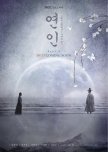
Nam Goong‑min delivers a staggering performance as Lee Jang-hyun, the man of hidden pain and silent resolve. His transformation—from the enigma of Part 1 to the hero who fights not just for his country but for the woman he cannot forget—is executed with nuance and power. Opposite him, Ahn Eun‑jin as Yoo Gil-chae shines with strength and vulnerability, embodying a woman caught in war, politics, love and loss, yet refusing to yield. Their chemistry is magnetic, built on scars and longing, and every reunion or separation hits like a thunderbolt.
Visually and technically, Part 2 reaches new heights: the battle-scenes are epic yet grounded; the quiet moments—glances in moonlight, old wounds resurfacing—lift the drama into something poetic. The pacing tightens when it needs to, and allows space for reflection when emotion demands it.
Some viewers have noted that the political threads feel slightly more complex and dense this round, but that depth is part of the show’s ambition. By the end, the merging of personal and national vendettas reaches a satisfying resolution—bloodshed gives way to sacrifice, and despair gives way to hope. The finale manages to honour both the epic and the intimate.
My Dearest Part 2 is not just the continuation of a love story—it’s the fulfilment of one. It’s bold, sweeping and deeply human. A worthy sequel that honours its characters and ups the emotional ante in every way.
Was this review helpful to you?
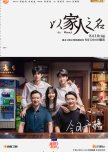
The drama follows three children — Jian Jian, Ling Xiao, and He Zi Qiu — who grow up together under the care of two single fathers. Though not related by blood, they form a bond stronger than any traditional family could define. Their journey from childhood to adulthood is filled with laughter, pain, misunderstandings, and reconciliation — all portrayed with remarkable warmth and sincerity.
What makes “Go Ahead” so special is its authenticity. The characters are beautifully written, flawed but lovable, each carrying their own wounds yet finding healing in each other’s presence. The performances are outstanding: Tan Songyun brings vitality and depth as the free-spirited Jian Jian, Song Weilong captures quiet vulnerability, and Zhang Xincheng delivers a touching mix of strength and sadness. Their chemistry feels effortless — real siblings in every sense of the word.
The writing is tender and introspective, filled with life lessons that resonate long after the episode ends. The pacing is gentle, the dialogue thoughtful, and the cinematography softly nostalgic. The music — delicate piano themes and heartfelt ballads — perfectly complements the show’s emotional tone.
“Go Ahead” reminds us that family isn’t defined by DNA, but by love, patience, and the people who choose to stay. It’s not just a drama — it’s a warm embrace for anyone who’s ever longed to belong.
Was this review helpful to you?
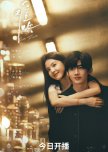
Bai Jingting delivers a heartfelt performance as Sang Yan — a man who hides his guilt and affection behind sarcasm and restraint. His every glance carries emotion, his quiet moments say more than words ever could. Zhang Ruonan as Wen Yifan is equally compelling — fragile yet resilient, she embodies a woman who has learned to protect herself from love, only to rediscover its warmth through patience and understanding.
Their chemistry feels natural, grounded, and beautifully understated. The drama doesn’t rush them; instead, it lets the tension breathe. Shared silences, hesitant smiles, and small gestures become the language of love. Every episode feels like watching two people slowly melt the frost around their hearts.
Visually, the series is stunning — filled with muted colors, soft lighting, and quiet cityscapes that mirror the emotional distance between the leads. The pacing is calm but deliberate, allowing each moment to linger.
What makes “The First Frost” special is its honesty. It doesn’t romanticize pain — it acknowledges it, showing that healing isn’t instant and love doesn’t erase the past, but helps us move through it.
In the end, it’s a story about timing, forgiveness, and the courage to begin again. “The First Frost” doesn’t shout to be heard — it whispers, and somehow, that whisper stays with you long after it ends.
Was this review helpful to you?
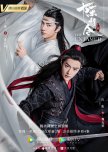
Xiao Zhan delivers a mesmerizing performance as Wei Wuxian — playful, brave, and tragically misunderstood. His journey from lighthearted youth to a man haunted by his choices is written and acted with stunning depth. Opposite him, Wang Yibo’s Lan Wangji embodies restraint, discipline, and quiet devotion. Their chemistry is extraordinary — subtle, powerful, and full of unspoken emotion. Every shared glance carries more meaning than a thousand words.
The writing is intelligent and poetic, blending suspense, politics, and spiritual philosophy with rare precision. Each clan, each symbol, and each melody contributes to a richly layered narrative about duty, identity, and the cost of doing what is right in a world that punishes difference.
Visually, “The Untamed” is breathtaking. Its sweeping landscapes, delicate costumes, and haunting soundtrack create a sense of timelessness. The use of music — especially the recurring motifs played on the flute — becomes an emotional language of its own.
What truly makes “The Untamed” unforgettable is its heart. Beneath the fantasy lies a story about love in all its forms — between friends, brothers, and soulmates. It’s about finding light in darkness and staying true to yourself even when the world turns against you.
Poetic, profound, and full of soul, “The Untamed” isn’t just a drama — it’s a legend that lingers long after the final note fades.
Was this review helpful to you?
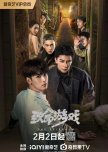
Peng Yuchang delivers a remarkable performance as Zhang Chulan, a protagonist who defies easy classification — witty yet burdened, brave yet uncertain. His evolution from a reluctant fighter to a man who understands the responsibility behind his power is both satisfying and deeply moving. Opposite him, Hou Minghao and Wang Yinglu bring energy and balance, their characters’ motivations intertwining in ways that challenge ideas of loyalty and justice.
The writing is sharp and layered. Each arc reveals not only hidden conspiracies but also timeless moral questions — about free will, legacy, and the cost of enlightenment. The dialogue is philosophical without being pretentious, and every battle carries emotional as well as physical weight.
Visually, “The Spirealm” is breathtaking. The choreography blends traditional martial arts with supernatural fluidity, turning each fight into a visual poem. The color palette — rich golds, shadows, and bursts of ethereal light — mirrors the show’s spiritual undertones. The soundtrack, filled with haunting strings and percussive energy, heightens every scene’s tension and transcendence.
What sets “The Spirealm” apart is its maturity. It doesn’t just ask who wins the fight — it asks why we fight at all.
Mysterious, profound, and beautifully constructed, “The Spirealm” is more than a fantasy drama — it’s a meditation on power, identity, and the eternal struggle between heaven and humanity. A truly exceptional work that stays with you long after the final strike.
Was this review helpful to you?
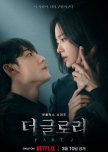
Song Hye-kyo gives a career-defining performance as Moon Dong-eun. Her portrayal is all restraint — eyes that reveal oceans of rage and sorrow beneath an outward calm. She embodies a survivor who refuses to be pitied, reclaiming her agency in the most methodical way possible. Lee Do-hyun as Joo Yeo-jung adds warmth and complexity, showing how love can coexist with trauma and vengeance without dissolving either. Their quiet bond — built on shared pain — is one of the show’s most striking elements.
The writing remains razor-sharp. Every subplot connects elegantly back to Dong-eun’s plan, and the pacing in Part 2 balances tension with catharsis. The series doesn’t glorify revenge; instead, it studies it — asking what’s left after justice is finally served. The dialogues are sparse but weighted with meaning; the pauses are as eloquent as the words.
Visually, “The Glory Part 2” is breathtaking — muted tones, haunting compositions, and minimalist lighting that mirrors Dong-eun’s emotional landscape. The direction is surgical, letting the performances breathe while maintaining a constant sense of dread.
More than a story of vengeance, “The Glory Part 2” is about reclamation — of power, dignity, and self. It’s not a tale of heroes or villains, but of wounds that demand to be acknowledged.
Cold, elegant, and unforgettable — “The Glory Part 2” doesn’t just conclude a revenge story; it perfects it.
Was this review helpful to you?
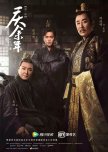
Zhang Ruoyun delivers an extraordinary performance as Fan Xian, a young man who navigates a world of power and deceit armed only with wit, intelligence, and an unshakable moral core. He’s charming and idealistic yet never naive — a modern mind trapped in an ancient world. His journey from curiosity to conviction is beautifully written and deeply human.
The supporting cast is nothing short of stellar. Chen Daoming’s calm authority as the Emperor, Wu Gang’s layered complexity as Chen Pingping, and Li Qin’s grace as Lin Wan’er all bring depth to a world where loyalty and betrayal coexist in delicate balance. Every conversation feels like a chess match, and every glance hides meaning.
What makes “Joy of Life” remarkable is its tonal balance. One moment it’s a tense political thriller; the next, it’s laugh-out-loud funny. The writing is razor-sharp, blending modern sensibility with classical beauty, while the cinematography and costume design immerse viewers in a richly detailed world.
Beneath the intrigue, the show explores timeless questions: What is justice? What is freedom? And how does one preserve innocence in a corrupt world?
“Joy of Life” is more than entertainment — it’s a philosophical adventure wrapped in humor, heart, and brilliance. A true gem of Chinese television, and one that only grows deeper with every rewatch.
Was this review helpful to you?

Zhao Lusi gives one of her most heartfelt performances as Sang Zhi — innocent, awkward, yet full of sincerity. She perfectly portrays the emotional shift from a shy teenage crush to the slow realization of real, mature love. Chen Zheyuan as Duan Jiaxu is equally impressive, balancing warmth and restraint with a quiet charisma that makes every small gesture meaningful. Together, they create a relationship built on friendship, care, and emotional growth rather than instant romance.
What makes “Hidden Love” special is its patience. It takes time to let the characters grow, showing us that love doesn’t happen all at once — it’s something that evolves through understanding, distance, and time. The drama avoids unnecessary conflict and focuses instead on healing, communication, and the courage to confess one’s feelings honestly.
The cinematography is warm and intimate, filled with sunlight, gentle colors, and nostalgic details that evoke the sweetness of youth. The soundtrack — soft, sentimental, and full of quiet longing — enhances the mood perfectly.
At its heart, “Hidden Love” isn’t just a romance. It’s about growing up, learning to love yourself, and finding someone who sees you even when you’re trying to hide. A heartfelt, comforting story that lingers long after it ends — like a memory you’ll always smile about.
Was this review helpful to you?
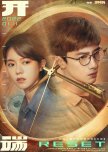
The story follows two ordinary passengers trapped in an extraordinary situation — a bus explosion that repeats endlessly. Bai Jingting and Zhao Jinmai deliver stunning performances, portraying confusion, fear, and determination with subtle realism. Their chemistry grows not through romance but through shared trauma and courage, creating a partnership built on trust and moral conviction.
What makes “Reset” special is how it uses science-fiction elements not as spectacle, but as a mirror for humanity. Each loop reveals more about the passengers, uncovering hidden pain, kindness, and the consequences of neglect. The tension is constant, yet the series never forgets the emotional weight behind every decision.
The writing is sharp and efficient — every detail matters. The pacing is deliberate but never slow, and the gradual revelation of each character’s story keeps viewers hooked. By the end, the mystery transforms into a message about understanding and compassion.
Visually, the show is sleek and claustrophobic, capturing both the monotony and terror of reliving the same tragedy. The music underscores each emotional beat without overwhelming the story.
“Reset” reminds us that heroism doesn’t require superpowers — just empathy and persistence. It’s a rare thriller that stimulates the mind while touching the heart, proving that even in endless repetition, humanity can still choose kindness.
Was this review helpful to you?
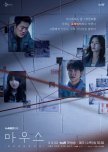
Lee Seung-gi delivers a career-defining performance as Jung Ba-reum, a character whose transformation is as terrifying as it is fascinating. His portrayal captures the duality of innocence and monstrosity with such precision that you can’t help but question your own moral compass. Lee Hee-jun, as detective Go Moo-chi, matches him perfectly — volatile, broken, yet fiercely human. Their dynamic is electric, filled with tension, mistrust, and reluctant empathy.
The writing is bold and layered, tackling questions rarely explored in mainstream television: Are killers born or made? Can someone truly change their nature? How far would you go to play God? The narrative unfolds like a puzzle — fragmented, deceptive, yet meticulously designed. Each twist doesn’t just shock; it redefines everything you thought you knew.
Visually, “Mouse” is dark and cinematic. Its use of lighting and sound builds constant unease, while the direction maintains an almost surgical precision. The pacing may test your patience at times, but every detail pays off in the end.
What makes “Mouse” unforgettable isn’t just its suspense — it’s its courage. It forces viewers to confront uncomfortable truths about empathy, morality, and the fragility of sanity.
Complex, haunting, and emotionally exhausting in the best way possible, “Mouse” is not just a thriller — it’s a moral experiment. Once you start, it won’t let you go.
Was this review helpful to you?


