
 News


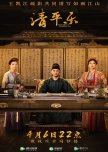
“Held In The Lonely Castle” A Shakespearean Tragedy Disguised as a Historical Drama
Despite its English title, Serenade of Peaceful Joy is neither peaceful nor joyful. If anything, the source title, The Lonely Castle, better captures the emotional landscape of this remarkable drama. Centered on Emperor Renzong, his family, and his court, the story explores the tension between duty and desire, public virtue and private happiness.
This is one of the rare historical dramas that achieves profound tragedy without relying on war, murder, palace coups, or larger-than-life villains. The tragedy arises from something far more painful: good people sacrificing their happiness in order to preserve a social and political order built upon Confucian ideals.
Many viewers praise Renzong as a benevolent ruler, and to a degree he certainly is. He is thoughtful, conscientious, willing to listen to criticism, and deeply committed to maintaining political stability. Unlike many historical emperors, he rules through restraint rather than force.
Yet what makes this drama exceptional is that it invites us to question whether benevolence alone is enough.
By the end of the series, I no longer viewed Renzong merely as a tragic hero. I viewed him as a tragic figure whose own contradictions contributed to the suffering of those closest to him. In practice, however, his “kindness” is indistinguishable from weakness, conflict avoidance, and glaring hypocrisy.
The most glaring examples involve the women in his life.
1. Empress Guo vs. Consort Zang: He deposes Empress Guo under the banner of “preserving palace harmony” because she was loud, transparent, and unappealing to him. Yet he later repeatedly excuses and rewards far worse behavior from Consort Zang – disrupting palace hierarchy, bullying staff, and trying to push unqualified relatives into court – simply because she wraps her ambition in tears and flatters his ego.
If harmony were truly the principle, then the same standard should have applied to everyone. Instead, the distinction appears to be that one woman had lost his affection while the other possessed it. Throughout the Inner Palace arcs, Renzong repeatedly mistakes manipulative fragility for genuine devotion – indulging the greedy, entitled Consort Zang while holding everyone else to impossible standards of propriety.
2. Chen Xichun vs Princess Huirou: Likewise, he shows remarkable compassion toward Chen Xichun, the woman he loved. He ensures her future security, elevates her family, and arranges a respectable future for her. Yet when his daughter Huirou faces an unhappy marriage, his flexibility disappears. Suddenly duty, propriety, and political necessity become paramount. The same man capable of mercy in matters concerning his own heart proves unwilling to extend that mercy when his daughter’s happiness hangs in the balance.
For me, these are not examples of fairness.
They are examples of double standards.
The tragedy is that he repeatedly chooses not to use that power when it matters most.
He understands Huirou’s suffering. He understands the flaws in her marriage. He understands that Liang Huaiji and Huirou have become victims of a rigid system. Yet he ultimately returns her to the very circumstances that caused her misery because preserving public order and imperial credibility takes precedence over her happiness.
From a Confucian perspective, his decision may be defensible.
From a father’s perspective, it is heartbreaking.
This is where the drama becomes Shakespearean.
Unlike Shakespeare’s great tragedies, however, the kingdoms do not collapse here. No battlefields are littered with bodies, no usurpers seize the throne, and no dynasties crumble into chaos.
The state survives.
The institutions function.
The bureaucracy remains intact.
What dies are possibilities.
The possibilities of love.
The possibilities of freedom.
The possibilities of happiness.
Villains do not destroy Empress Cao, Huirou, and Huaiji. They were wounded by a system that values duty, hierarchy, and social harmony above individual fulfilment. The cruel irony is that the more faithfully the characters uphold these virtues, the lonelier they become.
What I found most powerful is that the drama never completely condemns Confucianism, nor does it glorify it. Instead, it asks a difficult question:
Can a society truly be harmonious if that harmony is achieved at the expense of human happiness?
The answer remains unresolved.
The Song court prospers. History remembers Renzong as a successful emperor. Yet the people closest to him pay the price for that success.
What lingered with me long after the final episode was not the grandeur of the palace or the achievements of the dynasty. It was the image of lonely individuals trapped inside roles they could not escape. The emperor could not simply be a father. The empress could not simply be a wife. Huirou could not simply be a woman in love. Liang Huaiji could not simply be a loyal companion.
Everyone was imprisoned by duty.
That is why The Lonely Castle would have been the perfect title. The palace was filled with power, prestige, and privilege, yet it was also filled with profoundly lonely souls.
In the end, I do not believe this is a story about good people versus bad people. It is a story about the painful consequences of choosing order over happiness, duty over love, and reputation over compassion. It is a story that asks whether a ruler can be successful in the eyes of history while failing those he loves most.
Few dramas have left me thinking about their moral questions long after the credits rolled. Serenade of Peaceful Joy did.
9/10. A beautiful, intelligent, Shakespearean tragedy that dares to ask whether preserving harmony is worth the price of human happiness, and whether a successful emperor can still be a tragic failure as a father, husband, and human being.
Was this review helpful to you?


