
 News


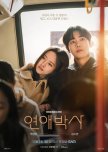
The Illusion of Healing and the Vacuum of Connection
Between Steps starts with a promising premise, but it ultimately falls into empty relational writing, devoid of real empathy and built on a mutual, frustrating selfishness between the two leads.The Main Couple: An Empathy-Free Incommunicability
The relationship between Park Min-jae and Lim Yoo-jin completely lacks an organic foundation. It is never clear what their bond is actually built on or why they should care for each other, other than to satisfy individual impulses and personal validation.
Two moments highlight this void:
1. Yoo-jin's Intrusiveness: Yoo-jin’s attitude toward Min-jae’s disability lacks sensitivity and respect. Her approach is driven by a stubborn desire for attention, crossing the other person's boundaries in an infantile and selfish manner.
2. Min-jae's Avoidance: On the other hand, Min-jae responds by building walls of coldness and hiding crucial personal and health issues. His choice to withdraw into a punitive silence rather than open up creates a dynamic of constant chasing, where both act according to their immediate needs rather than the well-being of the couple.
The Contrast: The Professor's Maturity
The true highlight of the drama lies in the dynamic between the female lead and the Professor. Here, the relationship shifts gears completely: there is mutual respect, intellectual esteem, and clear communication.
The Professor is a standout character: direct, transparent, assertive, and outspoken, yet always guided by deep consistency and dignity. He is the only figure capable of offering a healthy and stimulating connection.
A Note on the Soundtrack 🇮🇹🇮🇹🇮🇹
As an Italian viewer, hearing Gigliola Cinquetti’s 'Non ho l'età' was an extraordinary surprise.
Beyond the initial shock, the iconic line—'I'm not old enough to love you / I'm not old enough to go out with you alone'—acts as a poignant lyrical metaphor for the protagonists' emotional blocks. It serves as a melancholic commentary on their bond: two people acting on impulse and selfishness simply because they lack the emotional maturity and empathy required to sustain a real, adult connection.
Final Verdict
While the main couple represents a sterile incommunicability rooted in selfishness, the Professor offers the only true path toward growth for the characters. The hope for the finale is that the series has the courage to break off this toxic bond between the leads, rewarding the maturity, empathy, and respect that only the dynamic with the Professor managed to build.
Was this review helpful to you?

A breathtaking historical drama
I was completely captivated by *The Prisoners of Beauty*, a Chinese historical drama that enchants in every respect — every aspect of the production is meticulously crafted, creating a deeply immersive atmosphere. The direction is simply masterful: one can clearly sense the vision and precision with which every single moment has been constructed. The narrative pace is well-balanced, and the emotional evolution of the story unfolds with an elegance that captures the viewer’s attention from start to finish. Every shot, every movement of the camera seems designed to draw the viewer in, as if they were an integral part of the scene.The acting is also extraordinary. The actors bring their characters to life with a rare intensity and an engaging naturalness. Every glance, every gesture, every variation in tone of voice conveys far more than what is actually said, rendering the characters complex, believable and deeply human. We are not merely watching a performance: we experience every emotion, every choice, every conflict alongside them.
The costumes are a true visual delight. Every outfit tells a story: historical accuracy blends with a refined, theatrical aesthetic that enhances the beauty and dignity of each character. The fabrics, details and colour combinations reflect with great sensitivity the social status, character and even the mood of the wearer. An explosion of elegance and visual richness that helps make the experience even more immersive.
The cinematography is simply breathtaking. The light caresses the faces, the shadows reveal more than they conceal, and the landscapes — whether natural or architectural — seem to have stepped out of a painting. Each episode is a visual journey in which the eye is gracefully guided through warm lighting, majestic scenery and intense close-ups. It is a beauty that moves the viewer and, at times, leaves one speechless.
The soundtrack is a fundamental element that binds everything together with harmony and sensitivity. It does not merely accompany the scenes: it inhabits them. The melodies seem to spring directly from the characters’ emotions, intensifying the feeling without ever overpowering it. They linger within you, like a whisper that continues to resonate long after the episode has ended.
The Prisoners of Beauty does not merely tell a story: it transports you to a world where history, art, emotion and beauty merge in perfect balance. It demonstrates just how powerful a production can be when guided by vision, sensitivity and a genuine passion for storytelling.
Was this review helpful to you?

Look Beyond the Score: Why Oh! My Guard Deserves a Much Higher Rating
Eleven episodes into Oh! My Guard, that 7.4 rating on kisskh feels way off.It's far too cautious, almost hasty, for a series that actually has a distinct and fresh identity—one that still manages to surprise.
I've also wondered whether such a modest score might stem from the rumors or criticism surrounding the second male lead.
Stopping there would be like staring through the keyhole while ignoring the entire architecture of the house: a drama is born from the intersection of writing, direction, emotional pacing, on-screen chemistry, and character depth, and it loses its meaning when the judgment of the entire work is crushed under the weight of a single figure—or, in this case, a single actor.
Beneath its bright rom-com surface beats a genuinely tender heart, paired with a melancholic undercurrent that catches you off guard and a thread of mystery that keeps you hooked episode after episode.
The premise plays with the television imaginary in a clever and charming way: Oh Hae-ra, used to living a secluded life and finding refuge in dramas, after an accident ends up believing she is Cha Hong-doo, the brave heroine of the drama starring Um Tae-bong.
Opposite her is Tae-bong himself, a celebrated
romance actor marked by a curious, stubborn block: he refuses to film kiss scenes. That very rule conceals an emotional fracture—a secret that isn't just played for laughs, but reveals what truly weighs on this character.
What holds everything together is the chemistry between Jung Yong-hwa and Hong Seung-hee. They work so well together because they don't simply trade witty banter: they listen to each other, tease each other, and let real vulnerability bleed through.
Hong Seung-hee is brilliant at conveying the leap between Hae-ra's restrained shyness and Hong-doo's bold energy, without ever turning it into a caricature. Jung Yong-hwa, meanwhile, brings genuine depth to a lead who projects confidence on the outside yet carries shadows, unresolved memories, and a quiet emotional reserve that makes you reflect on feelings, the need for protection, and wounds that don't heal on command.
And that's where the lingering mystery comes in: it isn't a textbook detective thriller, but an mysterious web of buried memories, past ties, unspoken truths, and questions about what drove both of them to close themselves off and retreat behind a social mask.
With episode twelve right around the corner and four more episodes still to come after that, the story has plenty of room to untangle its most delicate knots and let the emotion build even further.
Oh! My Guard definitely deserves far more than a 7.4. To me, it's easily a solid 9, though I'm giving it a 10: it's well worth giving it a chance, letting yourself get drawn in, and rewarding it with a much higher score to help it climb to where it truly belongs!
💪🏼💪🏼💪🏼❤️❤️❤️
Was this review helpful to you?


