

 1
1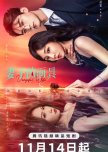
A Riveting Tale of Betrayal and Vengeance
This drama stands out as a riveting tale of betrayal and revenge. It masterfully weaves together elements of suspense, thriller, intrigue, betrayal, and obsession, creating a gripping narrative that compelled me to binge-watch the entire series. From the very first episode, the story sets a fast-paced tone and maintains suspenseful momentum, fueled by a continuous interplay of lies and counterplots.The central storyline follows Lin Xia, a woman driven by vengeance after her husband betrays her, murders her father, seizes her family’s wealth, subjects her to torture, and ultimately frames her for murder. Ye Dong, her husband, meticulously cultivates the image of a devoted and ideal partner. This carefully crafted persona allows him to earn her trust and operate without raising suspicion, all while scheming to take control of the family’s assets. His actions are motivated purely by greed.
Ye Dong’s villainy is fully revealed through his treatment of Lin Xia, especially after she becomes blind—a condition caused by his own machinations. Believing her to be helpless, he openly carries on an affair with his secretary and even conspires with his mother to murder Lin Xia’s father.
Lin Xia’s fortunes change when she miraculously regains her sight and uncovers the full extent of her husband’s crimes and betrayal. Alongside this main plot, a secondary subplot unfolds involving Ye Dong’s obsession with his ex-girlfriend, Bai Cha. Despite Bai Cha being married to Cheng Nuo, Ye Dong is relentless in his pursuit and attempt to win her back, even going so far as harassing her. This twisted obsession ultimately drives him to extreme actions, culminating in Bai Cha’s tragic demise.
Initially, Lin Xia is depicted as a trusting and unsuspecting wife, kept unaware of her husband's true nature. Her blindness renders her dependent on Ye Dong, who manipulates this vulnerability to his advantage. She appears to be the quintessential obedient daughter and perfect wife, oblivious to her husband’s schemes and his systematic destruction of her family. Lin Xia’s recovery of her eyesight serves as both a literal and metaphorical awakening to reality. While devastated by the betrayal and loss, she refuses to remain a victim. Instead, she empowers herself, meticulously plotting her revenge and working to expose Ye Dong’s crimes rather than seeking emotional confrontation. Lin Xia finds an ally in Cheng Nuo, Bai Cha’s husband, who also seeks vengeance against Ye Dong for the tragedy inflicted upon his own family. Cheng Nuo, at times, also becomes unhinged in his quest for revenge. As a doctor, he plays a significant role in Lin Xia’s transformation and quest for justice. The narrative is further enriched by a team of three police detectives who are just one step behind, diligently piecing together clues in pursuit of the truth.
Before watching this drama, I was unfamiliar with the cast. However, each actor delivered a remarkable performance in their respective roles. Of particular note is Chang Zhe Kuan’s portrayal of Ye Dong. His performance as a manipulative and cruel villain was truly praiseworthy. Ye Dong emerges as a multi-dimensional antagonist: cunning, calculating, cruel, sadistic, twisted, obsessive, and controlling, with a personality bordering on psychotic. The depth of his character is rooted in his relationship with his mother—a cruel, abusive, and domineering figure who serves as the catalyst for many of his actions.
The series’ ending was disappointing, characterized by a rushed and abrupt resolution that allowed the antagonists to face consequences unequal to that of their actions. This outcome felt inconsistent, especially given that Lin Xia and Cheng Nuo’s motivations throughout the series centered on seeking personal vengeance rather than relying on the police or legal system. They believed Ye Dong deserved far harsher retribution than a simple prison sentence. Despite this letdown, I still recommend the drama for its engaging storyline and outstanding acting performances.
Was this review helpful to you?
Worth Watching for the Stellar Performance from the Leads
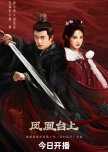
Despite receiving criticism and negative feedback from viewers who were not satisfied with this drama, especially the ending, I found it to be enjoyable for its quality content and brisk, watchable pace. It is not a perfect drama but definitely worth watching if you are a fan of the main lead actors because their performances will not disappoint. The drama skillfully weaves together elements of palace intrigue, thrilling swordplay, and heartfelt romance. Each aspect is given careful attention, resulting in a compelling narrative that keeps viewers engaged throughout. The tension of palace politics is artfully balanced with dynamic action scenes, while the romantic subplot adds emotional depth to the story.The acting throughout the drama is superb. The chemistry between the main leads is undeniable, and their performances contribute greatly to the show's effectiveness. Their dynamics make the characters’ journeys captivating and emotionally resonant as they navigate intrigue, danger, overcome conflicts, misunderstandings, learn to trust each other and stand united in achieving the same goals and purpose. Both RJL and PXR deliver nuanced and brilliant acting, elevating the drama beyond its flaws. Their portrayals bring out the angst and tension present in the early stages of their characters' relationship, making these moments compelling and memorable. PXR is noted for her beauty and talent in expressing her character’s emotions, which adds a layer of authenticity and relatability to the narrative. The scene in which her character wakes up after being poisoned demonstrates the actress’s emotional depth and range. Her reactions are layered, conveying heartbreak, pain, and inner turmoil as she confronts the reality of her situation. Despite the distress caused by her husband giving her an herbal concoction intended to prevent pregnancy, she chooses to drink it. The camera lingers on her face, beautifully framed in tears, allowing viewers to witness the full extent of her suffering, fragility, and despair. Throughout her ordeal Cang Cang never wavers from her principles, she may be hurt and betrayed but never broken.
RJL masterfully brings to life an emperor living a double life, one who is perpetually engaged in a strategic battle to outsmart his adversaries. Surrounded by enemies both inside and outside the palace, he must always remain vigilant, anticipating threats and maneuvering to stay ahead in a tactical political chess game. His leadership is marked by a shrewd and calculating approach, showcasing his ability to survive and thrive in a treacherous environment. Xiao Huan’s character stands out for his unwavering steadfastness in the face of adversity. As events unfold, he consistently demonstrates resilience which earns him public recognition. Over time, he learns to bear the weight of both the crown and his conscience. Despite his ruthless tactics against his foes, the emperor reveals a compassionate side in his personal relationships. He earns Cang Cang’s trust and reconciles with her through sacrifice and transparency. From the time he recognizes his love for her, he is determined to shield her from the painful truth of her father’s betrayal and carefully stages her rescue on several occasions. This protective instinct, however, comes at a personal cost, as his actions often lead to misunderstanding and resentment from his wife. His willingness to bear this emotional burden underscores his deep sense of loyalty and devotion. The emperor’s complexity is further highlighted by his treatment of those he cares about. While he is unyielding in eliminating his enemies, he shows remarkable leniency toward loved ones. This is exemplified by his relationship with his half-sister, who, despite her repeated attempts on his life, continues to receive his forgiveness and restraint. His capacity for mercy, even in the face of betrayal, sets him apart from the typical image of a ruthless ruler.
Many viewers have commented on the perceived lack of romance in the drama. However, this criticism often stems from the absence of kissing scenes and overt physical intimacy. Viewers familiar with RJL’s career know that he typically avoids roles focused on pure romance and prefers to perform tender kisses rather than passionate ones out of respect for his wife. Romance is not solely defined by physical displays; the drama effectively conveys love and devotion through the characters’ actions and willingness to make sacrifices for each other.
The depth of the main leads’ affection is portrayed through nuanced acting, such as longing gazes, gentle caresses, and heartfelt hugs. These subtle gestures are powerful indicators of their connection and enhance the emotional impact of their relationship. The visually gorgeous onscreen presence of RJL and PXR is so enticing that they make every scene consequential, so much so that I the supporting cast failed to hold my interest. As a result, I often skipped episodes that did not feature the main leads, underscoring the strength and appeal of their performances.
While there are noticeable script and editing issues, the overall quality is redeemable due to several outstanding elements. The drama starts out strong and manages to keep the momentum all the way until episode 20 before stalling which is common many C-dramas, although this was primarily because the storyline focused more on the supporting actors. However, it was short-lived and the drama resumed its footing again after episode 25. The ending was deliberately left open leaving viewers to question whether it set the stage for a potential sequel.
In summary, while the drama may not meet every viewer’s expectations for romantic content, it excels in delivering a heartfelt story through exceptional performances and emotional subtlety. Ultimately, its unique approach to romance, production design, and OST make it a standout experience for those willing to appreciate its depth and can put up with the adaptation liberties as well as an ambiguous ending.
Was this review helpful to you?

A Binge-Worthy Short Drama
Recently, I’ve found myself gravitating more toward short dramas, and this wonderful, binge-worthy series proves that short dramas, when executed well, are just as captivating—if not even better—than full-length dramas. This particular drama masterfully blends sci-fi time travel elements with heartfelt romance, raising the question of whether love can truly overcome obstacles and endure the test of time.The story follows a couple, Chen Jiawen and Shen Meng, who decide to break up after four years together. However, they find themselves trapped in a time loop, forced to relive the day of their breakup over and over again. This fantastical scenario compels them to re-examine their four-year relationship from new perspectives, as it challenges the strength of their love. To escape the endless cycle and break free from the time loop, Chen Jiawen and Shen Meng must complete a series of bizarre, mandatory "missions." These tasks, assigned by a mysterious “projector” that replays their past vows and sweet words, test the sincerity of their feelings and push them to confront unresolved issues. Each mission provides opportunities for the couple to learn, grow, and truly appreciate their love before the day resets at midnight. Throughout their journey, viewers are treated to sweet and comical moments that balance the drama’s emotional depth.
The story concludes with an open ending that strongly suggests the possibility of a well-deserved second season.
For me, one of the highlights of short dramas is the chance to discover new actors. The lead roles are portrayed by Hankiz Omar (female lead) and Xiao Kai Zhong (male lead), who share excellent on-screen chemistry. Both actors deliver strong performances, but Xiao Kai Zhong stands out for handling the more emotionally intense scenes with impressive skill.
I highly recommend this gem of a drama to anyone looking for a fun and quirky series that doesn’t shy away from exploring deep emotions of a second chance love. It is a well-produced, well-directed, and well-acted drama incorporating time travel, romance, and parallel universe which makes for an enjoyable viewing experience that will undoubtedly leave you smiling.
Was this review helpful to you?
A Well Crafted Espionage Drama
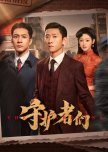
I am relatively new to the world of Chinese dramas, having only started watching them over the past two years. As a result, I am unfamiliar with many of the older actors who are well known in the industry. Despite my limited exposure, I am grateful to have discovered this particular drama, which introduced me to some truly remarkable leading actors.Zhang Yi Shan delivered a performance that was nothing short of perfection, fully embodying the character of Ding Yi and captivating the audience. Elvis Han impressed with his deep voice and smoldering looks, exuding pure charisma throughout the series. I believe that pairing Gu Yang Shan with Shen Bi Yun as romantic interests would have elevated the visual appeal and heightened the dramatic tension, making for an even more compelling viewing experience.
The drama started off strong, maintaining a good pace up until episode 30. The storyline about espionage and underlying theme of friendship was both captivating and suspenseful, keeping viewers engaged as the plot unfolded. The dialogue was particularly smart, contributing to the overall quality of the production. Unfortunately, the series began to shift after episode 30. In my opinion, it should have concluded at that point, as the subsequent episodes introduced elements of CCP propaganda that detracted from my enjoyment. This change in direction led me to stop watching at episode 32.
Throughout the drama, the character Gu Yang Shan's motivations were strongly tied to his roots. However, near the end, the writers chose to have him regret the path he took during the war years and ultimately decide to join the CCP. Given that all dramas undergo censorship reviews, it is understandable that Gu Yang Shan could not remain a nationalist, and the CCP needed to be portrayed as the good guys. This narrative choice, while expected, influenced my overall perception of the drama.
Was this review helpful to you?

A Gripping Family Drama
I initially watched this drama for Zhou Yiran after seeing him in Twelve Letters, but was disappointed that, despite being billed as the male lead, his role felt more like a supporting character. The story centers on the female lead, Qiao Qingyu (played by Zhang Jing Yi), and tackles dark themes such as bullying, suicide, depression, abandonment, abuse, misogyny, family pressure, conformity, trauma, and grief. This is more of a family and coming-of-age drama than a romance or youth series with characters that you either love or hate. The plot follows Qingyu as her family uproots to escape rumors about her older sister Qiao Baiyu’s mysterious death, and she becomes determined to uncover the truth behind it.The first half is engaging as Qingyu investigates her sister's past which reveals her family dynamics. However, the second half drags, especially with the brief arc about Mumu's family issues, which felt unnecessary. The drama’s characters are polarizing; for instance, I found Qingyu’s portrayal frustrating and unrelatable. At times, her younger brother seemed more mature than she was. She’s often standoffish, withdrawn, and acts on her own misunderstandings, especially toward Ming Sheng (Zhou Yiran) and her parents. She doesn’t show much appreciation towards people who support her like Ming Sheng, Mumu, or even the male teacher who offered to help her. Although complex and flawed, her character didn’t resonate with me due to a rather flat performance by Zhang Jing Yi. Throughout many scenes with Ming Sheng coming to her aid, she often looks at him with a blank, emotionless expression. After admitting that he's always there for her whenever she needs help, Ming Sheng asks "Are you touched by this?", she responds with icy detachment, "I don't want to be indebted to you. It’s not until episode 21 that viewers finally see her genuinely smile, laugh, and express real emotion while spending a full day with Ming Sheng. However, the moment is short-lived as the focus shifts to her vacant expression after he leaves. While some actors can convey deep emotion with just their eyes, Zhang Jing Yi unfortunately falls short in this regard. The storyline where Qingyu learns to dance in a short time and is able to perform on stage, despite having much less experience than her older sister, felt unrealistic.
I felt more empathy for the older sister, Qiao Baiyu, who endured bullying, abandonment issues and trauma but ultimately realized her parents’ quiet love for her. Her tragic ending highlights how suicide transfers pain to loved ones. However, the mother, Li Fanghao (Liu Dan), stands out as the most compelling character—a strict, tormented woman shaped by guilt, grief and patriarchal family pressures. Despite her harshness, she loves her children deeply and tries to protect Qingyu from repeating past mistakes, making her both tragic and relatable.
Ming Sheng’s resentment toward his father seemed unclear, as both parents share responsibility in a divorce and his mother was the one who left him to pursue her career ambitions. Although Ming Sheng harbors resentment toward his father, the two share striking similarities—they are both reserved, dependable, and prefer to demonstrate their feelings through actions rather than words. Ming Sheng’s personal growth is rooted in coming to terms with his father, all while he steadfastly supports Qingyu in the background. While his role is less prominent than the female lead’s, Zhou Yiran manages to convey impressive emotional depth, especially in the poignant scene at the Qiao family’s noodle restaurant where he breaks down in tears.
Overall, the drama is a decent watch with strong ensemble acting, effectively portraying themes of overcoming struggles, healing from loss, and resilience.
Was this review helpful to you?
A Journey of Love and Redemption
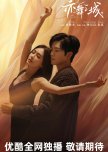
I have mixed feelings about this drama. While the central themes of love, sacrifice, forgiveness, redemption, and reconciliation are commendable, there is a lingering sense of restraint. Despite the underlying strained circumstances, unresolved issues, and deep misunderstandings, the narrative had the potential to be a highly charged drama filled with angst, tension, and simmering emotions ready to boil over at every turn. Yet, everything is subdued and toned down, resulting in a disconnect between the build-up and the actual events, which can leave viewers feeling empty. Although the series does not delve deeply into the emotional turmoil of its characters, it nevertheless manages to capture a beautiful, mature love that has survived the test of time.This was my first time watching Quin Lan in a drama, and while I found her visually stunning, her acting failed to impress me. Throughout the drama, she seemed to repress heightened emotions, which made me question whether this was a directorial choice or a reflection of how her character, Tan Si Ting, was written. Tan Si Ting appeared highly contradictory, exhibiting traits of a dual personality, unlike the other characters who remained consistent. She is portrayed as a strong, independent, and highly esteemed ballerina with a composed exterior, but her actions often contradict this image, particularly in her avoidance of emotional confrontations. Her initial interactions with Feng Rui after returning home seem aloof, even going so far as to accompany him and his girlfriend to pick out a wedding dress and venue. This raises questions about the realism of her actions, especially if she still harbors feelings for her ex. In professional settings, when handling conflict with colleagues, Tan Si Ting displays strength and determination, yet her soft, whispery, girl-like voice contrasts sharply with her persona. When she discovers that her son, Feng Le Xuan, is alive and learns of the years of deception, the moment that could have showcased raw emotional breakdown is instead handled with subdued tears rather than a full display of turmoil. Quin Lan missed the opportunity to showcase dramatic acting range.
The drama reveals that Tan Si Ting suffered from depression in her youth, and the dramatic reveal of her son's existence should have been a catalyst for turbulent emotions, had the character remained true to her established traits. After reuniting with Feng Rui, Tan Si Ting continually delays telling their son the truth, waiting for an ideal moment, even as she spends time reconnecting with Feng Rui. Her reasoning is a fear that Feng Le Xuan will reject her, despite knowing that he likes her and sees her as a confidant. Feng Le Xuan is depicted as thoughtful and mature, making Tan Si Ting’s delay in revealing the truth seem unnecessary. The eventual reveal, when Feng Le Xuan discovers the truth on his own and asks his father about it, is presented in a casual, offhand manner, lacking any emotional tension. Another puzzling moment occurs when Tan Si Ting cancels a family meal with Feng Rui and their son after being smeared by online rumors, opting to avoid her son. This results in Feng Le Xuan finding out the truth from other kids at school, further diminishing the emotional impact of the revelation.
For me, the two redeeming characters were Feng Rui, played by Wallace Chung, and Feng Le Xuan, portrayed by the exceptionally talented young actor Wang Hao Ze. Wallace Chung’s portrayal of Feng Rui stands out for its calm maturity and devotion as a father. He subtly conveys the emotions of unresolved yearning and bitterness. Though initially frustrated and dismissive toward Tan Si Ting due to past misunderstandings, Feng Rui takes the initiative to confront his suppressed feelings, asking her if she regrets leaving him and their son. This moment paves the way for clarifying misunderstandings between them.
This drama unfolds slowly and requires patience, which I admittedly lacked at the time of watching. The subplots that deviated from the main couple did not capture my interest, leading me to skip those scenes. Nonetheless, the drama remains decent overall, featuring good cinematography, musical scores, and solid acting.
Was this review helpful to you?
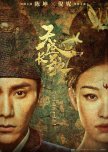
A Masterpiece - Captivating from the start!
I can't believe I finished this series in 2025. It had long been on my list of the best Chinese historical dramas, but I kept postponing it due to its daunting 70-episode length and after reading viewers’ critical comments about the ending. Lately, I've only had the patience for dramas that are around 24 episodes. Despite this, after struggling to get through several full-length 40-episode series starring some of today's most popular actors, I decided to give this one a try, telling myself I could drop it if it didn't capture my interest.To my surprise, this series grabbed my attention straight from episode 1 and maintained it all the way through episode 55. I never felt the need to fast-forward or skip an episode, which is something I've often done with other recent dramas. This speaks to the show's quality—it's a true masterpiece that deserves all the acclaim and awards it has received.
While the entire cast delivered great performances, it was Chen Kun and Ni Ni who truly made the series unforgettable. Their characters Ning Yi and Feng Zhi Wei were made for each other. I can't imagine any other actors taking on their roles. Only actors of Chen Kun and Ni Ni's caliber can express intense passion and longing while barely touching. Their performances demonstrate how physical proximity is not always necessary to convey powerful emotions. Through subtle gestures, lingering glances and restrained movements, they captivate audiences, making the connection between their characters palpable. Equally impressive is their ability to communicate without words. As two soul mates who simply know each other, Ning Yi and Feng Zhi Wei use silence, glances, and body language to create a profound sense of understanding. This wordless exchange is a testament to their skill as actors, allowing viewers to feel the depth of their bond without explicit dialogue. Chen Kun's portrayal of Ning Yi was exceptionally brilliant—he brought depth to a complex character with many layers, from intelligence and moral ambiguity to ruthlessness, vengefulness, all under a facade of carefreeness. Yet, Ning Yi was also deeply loyal and loving toward his mother and FZW. The chemistry between him and FZW was palpable, visible in the playful glint in his eyes and the tenderness he showed her. Their relationship, evolving from intellectual rivals to allies and eventually lovers, formed the heart of the drama. However, the environment around them was filled with deception, manipulation, treachery, and a longstanding feud between their families. Still, the storytelling, character development, and superb acting made the series compelling. Everything about this show was epic, from the cinematography to the music and costumes—some of the songs were heartbreaking to hear.
For me, the series began to lose its momentum after episode 55, when the story shifted to Jinshi. I understand the series had to be rewritten and underwent two rounds of reshoots to pass censorship, which likely contributed to the rushed storylines and some characters acting out of character.
It's unfortunate that we no longer see experienced, great actors like Chen Kun and Ni Ni in many dramas today. Instead, the industry tends to cast the same young "idol" actors repeatedly, selected more for their popularity than their skills. Many of these actors film multiple dramas in a single year, leaving little time to hone their craft, which often results in repetitive and uninspired performances. I wish more dramas were made like this one, focusing on strong storytelling, rich character development, and exceptional acting.
Was this review helpful to you?


