




More pop art than film
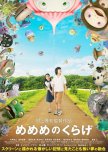
Caught in a very awkward disconnect that blends children's fantasy, pocket-sized kaiju and Takashi Murakami's unmistakable superflat aesthetic, Jellyfish Eyes struggles to find a stable footing and becomes so muddled at points that it is all but impossible to discern why anything is happening. The visual design is undoubtedly the film's strongest aspect, with each one of the weird and wacky creatures popping against the muted, almost sterile human environments, but the effects are so lacklustre and stiff that they all become this horrifying blend of adorable concept and nightmarish realisation. At times, the imagery feels closer to an art installation or a horror attraction than a children's film, undoubtedly thanks to the combination of Murakami and Yoshihiro Nishimura's backgrounds in their respective fields. The direction is passable at best, though the camerawork is downright hideous at points; it's clear Murakami has an acute visual sensibility, but a tin ear for expressing human emotion through drama. As a result, much of the film comes off as either insufferably saccharine or strangely out of tune, even with the bright colours. It wants to weave a tale of friendship and loyalty that also addresses humanity's propensity for destruction, but is more often than not let down by its failure to deliver any form of emotional clarity or dip below the candy-coating superficiality of it all. The pacing is slow, exposition-heavy and occasionally opaque, all delivered by a cast of child actors that scream more than they act, although the musical score was fine. Honestly, it's probably better to view Jellyfish Eyes as a failed experiment more than anything else, never fully cohering into a satisfying whole and would have undoubtedly worked better as the anime or horror film it was originally intended to be.
Was this review helpful to you?


