
 Editorials



Schizophrenic Double Dragon
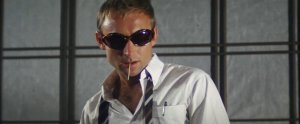
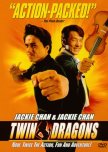
Schizophrenic Double Dragon. Taking Jackie Chan's doctrine of building action-comedy around a simple idea pushed to ridiculous extremes, it's a shame that Twin Dragons amounts to a somewhat chaotic collection of comedy, romance, car chases and martial arts only barely held together by the sheer charisma of its leading man. The annoying thing is that there's a lot of genuinely funny shtick throughout, but it's hampered by erratic pacing and a disjointed structure. The separated siblings' story is hardly new, but the film is more interested in how much comic mileage can be extracted from having two Jackie Chans running around; once it cuts loose, however, it's a strong reminder of why Chan's early-1990s work remains so enjoyable. The fights are fast, inventive and packed with the kind of physical ingenuity that distinguishes him from his contemporaries. The climax, in particular, delivers some spectacular choreography, combining hand-to-hand combat, vehicles and elaborate physical gags with Chan's stunt work up to its usual impressive quality; it gives the film's action sequences considerably more energy than its rather thin story deserves. Despite being co-directed by Tsui Hark and Ringo Lam, two directors at the top of their game at the time, it's a film that doesn't feel like either of their respective styles; Hark's anarchic sensibilities and Lam's harder-edged action do not gel cohesively together, especially given all the glaringly cheesy camera trickery employed in some shots that greatly undercut the illusion of twin brothers in the same frame. Thankfully, Chan throws himself into both characters with enthusiasm; the contrast between the two brothers allows him to showcase different sides of his screen persona. Equally, Maggie Cheung and Nina Li Chi make for some wonderful supporting ladies, Kirk Wong makes for a great villain, and there's the sheer abundance of cameos from Hong Kong directors, maybe the most in the history of Hong Kong cinema, that prove to be the funniest additions, with Lau Kar-leung and Wong Jing as major highlights. Unfortunately, once the novelty of watching Chan interact with himself wears off, there isn't always enough underneath Twin Dragons to sustain the momentum. When it's funny, it's really funny, yet it could have all been so much better.
Was this review helpful to you?


