

 4
4


A David and Goliath Story
Who doesn’t love an underdog triumph over the odds story? I don’t know how this gem almost eluded me but a show that features men with beards squabbling over the technicalities of the legal code is likely not to be everybody’s cup of tea. For me however this 14 episode series is a rare combination of smart, heartwarming, hilarious and just plain fun. It has me on the edge of my seat from start to finish. Moreover the courtroom drama (and there are a few) in the final two episodes of this is an exemplar of entertaining theatre.Set during the waning days of the Ming dynasty, Zhang Ruoyun is the neurodivergent Shuai Jiamo who has a knack for figures. His obsession with the accuracy of his calculations especially in the distribution of land leads him and his best friend Feng Baoyu (Fei Qiming) down a rabbit hole of bureaucratic mismanagement and corruption. The Central Plains is a large place. The country’s capital located some distance away relies heavily on diligent and even honest officials to ensure that the people are flourishing and everyone’s paying their fair share of taxes so that the world can go on spinning. All this assumes that officials picked from the country’s intelligentsia are worth their salt and are content to humbly “serve the country”. However when the cat’s not looking, the mice get up to mischief. There’s never enough money so they collude with the gentry to defraud the uneducated peasants and increase their pieces of the pie over time hiding behind layer upon layer of red tape with all kinds of mutually beneficial trade-offs.
Ultimately the war on corruption is not fought with weapons of steel. There are plenty of weapons showcased (including a large leg of ham) but the biggest one is likely to be red tape itself. It may be used as an impediment to truth. But in the right hands it is also the salvation of the show’s protagonists. Wielded by a knowledgeable soul with conscience, it can be a tool that holds back the forces of evil to great effect.
The tragedy though is that truth and justice is the last thing that matters to most in this fray. There are fascinating modern parallels here. No one really cares that 1+1=2. In fact 1+1=2 can become 1+1=3 at the whim of a corrupt educated class determined to push forward their own agendas on an unsuspecting populace. It’s akin to Winston Smith at the end of Orwell’s 1984. If the powers that be can make you state a lie as truth, it can make you do anything.
Shuai Jiamo is the outsider in a world of competing agendas. He’s suffering trauma from an event 20 years earlier that saw him orphaned. He is the age old oak tree that stands in the midst of the storm. Immoveable. Incorruptible. A challenge to the status quo. His role in the story is to bring to light all the man-made complexities caused by a web of self-interest. His simplicity is a bulwark against the complexity. Nonetheless he can’t do it alone. He needs his friend Feng Baoyu and frenemy lawyer Cheng Renqing (Wang Yang) to help him address a wrong that has implications beyond 1+1. It is a telling indictment not just of that world but ours that the truth matters very little but boils down to how one is able to prosecute one’s arguments in such a way as to negotiate trade-offs and mutual benefits.
Without saying, Zhang Ruoyun is terrific in this and he can be relied on to pick intelligent scripts. He also has a penchant for playing quirky characters. The presence of Wang Yang is usually also a guarantee of a quality production. The other faces in this are rock solid even the youngish Fei Qiming (not exactly his first outing) really comes into his own in those last two episodes. Others will recognize Wu Gang who also co-starred with Zhang Ruoyun in Joy of Life and Zhang Fan who seems to be in every other project that I watch.
The production values are great apart from the usual obvious editing misdemeanours. It's a testament to the quality of the direction that a show that's based on palace politics and bureaucratic red tape can be as enjoyable as this.
[This review is based on one on my blog.]
Was this review helpful to you?
Extraordinary Delight
Among the numerous police procedurals that have fallen off the C drama assembly line of late, Ordinary Greatness has earned itself a unique position among them all in terms of its slice-of-life approach and grounded storytelling. While there are cases (large and small) to be tackled, this is a drama primarily focused on the hectic lives of the men and women in blue viewed through the lenses of four recent recruits and their experienced mentors as they navigate the murky waters of modern day policing in the environment of a regional station. Overseeing the doings of the rank and file as well as nagging them into shape is the sagacious Wang Shouyi, the station’s head honcho and everybody’s go to guy for permission and advice. He is the cantankerous, good-hearted uncle everyone never knew they needed in a pinch that is, until he’s noticeably absent. At any given time Chief Wang (Wang Jingchun) leads with velvet gloves or iron fists while others follow… willingly.Zhang Ruoyun, Ba Lu, Xu Kaichen and Cao Lu play the four recruits of varying backgrounds who come to the station with personal baggage that may or may not have implications for their work performance. Most of the very best parts of the show feature their respective dynamics with their mentors Chen Xincheng, Cheng Hao, Cao Jianjun, Zhang Zhijie. The cunning station chief in his profound wisdom has deliberately paired off opposites (much to the initial dismay of some) so that the process of learning is mutually beneficial. This is the chief's hidden agenda which I call Operation Healing. Wang Shouyi wants to fix his people whether or not they seek his ministrations. In truth second chances, healing and moving on from the past are all part and parcel of the strong moralising tone of the narrative. The mentors here act as surrogate fathers in all cases but especially for the two youngsters raised in single mother households. And yet three of these flawed men who have their own backstories that are in search of a resolution. This is where the heart of the show lies, making it much more than an extended recruitment advert for the police services on the mainland.
Led by the gregarious Li Dawei (Zhang Ruoyun) brimming with initiative, the four newcomers form their own close-knit group where they share their struggles and fears. Each is given their own growth arc. Not only do they share a flat together but they become firm friends. There’s surprisingly no rivalry, jealousy or resentments — just good o’l fashion camaraderie in good times and in bad. Thankfully too there’s no romance or love triangles entangling them in more unnecessary complications because that would end up defacing a masterful work of art. Being romance free among the four friends means that romance tropes were nowhere in sight, preventing them from destabilising the story’s primary achievements.
The drama begins with a phone conversation between the chief and his superior at the bureau. Their station is overworked and understaffed in a busy area so after a bit of haggling with the director at the bureau, he is given four fresh faces — a landmark in the history of Bai Li He Station. So he says at least. Pleased as punch with his recent acquisition and killing time before the welcome ceremony commences, he embarks on a tour of the station which is seen via a tracking shot from his office to the balcony and down the stairs, barking orders to anyone within earshot. This acts as the audience's introduction to the life and times of Bai Li He. Within the mix of the chatter that follows, there’s friendly collegial banter, bragging, complaints of fatigue and foreshadowing in this quick initial sequence. It’s a quick taster of the goodies to come.
In this large toolbox of camera techniques, the tracking shot is a key lever of storytelling. The station is the central set piece which is a record of continuous activity. It is the household that never sleeps as it plays hosts to the residents with never-ending problems. Day and night, there’s someone at Bailihe at the reception taking calls. All location shoots lead to it. The effect of being able to follow the characters all around the station provides a near documentary-like exposure to the ins and outs of a busy police station dealing with anything from household registrations to murder. It is the coalface of the organization, the first line of inquiry. Hence, the good, bad and the very ugly of humanity as well as the scourge of materialism are on full display here.
As much as this is about policing, the show makes it clear that the police station isn’t just a place where the problems of the people find solutions but where familial bonds are formed. At least with Chief Wang at the helm, the station feels like a warm, caring place — a home away from home. For instance, when a member of the team takes time off work to care for a dying relative. The chief orders a roster to be made up to help support the officer until the end. In truth no one, not even cops, can escape the harsh realities of life but the effects can be mitigated when one is supported by genuine community.
The end of a story marks the end of a journey and the beginning of another. For some the learning curve has been brutally steep and there’s palpable growth which only experience in the school of life can give. It’s the hero’s journey multiplied manifold and writ large. Policing is a calling and only those who are called can move to its drumbeat despite the less than ideal working conditions. It's not a career but a lifelong service to the community that leads ordinary people do to extraordinary acts of heroism without any expectation of personal gain.
This is a drama I could have easily watched another 10 episodes of — something I don’t say often, particularly about C dramas. However, this is a rare beast of being quality production from the moment it begins to where it ends. It's a masterclass in visual storytelling. The moment I stepped into their world, I laughed, shook my fists, sighed and wept for the men and women of Bai Li He Station.
Was this review helpful to you?
Wild and Wacky
Cafe Minamdang is a silly but good-natured romp that positions itself within the tradition of slapstick buddy cop procedurals while conducting an uneasy dalliance with the serious side of criminal profiling. It’s no marriage made in heaven as the ensemble hunt down an elusive serial killer who seems to be connected with the upper echelons of South Korean society. Indeed how does one successfully reconcile the comedic with the more serious elements? Not easily and the mixed results speak for themselves. Seo In-guk who plays former forensic profiler Nam Han-jun turned consulting shaman gets to display his comedic talents with shameless glee as he robs from the rich while trying to solve crimes with his partners-in-crime, Kong Su-cheol (Kwak Shi-yang) and sister Nam Hye-ju using their individual skill sets. Han-ju is reduced to grifting as a shaman in his popular cafe using his mentalist abilities because he was wrongly convicted for fabricating evidence in the aftermath of the murder of his bestie the late Prosecutor Han Jae-jeong. After serving time, Han-jun is determined to track down the killer while amassing resources earned through the cafe. It doesn’t take long before he starts to cross swords with Jae-jeong’s younger sister, Jae-hui (Oh Yeon-seo) who despite her rank is really a third-rate detective who is investigates using her unreliable gut and is prone to emotional outbursts. In fact her entire team comprises of a rag tag of ne’er do wells that often have their rear ends handed to them by the unofficial sleuths from Cafe Minamdang (the front for Han-jun and Co.’s real agenda). Jae-hui misunderstands the flamboyant Han-jun but he prefers it that way especially when he doesn’t know who she is.Like many South Korean dramas of its type, the show mercilessly mocks the wealthy and the powerful not just for their avarice and flagrant disregard for the rules which are only for the plebs. It even manages to poke fun of wealthy parents with more dollars than sense in an unexpected foray into nature vs nurture territory on top of everything else the show crams in. Furthermore materialism is a scourge of society that afflicts the religious as represented in a character like Auntie Im and the irreligious for whom religion is a tool to gain power. Han-jun maybe an egotistical religious huckster to the more discerning but his razor sharp observation skills and ability to think on his feet sees him often in service with the angels until he is strapped for cash.
The 18 episode format is an overkill. This is a story that could have easily been told in 12 episodes but for the unnecessary insertion of romance which frankly adds nothing to the storytelling or character development. That said Seo In-guk is adorable even in his more pubescent outbursts. It is his onscreen charm that carries the romance as much as it is possible. The drama however is not enhanced by it or by Jae-hui’s presence. Her antics are particularly hard to watch in the first half as she’s bumbling around at playing detective, getting in his way and basically being a hinderance to actual investigative work done by the unofficial sleuths who have inserted themselves into an investigation illegally. It is something of a running gag that the police are so incompetent at the start, a situation made worse by Jae-hui’s lack of professionalism as she stubbornly sets her sights on a single line of inquiry in the early episodes. Her tendency to be overly emotional (there are good reasons why cops aren’t allowed to investigate cases involving family members) and freakishly violent is undoubtedly written to be a point of humour but comes across much more as annoyance for at least half the show. She’s in it to put the breaks on the real investigation and her violent spurts directed towards Han-jun don’t reflect particularly well on her.
18 episodes is also rather too long for a show primarily concerned with uncovering the identity of a mysterious serial killer especially when it is fairly obvious to the audience who that individual is quite early on. While there are no lack of red-herrings and false trails to lead the show’s investigators off the beaten track for the show’s most scary bad guy, there is no lack of real villany on offer whether they be chaebol heirs, corrupt politicians and supposedly real shamans who abuse their power.
It also takes far too long time for the two sides to start working together even though it’s always fun to have a giggle at official detectives’ expense. But when they finally do collaborate, things move far more smoothly for all concerned, expediting proper detective work.
Last but not least, the humour, which is perhaps the most important consideration of all, is an acquired taste. It’s over-the-top, slapstick and unabashedly wacky but it still manages to get laughs out of an old stodgy type like myself. Seo In-guk and Kwak Shi-yang are particularly ridiculously hilarious especially when one considers what they they are willing to do to create these larger-than-life caricatures. Even in my more doubtful moments I laboured under the belief that since I survived Vincenzo I could survive this which I did… and even enjoyed much of it.
It’s not a great show by any stretch of the imagination (although it could have been if it had been leaner and tighter) and the flaws are plain to see from the start. As far as the whodunit side of things are concerned, it does nothing spectacular or novel. But when Nam Han-jun flicks his folding fan and turns on his crazy shaman shtick, it’s almost a guarantee that we’re in for a wild and raucous ride.
Was this review helpful to you?
This review may contain spoilers
A Delightful Dose of Gentlemen
On paper A Noble League of Gentlemen is a show that’s… in the vernacular… very much my jam. It feels like we’ve been waiting for this one for the longest time. It’s first and foremost a whodunit that is set in a politically-charged imperial court where a ruthless Empress Dowager rules behind the scenes with an iron fist. The show inevitably ventures into the realm of political negotiation which raises the stakes for the show’s primary sleuths. It’s clear too even from the start that survival (political or physical) takes precedence over the truth. The detective side of things reminds me of a television favourite, the UK series Jonathan Creek — certainly in its use of illusion and misdirection all throughout the series. The show, I believe, is at its best when the team are solving cases and getting deep into the weeds of how the perpetrators got away with it. This is where the writing shines in its eye for meticulous detail.I started this for the very charismatic Jing Boran. I last saw him in The Psychologist (and its concluding follow-up He Dun’s Happiness) where he was one of the show’s bright spots. In my opinion he’s even better here when his versatility is given room to breathe. Jing Boran is Deputy Minister for the Ministry of Rites, Lan Jue (style name: Peizi). Much of the show sees him solving mysteries in the capital of Great Yong with Song Weilong’s Zhang Ping that seem to have links to a horrific series of events 20 years earlier in a place known as Moluo Village. On that occasion Lan Jue’s father was accused of treason and was executed accordingly. The son, however, is now on a secret mission to clear his father’s name. The relationship between Lan Jue and Zhang Ping is born out of suspicion and conflict but when they find common cause, it’s Mycroft and Sherlock against some rather formidable foes. And yes, there is a Moriarty lurking in the background pulling strings. It took me a lot longer to warm up to Zhang Ping whose rigid adherence to rules makes him impetuous and lands him into all kinds of proverbial hot soups — an appropriate metaphor considering that he runs a noodle street stall to pay for his living expenses. He comes to the Big Smoke as a scholar studying for the imperial exam while moonlighting as a detective who sticks his nose into everything suspicious for love of truth. At times he’s a bitter pill to swallow. But the sugar that helps the medicine go down is the repeated acknowledgement by the script that this is a flaw and backs that up with actual consequences for his busybody restlessness. He’s trying to be a black and white guy in a world of grey power plays. It’s akin to playing his own game in someone else’s backyard with no clue as to what their rules are.
As the title suggests, this is a male dominated cast that is unabashed in it celebration of masculine archetypes — father figures, mentors, protectors, warriors, brothers — just to name but a few. The beauty of this show is that it isn’t just about the leads Lan Jue and Zhang Ping. It’s a team effort that is underpinned by a brotherhood that transcends status and wealth. Deep connections can be made not just among intellectual equals but even between masters and servants.
The inclusion of the mysterious Shulin so late in the story feels like a double-edged sword. The actor, Wang Duo, is very good at drawing out the character’s complexity and yet even with all the nuance in the performance, his part in the narrative and its resolution ends up far less satisfying than it might have been because the show is determined to say something about the corrupting tendency of absolute power. The resolution is logical for the show that transpired but one is left wondering if making justice a casualty in all this is worthwhile for the individuals who worked so hard to gnaw at the truth.
It is hard to say much more without giving away spoilers. While there are seemingly disparate cases, it becomes increasingly obvious that they are intertwined. As a rule I have nothing against Bad Guy plots making bombastic statements about the world. However, it has to be done well. When it isn’t done well, it’s like moustache twirling villains doing a monologue and bragging giving their adversaries time to get their act together. It’s about theatre. Restoration takes a back seat. The purpose too with the Bad Guy plot is to create a moral dilemma — an unnecessary one — that’s probably meant in part to be a coming-of-age moment for Zhang Ping.
This is one that I found thoroughly immersive and beautiful to look at. I’ve heard that this was heavily censored but this is one occasion I had no problems with the editing because I never felt that I was missing out on anything essential. In fact, the pacing of this show not bogged down by fillers or detours was very much my cup of tea. Frankly I wish more C dramas would be equally disciplined in its storytelling.
Was this review helpful to you?
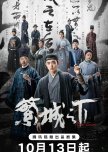
A Dish Best Served Cold
Is revenge justice? That's the recurring question that permeates the gloomy atmosphere of this 12-episode serial whodunit set in the waning days of the Ming Dynasty. This plodding but fascinating tale of wrongdoing and comeuppance is told in flashbacks and largely from the point of view of its present-day protagonist, Qu Sangeng (Bai Yufan), a bailiff of his county’s constabulary. On the surface it has all the elements of a juicy Agatha Christie murder mystery but in and among the dastardly deeds committed in the dark is a document of a civilization on the cusp of collapse. The country’s foundations are rotting and the cracks are showing even in the smaller scale corruption at the local level. It reminds me of the oft quoted saying that "the only thing necessary for evil to triumph is for good men to do nothing." It's been misattributed to Edmund Burke (I've been told) but it still rings true and reverberates all throughout this tale of unsavoury secrets and people looking the other way.The story begins when Qu Sangeng (Bai Yufan) finds the body of his beloved mentor, Captain Leng, strung up in an open field like a scarecrow. From then on the lad embarks on an extensive inquiry into his mentor’s death which doubles up as an exploration of the deceased’s life — his relationships and how he carried out his role as chief of the Hunters Squad. No one likes to speak ill of the dead apparently but the truth is when a man dies in such gruesome fashion, the general rule is that he was privy to some horrifying secrets before his untimely demise. It begs the question: Did his mentor do something he was ashamed of? This thought haunts Sangeng all throughout the investigation while he struggles to maintain some measure of objectivity. On top of that Captain Leng, a husband and father of two, is revealed to have regular night time assignations at a local brothel with a seasoned prostitute (Zeng Li). A part of Sangeng knows that his mentor was prone to cross lines for the job but turning over rocks for a big case is bound to end up in cupboards crammed with skeletons. As Sangeng delves into the rabbit hole of Capt Leng's past, he is led to digging further into a horrific fire that happened 20 years ago where an entire household was burnt to an unrecognizable crisp.
Qu Sangeng's probe into that incident inadvertently results in unpleasant revelations about respectable members of the community. One by one they get picked off almost as if they have knowledge of something sinister in the past that they've taken with them to their graves. Sangeng's journey of discovery is juxtaposed with flashbacks of a lowly but highly intelligent attendant Lu Zhi (Yu Yao) named after his master Lu Yuanbao. Somehow the plight and experiences of this orphan from 20 years earlier is connected to these grisly murders. Yu Yao, who looks like a much younger version of Korean actor Yoo Ji-tae, is charismatic in the role. He carries himself with confidence and exudes a wisdom beyond his years. Bai Yufan last seen in Stand By Me (2023) puts in a solid performance and he's wonderfully supported by Ning Li who plays Judge Song, Liu Yitong as Gao Shicong and Zhang Haowei as Feng Keshui. Since Reborn (2020) I'm always glad to see Zhang Haowei in anything watchable although his role here is relatively small.
No one can accuse the show of mishandled plotting because the script is tight as tight can be. The details are aplenty. Although I understand the intent of the showrunners to plumb the depths of character motivations and spell everything out in large letters, the pacing could be improved by some trimming. Even in a 12 episode drama. As a fan of the genre, I'm in admiration of the intricacies of the narrative with the decent-sized ensemble of characters but no crime show from the mainland ever escapes the mighty hand of social commentary. There's plenty of finger wagging certainly but the show doesn't overtly take sides although it's clear that revenge in the name of justice leads to a high body count that includes bystanders caught in the crossfire.
Was this review helpful to you?
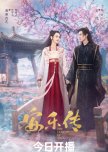
A Cliche Story Done Better Elsewhere
In an era where C dramas are falling off the production line faster than most of us can keep up , thirty-something hours of your time could be better spent on a show of better quality. The curious part of me would love to know what it was that they were imbibing in the writers' room when the script was cobbled together. (From an existing source material no less) Or smoking for that matter. There are plenty of problems with this production starting with the amateurish screenplay which was meant to provide the backbone to this. The Legend of Anle claims to be a revenge/justice story centred around a highly intelligent accomplished young woman who does a Count of Monte Cristo turn. But the showrunners don't seem to understand rudimentary storytelling much less the visual medium of television for that claim to be convincing. For instance we are persistently hit over the head with the message that our protagonist here is brilliant. Indeed she's happy to brag that she's got the whole thing sewn up because she's the best thing since pork dumplings. Her schemes are nothing to write home about and several are reliant on the stalwart Han Ye (Gong Jun), the crown prince to be on board. When she's busy doing the heavy lifting, the other leads are hiding in the background watching her work and providing running commentary. I like Gong Jun enough to persevere. His character was brimming with potential. But I too think he wasted his time on this fiasco of a production.It's not hard to see where the problems lie even in those early episodes. While historical dramas pandering to a younger demographic are nothing new, there's a dreariness that hovers over this production that makes watching much of it a slog. Even Dilraba's flirty girl boss pirate act as she bursts into the scene comes with a dose of cringe. Things like that while mildly amusing at times breaks immersion and doesn't bode well for what comes down the pike. The show does nothing more that better revenge/justice stories have achieved on a larger scale with far more thought put into them. It has the bad habit of recounting events through dialogue where key events occur offscreen. What's worse is that some characters are just there to instruct the audience on how a scene should be understood or how another character feels. The job of these side characters too is to hit us over the head ad nauseam with how much the leads are in love with each other and it's a pity that they can't be together. This certainly shows a lack of confidence by the director in the performances and the script to convey the most fundamental story threads with spoon feeding.
All in all it's a strange start, stop, drag experience. One that I don't recommend. You can certainly do better elsewhere.
Was this review helpful to you?
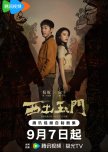
Good Story Limp Storytelling
Ni Ni and Bai Yu helm the deck in action adventure story as they steer a ragtag team into a raging world of secrets lurking on the other side of the legendary Yumen Pass which connects to the Silk Road. It's sand (lots of it), sorcery and sleight of hand as Ye Liuxi (Ni Ni) and Chang Dong (Bai Yu) navigate an alien environment with pals Fatty, Ding Liu and Gao Shen to solve the 2-year-old mystery of the Camelia expedition. At the start of this tale Chang Dong is haunted by the deaths of his fiancee and 17 others who died in a freak sandstorm while he's the sole survivor. Along comes a mysterious woman calling herself Ye Liuxi who is keen to find out who she is and why she's not dead despite being hung out to dry in the desert. Tagging along is Fei "Fatty" Tang who wants in on the action because his antique business back home isn't doing all that well. He's looking for that big score. Ding Liu jumps on the bandwagon on the behest of her godfather a mob boss and Gao Shen is her bodyguard.My first advice is to watch this knowing as little as possible. My second to all who dare venture in to persevere through the first 10 episodes because there is a treasure trove waiting on the other side of all that sandscape. More or less. To my mind a fair chunk of the first 10 episodes are an indulgent waste of television oxygen but it does provide some useful clues that lead to some "aha" moments later. I imagine that this is why the show is unlikely to have broad appeal. .
Aside from the interactions between the leads, the plot is perhaps the best thing about the show. From what I've heard, the story gains its inspiration from the popular Tomb Notes series with more than a few nods here and there to its predecessor. The world building is creative with quite an extensive lore to wade through. The leads and their expanding entourage get the lion's share of development while the show's primary antagonist seem like a cookie cutter entitled second female lead than a truly menacing adversary. I have more than a few issues with how she's written and the amount of power conferred on her in the script. Not to mention that Ni Ni's experience and charisma overshadows that of her drama nemesis.
Further on the negative side the show suffers the same types of problems that most C dramas do. While the secondary romances are quite appealing they don't add anything to the big story. The show also has a framing device of a sort that seems oddly misplaced unless it's meant to keep the censorship axe at bay. Frankly it doesn't otherwise add much to the narrative. Time could have been much better spent on the resolution which in typical C drama fashion wraps up in haste. This speaks to the start-stop-filler-go pacing. Moreover the showrunners don't really know how to properly adapt the source material to take full advantage of the visual medium. This is my continuing problem with C dramas and the way they handle exposition and foreshadowing. That's why I'm a little ambivalent about the main romance despite the fantastic chemistry between the leads.
All in all it's a decent watch with some missed opportunities especially with regards to the final act where so much is crammed into the last few episodes that aspects of the resolution comes across unearned.
Was this review helpful to you?
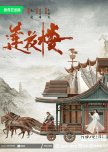
Humorous Hodgepodge of Wuxia and Murder
A title of this nature pretty much speaks for itself. A humorous hodgepodge of wuxia action, politics and murder mysteries starring Cheng Yi, Joseph Zeng and Xiao Shunyao as an unlikely trio travelling around the martial arts world (jianghu) for various reasons. Cheng Yi’s character Li Lianhua aka Li Xiangyi is looking for the remains of his beloved senior, while Joseph Zeng’s Fan Duobing is aiming to prove himself to Baichuan Yuan, the Pinkerton detective agency of his era. Xiao Shunyao’s Di Feisheng however wants to have a final showdown with Li Xiangyi so that he can say fair and square that he’s the No.1 pugilist of his era.Cheng Yi puts in a terrific performance as Li Lianhua (lotus) who was formerly known as Li Xiangyi, a master swordsman, the founder of the Sigu Sect. At the start of the drama Li Xiangyi has taken on the persona of Li Lianhua (lotus), a wandering physician with a reputation as something of a miracle healer. This moniker isn’t entirely without foundation. He is a skilled doctor in his own right but more importantly, a shrewd observer of the human condition. The glibness with which he tells lies is at times astonishing. This combination makes him a highly effective sleuth in the vein of the world famous resident of 22B Baker Street. Early on he encounters Fang Duobing who is eager to traverse the length and breath of jianghu away from the all-protective eye of his aristocratic parents. The two cross swords at first sight and bicker a-plenty until Di Fengsheng enters the picture wanting a rematch. The ignorant lad, mercilessly lied to by his companions, fails to notice that he’s among giants in wulin, is quick to direct his wrath against the surly newcomer who looks upon him with the same contempt Goliath looked upon David. Soon the caravan that Li Lianhua travels around in with his trusty doggy Fox Spirit becomes rather crowded.
To be honest it took me some time to warm up to Joseph Zeng’s Fang Duobing who at first seems to be combative on impulse. Some of that was warranted because Li Lianhua plays up his trickster persona with impunity — spinning tall tales at the drop of a hat trying to conceal the true state of his health and his former identity. It’s all quite amusing as he’s at the receiving end of a lot of dramatic irony. Nonetheless the lad has an inkling that Li Lianhua might be holding back. However a lot of Fang Duobing’s hostility towards others comes across like a rather bad case of the terrible twos — picking fights unnecessarily and out of what can only be interpreted as jealousy when others were partial to Li Lianhua. Still he has a decent growth arc and by the time the final showdown takes place most of his bad habits are a thing of the past. At the start he comes across as a bratty rich kid running away from home utterly lacking common sense. After undergoing a series of experiences with Li Lianhua investigating all kinds of murder mysteries, the belligerent newbie grows up enough to be worthy of a princess.
Joining them now and again is Di Feisheng (Xiao Shunyao) leader of the Jinyuan Alliance which is gradually being taken over by his obsessive proxy Jiao Liqiao and her minions. Her goal is to be kingmaker and rule by his side as his bride while he has less romantic notions in mind. It isn't long before he discovers that Jiao Liqiao is a serious and maddening obstacle to his personal aspirations. While all the plotting and scheming is going on in the background, the banter among the trio injects levity into the landscape of murder and mayhem without diminishing the stakes. More than once Di Feisheng comes to Li Lianhua’s aid during the rough and tumble of sleuthing in the tumult of jianghu.
There’s no doubt that Cheng Yi is born to play this role and any role in this genre. He’s an expressive actor who is capable of nuance. His elegance in executing fight scenes is one of the show’s highlights. He certainly knows his way around a sword. That said, the star of the show has to be the screenplay which does an excellent juggling act of pulling all the story threads together at the end for the show’s final showdown with the villains of the piece.
To my mind the second half of the show was better than the first which is why in the end, this is an 8.5 out of 10 for me. In those early days Fang Duobing did grate on my nerves and there was a fair bit of clumsy investigation going on while he blundered his way around the china shop. I also think that the puzzle hunt though fun (and perhaps necessary to stress the gravity of what’s at stake) lacks polish, and made matters more complicated, leading to more deaths than necessary. That awkward plotting I suspect was in service of a major reveal at the end.
Despite criticism I may have of this, it was a good watch and I could never accuse this show of inducing boredom. Cheng Yi is certainly a stand out and I ended up really appreciating how all the moving parts came together in the end.
Was this review helpful to you?
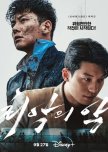
A Tale of Two Men
Ji Chang-wook returns to crime action in this historical thriller about the South Korean underworld in the late 1990s. He dons the blue uniform as Park Jun-mo, a low-ranking detective co-opted by his superiors to infiltrate an enterprising Gangnam gang operating nightclubs openly and dealing in methamphetamines in secret. He is married to Yu Eui-jeong (Im Se-mi) a fellow police officer who at the start of the show is already an inspector transferring to the security division. As a result Jun-mo is routinely made to feel his place by his snobbish in-laws who are all elite officers themselves. When first approached by the prosecutor-in-charge and his senior, Jun-mo hesitates. But with the prospect of promotion (and respectability) waved under his nose, he eventually succumbs and agrees.Jun-mo’s primary foil is Jung Gi-cheul (Wi Ha-joon) the founder and head of the Gangnam Union. Formerly a popular nightclub disc jockey who grew up in the area, the savvy and ambitious Gi-cheul takes up the offer by a local mob boss to head up his own nightclub. His inner circle consists of a group of friends from high school and their loyalty to him seems unwavering. Not content to be earning chump change, he wants to expand his operations to drug distribution but is flatly rejected by his backer, a notorious figure known as Sgt Jang. Like Jun-mo, Gi-cheul craves respect which he thinks money will bring. He is tired of being trampled underfoot by rich junkies and his direct supervisor so he devises a coup then buys over the biggest mob boss in the country based in Busan.
Despite all the violent blood-letting that’s on display, this is essentially a character study of two men. They’ve been dealt a similar hand at the start but made different choices along the way. Due to unforeseen circumstances, interventions and choices they end up in different places. The proposition that Gi-cheul could have ended up with Eui-jeong is not too far-fetched or that Jun-mo could have ended up as a member of a gang is highly probable. The moral argument (and the show's contribution to the nature vs. nurture debate) seems to be that human beings are the sum of their choices regardless of external intervention.
It's been a while since I've read F. Scott Fitzgerald's literary classic but Jung Gi-cheul bears more than a passing resemblance to Jay Gatsby. Instead of bootleg, Gi-cheul is the purveyor of an item known as Gangnam Crystal. He is the South Korean link in a deadly drug distribution triangle that includes Japan and mainland China. His goal from the first to the last is the girl -- Yu Eui-jeong, a woman he's been in love with since high school. Like his American counterpart, he is the symbol of the South Korean dream. Accumulate wealth as quickly as possible. Gain respectability. Get the girl one way or another. He's a tragic figure in the Gatsby mould and while I never felt the urge to root for him to win, I did want redemption for him.
I didn’t have huge expectations coming into this but this was just one of those unmissable collaborations that don't come very often. A veritable casting coup as it turns out. Our male leads -- Ji Chang-wook and Wi Ha-joon -- certainly lived up to expectations with thoughtful performances as cop and criminal. It's hard to say who was really the protagonist or antagonist. As a whole it was an entertaining emotional rollercoaster experience. The script is serviceable (unabashedly inspired by 90s Hong Kong gangland films) and nothing particularly groundbreaking. Still there are fascinating turns in the plot and implicit repudiations of standard K drama tropes. In the final analysis what elevates this show for me are its presentation of messaging and themes.
In ways explicit within the narrative The Worst of Evil is a Christian allegory about greed, desire and the road to destruction. While the world-building revolves around cops and gangsters playing cat and mouse, at its core is a cautionary tale of two men and their problematic relationship with success — and a particularly narrow view of what that looks like. Both men crave success not for its own sake but in order to attain that Holy Grail of respectability. The desire for respectability propels them forward right to the bitter end. Success, whatever form that takes, opens the door to acceptance by their betters and their peers. Jung Gi-cheul, in particular, is the poster child for this. Raised in the church and at some point a choir member, he would have been schooled in that often misquoted admonishment found in the New Testament. “The love of money is the root of all kinds of evil which while some coveted after, they have erred from the faith, and pierced themselves through with many sorrows.” (1 Timothy 6:10, KJV) His pursuit of wealth in order to gain respectability in a world that values status as well as to win over the woman he loved, kicked him off the straight and narrow. In the case of Park Jun-mo, it is for the love of a woman that he accepts the undercover gig. To shine and abrogate her family's disdain of him. To prove himself worthy of her and to prove them wrong.
The insinuation of Im Se-mi's Yu Eui-jeong into the investigation is a double-edged sword for both men. Even with all the drug talk, she is at the core of this story -- the point of intersection for their trajectories. She is inextricably tied to the desire line of both men. She symbolizes an elusive respectability for both. Nonetheless the de facto love triangle is not a romance but a journey of discovery that the great South Korean dream is not for everyone but a select few. Those who are born in Gangnam don't necessarily succeed in Gangnam. Effort alone don't cut it. Hence the outlook here is bleak and pessimistic.
The drama boasts a stellar ensemble of veteran character actors and promising youngsters . No one puts a foot wrong including newcomer Bibi who turns in a memorable performance as Lee Hae-ryeon the scion of the Chinese distributor. Also of note is Lee Shin-gi as the dagger-wielding Chief Seo, the menacing enforcer of the Gangnam Union. The action sequences are certainly designed and calculated to shock with its relentless brutality. All that contributes to the world-building that harkens back to a different time -- a more chaotic time.
This review is adapted from several posts made on my blog https://40somethingahjumma.substack.com/
Was this review helpful to you?
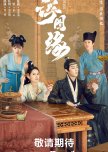
Royal Romp Best Served with Humour
Chen Yuqi and Dylan Wang are delightful pairing as a imperial consort and eunuch respectively in this faux historical romantic comedy. It is a quirky mix of genres that don't always blend well especially in the final phase of the drama, where the show feels like it outstays its welcome. The show is at its best when it doesn’t take itself seriously and remain within its comedic purview.The series starts off with plenty of hilarity as Chen Yuqi’s Bu Yinlou attempts to survive the rough and tumble of palace machinations using her wits. She’s an inveterate gambler and manages to get extricate herself from various problems sometimes with the aid of Dylan Wang’s Xiao Duo, a supposed eunuch in charge of Zhaoding Bureau and other law enforcement agencies. The leads are suspicious of one another’s intentions at first but later become allies and eventually lovers. The banter between them is a hoot especially when they misunderstand each other and there are many laugh out loud moments in those early days.
The pair inevitably find themselves in a love triangle with the recently crowned emperor Murong Gaogong (Peter Ho) whose obsession with Yinlou is… incomprehensible all throughout. He evolves from being a timid prince to a raving paranoid megalomaniac — a caricature rather than a fully fleshed out character. Even when he finally finds out that Yinlou and Xiao Duo are doing the hanky-panky behind his back, he reactions are insanely pathetic. He barely knows Yinlou except for a brief childhood encounter and yet he expends all his energies in obsessively holding on to her to the point of absurdity. As a result of not having his way with her, and suffering one disaster after another he spirals into self-destructive madness. Even though he suffers the fate of all cuckolds, there’s not a lot that’s sympathetic or likeable about him. Instead he is primed as a figure of scorn.
Where the show goes wobbly is when it tries to be serious and soapboxes about the freedom for individuals to choose within the palace walls. Theirs is a forbidden love but Yinlou seems an unlikely mouthpiece that speaks truth to power. The downside to this is that it takes one right out of the experience because let’s face it, nobody cares anything about individual freedom in the days of emperors. Luckily for them, the leads have the intelligence and enough friends to help them with Yinlou’s jail break. But by then, one has had a gutful of a very deranged monarch whose grasp on reality diminishes daily. Where would the opinionated leads be if they had no brains? Dead, would be one possibility. Or contentedly living out the rest of their lives in the palace eating and drinking from the emperor’s table grateful for not being dead.
In some ways I’m surprised that this got made. Or that it even got past the scissor happy censorship with as much as it did. Many of the passionate scenes purportedly got the chop and yet when Yinlou slaps the emperor she gets away with it. Her statements railing against his tyranny are far more radical than all the snogging between the leads. Perhaps it’s the low budget nature of this beast. I can only speculate that those who let this pass think somehow that hardly any one will be watching this and an emperor who is over-the-top crazy can’t possibly have any modern day parallels.
All in all, it’s far more enjoyable when one suspends all manner of disbelief.
Was this review helpful to you?
This review may contain spoilers
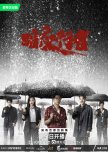
The Broad Road to Perdition
While this drama gives the appearance of being a convoluted ensemble of vested interests and hidden motivations, at its heart is a run-of-the-mill morality tale about the slippery slope descent into evil. The deliberate use of flashbacks and the continuously shifting points of view creates the illusion that this is a far more complex story than it is. In fact, when boiled to its essence, it is rather a straightforward character driven tale of woe. This is made more obvious by the show’s ending where the youngest member of the cast poses the question to her father — “What sort of world would it be if there were no drugs?”. In a bid to answer that question, the show’s protagonist casts his imagination over to an alternate universe where enemies amicably sit across tables sipping tea and playing chess as friends. Heroism is no cynical ploy and trust is genuinely possible. No one would disagree that a world without drugs could be a far less violent one. This is Luo Xiang’s utopian vision of a drug-free where former foes hold hands and sing kumbaya in harmony. Like all utopias, it’s a pipe dream that assumes that a radical change of circumstances would lead to a change of the heart. Indeed, history proves that the opposite is true. Solzhenitsyn’s famous line about the line that separating good and evil passes through the heart reverberates everywhere here.It’s a completely unnecessary (if schmaltzy) appendage to the finale because the drama itself makes a credible case for Solzhenitsyn’s thesis through much of the storytelling. Drugs are almost irrelevant as any kind of rationale for the insidiousness of evil. Barely anyone who trades in it, is also a consumer of it. Instead it is a commodity (as well as a powerful weapon) and almost always a means to an end. It’s mostly about amassing power, sometimes about control and certainly always about greed.
Almost everything about this story begins 5 years earlier — a disastrous attempt by the police to bring down the most powerful drug lords in the business. Mistakes were made and men under the pressure of the moment crossed lines that should never have been crossed — choices once committed to would haunt them forever. Drug trafficking is the mechanism that binds them all together in sordid fashion but it’s the corruptible human soul gripped by fear that destroys even the best of men.
It is through the lenses of three men that the pivotal event and what ensues is constantly being translated or interpreted . First of all there’s the show’s protagonist Luo Xiang (Li Yifei) the idealistic cop who is in it for the long haul. He goes undercover for an extended period of time and remains largely untouched by the vast array of temptations on offer. Despite all the trappings of power and wealth on display, Luo Xiang is unmoved and soldiers on in his quest to rid Hua City of the dregs. The darkness though surrounds him, never overwhelms him. He is steadfastly single-minded about his mission to the point of denying himself a chance to rekindle a romance from the past. He pays a high price for his dedication but he never loses his soul to achieve his ends. He is at the tip of the spear but manages to avoid impaling on it.
The other personality that dominates the story is Liao Yongjia (Stephen Fung) whose intentions are seldom clear. A highly regarded criminal investigator, Liao Yongjia is a man with far too many secrets and hidden agendas to be completely trustworthy. He might see himself as the man with the plan pulling the strings but there are forces outside his control for which he is compelled to respond to at any time. All of that inadvertently reveal him to be a far more ruthless operator than meets the eye. 5 years ago was a catastrophe for a man who prided himself on being a diligent cop.
Yu Shenghai (Gong Haibin), is yet another police officer whose conduct is dubious to say the least. At some level the show paints him as victim as well as a perpetrator. The audience’s perspective on him shifts continuously over the course of the story as the unseen forces of evil persistently know which buttons to push. His road is one paved with many so-called good intentions but it can only lead to one destination. Guilt and shame accompany him as he wrestles with the puppet masters who tug at his strings while he tries desperately to sever all ties that weigh him down.
The intersection of these three paths is what makes the entire show more than just a police procedural and a shoot-up fest. The rogues gallery is a long one indeed and not unexpectedly there are people from both sides of the law that find their picture there. Public persona is just that and no guarantee that the man or woman who dons the uniform will uphold the law if it doesn’t suit. In fact, the uniform might just be the cover needed to trespass the law with impunity and the means to get away with murder most foul.
There's little doubting the calibre of the cast in general. There's no moustache twirling in sight. Even the why-is-there-a-cute-kid-here holds her own when the director is deigned to trot her out. Maybe it's about ramping up the stakes. Maybe it's the odd reprieve from all the plotting and scheming. Maybe it's the reminder that Luo Xiang needs to stay on the straight and narrow if he wants to build that better world he dreams of when he's not dodging bullets and making deals with the unsavoury types.
Was this review helpful to you?
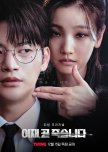
This review may contain spoilers
An Unexamined Life
A young graduate (Seo In-guk) doing it very tough in the existential scramble for jobs, has come to the end of his tether. After several years of juggling part-time jobs and not achieving that holy grail — a corporate position at Taekang Group — he concludes that his life has been an absolute failure. From the top of a high rise, he takes the plunge, ends his life, leaving behind a loving single mother and his longtime ex-girlfriend. It is important to note that his despair is exacerbated by a particularly bad day that culminates in a break-up with his girlfriend which he initiates after seeing her with another man. One thing after another he believes that his death is the solution to all his problem and will end all the agony that paralyzes him. That is until he wakes up and finds himself in a kind of purgatorial location face to face with Death herself played by a suitably menacing Park So-dam. This begins a drawn out debate between Death and our protagonist about the value of his life and life in general.I went into this not knowing much except the bare essentials and on hindsight the surprises increased my engagement with the plot. The element of surprise pumps an extra layer of enjoyment as there are plenty of thrills in the offing especially in the first 4 episodes aka Part 1. Be warned: It’s not for the faint-hearted. The crime elements are unyielding in this and there’s bloody violence all about in precarious situations. If violence is no barrier to entry, this can be an amazing adrenaline rush as the viewer embarks on this seemingly convoluted journey of discovery with Yee-jae who reluctantly… and often defiantly takes on each challenge to prove his case.
From the perspective of a seasoned viewer, it’s undoubtedly one of the more creative K drama endeavours I’ve seen in awhile. The plotting here is everything. On the surface it appears to be just another one of those transmigration stories that have become K drama staple but from the way it blends genres, it’s a superior work of art to all the others.
The other highlight has got to be the top tier cast. Plenty of familiar faces and the director certainly used the best of the best to optimize the storytelling. It’s also good to see the underrated Kim Ji-hoon getting a lot more work these days in these bigger high profile productions. But the star of the enterprise is the script begging the question... when was the last time a K drama had plotting this good?
My analysis — best read after viewing and not before… Spoilers ahead.
Somewhere between the third and fourth episodes, it occurs to me that Death’s Game is a darker, certainly more violent reimagining of Frank Capra’s It’s a Wonderful Life. And while we’re at it, why not throw in Charles Dickens’ great classic, A Christmas Carol for good measure? We know which inspired which there. So what do these stories have in common? For one they are second chance stories but the protagonists in these stories aren’t necessarily aware that they are being offered a second chance at the start. They undergo an arduous punishing journey of self-discovery that on the surface is more excruciating than edifying. If Death is to be believed, then Yee-jae is being punished for committing suicide.
But is he, really? Should we really take Death at face value or are her threats strategically made to egg him on to play the game game and force him out of his despondency? Is she manipulating him with reverse psychology. Hell awaits if he fails and it’s a terrifying thought now that he’s seen what it looks like. If punishment is really the endgame, then why take Yee-jae on this journey to solve a matter of grave injustice but to give him a glimpse of what’s life like for those who are left behind? If he was the burden he believed himself to be, why are his mother and ex-girlfriend, Ji-su still grieving for him?
Because the first “body” belongs to the second son of Taekang Group, it signals immediately that these challenges are somehow linked to Yee-jae’s life before death. But how do these pieces of the puzzle fit together? Why can’t he see the forest for the trees? Corporations in K dramas are seldom portrayed positively and yet it seems to be the dream of every university graduate to seek employment in these detached monoliths. Yee-jae attends two interviews at Taekang. The first is a write-off as a result of his encounter with a suicide victim on his way. In the second seven years later he interacts with Park Tae-woo (Kim Ji-hoon) the oldest son and CEO of Taekang Group and mistakenly assumes he has had a positive encounter with his potential employer. It’s an illusion. One of many. Park Tae-woo is a double-faced psychopath with violent tendencies. He’s a fraud. His benign public image is a cover for something far more sinister. He uses his clout as CEO of a corporation with deep pockets to pay off corrupt officials to cover up his crimes. He can use his infinite resources to engage organized crime. He sets himself above the law. He styles himself as Milton’s Satan ruling in hell. No one can get to him. Except through a miracle.
Furthermore the purpose of Taekang Group in the narrative is not only that it represents a festering merciless evil behind the facade of wealth but it is a symbol of a larger critique of materialism that drives the rat race and the participants to despair. The society in which these people live define success in terms of wealth, status, possessions. Yee-jae mentions this more than once that everyone has the same goals — a good job at a large company, marriage, children who do well at school, financial security. The reality however is that not everyone can achieve all of this. Nor might they want to. It is in the interest of these corporations with the help of governments to turn men and women into economic units — slaves of a system that tethers them to the economic engines of the nation with no regard for their spiritual, mental, physical well-being that make up the whole person. Big Business is first and foremost about profits. Governments are about control. They don’t see their clientele or electorates as individuals but entities to be exploited managed.
This perspective is given added merit by the fact that when Yee-jae finally realises that the people around him are more important to him than clinging on to wealth that’s not even his, he finally has clarity about the nature of Death’s game. It isn’t punishment per se but revelations/insights into his life that were not available to him previously. These insights serve a dual purpose insofar as they offer him an opportunity to re-evaluate his life and a compelling reason to exist. He didn’t have much by way of material wealth. In the order of things he was a “nobody” but he loved and was loved. His life had value by virtue of the fact that he was born.
In his case Yee-jae’s depression arose from unrealistic, unhealthy social values that just don’t account for individual differences and the unpredictability of life. Working for Taekang isn’t that pot of gold at the end of the rainbow but it has become a lie perpetuated in his world to prop up a class based social system that devalues the “losers” based on their monetary value. This is also reiterated in the other highlighted suicide where unlike Yee-jae, the individual makes it at Taekang for a while and lives the South Korean dream only for the bubble to burst in middle age when all his accomplishments and attempts to climb up the corporate ladder are rendered meaningless in a single moment. The problem with material possessions is their transience and lifelong pursuit of them is meaningless. Our ability to cling on to them in life is tenuous at best. And no can take it with them when they die.
At the core of this is the question of what makes us human. Are we just mere bodies to be “filled” by a soul? Are we just a sum of our memories? Like in Neo in The Matrix, Yee-jae is able to “download” abilities ie. access the abilities of his “hosts” and use them for a far greater purpose that transcends the lives of any of these morally dubious men. He is able to co-opt their memories for a greater cause — justice for victims of heinous crimes.
Hence the analogue to It’s A Wonderful Life and to a lesser degree A Christmas Carol. Instead of Clarence the angel or the three Christmas ghosts, Yee-jae’s instructor and messenger is the hard task master Death who brings out the whip and cracks it with unholy glee to keep him on his toes. As with the case in these second chance stories, these men come to realise that material prosperity isn’t everything but the relationships, the people we leave behind when we die are the true legacy of our lives. It’s not punishment at all but compassion to be shown how you’ve been led astray and be given another chance to refashion one’s life not governed by the materialistic impulses of our culture.
Was this review helpful to you?
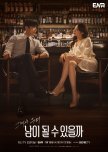
Strangers in the Dark
I have a theory about this show. While I never thought that I was watching a garden variety rom com, I laboured under the belief that belying all the absurd coincidences that this was a serious show that had serious things to say about marriage and divorce. Fast forward six weeks later, I question my own judgment wondering what I’d been privy to. I begin by trying to grapple with the question of why for 11.75 episodes nobody ever thinks to go for some kind of relationship counselling. Not a single soul. I wonder if it’s deliberate. Moreover while everyone is decent at diagnosing other people’s problem, they are terrible at perceiving their own hang-ups. Apparently the cult of experts don’t exist in this world where Eun-beom and Ha-ra, two supposed grown-ups stumble around avoiding answers. It may be that hardly anyone reads books anymore but in their world there’s not even an app or a website that people go to for advice. How odd. It’s straight to lawyers and courts we go. Learning takes place accidentally rather than purposefully. And the results speak for themselves.The people behind this, it occurs to me, aren’t interested in any other solutions except divorce. Except that divorce itself is problematic — a convenient exit strategy for two people who haven’t learnt the art of communication or accommodation. And they never have to because there’s divorce to put an end to everything once things turn sour. A get-out-of-jail card as it were. Because they sidestep the fundamentals, the characters default to the same behaviour over and over again expecting a different result.
Realistic? Perhaps. It’s arguable how realistic the show is. But from the point of view of the audience, frustrating.
So I’m inclined to think that the entire project is a storytelling experiment. Whether in earnest or for laughs — I’m still puzzling over that one. The experiment starts with “what if”. What if we were to tell a story about two divorce lawyers who are divorced from one another working cases in the same firm? It would be a hoot, right? A couple of ex-spouses who haven’t been schooled in the art of relationship, who haven’t even learnt to communicate, handling relationships that have “inevitably” reached their endpoint. The result is sheer chaos. All the wisdom of the ages cast aside for this narcissistic introspective trial and error approach to the most foundational of relationships. As if the present generations will be the first to discover something the previous ones haven’t. Underpinning all of this is a materialistic, consumerist impulse as seen in an ex-wife who hops from lover to lover with impunity leaving her ex-husband lawyer to clean up her messes.
Therefore the entire project only makes sense when I think of it as satire. Again I can only speculate because divorced individuals here are mercilessly mocked. Or it’s just modern “love” marriages that’s under fire. So much heartache could be prevented if people actually opened their mouths and uttered coherent words. For a world of actions so dominated by feelings, the people in it are so poor in articulating them. I am left wondering if the moral of the story might be that a world where human agents are driven by emotions unchecked by discernment only leads to chaos. Feelings of goodwill towards another just aren’t enough for marriage. Indeed feelings aren’t substantial enough of a foundation to build any kind of future on.
As a reviewer of dramas there’s a part of me inclined to think of this entire project as a critique of the romantic comedy popularized by Hollywood first and whose mantle has been picked up by K dramas in the past decade. The genre is waning. Cynicism is on the rise. Building paradise on earth is no longer feasible when narcissism has a grip on the culture. No one is willing to change or feel the need to. That’s the troubling part in all the push and pull.
There’s no happily-ever-after her. For the leads that is. Just a tired cycle of withdrawal, miscommunication and conflict. There’s plenty of baggage. The ending seems to be a logical one amidst all the illogical antics that ends in sabotage. Yet one is left feeling dissatisfied because the two people at the centre of the story don’t really get it until it’s too late. Or do they? That’s left open to individual interpretation. But I repeat. Insanity is doing the same thing over and over again expecting a different result.
There’s nothing progressive about that.
Was this review helpful to you?
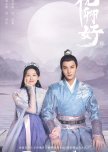
Intense Romance with Execution Issues
There are certainly elements of a good story here regardless of the obvious anachronisms indicated by the show's title. However, at the end of the day, this was clearly a story in search of a script, director or editor. Or all of the above. The first half was decent and flowed much better. The second half however was weakened by noticeable pacing issues caused by large chunks of exposition via dialogue and unexplained occurrences or allusions to offscreen events. While I don't fault the show for not doing anything particularly clever or groundbreaking, I will come down hard on the lack of consistency in the storytelling. There was never any real doubts that I was watching a romantic comedy and there were laughs to be had all throughout especially from the interactions between the leads. It was also clear that the palace intrigue, such as it was, played second fiddle to the romance. Make no mistake, this is a fairytale and I saw it as such all the way through but it's flaws hold it back from being a much better show than it could have been.However, the editing choices of this drama undeniably caused this viewer whiplash from time to time. It's hard to say whose problem it is because the censorship issues that beset the industry. Nevertheless, it is still incumbent on the director to be far more preemptive about what external obstacles are likely to dish out and be clever about how the material should be put together to escape the censor's knife. I say this because the production values are good. There are some great set pieces and the cinematography is of a high standard. I don't generally comment about costumes because I don't feel qualified but the styling of Liu Ling, the titular character, is a mix bag. After the much anticipated wedding, overnight she's transformed into a dowdy, matronly figure which doesn't flatter her one whit.
It's important to give the cast, especially the leads, their due. The performances range from adequate to good. The interactions and the banter between the leads are some of the better parts of this show. Their chemistry is a delight and the director milks it for whatever it is worth. At least this show understands the meaning of fan servicing. Zheng Yecheng I like a lot. He is nicely broody and mischievous. His enthusiasm for the romance is well-matched by Yuan Bingyan. In all frankness I liked the Shen Yan character more than the Liu Ling one primarily because of the writing. While it's not hard to see why Liu Ling is the insecure, needy, clingy female lead here (particularly when she's been badly treated by family), her over reliance on Shen Yan might come across a bit icky for modern audiences. It's not necessarily a problem in those early days but development on that front ends up being scant. Her early cynicism and world-weariness is interesting although unfortunately it's not sustained. Brother to Shen Yan is Merxat's Shen Yu. The brotherly dynamic is one that I relished and certainly wouldn't have minded more of. Liu Ling's sisterhood with Xu Shijin was also great.
Overall, it is not without charms despite its limitations. There is some plotting and scheming in the background but really this show almost entirely about the sassy princess and her knight in shining armour.
Was this review helpful to you?
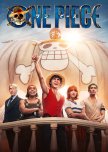
Casting is Key
The track record of popular anime/manga series being adapted into live action film and tv shows is a checkered one at best. The odds are that of a lottery when an overseas production team puts its hand to the plough and do their “remakes”. So when news spread that this iconic, long-running manga story was being adapted by Netflix, I couldn’t summon much enthusiasm for it. A tiny bit of curiosity perhaps but not a lot of confidence. Still the official trailer gave me the impression that it might not be quite as appallingly awful as Cowboy Bebop was and might even *shock, horror* capture the essence of the source material. Moreover the technology is certainly available in this day and age to do the series justice.It might be a bit of a stretch to say to say that I belong to a One Piece family. But it’s not far off. My offspring follow the manga conscientiously and they’re all up to date with both the manga and the anime. I’ve seen hundreds of episodes of the anime (lost count) and I think the other half is far more ahead of the game than I am. All that to say, we pretty much know the characters and the lore. And maybe I might have something worthwhile to say.
My initial thoughts about this adaptation is that it’s a solid effort. It does a better than serviceable job in adhering to the spirit of the original. It's unabashedly whimsical, goofy and cheesy. And considering the terrible remakes on Netflix of late, this is surprisingly faithful. The casting has to be absolutely one of the highlights. The main characters like Luffy, Zoro, Nami and Usopp are well cast. Everyone in my clan loves the actor, Mackenyu, donning the bandana as Zoro. He couldn’t be more perfect for the role. More than that he seems to know his way around a katana. Or three. Inaki Godoy is rather good as Luffy, capturing his boyish enthusiasm and occasional cluelessness about the realities of life. Sanji is a little on the bulkier side than his anime counterpart but I'm not complaining too much.
One Piece at its core is a superhero-martial arts story where the characters sail around from place to place recharging, making new friends and battling powerful villains to level up. In that regard it’s not unlike a video game. I suspect that Eiichiro Oda was partly inspired by Marvel’s superhero Reed Richards when he designed the original concept of Luffy. In the anime he’s my favourite because he keeps me reliably amused. Furthermore the series demonstrates that it is well-acquainted with the golden age of piracy. As the Straw Hats’ notoriety reach newer heights, the greater the bounty on their “wanted” posters. It has a strongly libertarian streak running right through it and the pirates are the epitome of that spirit of freedom, for good or ill. Not all are ambassadors of goodwill like the Straw Hat crew and certainly not the dubious World Government which is the arbiter of law and order in those turbulent waters. Part of what the Straw Hats do is help inhabitants of these islands and villages regain their autonomy from minor and major tyrants taking a leaf out of the book of twentieth century dictators.
The decision to make the look and feel of this enterprise quirky in the manner of Tim Burton pays off here. Though Eiichiro Oda draws on historical events and figures, the One Piece universe is still a fantastical world where good versus evil is centrestage to some familiar locations populated by a parade of mythological races, bizarre personalities with the most unlikely abilities. There’s a sense that Alice has fallen down the rabbit hole one more time and it’s a brave new world that seems inviting on the surface but harbours a foreboding savagery in its underbelly.
Aside from the pacing, my other nitpick with this is the lack of spectacular rubber Luffy moves. While they’ve kept his personality more or less intact, his fight scenes don’t seem as exuberant or hilarious as they are in the anime. This is always my biggest beef with adaptations — the humour and action sequences don’t always transfer over well. That said, Luffy’s most important asset as it were, is his ability to inspire loyalty and affection everywhere he goes. Despite being on the naive side, he also has an uncanny ability to surround himself with the right kind of people and see past the facade. It is an achievement in and of itself that he is able to bring an arrogant loner like Zoro and an untrusting cynic like Nami into the fold despite all their protestations. The fact that the live action is able to bring that crucial factor to the forefront does check off a very important box.
Obviously the fact that the mangaka onboard is a producer on this is why this project hasn’t been a disaster. The most illogical thing they could do in the current climate is to disrespect a beloved IP and antagonize generations of fans worldwide in order to appeal to a politically correct crowd. No production house in their right minds would do that, surely?
Was this review helpful to you?


