

 4
4



Road to Nowhere
Do I really need to see Jing Boran change a light bulb? That’s just one of many niggly questions that comes to mind as I plod my way through Road Home with a gnawing itch to drop it. It’s a lovely angle of him to be sure (as any would be) and perhaps the audience has missed the point that Tan Songyun’s character Gui Xiao is absolutely enamoured with Lu Chen when she fixes her adoring eyes on his strapping figure as he does what most men worth their salt can do at the drop of a hat. When Li Xian changes light bulbs at the boarding house in Meet Yourself, there are multiple reasons for it. It tells us something about the ubiquity of his character. It shows that he’s a handy fellow. It was yet another bit of confirmation that he was the heart and soul of his village — a one man economic engine. But when Lu Chen is swapping out light fittings, it feels like the director and/or script writer don’t really have any idea of how to integrate all of the elements around the romance. Which is the general feeling I get as the “story” progresses. It’s like watching a reality travelogue that I didn’t sign up for. The thing is, the light bulb scene is meaningless here because it doesn’t tell us anything we don’t already know about Lu Chen. The guy is a bomb disposal expert. What’s a light bulb when there’s an explosive device with a complex web of wiring about to go kaboom? Road Home is a show that should be watched at 1.5 x or 2 x speed or not at all. Which leaves me with a conundrum: Jing Boran’s alluring sonorous vocals gets lost in translation.On paper, Road Home should have the potential to be equally effective but the mistake is putting an obvious conflict-free romance at the centre of the story. Except for the godson, none of the other characters have interesting arcs of their own. Worse still they feel disconnected. Their sole purpose is to dance around the leads and support their journey as they inevitably pair up. I’m about 15 episodes in and I still don’t find Gui Xiao a compelling character in her own right. Lu Chen gets to do all the exciting cop stuff while she panics around in the dark wondering if he’s going to live to see another day. It’s by the numbers. There’s no curiosity about any of the characters and how they get to the point that they do. 30 episodes is just too long for a show where there’s so little build up or suspense. By the time the leads tell us that they’re tying the knot, most of the key reveals have come and gone.
It’s a mistake to think that slice-of-life dramas have no plots. (Or meander aimlessly without one) They do. And the really good ones do such a good job of juggling multiple threads that those who watch that the balancing act is actually easy. Part of the problem too with Road Home is that Lu Chen’s SWAT activities are far more interesting than anything else in the show. Consequently I inevitably come to this conclusion about these types of police procedurals — they are veiled recruitment propaganda. Ad campaigns for law enforcement because no one in the their right mind would sign up for SWAT and EOD without overt prodding and/or flag waving. It’s one thing to insert propaganda in a crime show, it’s another in a romance. It’s deadly.
Was this review helpful to you?
Watchable Rom Com Falls Prey to 11th Hour Problems
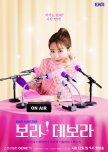
Having Yoo In-na and Yoon Hyun-min spearheading this was a major incentive to jump on the bandwagon. Especially Yoo In-na who is so much at home in rom coms. So after skipping ahead for a sneak peek, I decided that this might be fluff worth wasting time over. I was sold after watching Episode 3 and my heart went out to a very humiliated (and devastated) Bo-ra who was being mercilessly gaslighted by her ex and social media.This show covers plenty of subjects close to my heart — the complexities of courtship, marriage as well as differences between the sexes. Not everything works for me but there are nuggets of gold everywhere and the gleam of gems even when episodes don’t light up. What’s become evident is that Kdrama rom coms are gradually turning into parodies of the genre which would account for the histrionics, hijinx and odd foray into toilet humour. This accounts for why the genre that catapulted SK dramas to international glory have become very hit and miss. Here there’s a dual purpose in that because the show needs Yoon Hyun-min’s character Lee Su-hyeok to see the very worst of Bo-ra and still somehow manage to fall in love with her. Why? Because everyone defaults to hiding behind masks and facades in public. In a society where status and respectability holds incalculable currency, one’s public face may bear little or no resemblance to one’s private realities. This fact has ramifications for how dating and marriage is viewed in the wider population.
The first 7 episodes are a mixed bag. Some segments contain sparkles of brilliance and insight into the fallen state of humanity while others leave behind the sour aftertaste of second-hand embarrassment. The lifeline during those moments are the leads’ banter which is always a delight to behold. Whatever the show’s flaws there’s no doubting the quality of the dialogue. But from Episode 8 onwards when Bo-ra finally bids the duplicitous ex-boyfriend farewell and the leads share an intimate moment in a karaoke booth, a switch in the show’s engine is turned on.
By about the third or fourth episode it becomes clear that this show is about endings. The end of a relationship doesn’t have to be the death knell to one’s existence. It can be the beginning of something else. Perhaps something better than what came before. Out with the old, in with the new. Hence the jalopy vs Mercedes analogy that is referenced in Episode 11. The very best part of this show is reserved for the leads and rightly so. From the first they are set up with parallel journeys and in walking together, groping around for answers, their eyes are opened to what’s been there all this time. The ending of a relationship doesn’t have to be a tragedy regardless of how it ended.
It occurs to me that this story really begins with the exes — Ju-hwan and Yu-ri. The leads are going on their merry way more or less maintaining the status quo. Bo-ra who is the talk show queen of dating and author of three books on the subject gets mugged by a rude shock when she finds out that not only was Ju-hwan messing around with a close family friend on his busy days, he had long since given up on their relationship. In his words, he felt smothered by Bo-ra but I’m inclined to think that in his case there’s a lot more than that. Yu-ri on the other hand was fed up with Su-hyeok’s reticence and was already looking elsewhere for security and solace.
Infidelity, an immoral act, is usually an expression of a much deeper problem that hasn’t yet been laid bare. It’s also a case of wanting your cake and eating it. A lack of communication is often blamed for break-ups and no doubt that plays a integral part. However, it goes much deeper than that. The death knell of a relationship is the consequence of unspoken, unmet expectations much of which are unrealistic.
The show swims along nicely for about 5 episodes and then it falls apart with the last two which are almost a reversal of what transpired in the two preceding episodes.
Do I really want to know what was in the kimbap or fried chicken in the writers’ room when ideas were being pitched for Episodes 13 and 14 of Bo Ra! Deborah / True to Love? I was fervently hoping that they wouldn’t screw up the resolution but alas they just couldn’t help themselves. Episode 13 in particular aroused something in me that few dramas are capable of doing. It made me want to punch the screen. What the show did to Su-hyeok’s arc in particular was sloppy and asinine. All in service of a push and pull that had to be until about 10 minutes before the end. It was a resolution in search of a conflict… and a villain. And even now I’m puzzling over who that might be.
Is it the insufferable Ju-hwan — the pompous egotistical ex who was caught red-handed cheating on Bo-ra? He seems to be the front runner. The classic bad guy and the quintessential obstacle to true love and happiness. The guy has no shame and the show is shameless in exploiting the very worst aspects of his personality. Or is it the gutless wonder that is the male lead who somehow loses his nerve when the destable Ju-hwan confesses on public radio that he wants another chance with Bo-ra. So what does Su-hyeok do. He caves. Accordingly Su-hyeok backs down from a fight because he says during a drunken stupor that he “doesn’t want to be the bad guy in somebody else’s romance”. It’s easy to believe that someone else wrote Episode 13 because the Su-hyeok in the last two episodes underwent a brain or personality transplant. He became a different man. In my exploding head I can just hear Jeremy Northam’s Mr Knightley saying to Gwyneth Paltrow’s Emma. “Badly done, Emma, badly done.”
Another candidate for villain here might be Bo-mi who sinks to new lows in terms of churlishness and stupidity. Gee “Sister, thy name is gaslighting” was out in full force. I’ve never liked Bo-mi who has never been much of a presence in this drama but all that defensive tantrum throwing in the final episodes is very hard to watch.
In a way I’m glad that I didn’t invest weeks on this show only to be left feeling vaguely defrauded by the production. To put a positive spin on this I can see how the show runners who are tethered to the ratings system are terrified of the leads coming together too early because the complaint has traditionally been “oh the show is not interesting once the leads come together.” This kind of thinking has incentivized bad endings more times than I can count with two hands and ten toes. A moderately good show can’t have a clunky ending because a clunky ending has a detrimental effect on the entire shape of the narrative.
Adapted from two posts from my personal blog.
Was this review helpful to you?
A Veritable Dollhouse of Absurdity
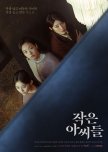
The experience of watching this so-called homage to Louisa M. Alcott’s beloved tale is like playing a game of blind man’s bluff. The audience is positioned as the player in the middle, blind-folded, groping around trying to make sense of the surroundings only to be led by a cacophony of sounds which may either prove to be helpful leads or egregious misdirections that lead to nowhere. Rather than being any kind of thoughtful of adaptation of Alcott’s timeless series, the roots of this Korean drama lie in the overlong weekend family dramas infamous for their ridiculous plot lines punctuated by unbelievable twists and turns, protracted conflicts that are designed to leave audiences begging for more week after week. It’s a combination of pure farce, high melodrama and an unabashed (even gleeful) exploitation of tropes. Polished as it may be, it is still a makjang. From the first, this story positions itself as a morality tale cautioning against the consequences of greed and ambition from its use of the red shoes motif only to end up with a bewildering incoherent resolution that undermines the story’s early messaging.The show throws the spotlight on two adult sisters from a working class background. They are Oh In-joo (Kim Go-eun), Oh In-kyung (Nam Ji-hyun) as well as their teenage sister Oh In-hye (Park Ji-hoo), a talented artist who has caught the eye of a certain Ms Won Sang-a (Uhm Ji-won), an ambitious wealthy woman who is married to an aspiring politician Park Jae-sang (Uhm Ki-hoon). The unsuspecting Oh sisters who lament their meagre lot in life are drawn into a web of deception on a scale that they are laughably ill-equipped to handle. It suits the writer’s agenda to place these babes in the woods in such an unlikely situation as they flounder around in search of answers.
The real trouble begins when In-joo a bookkeeper finds herself tempted by the offer of 2 billion won of cash left to her at the pleasure of her colleague Jin Hwa-young in a gym locker. It’s more money than In-joo has ever seen in her young life but it comes with a high price tag and puts her in an ethical predicament. Apparently Hwa-young has been playing around with Other People’s money and suffered the consequences. In-joo is in over her head and it’s Choi Do-il (Wi Ha-joon), her company’s accounting manager and money laundering expert, to rescue. Apparently the company has a habit of accumulating ill-gotten money and key people in the organization are involved in helping the Park-Won family creating slush funds to further their political ambitions.
While the performances range from great (Kim Go-eun, Wi Ha-joon and Uhm Ji-won) to good, in the overall scheme of things the characters don’t matter much because they are quite literally putty in someone’s hands. They exist to tell a story like miniatures in a diorama or figures in a dollhouse. The dollhouse metaphor is deliberate on the part of the writer who wants to weave a fairytale about the ordinary confronting the extraordinary similar to any Brothers Grimm tale. While there are no talking animals or supernatural beings in the mix, the show nevertheless relies heavily on miracles. The Oh sisters are fated to embark on a journey through a dark forest of evil and they cannot be certain who is friend or foe. They are almost always somebody’s plaything and dependant on the goodwill of others for their survival. There is an appearance of agency but the Oh sisters can only react to the situations they inevitably find themselves in due to the machinations of others.
There’s little that is relatable about the Oh sisters. They act impetuously in service of the plot. There’s nothing realistic about them or the situation they find themselves. At times it’s hard to believe that they might have been a close-knit family once when they spend far more time with others than each other. Using In-joo and In-kyung in particular as the primary windows into this world is a double-edged sword. More often than not their supposed bravery comes across as recklessness and lack of circumspection.
Won Sang-a the show’s primary antagonist fancies herself an unfulfilled thespian and plays out her fantasies with lesser mortals. She’s General Won’s daughter and her wealth enables her to indulge in her narcissism and megalomania. She likes secrets and she takes perverse pleasure in gamefying scenarios involving desperate malleable individuals where she commands their inevitable outcome. On the other hand her relationship with husband Park Jae-sang involves a series of sex games in which she manipulates him while he enables and cleans up after her. At first it seems like he’s a controlling abusive husband but it doesn’t take long before it’s clear who’s really calling the shots in that dynamic. She represents the figure of the witch that’s the staple of many beloved fairytale as she’s an inveterate schemer and master manipulator that casts her spell on those she deems dispensable.
In that vein Little Women is a witch’s brew as it mixes high stakes criminal activities with family dysfunction, romances and a conspiracy that goes back decades. The set-up brimming with potential, hitting the climax in Episode 10 only to end with a whimper in Episode 12. For a show that traded relentlessly on plot twists and shock factor, the finale felt strangely flat and mind numbingly… tedious. In effect the writer overplayed her hand ad absurdism; to the point where the final showdown between the protagonist and antagonist feels comedic rather than revelatory thus diminishing the impact of the moment.
Despite the title, the highlight of the viewing experience is Choi Do-il, who grounds the show for me. Almost everything else about the show is a farce in every sense but Do-il feels like a bright spot in a bleakly surreal landscape and more’s the pity that this show isn’t about him. Although he makes claims to being entirely mercenary, he is the sanest creature in this cat and mouse insanity — a reassuring constant in a sea of madness for the artless In-joo. He is her lifeline from start to finish. Without him she would be six foot under or ashes in an urn. The romantic tension between them evidenced from the start regrettably doesn’t have closure which begs the question — is the show leaving the door open for a second series?
A show like this can be an engaging watch depending on mood and the extent one is willing to suspend all manner of disbelief because at the end of the day such dramas don’t exactly prioritise logic or consistency.
Was this review helpful to you?


