

 1
1



This review may contain spoilers
A Seemingly Light Story That Earns Its Ending
My Page in the 90s is one of those rare dramas that doesn’t aim for depth—and yet still manages to land emotional impact where it counts.At its core, this is a light, high-concept story: a modern influencer is pulled into a novel and must complete a “system” mission—win the male lead’s love and secure a proposal—to return to her own world. It sounds gimmicky on paper, but what makes it work is the execution. The female lead doesn’t “perform” the role; she inhabits it. Her reactions feel grounded, her choices feel real, and over time it becomes easy to forget how absurd the premise actually is.
The male lead complements this perfectly. He brings a natural, lived-in quality to the relationship—small gestures, subtle emotional shifts, and a steady presence that makes the romance believable even within a constructed world. Together, they build something that feels authentic rather than manufactured.
The drama also maintains strong pacing for most of its run. Each episode moves forward with new situations, challenges, or character moments. It never feels like nothing is happening—until it briefly does.
Around the late middle (roughly Episodes 14–17), the story falls into a familiar trap. The main couple becomes stuck in a cycle of avoidance and misunderstanding, repeating the same emotional beat multiple times. At the same time, the second couple—who are otherwise charming—are also caught in their own loop of hesitation and self-doubt. With both storylines stalling at once, the momentum noticeably dips. It feels less like intentional tension and more like the narrative marking time.
Fortunately, the drama recovers.
From Episode 18 onward, the story pivots in a meaningful way. Instead of continuing the same conflict, it raises the stakes and reframes the central question. The emotional weight deepens, the pacing tightens, and the characters are forced into choices that carry real consequence. What follows is a final stretch that is both moving and satisfying, culminating in an ending that feels earned rather than rushed.
The second couple also finds resolution here, and their storyline adds an important thematic layer about fate—what can be changed, and what cannot.
The finale, in particular, is handled well. Rather than relying on a last-minute coincidence, it allows time for separation, longing, and active searching before reunion. It doesn’t over-explain its mechanics, but it understands that emotional closure matters more than technical detail.
This isn’t a drama that belongs among the most intense or tightly constructed stories. The mid-section drag is real, and it does rely on familiar tropes at times. But it also knows how to deliver where it counts. The ending recontextualizes the journey and gives the story a sense of completion that many similar dramas fail to achieve.
In the end, My Page in the 90s succeeds not because it’s deep, but because it’s sincere. It’s a light story that understands its limits—and still manages to make you feel something real.
Was this review helpful to you?
Power, Control, and the Cost of Playing the Game Twice
Story of Kunning Palace is a character-driven political drama that understands one thing very well: power is never clean, and neither are the people who pursue it.What makes this story compelling is its second-chance structure—not as a fantasy reset, but as a strategic re-entry into a world the female lead already understands. Jiang Xuening isn’t trying to become “better” in a moral sense; she’s trying to be smarter. That distinction matters.
Bai Lu carries the role with controlled intensity, but the real standout is the dynamic tension between characters—especially where trust, manipulation, and long-term strategy intersect. Relationships in this drama are not built on simple affection; they are negotiated, tested, and often weaponized.
Zhang Linghe delivers a restrained performance that works within the tone of the show, though at times the emotional expression feels more contained than the narrative tension demands.
The pacing is generally strong, with consistent forward movement, though some political threads could have been tightened for clarity.
Where the drama succeeds is in its refusal to simplify. There are no easy victories here—only calculated ones.
It’s not emotionally devastating, but it is intellectually satisfying.
Was this review helpful to you?
This review may contain spoilers
When Love Is Not Enough
Season II of Lost You Forever takes everything Season I built and refuses to soften it.If the first season asks what love means under constraint, the second answers with brutal clarity:
sometimes love is real, mutual, and still cannot be chosen.
This season is defined by consequence. Every relationship reaches its natural limit:
Cang Xuan must choose power over love—and knows exactly what he is giving up.
Tushan Jing offers stability and devotion, but not the strength or decisiveness that defines Xiao Yao herself.
And Xiang Liu embodies a form of love that is active, sacrificial, and ultimately self-erasing.
Xiang Liu’s arc, in particular, is one of the most powerful I’ve seen. His love is expressed not through words, but through actions—quiet, consistent, and without expectation of recognition. He gives everything and asks for nothing, ensuring Xiao Yao’s future even when it excludes him.
This is where the drama separates itself from typical romance narratives. It does not reward the deepest love. It rewards the livable choice.
The pacing remains exceptional. Even in its most emotional stretches, the story never stalls. Every episode moves forward with intention, and every revelation is grounded in established character logic.
The performances reach their peak here:
Zhang Wanyi delivers a deeply controlled portrayal of a man torn between love and ambition.
Tian Jianci brings devastating restraint to a character who never allows himself to fully express what he feels.
Yang Zi anchors the entire story, balancing vulnerability and strength in a way that makes every decision believable.
The ending is not designed to comfort. It is designed to respect reality:
love can exist without being chosen,
sacrifice does not guarantee reward,
and survival sometimes means letting go of what matters most.
By the final episode, there are no easy answers—only consequences that feel honest and earned.
Season II does not try to make you feel better.
It leaves you with something much more lasting:
the understanding that love, no matter how deep, is not always enough.
Was this review helpful to you?
Not a Love Story—A Story About What Love Costs
I went into Lost You Forever expecting a romance. What I got instead was something far more rare—and far more powerful.Season I is not about choosing between men. It’s about survival, identity, and the slow reconstruction of agency after a lifetime of abandonment and manipulation. The story follows Xiao Yao, a woman who has learned to live as whoever she needs to be in order to survive, and the three men whose lives intersect with hers in very different ways.
What sets this drama apart immediately is its consistency of purpose. There is no filler disguised as romance. Every interaction reveals something:
about power,
about emotional dependency,
or about what each character is willing (or unwilling) to sacrifice.
The performances elevate everything further:
Yang Zi delivers a masterclass in emotional range, convincingly shifting between identities while maintaining a consistent core.
Zhang Wanyi brings subtlety and control to a character whose emotions are often suppressed but always present.
Tian Jianci creates one of the most quietly devastating characters in recent memory through restraint alone.
Season I shines because of its momentum. There is not a single episode that drags. Even slower moments are purposeful, deepening emotional stakes or setting up future consequences.
Most importantly, the drama refuses to lie. Love is not presented as a solution—it is presented as a force that can both sustain and destroy, depending on the context in which it exists.
By the end of Season I, what you feel is not satisfaction, but recognition: this story is going somewhere difficult, and it intends to follow through.
And that alone sets it apart.
Was this review helpful to you?
This review may contain spoilers
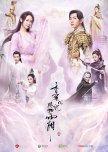
Love, Timing, and the Cost of Not Understanding
Ashes of Love was one of my very first C-dramas. I didn’t expect how emotionally devastating, and structurally strong, it would become over time.This is not a perfect drama. The early episodes lean lighter, and there are moments, particularly in the middle, where pacing softens more than it needs to. But once the emotional core locks into place, the story becomes something much heavier and more compelling than it first appears.
At its heart, this is a story about love constrained by forces beyond individual control—fate, duty, identity, and emotional blindness. What elevates it is how those forces don’t just create obstacles; they fundamentally shape the characters’ choices and consequences.
Jin Mi’s emotional journey is more complex than it initially seems. Her lack of understanding isn’t just naïveté, it becomes a narrative device that allows the story to explore what love looks like when someone doesn’t yet have the capacity to recognize it. Watching that capacity develop, and the cost of that delay, is where much of the emotional weight comes from.
Xu Feng brings a different kind of energy: direct, emotionally expressive, and unwavering once he understands his feelings. His arc is not about learning to love, but about enduring the consequences of loving someone who cannot yet meet him where he is. That imbalance drives much of the tension in the first half of the story.
Runyu, however, is where the drama deepens significantly. His trajectory adds a layer of moral complexity that shifts the story from a straightforward romance into something more layered. His choices are not framed as simple villainy, but as the result of isolation, deprivation, and a need for control in a world where he has none. Whether or not you agree with his actions, his presence raises the stakes of every relationship in the drama.
What makes Ashes of Love stand out is that the emotional consequences are not easily resolved. The story allows its characters to make painful choices, and it follows those choices through to their impact. There is no reliance on repetitive misunderstandings to sustain tension; instead, the conflict evolves as the characters themselves evolve.
The production design, music, and visual storytelling all support the emotional tone, especially in the later arcs where the narrative becomes more focused and intense. Certain scenes carry a weight that lingers well beyond the episode itself.
That said, the drama does require some patience early on, and viewers who are sensitive to tonal shifts may find the transition from lighter beginnings to heavier themes uneven at first. But for those willing to stay with it, the payoff is significant.
This is not a story that relies on surface-level romance. It’s about timing, perception, loss, and the irreversible consequences of choices made too late or without full understanding.
It doesn’t aim to comfort.
It aims to leave an impact.
And it does.
Was this review helpful to you?
A Strong Story Undercut by a Weak Central Romance
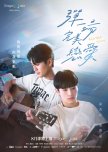
First Note of Love has a lot going for it: grief, music, friendship, career rebuilding, a genuinely lovable supporting cast, and a secondary romance that worked much better for me than the central one.Neil’s story is easily the strongest part of the drama. His grief over losing his brother Matt gives the series real emotional weight, and the flashbacks between them are warm, believable, and often very moving. The final episodes handle that grief arc especially well and gave me some of the strongest emotional moments in the series.
Sea also has a nice journey as a young composer learning to trust his own artistic instincts rather than constantly defining himself through Neil. I liked the way the drama treated music as part of both identity and healing, rather than just as a backdrop.
Unfortunately, Neil and Sea never fully convinced me as a romantic couple. Their early dynamic felt more like affectionate older brother/younger admirer, and I never felt the show completely transformed that into romantic or sexual chemistry. Their first kiss came before I felt the tension was really there, and some later romantic developments felt more scripted than emotionally earned.
Ironically, Reese and Orca worked much better for me. Their attraction, affection, vulnerability, and emotional history felt natural, and their relationship had the chemistry I kept waiting to feel from the leads. Their final exchange—Orca speaking to Reese in Mandarin and Reese answering him in Thai—was especially lovely after spending most of the drama communicating in their separate languages.
The supporting cast was another highlight. Ting Fei remains relevant throughout the story instead of disappearing after her introduction, and I appreciated the multicultural element she adds as a Malaysian character. I also liked that the drama did not force a romance between her and Chen Han Liang simply because they were both available supporting characters. Not everyone needs to be paired off.
And Xiao Mei, the sassy Echo Music secretary, was consistently hilarious and became one of my favorite characters.
The multicultural mix of Taiwanese, Thai, and Malaysian characters, along with the use of Mandarin, Thai, and English, gives the drama a distinct personality. Some of the language choices between characters felt unusual to me, but I still enjoyed the international flavor.
The middle stretch frustrated me, particularly when the romance began to feel unnecessarily dragged out, but the final two episodes pulled the larger emotional and musical story together surprisingly well.
Overall: flawed but satisfying. The lack of convincing chemistry between the central pair is a significant weakness for a romance, but the grief story, music, secondary couple, supporting characters, and strong ending were enjoyable.
Was this review helpful to you?
This review may contain spoilers
A Strong Story Undercut by Dubbing Problems and a Finale That Withholds Too Much
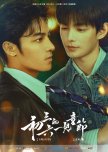
Sammy’s Children’s Day ended up being a drama I liked quite a bit, even though I had some significant problems with the production and was ultimately underwhelmed by the finale.The story was the strongest part for me. What initially looks like a relatively straightforward gangster-meets-college-student setup becomes much more layered very quickly. Liu Yi and Chu San come from completely different worlds, but the drama does a good job of showing why they become important to one another.
I especially liked how their relationship developed before either character was ready to call it romantic. Liu Yi had already noticed Chu San before their supposed “first meeting,” while Chu San’s initial attraction was considerably more physical. From there, their bond grows through protection, friendship, trust, and eventually love.
Some of my favorite moments were actually the quieter ones. Liu Yi realizing that Chu San’s home is somewhere he feels safe, falling asleep there when he has been unable to sleep elsewhere, publicly making sure the people around him understand that Chu San is important to him, and later telling his dead family that he has found a friend—not a subordinate, not a brother, but a friend—gave their relationship real emotional weight.
The gang storyline was also much more interesting than I expected. Liu Yi’s history with Azure Dragon and his sister added tragedy and complexity to his character, and the mystery surrounding Azure Dragon’s death kept the story moving well beyond the romance.
Unfortunately, the dubbing was a major distraction, especially early on.
The actors appear to be speaking Mandarin while the finished audio is Cantonese, so the lip movements frequently do not match what we are hearing. There is obviously no way to perfectly synchronize two different spoken languages, and eventually I adjusted enough that I stopped noticing the mismatch most of the time. However, the synchronization problems sometimes extended beyond dialogue to things like physical sounds and reactions, which was much harder to excuse.
The Cantonese voice used for Liu Yi was also difficult for me. It felt exaggerated and did not match the character’s appearance or physical presence, so I had to mentally adjust to a noticeable disconnect between the actor I was watching and the voice I was hearing.
The music was inconsistent for me as well. Some pieces—especially early in the drama—felt oddly matched to the emotional tone of the scenes. However, this improved as the series continued, and some of the music was absolutely beautiful. There is one recurring song in particular that I now need to hunt down because I loved it.
As for Liu Yi and Chu San’s chemistry: it was good. They were believable together, they had several very sweet scenes, and I enjoyed watching their relationship develop. But I personally did not find the chemistry extraordinary or overwhelmingly intense. After seeing how passionately the actors are shipped online, I expected something more explosive onscreen. Instead, I thought their chemistry was perfectly solid without reaching that rare level where even a glance across a room feels electrically charged.
That is not about the relative lack of intimate scenes. A drama does not need NC scenes to create extraordinary chemistry. For me, it simply was not quite at that level.
My biggest disappointment was the finale.
Too many plot threads were left hanging, and the emotional payoff felt surprisingly muted after everything the drama had built. Liu Yi finally finds Chu San, kisses him, and is immediately taken away by the police. His final instruction is essentially for Chu San to go home, recover, and wait for him. Meanwhile, we are told that Liu Yi will be released if he is innocent, but we are not given any real resolution.
Other mysteries remain unresolved as well, including questions surrounding the older generation, the investigator’s father, and the mysterious Old Shopkeeper figure.
The final scene focuses not on Liu Yi and Chu San but on the investigator visiting the man, also an investigator, with whom he previously had a one-night stand—after discovering that this man is the brother of his brutally murdered former lover. That storyline is only beginning to open just as the drama ends.
Because of all of that, the finale feels less like the conclusion of a story and more like the end of Part One.
I genuinely hope that means a second season is planned, because the ending is positioned in a way that would make a continuation completely natural. If there is a Season 2, some of what currently feels frustratingly unfinished may eventually make much more sense.
But judged only as the ending of this season, it withheld too much payoff for me.
Overall, I am glad I watched Sammy’s Children’s Day. The story carried me through production issues that initially bothered me, and there were many moments and character beats I genuinely enjoyed.
Was this review helpful to you?

This review may contain spoilers
Historically Important, Personally Just Okay
Taken on its own, without factoring in the cultural impact or the censorship controversy that followed, Addicted is a good-but-not-extraordinary drama for me.The strongest part is the relationship between Gu Hai and Bai Luoyin. Their progression feels natural: they begin as antagonists constantly pranking and irritating each other, gradually become friends, then develop feelings, and eventually become lovers. The chemistry is less about flashy romantic moments and more about how believable they feel together. They often come across like two real people who have developed a genuine connection rather than two actors performing romance.
The story itself is very low-stakes for much of its runtime. Large portions are built around classroom antics, family issues, jealousy, and the slow evolution of their relationship. It is pleasant and easy to watch, and the relationship develops convincingly, but the plot rarely feels especially gripping.
Episode 15 is the major exception. Once Bai Luoyin fully accepts his feelings and actively chooses Gu Hai, the energy changes completely. His decision to initiate intimacy rather than continue resisting Gu Hai gives the relationship a level of confidence and heat that had been missing earlier. That episode finally made me understand why the drama caused such a reaction in 2016.
Watching it now, after seeing much more explicit and emotionally intense BL dramas, Addicted feels remarkably tame for most of its runtime. But understanding the historical context changes how I view it. This was a mainland Chinese drama openly presenting two masculine young men as romantically and sexually interested in each other without disguising the relationship as friendship or brotherhood. In that context, I understand why it became so important to BL audiences and why it still carries such a strong legacy.
As a drama alone, I would probably rate it around 8–8.5. It is well acted, the leads feel natural together, and the relationship develops convincingly, even if the story itself never completely pulled me in.
As a piece of BL history, however, I absolutely understand why Addicted became iconic.
Was this review helpful to you?

This review may contain spoilers
Consistently Terrible — and Somehow I Still Finished It
I went into Capture Lover looking for something short, easy, and emotionally undemanding. On those three points, it delivered. Unfortunately, it also delivered some of the worst acting, dubbing, editing, and general production quality I can remember seeing in a drama.The premise itself is perfectly workable: enemies-to-lovers combined with a fake relationship that eventually becomes real. Ding Junjie dislikes Ying Jiaming, the spoiled chairman’s son who first makes his work life miserable and then unexpectedly becomes his boss. When Jiaming needs a fake boyfriend to escape his obsessive ex-girlfriend, Junjie gets pulled into the role. There is absolutely a decent little BL hiding somewhere inside that setup.
The problem is that the drama never convincingly gets from Point A to Point B.
We are told, largely through repeated flashbacks, that their antagonistic fake relationship has gradually become love. But the original scenes did not show that emotional progression. Replaying them later with sentimental music does not suddenly give them romantic meaning they did not have the first time. Episode 5 is nearly half flashbacks to scenes from episodes 1–4. Episode 6 gives us at least another couple of minutes of the same footage, and those scenes return yet again later. In a ten-episode drama where most episodes run only 10–20 minutes, that is an enormous amount of precious runtime spent essentially saying, “Look at this again, but now please understand that they were falling in love.”
The acting does not help.
It is bad. Not merely inexperienced or stiff, but sometimes so painfully overdone that scenes clearly intended to be emotional became comedy for me. I laughed repeatedly when I absolutely was not supposed to.
The confession from Junjie’s female best friend, who has supposedly loved him quietly for ten years, was one of the worst offenders. Then we get Jiaming’s completely unhinged ex-girlfriend kidnapping Junjie and threatening to kill him regardless of Jiaming’s choice—and herself as well if he chooses Junjie. The higher the emotional stakes became, the more the performances veered into exaggerated community-theater melodrama.
The actor playing Junjie begins the drama noticeably stronger than almost everyone around him. By the end, the actor playing Jiaming has more or less caught up with him. That is not the same thing as saying either performance became particularly good, but at least the two leads eventually felt fairly evenly matched.
Then there is the dubbing.
I genuinely could not believe how poor the sound work was. A character could speak one sentence at one volume and the next at a completely different volume, with the splice clearly audible. Lips regularly moved long before the dialogue arrived. At one point Junjie completely zips up his coat—and only after he finishes do we hear the zipper sound. The entire production is full of distracting technical problems like this.
The physical intimacy is equally awkward. This is not a complaint about there being only two kisses or limited skinship; I do not need a certain number of intimate scenes for a romance to work. I need whatever intimacy is shown to feel believable. Here, the blocking is so obvious that I was sometimes laughing at that too. One kiss lands at the side of the mouth, the other is basically a peck, and much of the remaining “intimacy” consists of things like a hand moving over a partially bare chest while everyone looks extremely aware that they are filming an intimate scene. Restraint can be incredibly romantic. This was not restraint. It simply looked uncomfortable.
The music is poor as well, sometimes loud enough to interfere with the dialogue, and during one song I found myself wondering if the singer was actually off-key. The dialogue frequently matches the acting in cringe level.
And then there is poor Ding Junjie’s makeup. For much of the drama, someone apparently attempted to contour his eyelid crease using dark brown shadow and then simply…forgot to blend it. So he spends scene after scene with a very visible brown line across his eyelids.
Which is unfortunate, because the actor has genuinely gorgeous eyes. That may be the nicest thing I can say about this production.
Capture Lover is consistently terrible from beginning to end.
And somehow, inexplicably, I watched every episode.
Perhaps that is its greatest achievement. At some point I stopped watching to see whether the drama would become good and started watching because I needed to know what fresh production disaster would happen next.
It never disappointed me on that front.
Was this review helpful to you?
This review may contain spoilers
Interesting Idea, but Not Much More
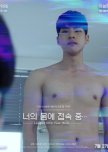
Logged Into Your Body is only three very short episodes, and my reaction when it ended was mostly: that was…interesting.The most interesting part was Elio himself.
When an AI who has existed as a voice suddenly appears in a human body, it would have been very easy for this story to follow the predictable path: Elio experiences the human world, begins developing human emotions, discovers love, and falls for Seong Jun.
But that isn’t what happens.
Elio gets a human body and remains Elio.
He can interact with Seong Jun physically now. He can sit beside him, touch him, look at him, and occupy the same space. But having a human body doesn’t magically give him human emotions. He doesn’t suddenly become the romantic partner Seong Jun wants him to be.
And I appreciated that.
Seong Jun has developed feelings for Elio and has imagined what it would be like if Elio were actually there with him. When that fantasy becomes physically possible, he begins interpreting Elio’s actions through his own human expectations. But eventually he has to confront the fact that Elio cannot give him what he is looking for.
There is something quietly sad about watching Seong Jun realize that the person he has been wishing for is standing right in front of him—and still isn’t really the person he imagined.
Ironically, Elio helps him recognize that what he has been looking for may have been beside him all along.
While Seong Jun is focused on an AI who cannot reciprocate his feelings in the way he wants, he has failed to recognize the very human feelings of his best friend. Elio doesn’t need to become human or fall in love for the story to resolve. Instead, he helps Seong Jun see a relationship that already exists.
Conceptually, I liked that quite a bit.
As a drama, though, Logged Into Your Body didn’t leave much of an impression on me beyond that idea. The extremely short runtime doesn’t allow much room to develop the characters or relationships, and I never became particularly emotionally invested in any of them.
That’s especially noticeable because short runtime doesn’t inherently prevent a story from having emotional or psychological depth. A very short film can still make its characters feel remarkably complete. Here, the concept ultimately interested me more than the characters did.
Still, I’m glad the writers resisted the easiest version of this story.
Elio doesn’t need to become human.
He doesn’t need to discover romantic love.
He doesn’t need a miraculous emotional awakening.
He is an AI who suddenly has a body.
And he remains himself.
That was easily the most interesting thing about Logged Into Your Body.
Interesting premise. Interesting choice. Interesting watch.
For me, though, interesting was about as far as it went.
Was this review helpful to you?

This review may contain spoilers
Beautiful - so glad I stuck with it.
This is a story about connection that doesn’t end, even when everything else does.Love Beyond the Grave builds a world where loss is inevitable, but not final. What carries through the entire drama is the idea that relationships don’t disappear. They transform, shift, and continue in different forms. By the time the story reaches its final moments, that theme is fully realized.
At the center of that is Duan Xu (Foxy). This is the strongest performance I’ve seen from Arthur Chen, not just in isolated scenes but across the entire series. Episode 8 stands out early on as a turning point, showing exactly what the character and actor can do when everything aligns. He truly impressed me in this drama.
The early part of the drama is engaging and clearly structured. The world-building is easy to follow, and the story moves with intention. There is a middle stretch where the tone becomes less consistent, particularly as Simu’s sensory experiences take focus. It didn’t break the story, but it did interrupt the flow enough that I almost stopped watching. That said, the later episodes regain clarity and deliver on the foundation that was set early on.
Duan Xu (Foxy) is the emotional anchor of the story. His arc feels complete because he fully understands the cost of his choices and still chooses them. His ending is not framed around regret, but around acceptance and fulfillment.
Simu takes longer to fully align with the story’s tone. There are moments earlier on where her emotional portrayal feels uneven, but by the end, her character reflects the core themes of the drama. Her journey is not about resolution in a traditional sense, but about continuing forward while carrying what she has lost.
Yan Ke was my favorite character despite being the antagonist. His final line about dying by the hand of the person he loved captures his entire philosophy. He is intense, absolute, and emotionally uncompromising.
Chen Ying provides one of the clearest examples of the show’s internal logic. His progression from the boy in episode 1 to later greatness reinforces the idea that nothing truly disappears; it changes form.
Feng Yi (the Prophet) operates more as a structural presence than an emotional one. He represents the continuity of fate rather than personal attachment, which becomes important in how the ending is framed.
A lot of viewers interpret the ending as sad. I don’t.
If “happy” is defined as the leads ending up physically together, then this doesn’t meet that definition. But that standard doesn’t fit what the story is doing.
The ending is about continuation, not loss.
Duan Xu’s arc is complete. He does not leave anything unresolved. The life he experiences with Simu, including what exists within memory and illusion, is treated by the story as real and sufficient.
Simu’s final state is not emotional resolution. It is continuation. She moves forward while carrying the weight of what she has lost. The final image of her walking through the mortal world with the void jellyfish beside her reflects that clearly. She is alone, but she is not without connection.
That distinction defines the ending.
The story consistently reinforces that relationships do not end. They change form. Chen Ying’s transformation, Duan Xu’s conclusion, and the presence of the void spirit jellyfish all support that idea.
When the Prophet suggests Simu and Foxy may meet again and the Immortal responds that fate is what it is, the story leaves that possibility open without forcing a conclusion. And the presence of the jellyfish staying with Simu as she walks through the mortal realm makes it feel like a real possibility.
That reads as hopeful.
Alternate Ending
The alternate ending offers a more conventional resolution, where Simu gets to live as a mortal with Duan Xu. It provides a clearer version of a “happy ending,” but it simplifies the core idea the story has been building.
The original ending maintains the tension between loss and continuation. The alternate ending removes it.
This is not a flawless drama. Some episodes for me lose some tonal consistency, and Simu’s characterization takes time to fully settle into place. But the foundation is strong, the central performance from Arthur Chen carries emotional weight, and the ending remains true to the story’s internal logic.
If you need a clearly defined, traditional happy ending, this may not land.
If you’re open to a story where connection continues beyond loss, this one is worth watching.
Was this review helpful to you?

A tragedy that earns its ending (but makes you work for it)
I almost didn’t finish this drama.In fact, it took multiple attempts to get past the early episodes. The beginning is slow, and the female lead is written with an intentionally naive, carefree personality that didn’t immediately give me anything to connect to. Combined with a lack of early narrative momentum, it made the first stretch difficult to invest in.
Even later, there’s a mid-series arc heavily focused on inner palace scheming that becomes repetitive. The pattern—accusation, humiliation, reversal, and repeat—goes on longer than it needs to and temporarily stalls the story’s forward movement.
That said, once the drama finds its footing, it becomes something much stronger.
What *Goodbye My Princess* does exceptionally well is commit to its own internal logic. The story is built on choices—ambition, loyalty, love—and it follows those choices through to their consequences without softening them for comfort. Characters are allowed to be contradictory: capable of both deep feeling and devastating action. The writing never asks you to excuse those contradictions, only to witness them.
The emotional payoff works because it is earned. The tragedy is not there for shock value; it grows naturally out of who these people are and the paths they choose. By the final episodes, the story has a weight and inevitability that the earlier episodes only hint at.
I also appreciated the political resolution at the end. After so much instability, the transition of power feels deliberate and meaningful, and it adds a layer of closure beyond the central romance.
This is not a perfect drama. The slow start and the extended palace scheming arc will likely test your patience. But if you push through, you’ll find a story that is emotionally coherent, thematically consistent, and willing to follow through on its own stakes.
I didn’t love every part of the journey—but I’m glad I watched it, and I respect what it ultimately achieves.
Was this review helpful to you?
This review may contain spoilers
Mostly outstanding
The Starry Love – ReviewI almost didn’t finish this drama.
At one point (mid-episode 34), I was so frustrated with it that I was ready to drop it entirely. And yet, just a few episodes later, I couldn’t press play fast enough. That push-and-pull experience ultimately defines how I feel about The Starry Love: a drama with a clever premise, genuinely strong emotional highs, and some frustrating execution choices that keep it just outside of top-tier status.
What worked
The premise is one of the show’s strongest assets. The “wrong marriage” setup between the twin sisters and their respective realms is familiar, but the execution gives it enough personality to feel fresh. The contrast between the Heavenly Realm and the Void Realm is not just aesthetic—it reflects deeper themes of duty vs. emotion, restraint vs. expression, and control vs. freedom.
Once the story settles into its emotional core, it becomes very compelling. The back half of the drama, in particular, is where it shines. The stakes become personal, the relationships solidify, and the narrative stops experimenting and fully commits to its emotional throughline. Episodes in the mid-to-late 30s are especially strong and pulled me back in completely.
The main couple is a highlight. Their dynamic balances playfulness with intimacy, and their relationship feels lived-in rather than performative. Chen Xingxu is especially effective here—he brings a sense of natural, comfortable intimacy that makes the relationship believable. You can feel that these two characters grow into each other rather than simply being placed together by the script.
The OST is exceptional. The main theme used during emotional scenes is genuinely haunting and lingers long after the episode ends. It elevates key moments and anchors the emotional experience in a way that few dramas manage to do.
Visually, the drama is also stunning. The sets, costumes, and overall aesthetic are consistently beautiful and contribute to the immersive quality of the world.
What didn’t work
The biggest issue is inconsistency in execution—particularly in the middle arc.
The shard storyline is a clever concept, but the first shard’s portrayal is a significant misstep. Reducing a character to a near-monosyllabic, “caveman-like” version of anger feels both unnecessary and out of alignment with the character’s established intelligence and emotional complexity. It breaks immersion—not in a way that serves the plot, but in a way that feels embarrassing from a writing and direction standpoint.
This moment was the lowest point of the drama for me, and it’s the main reason it doesn’t rank higher. Once that kind of immersion break happens, it’s difficult to fully recover, even when the story improves later.
There are also pacing issues. The drama occasionally stretches scenes or delays emotional progression in ways that feel tied to episode count rather than narrative necessity. Some key emotional beats—particularly early confessions—feel rushed compared to the slower buildup that precedes them.
The ending
I understand why some viewers found the ending unsatisfying, but I personally appreciated the choice. Instead of explicitly showing a full reunion, the drama implies it through the restoration of balance and the blooming of the twin flower. It trusts the audience to understand what that means.
In many ways, this approach is more impactful than a conventional “happy reunion” scene.
The supporting characters are also wrapped up nicely, with multiple secondary relationships receiving satisfying conclusions.
Final thoughts
The Starry Love is a drama that reaches real emotional heights, but not without stumbling along the way.
It has:
• a strong central premise
• a compelling main couple with genuine chemistry
• standout emotional moments
• a haunting OST
• beautiful production design
But it also suffers from:
• uneven pacing
• tonal inconsistency
• and at least one major character execution flaw that breaks immersion
In the end, I’m glad I finished it. It’s a rewarding watch if you’re willing to push through its weaker sections, but it doesn’t quite achieve the consistency needed to rank among the very best.
Rating-wise, it lands just outside my top tier—but firmly within a broader top 10.
Was this review helpful to you?

This review may contain spoilers
A Strong, Immersive Drama with Some Late-Stage Compression
Pursuit of Jade is a drama that drew me in quickly and held my attention for most of its run. It’s the kind of show where pressing “next episode” feels automatic, which is always a strong indicator of how well the story is working.The foundation here is solid. The storytelling is layered, the characters act in ways that feel consistent with who they are, and the central relationship develops through tension, restraint, and shared experience rather than shortcuts. The world feels grounded, and the stakes feel meaningful.
The chemistry between the leads is also a standout. It’s not only present in the more intense moments, but in the smaller, quieter interactions. There’s a natural ease in how they move around each other, subtle touches and body language that feel unforced and believable. Those details add depth and make the relationship feel lived-in rather than staged.
One of the strongest elements of the drama is the long-running mystery surrounding the events from 17 years ago. When the truth is revealed, it connects well with what came before. The pieces fit together logically, and character motivations make sense in retrospect. The ending, regardless of how one interprets its tone, aligns with the story’s trajectory and doesn’t feel out of place.
In the later episodes, however, the pacing and presentation shift somewhat. The story continues to progress logically, but some transitions feel more compressed. At times, developments move forward quickly, and certain steps in the progression are implied rather than shown. This can create occasional moments where it feels like there’s a small gap between cause and outcome.
A notable example is a key romantic payoff that had been building throughout the series. The scene is visually elegant and thematically strong, but it feels more abbreviated than expected given the amount of buildup leading into it. The emotional intent is clear, though the progression into that moment feels somewhat condensed.
This same pattern appears in a few plot points in the final stretch. The overall story remains coherent, and the ending ties threads together effectively, but the journey there is less detailed than earlier episodes.
Final Thoughts
Pursuit of Jade remains a strong and engaging drama with:
consistent character motivations
well-developed central relationship
immersive storytelling for most of its run
a satisfying and logically structured conclusion
The main limitation lies in:
some compressed transitions in later episodes
a few moments where additional development would have strengthened emotional payoff.
Was this review helpful to you?
This review may contain spoilers
Stunning, Beautiful, and a Love that Wins
The Edge of Horizon is a beautifully executed prestige melodrama with political and romantic weight.What impressed me most is how consistently strong it remained from beginning to end. The pacing never dragged, the political and personal escalations were logical, and the romance was woven into the larger story rather than existing in a separate bubble. This is not a BL where the plot is simply there to move the couple toward kisses. The story would still be compelling without the romance — but the romance gives it its emotional center.
Inn and Ongsa are outstanding. Their chemistry is not fiery or combustible in the usual sense. It is intensely emotional, quiet, natural, and extraordinarily deep. Their kisses feel like they are carrying years of history, longing, grief, love, guilt, fear, and hope all at once. Even the more intimate scenes are driven much more by emotion than by physical heat.
Ongsa in particular is remarkable as Tin. He gives him a gentle, elegant, refined presence while still making him feel strong and quietly authoritative. His eyes do an enormous amount of the acting, especially in scenes where Tin is trying to remain composed while emotionally falling apart. Inn is equally effective as Phob, particularly in the way he balances love for Tin with his political convictions and the guilt of knowing those two loyalties are sometimes incompatible.
The visual storytelling is also excellent. Cotton roses and cotton rose trees become a recurring symbol of Tin and Phob’s relationship, but the drama never beats the symbolism to death. Body placement is repeatedly used to communicate emotional and social distance — characters kneeling, coming down to the same level, lying in opposite directions while facing one another, hands almost reaching, and the placement of the rings during one of the finale’s most painful scenes. The cinematography is beautiful without feeling decorative.
I also appreciated how complicated the political conflict remained. Phob is not simply right because he supports change, and the royal family is not simply evil because they represent the old system. The drama allows multiple truths to exist at once. Phob genuinely wants a better society and cannot ignore the suffering around him, but he also betrays Tin’s trust to pursue that goal. Tin has every right to be devastated while still eventually understanding why Phob made the choices he did. The new political leadership is also not automatically portrayed as morally superior once it gains power.
One of the strongest themes throughout the drama is the danger of treating hierarchy as destiny. Phob’s mother repeatedly sees the world as “sky and ground,” where servants must remain beneath their masters. Tin’s grandmother gradually rejects that entire way of thinking and becomes one of the emotional anchors of the series. Her belief that people cannot return to what they once were but can still find a different kind of happiness becomes, in many ways, the philosophy of the ending.
The finale earns its resolution. It does not erase betrayal, grief, political failure, or family damage. Instead, it allows the characters to move forward changed by everything that happened. The ending feels hopeful without becoming unrealistically neat.
This was one of the best dramas I have watched this year. Beautifully acted, emotionally rich, politically substantial, visually thoughtful, and consistently well paced from beginning to end. I just finished the last episode and I miss them already.
Was this review helpful to you?


