


 3
3 7
7 2
2 1
1 1
1 1
1 1
1 1
1 1
1 1
1


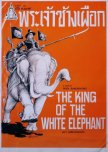
Something of a fable, or a morality tale, with its sparse story and characters who represent values - all the virtues belong to one king, all the vices to another. War, ego, governance, expenditure and how women are treated all have their moments in this.
Jaunty, jovial western music as the soundtrack seems an odd choice for going off to war from today's point of view. The pieces do bring energy to their scenes, a different way of accomplishing with a few cameras what takes many (and a lot of editing) today. I kept thinking the extras must have had fun filming this, with all the running around and shouting.
Moments of surprising humour some of which were clearly intentional, like that song quote.
How much history is in this? There were several rulers given the epithet "King of the White Elephant". It's located to a specific year (1540 CE), king (Chatra) and cities (Ayodhya and Kanburi), but the flattening of the two kings into vice and virtue complicates that. Is it fair to read an undercurrent of chauvinistic nationalism into that binary? Residual (maybe even nurtured) trauma from Burmese invasions still lingering, more recent anxieties and difficulties finding their way out through this, or simply fodder for this and other movies? The King of Ayutthaya in 1540 was not all virtue en.wikipedia.org/wiki/Chairachathirat
Or was 1540 easy, because it was a tidy 400 years earlier? Long enough ago to become part of malleable mythic memory.
I have so many questions =D
Available on Thai PBS and Film Archive Thailand's YT
Jaunty, jovial western music as the soundtrack seems an odd choice for going off to war from today's point of view. The pieces do bring energy to their scenes, a different way of accomplishing with a few cameras what takes many (and a lot of editing) today. I kept thinking the extras must have had fun filming this, with all the running around and shouting.
Moments of surprising humour some of which were clearly intentional, like that song quote.
How much history is in this? There were several rulers given the epithet "King of the White Elephant". It's located to a specific year (1540 CE), king (Chatra) and cities (Ayodhya and Kanburi), but the flattening of the two kings into vice and virtue complicates that. Is it fair to read an undercurrent of chauvinistic nationalism into that binary? Residual (maybe even nurtured) trauma from Burmese invasions still lingering, more recent anxieties and difficulties finding their way out through this, or simply fodder for this and other movies? The King of Ayutthaya in 1540 was not all virtue en.wikipedia.org/wiki/Chairachathirat
Or was 1540 easy, because it was a tidy 400 years earlier? Long enough ago to become part of malleable mythic memory.
I have so many questions =D
Available on Thai PBS and Film Archive Thailand's YT
Was this review helpful to you?


