
 K-Drama

This review may contain spoilers
Fun watch but not as well-rounded as I would've liked
This review is a bit more critical of the c-drama's character-choices and plot mostly, so beware.I thoroughly enjoyed some parts of the series and liked a few characters (i.e., Lingbo, Lingbo's mother, Yuzhi- although his character was slightly bland-, and Cai Zhao's initial character)
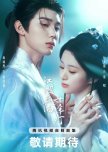
Generation to Generation started off as a very promising c-drama: a light-hearted, ambitious girl comes across a mysterious angsty boy who has just lost his father and they team up to defeat the antagonists. I loved their dynamic and characterisation until about the 12th episode mark, where it was revealed Chang Ning was Mu Qingyan. After this transition, the male lead lost much of what made him unique, and he turned into another one of those typical, powerful, possessive Wuxia male leads. His loss and revenge arc was unfortunately thrown out in favour of the romance story, which also seemed promising as first, but then just deteriorated later on. I loved their initial interactions, the way that Mu Qingyan was closed off at first, and Cai Zhao kept penetrating his social barrier, kept forcing him to confront the world. I especially loved the scene in the garden, where she tells himthat she will protect him- it really felt like there was true, human emotion there.
But then... of course, after Chang Ning --> Mu Qingyan, both the main characters were constantly restricted by each other. We never got to see Cai Zhao become the amazing leader she could've been because of Mu Qingyan's forcing her to stay with him and we never got to see Mu Qingyan conquer his own demons because he was constantly obsessed with Cai Zhao. We only saw this kind of toxic back and forth, cat and mouse game.
In regards to the plot, the first twenty or so episodes solely dealt with the Jianghu side of things- the Ziwei method, the man in black, the jade sunflower, etc. I had no problem with this plot, it was pretty well done, but then it just halted after Cai Zhao and Mu Qingyan's romance took the spotlight. This felt very weird and I feel that the writers should have just continued the way they were going instead of trying to exaggerate their love story. They should've kept the love-story in the background. By the way, it wasn't even better than what the original plot was doing: it was literally just Cai Zhao trying to run away from Mu Qingyan and the latter always pulling her back. This would've been an okay, albeit toxic and dark, shift, but there was no self-awareness of the fact that Mu Qingyan was literally evil for not leaving Cai Zhao when she was forced to choose between him and her sect, family, and friends. To me, it just proved that he didn't love her enough to genuinely think about her feelings and her life, and more-so wanted to possess her like an object. The male lead was idealised for this behaviour and we were being conditioned into accepting that he truly loves her, which is the BIGGEST issue with this. I'm all for dramas that deal with toxic relationships, broken people, imperfect leads, etc, only not when said toxic relationships and behaviour is idealised and looked upon as perfection. Characters are supposed to be messy, yes, they're supposed to be flawed, but the way Mu Qingyan was flawed was not at all helping his character or raising awareness.
The rest of the characters were mostly fine, I just would've liked to see more development- Lingbo goes through a pretty solid development arc, she became exactly what I envisioned her character to be in the end. Yuzhi was also a good character (more tolerable than the male lead), but I wish the writers could've made his character face more internal conflict and tension than just admitting his feelings for Cai Zhao. Like perhaps there could've been some grey area for him to deal with in regards to his brother and the heir of his sect.
I also wanted to discuss the camera-work and editing real quick. The way scenes were shot, cut, edited, the way that the characters and their emotions were displayed through camerawork could've been better, and the reason why I'm mentioning this is because I feel that it had an important role in allowing the audience to connect with the characters. There were some scenes where I wished the camera-angle, or the opening shot, or the focus on certain aspects of the set, would've been a little different, just so I could see the actors' emotions, and consequently, feel what they were feeling. But it was just slightly lack-lustre and did affect the overall watching-experience.
In terms of re-watch value, I would stick to a one-time watch only. Perhaps, one day, I may go back and rewatch only the first ten or so episodes and pretend that Cai Zhao and Mu Qingyan's story ended differently to how it did, but not anytime soon.
Was this review helpful to you?


