



Our life experience in this world condensed into a beautiful cinematic exhibition
This is my first review for MDL, so please be kind with me 😊I stumbled upon this movie by chance, but I am very grateful to know that this "type" of movie exists. I know this is based on the video game "The Exit 8" but it is unlike any other movies based on games. This has lots of esoteric symbolism. Everything in this movie has a meaning. I mean, everything! Hidden in plain sight.
Cinematography and directing are tight and very interesting, to the point that we as the audience can feel that we are involved in finding the "anomalies" and making decisions (I found myself shouting "move ahead!", or "no! go back!") basically becoming part of the movie. We just don't watch passively. I'm not familiar with Genki Kawamura's other works (the director of this movie), but will be sure to check out more from him. Top-notch screenwriting as well.
The entire cast' acting is amazing, especially the main lead, Kazunari Ninomiya. It's one of his best performances. A cameo appearance by Nana Komatsu is also a welcome addition and perfect for the role (because she's now a mother, right?).
Now, what makes this movie perfect is not the production, but the hidden meaning behind all the esoteric symbolism, because it can help us in finding the realization. It is up to us to find the subtle clues by paying attention to the details of our surroundings, and then make meaningful connections (This poster represents one thing, that "walking man" represents another, the boy represents that, and so on and so forth).
Once we are able to make a connection about that whole experience of being "stuck in the loop" actually represents our life in this world, this movie can help us to exit this matrix. All we need to do is to keep moving and pay attention to our surroundings (see the signs, anomalies, glitches in the matrix, etc.), not get distracted by things this world offers — like things that are not essential or needed for our escape, also to persevere and be patient on our journey, and to not repeating the same pattern of mistakes again that can make us to regret. Those are the values brought up in the movie.
Simply said, this is ultimately the best movie in years. Of course, only "those who get it will get it, and those who don't won't", but even if you don't seem to get it, just pay attention and be patient in watching the movie (patience is required, as in living a life in this world) — then try to make a connection to your life. Your life may not be the same again.
Good luck in finding the exit!!
10/10
Was this review helpful to you?
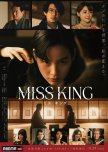
A carefully-crafted allegory, about courage to face and overcome seemingly impossible challenges
"Miss King" offers us a charming approach to presenting familiar real-world issues and occurrences, assembled into a serial-drama centered on the game of Shogi, a Japanese chess. But this is not a drama about shogi, even many scenes show us the actual games' moves — enough to make Shogi enthusiasts be excited. Shogi is only used as a central theme of the allegory. We don't really need to understand the game to watch and appreciate it. While many may compare this to the movie "The Queen's Gambit", I don't see anything similar between the two in their stories, although "The Queen's Gambit" might have been used as a thematic inspiration to form the initial idea of "Miss King".The first thing that stands out from the first few minutes of watching is the top-notch quality of the cinematography as well as the editing and post-production, including the music. This does not have the typical "cheap & quick" serial drama production we have seen too often on mainstream TV. From the beginning of the episode, they give us very artistic, feature-movie-like visual display and creative camerawork without being too "artsy" and pretentious. The production team really put effort down to very conceptual details, even the "MISS KING" title presentation where the pointed warped texts start with the first letter for episode 1, then 2 letters for episode 2, and so on, up until the final episode when the entire letters are warped.
Despite the dramatizations, the story of "Miss King" doesn't go too deep into unnecessary complications and plot twists. The plot stays as simple and straight-forward as possible here, and many of the conversations are on-point and vital to the story. Just like the actual game of shogi (I'd assume), it does have the attack and retreat moments. Even though there are a few repeated patterns here and there, it is still far from becoming "just another shallow & boring story" plaguing many of the now over-saturated TV dramas. Screenwriter/director Yamagishi Santa delivers the most efficient storytelling condensed within the tight and gripping 8 episodes, with a rather short duration per episode. I wished the duration could be a bit longer, like 45 to 50 minutes each. In most episodes, 30 minutes feel like merely 15 minutes. It passes very quickly because the editing is very tight, and shuffling between two scenes is used quite often for thrilling effect. The cinematography is very good at presenting each scene from multiple different angles, sometimes even using extreme close-ups. Re-watching all the episodes is recommended, because we may miss some small details.
The Shogi whereabouts and its entire intrigues in the drama could very much represent the entire showbiz/entertainment industry (be it sports, film, TV, music, etc.), specifically in Japan but also in many other countries throughout the world, which is tainted by corporate greed and the thirst for power. This is what makes "Miss King" a very likely candidate to be the best J-drama for 2025. It has a multilayered meaning. Simple, but deep at the same time. To those of us film enthusiasts who are curious to interpret the allegorical meaning and symbolism beyond the surface-level plot or story line, this is an absolute must-watch because this drama has plenty of them, just like the 2025 movie "Exit 8" (check out my review of "Exit 8" here on MDL 😉).
What is being presented in "Miss King" is not about "selling the dreams/aspirations", but a carefully-crafted fictional allegory. In particular, I have noticed some cautious re-narration (or RENA-rration 😁) of what happened to the acting career of this drama's main lead female actor: Nounen "Non" Rena. — She is the most suitable person in playing the role of the main character Asuka, because they both share the similar flair, brilliance, and also struggles to overcome obstacles in the world that abhors the natural sparks within a person. It seems that whoever came up with the story already had Non in mind to play the role of Asuka when the character was being developed (the character was built around the actor and not vice versa). I'm not going to give any spoilers but just one clue: in the ending scene of Episode 5, it reveals a similar situation to what had actually happened to Non back in 2015.
Again, without attempting to spoil the scenes, there is one important statement said by Todo Seigo (the main/leading supporting character played by Fujiki Naohito): "I'm going to kill the old era", which may explain the "hidden aim" presented in this drama, thanks to Abema TV. His character is displayed as "hot temper" but, at the same time, also "cool-headed", a unique combination that's essential in strategically guiding and refining any person gifted with raw talent and wild/unfocused energy like Asuka.
When we think about "the old era" within the showbiz industry, that refers to the outdated system of hierarchy, controlled by a very few yet highly influential key people at the very top of the pyramid where most of the important decisions are made, in which the entire industry is being run through exploiting the ones at the "bottom of the food-chain": namely all the young and naive talents with high aspirations. These talents are used merely as "assets" that can be exploited, disposed of and replaced at any time. The entire "agency system" provides these assets to do the work in a "binding agreement" so that entertainment commodities can be produced as money-generating tools. In reality, many of these modern-day "slaves" (not owned by landlords, but talent agencies) are more than willing to sacrifice their authenticity, integrity and freedom just for wealth and fame, and in certain cases, even dignity and moral values for a slight chance to move up in the hierarchy. These people then turn to become "monsters" (the term used often in this drama) , despicable creatures who "have made a deal with the devil." As outlined in the first line of this drama's synopsis, it is a "shitty world" indeed. There are also many talented individuals within the industry who actually understand how this system works, but decide to compromise and let themselves remain in the safe "middle ground" by choosing not to excel further, in order to keep themselves at bay, from being attacked by those monsters. They are represented in this drama by the seemingly "pragmatic" Yuna character (played excellently by Narumi Yui), a character many of us here may relate to at some degree. This drama also presents us with the nature of a "binding agreement" or "contract" and its actual significance in controlling the moves of these talents/assets. There's also a seemingly "random" casual joke about plastic surgery popping up in a conversation.
Of course, a drama is a drama, a play. All the dramatizations of the characters and the "larger-than-life" fictional story line are needed so that it is exciting to watch, be it the background stories, the situations, character development, etc. Some of the characters are displayed as serious and very realistic, like for example the Sakai Reiko character (played by Kurashina Kana), and Asuka's mother. The other characters are a bit "comical" to spice up the story, like Todo Seigo, for example, or the variety of "supposedly villain" characters in the Yuki family clan. We can relate ourselves to any of these characters in the "Miss King" story. Certain personality traits being displayed so often by the characters here are: envy, pride, selfishness, rivalry, victim mentality, and lack of self-worth, while on the positive side, goodwill, compassion and empathy also play a significant role in balancing the story so that it does not fall into a toxic negative vibe, where revenge may turn into absolute nihilism. This is a positive drama about courage to face and overcome seemingly impossible challenges. The description of "revenge" here is more about "taking the power back" or "reclaiming what was once lost", and certainly not the "bring everyone who put me down into the pit of hell" type of revenge.
However, I have to disagree with the official synopsis given by Abema TV, that Asuka's "revenge" was fueled by deep hatred (nikushimi / 憎しみ). I don't see that in her character at all. Maybe "rage" (uncontrollable anger) is the more appropriate word to describe what drove Asuka in the first episode, where she began to act impulsively, as opposed to a premeditated plan. Asuka was indeed angry and in pain, but all her anger was more like a "righteous anger" triggered by the world that is full of manipulations and betrayal where she became a victim. Despite being angry and in pain to begin with, Asuka's authentic love for shogi since she was a child (displayed when she smiles during her shogi matches as if she is actually having fun doing it) is the source of her willingness to fight back, and that alone is beautiful to watch! There is a great amount of love being displayed in this drama, even without any romance. As Asuka began to build her trust in the ones who support her unconditionally, she was able to find a way to convert or transmute the energy of anger into creative expression using the platform that she loves, which is shogi. In the real-world, many authentic artists and musicians do that, including I believe Non herself. Speaking of Non, she still has that adorable sparks of energy/aura that has been unique to her ever since she starred in the classic asadora "Amachan", and that energy is incredibly magnetic! 😍
I give "Miss King" a high rating because it is one of the very few J-dramas that has the ability to transform us, if only we're courageous enough to open our hearts. It does not lecture us about virtues or moral values. It is up to us to extract the story, relate ourselves from the characters, and use the allegory as a mirror reflection.
9/10
Was this review helpful to you?

An excellent "hybrid drama" with aspects of psychological thriller, mystery crime, and deep romance!
This is only my 4th MDL review. I won't review any movie or drama if it isn't enough to move me. So, the reason why you can see my review here is because "25 Years of You" could, in fact, shake my gut so bad. It was a terrifying experience, yet so gratifying and delighting at the same time!This 10-episode serial drama was produced by Nippon Television (NTV) and first aired on their network. NTV is known for producing interesting and "out-of-the-ordinary" TV dramas (highlights including 2025 dramas "The Hot Spot" and "Chosen Home"). It also streams internationally on Netflix, so in that case I'd use a "western-styled" naming arrangement (first-name followed by surname) in mentioning the cast, like shown on the Netflix site. As with all my reviews, I will not give spoilers and hints. I'll just put my impressions on the general story, directing, acting, camerawork and post-production, as well as how we as audiences can absorb — namely, any life lessons that may arise from watching this drama. Please note, I do not use AI in writing this review, so what I'm going to share is my own personal impression. My emotions are involved, even though it includes some technical analysis. If you want to know what kind of dramas and movies I have reviewed here, feel free to check them out at: https://kisskh.at/profile/HomeScreenAlchemist/reviews
First of all, this is actually a "hybrid drama" with balanced aspects of dark psychological thriller, Japanese-styled mystery crime, and deep, heartfelt romance. I've seen quite a number of hybrid genres being utilized lately in a number of Japanese TV dramas, especially in 2026. Maybe because "normal/typical dramas" have become way too oversaturated nowadays and could easily become snoozefest. But, ironically, most of the time, the creative team would try to pull out a brave experiment by combining these genres only to end up failing in the execution. In terms of one that has a perfect balance of the entire aspects, with a storyline that can also manage to flow naturally without being too forced, I would say "25 Years of You" is the only drama that is able to do that, so far. Hence, the reason I was compelled to write this review.
NTV outlines this drama in their synopsis as "A love-suspense story that is both the purest and the most dangerous." Wow. Sounds intriguing, right? It follows the story of two individuals since childhood. One is named Sota, and the other one is Mariko. For 25 years, Sota managed to follow and observe Mariko in the shadows (some may consider that as "stalking"), all done without them interacting with each other. This was triggered by two events: one that happened earlier to Sota, and the other one that happened to Mariko. That's the start of the story. 25 Years later, as early 30s adults, they had their first exchange of conversation. The rest can be seen as spoilers, so I will stop here in terms of explaining the background story. You can also read the drama synopsis, which doesn't have much to disclose either. 😆
What makes this drama very interesting?
Much of the credit is due to the clever screenwriting. Kudos to the screenwriter, Mako Watanabe (she wrote another hybrid psychological thriller/mystery/romantic drama, "Murderous Encounter", starring Jun Shison, that I have yet to watch). She might become my second favorite J-drama screenwriter after the genius Bakarhythm. Huge respect also goes to the two different directors, Kosuke Suzuki and Takahiro Horie, one that specializes in more romantic dramas and the other one that specializes in thriller and mystery-suspense dramas. I love how they can blend these two aspects without colliding into each other. I can name certain dramas that ended up failing at combining genres to the point of a rather embarrassing outcome, which made me raise eyebrows and even do facepalm numerous times, even with high-profile award-winning lead actors that excel in acting. "Surname Confidential" (with 3 different directors) and "Silent Truth" (2 directors) are two of such examples. Those two have some forced comedic aspects, probably to ease the tensions, but fell short in terms of storyline and overall directing. On the other hand, "25 Years of You" is, in my opinion, the first J-drama that is successful in blending thriller, mystery, and romance together beautifully and cohesively without being forced. Take note, screenwriters!
The editing is tight and wonderfully done. Sometimes they shuffle between two scenes, to make the drama become more gripping and thrilling, without losing the pace and disrupting the thread of the story. The casting selection for the female-lead role is perfect. It's my first time watching Sae Okazaki taking the lead role. I was not familiar with her acting at all, so I had zero expectations of her. But my goodness, she's fantastic! She's excellent at using subtle facial expressions, even for showing multiple emotions at once. I don't think many other talents can do that. So, that's a plus! She is perfect for her role as Mariko Nose, a daughter born into a wealthy business tycoon family. The way she's able to express her constant agitation, anxiousness, suppressed loneliness, and distrust of others is exceptional. Her acting during various types of conversations is also very natural and never forced, but yet never becomes boring because it seems she embodies the character as Mariko (becoming the character instead of just "acting/playing it" like most actors do). I can see that she may get more main role gigs in the future just from this drama alone. Directors take notice! Knock, knock, Hirokazu Koreeda, where are you?
The male-lead role as the quiet and enigmatic Sota Yukimura, played by Hokuto Matsumura (the boy-band idol from SixTones), is also really good as well, even though the characteristic of his role is very demanding to be multi-faceted and requires playing with nuance. To me, it's one of his finest in terms of acting. However, he could polish his expression a little bit to juggle between nerdiness and bravery, because right now it seems he had 2 separate personalities (maybe it has something to do with the specific directions of the 2 different directors). His acting in the previous Netflix drama "Sins of Kujo" is kindergarten compared to this. Also worth mentioning, he can develop a natural chemistry with Sae Okazaki even though their roles require them being mostly awkward with each other due to their supposed hidden feelings. It's really cute to watch how things develop between them (and I'm not even a romantic drama fan!). I guess their energies can click naturally, the kind of chemistry I felt to be missing in his previous romantic drama "Ensemble" (with Haruna Kawaguchi). Other supporting cast are also good, some of them are considered "veteran actors" with many years of acting experience. But I have to mention Miki Mizuno, who plays Sayuri, a rather demanding "villainy" character as Mariko's stepmother, as the one that stands out in the supporting role. She could pull out the acting very well and yet very natural at the same time. There are a couple of downsides, though. The actor that plays the police detective (I can't remember his name) terrifies me with his eyes and stares 😱, so my mental defenses were already "active" since the first minute he appeared on the first scene! It was tough for me to watch his scenes. His acting is also noticeably overplayed. The guy that plays Mariko's half-brother is visibly "inexperienced" and not that good at acting. OK, he's still relatively young, but many former child actors out there can act much, much better, so there's no excuse.
The pace of the scenes is steady, never too slow but also never too fast. There is a tendency towards the slower part because the overall atmosphere is leaning into the darker one, and this is not an action drama. It gives space for character development. The changes are more in intensity, some scenes are very relaxing and brighter, while other scenes are very gripping and full of suspense. The camera work and filtering in post-production also follow the atmosphere of the scenes. This is a dark drama that covers many aspects of human personalities, but it doesn't always focus on the darkness and negativity. There are also light and uplifting scenes that require bright atmosphere, so the cinematography needs to adapt to these scenes as well.
My only slight criticism is that the background music seems to be a bit loud in the mix. I assume the audio is already too compressed, so the loudness level seems "flat" with almost no room for dynamic range. When the mood switches from the supposedly more upbeat "romantic vibe" into the thriller and suspense vibe, the music also switches abruptly, almost to the point of telling the audience, "OK, the romantic scene is now gone, now go back to the suspense." Not that it is bad. The music itself, kinda jazzy at times, is wonderful at helping to identify the atmosphere, only that it's a bit too loud and abrupt to the point of being rather comical. Some conversations tend to be buried by the background music. If you're audibly sensitive, it could disrupt the flow because your attention to the story gets distracted by the background music. One example of the most outstanding background music used in a psychological-thriller drama is WOWOW's 2025 mini-drama "Sai" (check that out if you're a fan of thrillers). They use plenty of dynamics in the music, and the creepy part really creeps the hell out of me!
I consider myself a fan of mystery cinema, and to some degree, also psychological-thriller movies (not always, not those gore/splatter-fest, only the more realistic ones — remember, real psychos do exist and roam this world freely and unpunished. Your boss might be one of them. Ha!). I'm not into romantic dramas at all, especially those that are considered lame or timid with lots of tears and weeping, but to be honest, I found myself digging this one just because it doesn't give some cheap impression: "I like you because you look cool, so let's date or get married" type of dynamics. Love is way deeper than that. Many romantic dramas use physical sickness as the subject where true love can be displayed and tested. Nothing wrong with that, but that theme has already been way overused, especially in J-dramas, and now becoming too cliché. Even though in this drama there are specific "feats" that are typically used in romantic-comedy dramas (bumping into each other, unintentional holding hands, etc.), I assume that they use those just as puns — seemingly to "poke fun" of these over-used elements found in many of those types of dramas. There are deep underlying layers beneath the story here, most of them psychological in nature and are suppressed, like the sense of alienation, loneliness, and longing for acceptance, in which a shallow "I like you. Doki-doki. Suki desu." type of romance cannot possibly enter the picture.
One of the early comments here on MDL mentioned this drama as having a Hitchcockian style of mystery writing (Shoutout to user @jeoneungd for bringing Alfred Hitchcock to the MDL table!). I agree. Compared to many of the mystery J-dramas, this one has that unmistakable Hitchcock signature. His classic movies like "Rear Window" and "Psycho" seem to have a significant influence on this drama's storyline.
How do we approach this drama?
From reading other early comments, there are those who seemed to expect this as a typical "lively" romantic drama, and got freaked out upon finding that the drama also has a dark psychological thriller dimension to it. My guess is perhaps because Netflix put the tag "romantic" (among other tags), it appears in the results when one enters "Japanese romantic drama" into the search box.
Worth mentioning, this is also a drama that has a very high rewatch value, because we might miss numerous subtle clues when it comes to the "mystery" aspects of the story. Those into "detective-style" mysteries can also dig this because it has elements of "guess who did that?" thrown in the picture, and they provide numerous clues all over the episodes. If you're patient enough to watch until at least halfway through the series, you'll understand why. Episode 6 reveals quite a number of things. I have watched that particular episode 3 times already (not quite 25 times, but maybe should I?), and the real thriller aspect starts from that episode onward along with the unfolding of the mysteries and the buildup of intensities. I started writing this review after finishing episode 7, and the buildup en route to the climax is still ongoing while the intensity of the scenes remains intact. I do have feelings where this drama is heading for the remaining 3 episodes, but at the same time I wanted to be surprised too. However, I hope this drama will not fall into all the crazy and unrealistic plot-twists in order to fool the audience, because the main storyline itself is already rich and more important than its "mysteries" that need to be revealed.
"25 Years of You" is a drama for adults. It's never telling us what's right or wrong, and there's also never black or white. One person's "angel" can be another person's "demon", so to speak. It presents us with elements that only each of us audiences can figure out by evaluating the characters (from moral/ethical, psychological, and legal perspectives), and then decide which one that's actually more relatable to us. It's the kind of drama that can generate healthy conversations. It may even be used in Psychology class (any psychology professor here? 🤔). Questions like "what can be defined as stalking?" or "how far is too far?" can also be brought up for discussion. A movie or drama can be a good tool for introspection and self-evaluation. This is exactly what makes some J-dramas (not all) much deeper and more rewarding to watch. If, let's say, the drama-world equals to McDonald's with many items there that are basically "junk", but in Japan they also sell the unique and good-tasting Ebi Filet-O shrimp burger!
My final verdict: "25 Years of You" is one of the overall best-orchestrated J-dramas in 2026 so far. While it's not a perfect one, (I won't rate this 10/10), but in terms of storyline and general execution, it is exceptional!
9/10
Was this review helpful to you?

A must watch for those who choose to face the truth (and not to remain ignorant)
There is a rather popular quote by a manga artist and writer Ōima Yoshitoki: “It’s better to be hurt by the truth than comforted with a lie.”I'm writing this review after watching Episode 5 of “Scandal Eve”, in anticipation of the following episode, which is the finale. I think my review will not be affected by the ending of this drama at all. To me, the ending does not really matter much when the main point is the essence of the story itself, what this drama brings within its story, as opposed to the plot or storyline. My point being; it is the content that makes a difference in how I would rate any movie or serial drama, besides the production quality (directing, cinematography, editing, post-production, etc.), which is essential. When it comes to the content, I'd like to see if there's any message delivered in the narrative, or is it just merely a hollow story without any substance? By looking at that, it has become clear to me that “Scandal Eve” carries a critical message which points to everything that is wrong in our system, and it extraordinarily displays it in a way we (as the viewers) can become the judge, the witness, the victims, and even the perpetrators at the same time. In the end, this may compel us to introspect and evaluate our own values in this life. That alone makes “Scandal Eve” a must-watch drama which is perfect to close the year 2025.
Even though it only has 6 episodes in total, the first two episodes only barely scratch the surface. They are just an introduction, a teaser to much deeper complications. The real story starts at the end of Episode 2. I will not spoil the storyline in my review, so I will just write the general message of what this drama wants to convey, and that's the most important thing. From Episode 3 onward, the story quickly develops with more and more clarity to the entire "situation" and the roles of most of the key characters. It becomes more obvious where the drama is heading, if only we could endure watching it without being triggered by the gripping, intense scenes that keep us holding our breath, gut-wrenching plot, tight editing, dark atmosphere (using dim lighting and blue-ish hue effects in post-production), and the emotional breakdowns played by some of the characters. Be aware that those things can get us caught offguard and trigger our defense mechanism.
“Scandal Eve” is certainly not made just for entertainment purposes. It dives deeply into the darkness of the so-called entertainment industry or "show-biz". I started to watch “Scandal Eve” right after finishing “Miss King”, another Abema original drama aired earlier. Interestingly, both of these dramas can work as "a pair" because they both touch the shadowy darkness within the lucrative mainstream entertainment industry. Check out my review of “Miss King” where I explained how young talents are considered merely as assets, and in many cases they are also being treated and (ab)used as such.
“Miss King” uses Shogi as an allegory, but “Scandal Eve” digs explicitly into the actual shadows in the industry where people can become cruel "monsters" (a specific term spoken often in “Miss King”). Even though they are both considered as dark, and both plots are mostly linear with tight and gripping scenes, “Scandal Eve” is unquestionably heavier. Let me use food as a parable or allegory — “Miss King” is like an appetizer; a somewhat lighter drama with some slight humor thrown, to make us prepare for and anticipate the main course. Then comes the main course, with its "super spicy ingredients" enough to put us in a state of fear, worried whether our stomach would be able to handle it or not. “Scandal Eve” is like that, not in the sense of the food itself that it is disgusting or hard to digest, but because we're not so used to eating the food with such heavy ingredients. We are stepping into uncomfortable territory here.
Among us movie enthusiasts, I can see that some people have already been dropping this drama even from the first one or two episodes because the story really gut-wrenches them, and they could not handle this "tight wrench", so their defenses start to get triggered and then throw some tantrums: "This is too much! I don't want to see this! It ruins my day! I'd rate this 1 out of 10! 🙄" and so on and so forth.... They would not do that if this story was pure fantasy and not "based upon" the actual events that happen every day to real people in the entertainment industry around the world. Many viewers prefer fantasy as an escapism, to deflect from the real problems that exist among us, hidden in plain sight. Most dramas don't hurt our hearts or trigger our emotional and mental defenses. They are meant for entertainment and remain entertainment only. But, however, things that do hurt us are the truth and, so, anything that points to the truth, including what's being presented here in “Scandal Eve.” And this truth also hits us even harder because we like to watch and enjoy these products: all the dramas, movies, songs from idol groups, etc., and take them for granted. Our ethical sensitivity is being provoked.
But, however, for humanity to grow, we have to face the reality we live in right now, no matter how evil, dark, and disgusting it actually is. We need to be able to see the world as it is, in order for us to contribute to healing the world and eventually try to make it a better place to live. Denial is not an option, because denial is one aspect of ignorance and it can hinder our growth. But, of course, a number of people choose to stay ignorant because ignorance is bliss.
So please, keep reading.
I saw some photos posted on social media, showing giant printed wall mural ads of both “Miss King” and “Scandal Eve” placed side-by-side, somewhere in the underground passageways connected to the Tokyo Metro or train stations. Those are certainly not cheap, but why did they do that? Why is in the heart of Tokyo (most likely around Shibuya - Harajuku area, the center of the Japanese entertainment industry) of all places? Also, in particular, judging from the various different locations for the shooting (some are open locations that need the presence of a number of hired extras), many supporting casts, etc., this drama seems to also have a large budget allocated for the production. I don't remember seeing any studio set-up. All shooting locations seemed to be using the actual locations that exist on the map. The production costs are certainly larger than many other "normal" serial dramas. For only 6 episodes, this may also be one of the most costly dramas ever made by Abema. It is safe to assume that Abema has to have a "mission" to spread awareness and an important message to many potential audiences through this drama, almost to the point that it can be viewed as "not-for-profit" or "pro bono". It's crazy to think otherwise. They also screened the first 2 episodes at the 2025 Tokyo International Film Festival, where both Shibasaki Kou and Kawaguchi Haruna, the women who play the two leading roles, gracefully walked the festival's red carpet prior to screening, all dressed in black.
“Scandal Eve” is not your average drama. I believe it is meant for an exposé based on a number of actual stories that are suppressed, re-narrated into a "fictionalized documentary" under the drama setting. I must admit my heart was beating faster while watching the episodes of “Scandal Eve” than while watching horror movies. Some scenes could drive me into tears, because both the cinematography and directing are able to pull the audience directly into feeling the emotions of those young talents who are being exploited by the industry every single day. It may be too dark and "brutal" for some, not brutal in the graphic-violence sense but brutal in how they're presenting all the details in an unhinged, in-your-face approach without any exaggeration.
Talent exploitation in the entertainment industry is considered as a "taboo subject". It is rarely discussed in mainstream media everywhere in the world, not only in Japan. Many of the stories are even being placed under the "conspiracy theory" umbrella term. High-profile scandals within the entertainment industry have never been discussed deeply enough by any news channels. They turn a blind eye even though public interest is actually very high. If you ask me why, well... the answer is also presented in the story of “Scandal Eve”. I highly recommend anyone to watch this drama. The only effective way for this exposé to be addressed to the public is through using what I call a "fictionalized approach" of storytelling as opposed to a featured documentary, because many of them, both the victims and the exploiters or perpetrators, are still active in the industry. In case it's getting too much to bear, just pause and watch relaxing and uplifting dramas (such as “Hirayasumi” — also recommended!), and then when you're feeling okay again, get back to watching this.
To be honest with you, this type of exposé is gravely needed in our society, so that many aspiring young and naive talents who normally start from the "idol bootcamp" or as teen models, may not get lured so easily into the exploitation mill for years (and being "eaten" by those "monsters") with no way out, just because they did not fully-understand the contents and fine-prints of their contracts and did not realize how manipulative and exploitative these talent agencies can become. Thanks to Abema (right now, the only large Japanese entertainment network that is brave enough to ever put this kind of story out and publicize it to a broader audience), this drama may help open the eyes and minds of parents with children aspiring to become entertainers either as models, actors, dancers, or idol singers. Parents or guardians may consider hiring a public lawyer to seek advice for these young talents and assist in negotiations prior to signing the contract.
Regarding the ending scenario of the drama, I understand some of us prefer to watch something that would offer some sort of justice and even hope for any possible revenge. But like I said earlier, this is the kind of film that gives us a glimpse of what actually happens in our society behind closed doors. To be blunt, realistically speaking, there's no satisfying ending at all unless the entire system is being scrutinized and dissolved, and that cannot be done overnight. Giving a movie a non-realistic "happy ending" would never help us grow, because then it would fall into another fantasy as a means of escapism. That would be akin to lying to ourselves, self-sabotage. Every change should start with ourselves, by being well-informed and knowledgeable about what's going on and how much we have been "participating" in it, whether we are aware of it or not. To confront ourselves with the truth. This drama may help, but only to some degree. In the end, it is up to us if we want to be the change and make a difference, even little by little, or else continue living in denial and ignorance and further numbing ourselves down to becoming either hive-minded NPCs or cruel and evil monsters.
9.5/10
Footnote:
When writing this review, I was also watching the 2023 Japanese movie “Scroll”. Although both “Scroll” and “Scandal Eve” seem nothing alike (different genres, different vibes, etc.), there is actually a meaningful connection between the two that is meant for personal reflection, and I am deeply moved by both of them. Here's a quote taken from the movie, which was originally based on the novel by Hashizume Shunki: “This thing called society, is actually me... I finally realized that I can do something for others. It may be small, but it gives life a meaning.”
Was this review helpful to you?

Tonight, I Have a Date with a Serial Killer
0 people found this review helpful
A dark-comedy mystery drama, based on a satire type manga pointing to what's going on in our society
"Konya mo Serial Killer to Machiawase" is a live-action comedy drama, adapted from a serial manga with the same title written by Iguchi Kon and illustrated by Nakamura Yuji. The English translation of the title is "I'm Meeting a Serial Killer Again Tonight." If there's a mention of a "serial killer" in the title, we should know what kind of story this is, right? But, mind you, this is more a dark-comedy type mystery drama than a full-blown thriller. The thriller aspect is very light and much less intimidating when we compare it to those terrifying serial-killer-themed thriller dramas out there, like, for example, WOWOW's 2025 mini-drama "Sai".Most action-type mangas use various levels of exaggerations in their narrative or storytelling (from mild to "unbelievably-crazy"), but actually, most of them are inspired by the hidden aspects of reality. Before I start with the review, below I'm outlining the current data regarding Japan that are available/published.
Data 1: Japan has maintained one of the lowest homicide rates in the world: 0.2 per 100,000 people in 2023. Only 912 cases of homicides the entire population in 2023.
Data 2: More than 91,000 people were reported missing in Japan in 2023, marking the third consecutive year of increases.
Manga creators are normally very clever artists, and they are aware of all the things "unseen". From comparing the two data above, the basic thought is that "how many of those that are missing are actually unsolved or unreported homicides?" Of course, no one knows the exact thing, but the missing cases are never resolved. However, deep creative thinkers, especially artists and writers, do ask that type of questions.
Now to the review.
The Story (no spoilers here):
I haven't read the original manga series that this drama is based upon. But I tend to feel that the original story started from the kind of thinking I explained in the previous paragraph, and then they created the fictional narrative from it, called a Satire*. That's how all these seemingly unbelievable "serial-killers" stories are made in the first place. The reasons behind all the murders in the manga/drama are even more unbelievable too, even downright sick and ridiculous for some, but it's a kind of "satire" pointing at many of the police reports that are ridiculous and cannot be trusted. If you watch J-dramas or J-movies, so many of them put personnel in the police force as "highly corrupt bad guys" that cannot be trusted. I think that's the case when it comes to the numerous "citizen vigilante" themes used in mangas and in films. Average Japanese people may view that the police just don't care and can even be complicit. It's embedded in their collective psyche.
As a dark-comedy drama based on a dark satire manga, almost every character is presented as comical and unrealistic (except probably some of the police personnel, like those played by Yamazaki Hirona and Okuno So). The comedy displayed here is mostly sarcastic and even borderline "rude". There are also moments of dry humor. You may say "that's stupid and absurd!" but that's the reason I like it. It's hilarious! In that way, it is quite similar to the popular manga-based live-action drama called "Shiawase Kanako no Koroshiya Seikatsu" with Non as main lead. Worth mentioning: Yamazaki Hirona also plays a very similar supporting role and character there as a serious police detective. Maybe she was picked as a cast here because she did a really good acting there.
*)From Wikipedia: Satire is a genre of the visual, literary, and performing arts, usually in the form of fiction and less frequently non-fiction, in which vices, follies, abuses, and shortcomings are held up to ridicule, often with the intent of exposing or shaming the perceived flaws of individuals, corporations, government, or society itself into improvement.
The Main Actors:
The acting of Yokoyama Yu as the male lead role is decent, even though some would consider as "flat" and "cold". He delivers what's needed for the drama. To be honest, some people may have a problem watching him because he has that kind of "grumpy" and "angry look" by default, creating an impression like he really loathes the world and loathes everyone, including you and me! Hehehe.....😂 But for his role here as Isogai Shiro, I guess it just fits. His role is actually kind of sad and depressing, but watching his acting doesn't give off that vibe, because there are plenty of comical moments that are funny.
Now let's talk about Sekimizu Nagisa. I've watched quite a number of her dramas in the past (my favorite is "#Who Am I"). Her acting style is, shall I say, unique and distinct. When I say "unique", that means it's not for everybody. Not that it is bad, mind you. The way she acts actually has plenty of oomph, so she always stands out and it's never boring. But the way it gets presented is something that would be more common in stage theater plays than in TV dramas or movies, by using plenty of facial expressions and a louder voice. It's not quite a comical exaggeration (acting style normally used by comedians), and I would not say it's over-acting either. It's more a dynamic, expressive acting.
Combining the stylistic acting between the two makes a perfect match, and that makes the drama interesting and not boring to watch. Good job on the cast selection part!
Worth to mention here, that the acting of the supporting casts Yamazaki Hirona and Okuno So, really level-up the drama. If you've watched Episode 10, you'll know what I mean.
Directing, Production and Post-Production:
We need to realize that this is just a late-night drama with a noticeably low-budget production, quick takes that require some acting improvisations, and re-purposed shooting areas (same space used for multiple different scenes). You cannot expect a smooth, multi-million dollar movie-like budget for dramas like this. It's definitely on the cheap side, but still delivers, resulting in both efficient and effective execution. I'd rather see dramas like this, than ones with a pompous high-budget production but yet failing in the execution. Directing is good, very efficient and also creative. Post-production work also has that low-budget vibe, kind of funny at times because the outcomes look cheap and nasty, but I don't mind seeing that. At least they did not use AI in helping them with the background composites.
If you ever asked "is there any excessive violence displayed here?", I'd say no. They keep everything pretty mild and toned down. The only real "deadly" scenes are perhaps the smoking scenes! 🚬
Earlier, I drew a similarity between this and the action-comedy drama "Shiawase Kanako no Koroshiya Seikatsu". The character dynamics and general presentation are actually very similar, although they both carry different stories and different genres. In terms of production, the difference is that "Shiawase Kanako" serial drama, produced by DMM and directed by Hanabusa Tsutomu (they have a Season 2 airing September 17, 2026), had a sizable production budget that made that drama look like a proper action movie that is smooth in every aspect, while this one is a low-budget one, with raw and no-frills production. The type of humor is also different. But I happen to enjoy both. They can be watched with the same flavor of popcorn! Both are based on serial mangas that are essentially satire-type narration utilizing dark humor, pointing to what's going on in our society.
This is a kind of drama that was never made to be "believable" nor realistic, but it's made to provoke our thoughts while still provides a great amount of entertainment. A must for the lovers of satire.
Was this review helpful to you?


