




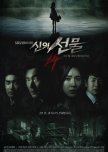
God’s Gift: 14 Days starts from a powerful premise - a mother’s despair in the face of her child’s imminent death and the attempt to rewrite fate - and sets out to explore dense themes such as guilt, time, forgiveness, sacrifice, political and criminal corruption, motherhood, and moral responsibility. At first glance, the drama seems to contain all the elements of a great work. However, when it comes to filling in the narrative gaps and giving the script proper structure, the execution collapses. The story becomes heavily reliant on illogical decisions, characters who behave foolishly merely to sustain the mystery, and narrative conveniences that undermine any genuine sense of suspense. Rather than being driven by causality, the plot leans on inflated melodrama and situations that verge on the absurd. Events unfold not out of dramatic necessity, but out of sheer narrative convenience. Episode 4 is a particularly egregious example: the confrontation between the protagonists and the villain is handled so artificially that, despite the entire struggle, the antagonist still manages to kill the victim. What makes this even worse is that the same situation is repeated multiple times throughout the drama, making the experience increasingly frustrating and almost surreal. The protagonist, portrayed by Lee Bo-young, is not the core issue. Her performance is competent to a certain extent, but it is undermined by excessive dramatization and by narrative choices that force her character to act almost entirely on emotion, at the expense of coherence. The daughter’s character, on the other hand, is especially problematic: she is portrayed as a disturbed, dishonest child who repeatedly places herself in dangerous situations. The father is depicted as someone who seems to care only about his professional reputation, to the point of cheating on his wife, committing her to a psychiatric clinic, and leaving his daughter alone - although it is worth noting that the mother also abandons the child on several occasions. The comparison with Mother (2018) is inevitable. In that drama, the same actress delivers a restrained, profound, and emotionally devastating performance, within a narrative that treats motherhood with complexity, sensitivity, and rigorous storytelling. Although both works share similar themes, Mother is vastly superior, while God’s Gift: 14 Days gets lost between good intentions and a script incapable of sustaining the weight of what it seeks to address.
The ending is particularly problematic. The finale makes little sense and does not logically align with the events preceding the child’s death, unless one assumes that the characters return to a parallel universe rather than the original timeline. In that interpretation, the primary events - which are never properly shown - would connect to the secondary events presented throughout the story. Ultimately, the drama implies the existence of two distinct timelines in each period: the original timeline, in which all three characters die, and a parallel one, in which only the male protagonist dies while the mother and daughter survive. This resolution, rather than providing clarity, reinforces the overall sense of incoherence and structural fragility that permeates the entire work.
~~~~~~~~~~~~~~~
🇧🇷
God’s Gift: 14 Days parte de uma ideia potente - o desespero materno diante da perda iminente e a tentativa de reescrever o destino - e aborda temas interessantes como culpa, tempo, perdão, sacrifício, corrupção política/criminal, maternidade e responsabilidade moral. Em resumo, de fato parece uma grande obra, no entanto, quando começa o preenchimento das lacunas para estruturar e da corpo ao roteiro, isso desmorona na execução, o roteiro depende de decisões ilógicas, personagens que agem de forma estúpida para sustentar o mistério e conveniências narrativas que minam qualquer sensação de suspense real. A história se apoia mais em melodrama inflado e momentos que beiram a estupidez do que em causalidade, não se move pela necessidade e sim por conveniência narrativa - vide o episódio 4, que foi grotesco com aquela luta deles contra o vilão e o mesmo ainda conseguindo matar a vítima, o pior de tudo é que eles repetem a mesma situação em vários momentos do dorama, é surreal kkkkkk -, tornando a tensão artificial e frustrante. A protagonista, interpretada por Lee Bo-young, não é o problema em si, sua atuação é competente até certo ponto, apesar de ser excessivamente exagerada pela dramatização e agir puramente pela emoção em muitos momentos. Já a garotinha, que faz o papel da filha, que personagem perturbadinha, mentirosa e que gosta de se colocar em situações perigosas. O que dizer do pai dela que parece ligar apenas para a reputação no trabalho ao ponto de trair a esposa e internar a mesma em uma clínica psiquiátrica e deixar a filha sozinha - se bem que a mãe também deixou em vários momentos, mas enfim. O contraste com Mother (2018) é inevitável: ali, a mesma atriz entrega uma performance contida, profunda e devastadora, em um dorama que trata a maternidade com complexidade e rigor narrativo. Embora compartilhem temática semelhante, Mother é infinitamente superior, enquanto God’s Gift se perde entre boas intenções e uma escrita que não sustenta o peso do que propõe.
O final é uma piada, nem faz sentido e nem se encaixa logicamente com os eventos antes da morte da menina, a não ser que eles tenham voltado para outro universo paralelo e não o original em que de fato os eventos primários que não foram mostrados, se conectando com os eventos secundários que foram apresentados. Basicamente, foram apresentados duas linhas temporais diferentes em cada período, o primeiro é o original e o segundo é uma linha paralela. No original os três morrem. No secundário apenas o mc e as duas vivem.
The ending is particularly problematic. The finale makes little sense and does not logically align with the events preceding the child’s death, unless one assumes that the characters return to a parallel universe rather than the original timeline. In that interpretation, the primary events - which are never properly shown - would connect to the secondary events presented throughout the story. Ultimately, the drama implies the existence of two distinct timelines in each period: the original timeline, in which all three characters die, and a parallel one, in which only the male protagonist dies while the mother and daughter survive. This resolution, rather than providing clarity, reinforces the overall sense of incoherence and structural fragility that permeates the entire work.
~~~~~~~~~~~~~~~
🇧🇷
God’s Gift: 14 Days parte de uma ideia potente - o desespero materno diante da perda iminente e a tentativa de reescrever o destino - e aborda temas interessantes como culpa, tempo, perdão, sacrifício, corrupção política/criminal, maternidade e responsabilidade moral. Em resumo, de fato parece uma grande obra, no entanto, quando começa o preenchimento das lacunas para estruturar e da corpo ao roteiro, isso desmorona na execução, o roteiro depende de decisões ilógicas, personagens que agem de forma estúpida para sustentar o mistério e conveniências narrativas que minam qualquer sensação de suspense real. A história se apoia mais em melodrama inflado e momentos que beiram a estupidez do que em causalidade, não se move pela necessidade e sim por conveniência narrativa - vide o episódio 4, que foi grotesco com aquela luta deles contra o vilão e o mesmo ainda conseguindo matar a vítima, o pior de tudo é que eles repetem a mesma situação em vários momentos do dorama, é surreal kkkkkk -, tornando a tensão artificial e frustrante. A protagonista, interpretada por Lee Bo-young, não é o problema em si, sua atuação é competente até certo ponto, apesar de ser excessivamente exagerada pela dramatização e agir puramente pela emoção em muitos momentos. Já a garotinha, que faz o papel da filha, que personagem perturbadinha, mentirosa e que gosta de se colocar em situações perigosas. O que dizer do pai dela que parece ligar apenas para a reputação no trabalho ao ponto de trair a esposa e internar a mesma em uma clínica psiquiátrica e deixar a filha sozinha - se bem que a mãe também deixou em vários momentos, mas enfim. O contraste com Mother (2018) é inevitável: ali, a mesma atriz entrega uma performance contida, profunda e devastadora, em um dorama que trata a maternidade com complexidade e rigor narrativo. Embora compartilhem temática semelhante, Mother é infinitamente superior, enquanto God’s Gift se perde entre boas intenções e uma escrita que não sustenta o peso do que propõe.
O final é uma piada, nem faz sentido e nem se encaixa logicamente com os eventos antes da morte da menina, a não ser que eles tenham voltado para outro universo paralelo e não o original em que de fato os eventos primários que não foram mostrados, se conectando com os eventos secundários que foram apresentados. Basicamente, foram apresentados duas linhas temporais diferentes em cada período, o primeiro é o original e o segundo é uma linha paralela. No original os três morrem. No secundário apenas o mc e as duas vivem.
Was this review helpful to you?


