

This review may contain spoilers
The drama kept calling her a genius, but her decisions rarely convinced me.
I went into The Long Ballad with genuinely high expectations. Everywhere I looked, it was consistently recommended as one of the best historical C-dramas. Review after review praised Li Chang Ge as one of the smartest and strongest female leads in the genre, while Ashile Sun was often described as one of the most unforgettable male leads. Naturally, I expected another masterpiece that would stand alongside dramas like Blossom, The Double, Prisoner of Beauty, Legend of the Female General, Fated Hearts, and A Journey to Love.
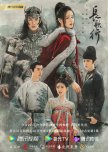
What drew me in even more was the poster and synopsis. They promised a grand historical epic centered around battlefield tactics, military strategy, political mind games, and a brilliant female commander whose intelligence would constantly outmaneuver everyone around her. As someone who genuinely enjoys strategist-driven stories, I couldn't wait to start it.
Unfortunately, that wasn't the experience I ended up having.
Before anything else, I want to make one thing clear—I am not the type of viewer who drops a drama halfway through. Once I commit to a series, I see it through until the very end, no matter how frustrated I become. So when I say I struggled with this drama, it's not because I gave up early. I stayed until Episode 49, hoping the story would eventually deliver the payoff I had been waiting for.
Perhaps it's also worth mentioning that I've only been watching C-dramas for a little over three months. Before discovering this world, I spent most of my free time outdoors—running marathons, hiking mountains, traveling, and chasing adventures rather than binge-watching dramas. But once I watched The Untamed, I completely fell into the rabbit hole. In just a few months, I've watched more than 40 C-dramas across historical, xianxia, wuxia, mystery, and romance: strategist-driven stories, brilliant battlefield tactics, political mind games, strong character development, and romances that truly feel earned. That's exactly why my expectations for The Long Ballad were so high.
To its credit, The Long Ballad is a visually stunning production. The cinematography is beautiful, the costumes are exceptional, the battle sequences are well-executed, and the soundtrack perfectly complements the atmosphere. Every frame feels cinematic.
Wu Lei was also one of the drama's greatest strengths. His portrayal of Ashile Sun was calm, composed, intelligent, and quietly devoted. He never overshadowed Li Chang Ge, instead respecting her abilities and decisions while remaining a dependable presence throughout the story. His performance was one of the main reasons I kept watching.
Unfortunately, the storytelling became the biggest obstacle for me.
The pacing was simply too slow.
Many story arcs that could have been resolved within two or three episodes were stretched far beyond what was necessary. Instead of building suspense, the narrative often felt repetitive. By the second half of the drama, I found myself waiting less for exciting developments and more for the story to finally move forward.
Personally, I believe the same story could have been told much more effectively in around thirty episodes without sacrificing its emotional impact. Instead, the constant dragging diluted many moments that should have felt powerful.
My biggest frustration, however, was Li Chang Ge herself.
One sentence perfectly summarizes my entire experience:
"Several times, the drama told me she was brilliant, but what I saw on screen did not always match that reputation."
Throughout the series, Li Chang Ge was repeatedly introduced as an extraordinary strategist and military genius. Unfortunately, many of her decisions didn't reflect that reputation. Several of her plans ended up creating even bigger problems, not only for herself but also for the people around her. Rather than watching someone who consistently stayed several steps ahead of everyone else, I often felt like I was watching someone forced to react after situations had already spiraled out of control.
What frustrated me even more was the number of reckless decisions that contradicted the image the drama was trying so hard to build. A truly brilliant strategist should make the audience admire their intelligence through carefully calculated actions—not repeatedly remind us of it through dialogue.
One scene perfectly captured my frustration. Near the end of the drama, Li Chang Ge willingly followed someone simply because they claimed to be connected to the young Crown Prince. She didn't question the person's identity or motives until she had already been cornered with no escape.
At that moment, I genuinely paused and thought:
"This is the legendary strategist everyone has been praising for forty-nine episodes?"
Moments like these happened often enough that I struggled to fully believe the reputation the drama kept assigning to her.
Another issue I couldn't ignore was how often the drama presented Li Chang Ge as an exceptionally strong female lead, only for many major conflicts to end with Ashile Sun rescuing her. I have no problem with a heroine being saved occasionally—every great character has vulnerable moments. But it happened frequently enough that it started to undermine the very image the drama was trying to establish. I wanted to see her intelligence consistently solve impossible situations rather than repeatedly relying on last-minute rescues.
Ironically, I found myself becoming far more invested in the second couple than the main romance.
Hao Du (Liu Yuning) and Princess Li Leyan (Zhao Lusi) completely stole my attention.
Despite having significantly less screen time, their relationship felt far more emotionally rewarding. Hao Du's quiet devotion, unwavering protection, and gradual emotional growth made him one of the most memorable characters in the entire drama. Watching a cold and ruthless imperial guard slowly learn how to love without expecting anything in return was genuinely beautiful.
Li Leyan's transformation was equally satisfying. She began as a sheltered and timid princess, but through hardship and survival, she gradually discovered her own courage and inner strength. Her growth felt natural, believable, and well-earned.
Every glance between Hao Du and Leyan carried emotion.
Every silent act of protection meant something.
Every reunion felt earned.
Ironically, with far fewer scenes than the main couple, they left a much stronger emotional impact on me.
Meanwhile, the romance between Li Chang Ge and Ashile Sun remained surprisingly restrained. Their relationship was built on mutual respect, trust, and understanding, which I normally appreciate. However, after investing nearly fifty episodes into their journey, I expected a much stronger emotional payoff.
Even their romantic moments felt limited, and the kissing scene itself was filmed so conservatively that it barely felt like the culmination of such a long slow burn. By the end of the drama, I realized I had become far more emotionally attached to Hao Du and Leyan's story than to the main relationship I originally started watching for.
Despite my frustrations, I can still understand why The Long Ballad is so highly regarded. If you enjoy slow-burn political storytelling, military campaigns, character-driven journeys, and historical world-building more than romance, I can absolutely see why this drama resonates with so many viewers.
But for someone like me—who was expecting a strategist-heavy historical drama where intelligence is consistently demonstrated through brilliant planning, alongside a romance with a stronger emotional payoff—the experience ultimately became more frustrating than rewarding.
I didn't hate The Long Ballad.
I simply expected a legendary strategist, unforgettable battlefield tactics, and one of the greatest historical romances based on everything I had heard before watching it.
Instead, I found myself admiring its cinematography, production value, and performances far more than I connected with its storytelling.
A visually stunning historical drama with outstanding performances, but one whose pacing, execution, and characterization never fully lived up to the incredible expectations it created.
What drew me in even more was the poster and synopsis. They promised a grand historical epic centered around battlefield tactics, military strategy, political mind games, and a brilliant female commander whose intelligence would constantly outmaneuver everyone around her. As someone who genuinely enjoys strategist-driven stories, I couldn't wait to start it.
Unfortunately, that wasn't the experience I ended up having.
Before anything else, I want to make one thing clear—I am not the type of viewer who drops a drama halfway through. Once I commit to a series, I see it through until the very end, no matter how frustrated I become. So when I say I struggled with this drama, it's not because I gave up early. I stayed until Episode 49, hoping the story would eventually deliver the payoff I had been waiting for.
Perhaps it's also worth mentioning that I've only been watching C-dramas for a little over three months. Before discovering this world, I spent most of my free time outdoors—running marathons, hiking mountains, traveling, and chasing adventures rather than binge-watching dramas. But once I watched The Untamed, I completely fell into the rabbit hole. In just a few months, I've watched more than 40 C-dramas across historical, xianxia, wuxia, mystery, and romance: strategist-driven stories, brilliant battlefield tactics, political mind games, strong character development, and romances that truly feel earned. That's exactly why my expectations for The Long Ballad were so high.
To its credit, The Long Ballad is a visually stunning production. The cinematography is beautiful, the costumes are exceptional, the battle sequences are well-executed, and the soundtrack perfectly complements the atmosphere. Every frame feels cinematic.
Wu Lei was also one of the drama's greatest strengths. His portrayal of Ashile Sun was calm, composed, intelligent, and quietly devoted. He never overshadowed Li Chang Ge, instead respecting her abilities and decisions while remaining a dependable presence throughout the story. His performance was one of the main reasons I kept watching.
Unfortunately, the storytelling became the biggest obstacle for me.
The pacing was simply too slow.
Many story arcs that could have been resolved within two or three episodes were stretched far beyond what was necessary. Instead of building suspense, the narrative often felt repetitive. By the second half of the drama, I found myself waiting less for exciting developments and more for the story to finally move forward.
Personally, I believe the same story could have been told much more effectively in around thirty episodes without sacrificing its emotional impact. Instead, the constant dragging diluted many moments that should have felt powerful.
My biggest frustration, however, was Li Chang Ge herself.
One sentence perfectly summarizes my entire experience:
"Several times, the drama told me she was brilliant, but what I saw on screen did not always match that reputation."
Throughout the series, Li Chang Ge was repeatedly introduced as an extraordinary strategist and military genius. Unfortunately, many of her decisions didn't reflect that reputation. Several of her plans ended up creating even bigger problems, not only for herself but also for the people around her. Rather than watching someone who consistently stayed several steps ahead of everyone else, I often felt like I was watching someone forced to react after situations had already spiraled out of control.
What frustrated me even more was the number of reckless decisions that contradicted the image the drama was trying so hard to build. A truly brilliant strategist should make the audience admire their intelligence through carefully calculated actions—not repeatedly remind us of it through dialogue.
One scene perfectly captured my frustration. Near the end of the drama, Li Chang Ge willingly followed someone simply because they claimed to be connected to the young Crown Prince. She didn't question the person's identity or motives until she had already been cornered with no escape.
At that moment, I genuinely paused and thought:
"This is the legendary strategist everyone has been praising for forty-nine episodes?"
Moments like these happened often enough that I struggled to fully believe the reputation the drama kept assigning to her.
Another issue I couldn't ignore was how often the drama presented Li Chang Ge as an exceptionally strong female lead, only for many major conflicts to end with Ashile Sun rescuing her. I have no problem with a heroine being saved occasionally—every great character has vulnerable moments. But it happened frequently enough that it started to undermine the very image the drama was trying to establish. I wanted to see her intelligence consistently solve impossible situations rather than repeatedly relying on last-minute rescues.
Ironically, I found myself becoming far more invested in the second couple than the main romance.
Hao Du (Liu Yuning) and Princess Li Leyan (Zhao Lusi) completely stole my attention.
Despite having significantly less screen time, their relationship felt far more emotionally rewarding. Hao Du's quiet devotion, unwavering protection, and gradual emotional growth made him one of the most memorable characters in the entire drama. Watching a cold and ruthless imperial guard slowly learn how to love without expecting anything in return was genuinely beautiful.
Li Leyan's transformation was equally satisfying. She began as a sheltered and timid princess, but through hardship and survival, she gradually discovered her own courage and inner strength. Her growth felt natural, believable, and well-earned.
Every glance between Hao Du and Leyan carried emotion.
Every silent act of protection meant something.
Every reunion felt earned.
Ironically, with far fewer scenes than the main couple, they left a much stronger emotional impact on me.
Meanwhile, the romance between Li Chang Ge and Ashile Sun remained surprisingly restrained. Their relationship was built on mutual respect, trust, and understanding, which I normally appreciate. However, after investing nearly fifty episodes into their journey, I expected a much stronger emotional payoff.
Even their romantic moments felt limited, and the kissing scene itself was filmed so conservatively that it barely felt like the culmination of such a long slow burn. By the end of the drama, I realized I had become far more emotionally attached to Hao Du and Leyan's story than to the main relationship I originally started watching for.
Despite my frustrations, I can still understand why The Long Ballad is so highly regarded. If you enjoy slow-burn political storytelling, military campaigns, character-driven journeys, and historical world-building more than romance, I can absolutely see why this drama resonates with so many viewers.
But for someone like me—who was expecting a strategist-heavy historical drama where intelligence is consistently demonstrated through brilliant planning, alongside a romance with a stronger emotional payoff—the experience ultimately became more frustrating than rewarding.
I didn't hate The Long Ballad.
I simply expected a legendary strategist, unforgettable battlefield tactics, and one of the greatest historical romances based on everything I had heard before watching it.
Instead, I found myself admiring its cinematography, production value, and performances far more than I connected with its storytelling.
A visually stunning historical drama with outstanding performances, but one whose pacing, execution, and characterization never fully lived up to the incredible expectations it created.
Was this review helpful to you?


