


Came for the Mystery, Stayed for Shen Du’s Downfall
I came for Ding Yuxi… and somehow Shen Du became one of the reasons I stayed. 😂At first, I wasn't even sure how I would feel about this drama because Shen Du was SO cold, intimidating, and difficult to read. Then Yan Xing slowly started getting through that ice-cold exterior, and suddenly this man went from “don't come near me” to basically “where is my wife?” 😭
And THAT was probably my favorite part of the drama.
Shen Du × Yan Xing worked for me because their relationship wasn't instant. It was a slow burn where their feelings developed while they were constantly thrown into investigations, danger, misunderstandings, and family problems. Yan Xing was never just there to be the ML's love interest either. She was genuinely capable at her work, observant, persistent, and willing to put herself in danger to find the truth. Their dynamic felt more like two people learning to trust and rely on each other.
Shen Du, on the other hand… 😭
The character development was SO satisfying to watch.
He started out emotionally guarded and seemingly ruthless, but once he truly fell for Yan Xing, the difference was hilarious. The jealousy. The protectiveness. The way he kept trying to get closer to her. And then Yan Xing rejecting him over and over again while this powerful Imperial Guard basically suffered through it? 😂
THE MAN WAS DOWN BAD.
And Ding Yuxi really sold that transformation for me. His expressions did so much of the work, especially when Shen Du didn't say much. His action scenes were also one of the biggest surprises for me. After watching this, I completely understood why Ding Yuxi kept climbing my actor ranking. The fighting + presence + those Shen Du eyes? Yeah… I get it. 😭
⚖️ What didn't work as well for me
The biggest problem was the plot.
The drama started with a really interesting combination of romance + investigation + court politics, and there were cases that genuinely made me curious. But as the story progressed, the mystery became increasingly complicated, and some of the later revelations felt like the drama was adding another layer when I was already trying to keep track of everything.
The whole Fire Moth / sect / mastermind storyline especially made the plot feel more convoluted than it needed to be. I understood what they were trying to do with Shen Du's family history and revenge, but I honestly think the drama could have been tighter if it had stayed more focused on Shen Du, Yan Xing, their investigations, and the central mystery.
The pacing also wasn't consistently smooth. There were stretches where I was very invested, followed by parts where I was like, “Okay… are we still solving the original problem?” 😂
Some of the emotional and mystery payoffs also came quite late. Even Shen Du's family injustice being properly addressed only near the end made me wish some of these threads had been developed more cleanly throughout the drama.
iQIYI's final episode ultimately brings the story back to Shen Du and Yan Xing and gives them their happy ending, but getting there was definitely a journey.
🚩 My main complaint:
40 episodes felt a little long for the amount of story that actually needed to be told.
I saw other viewers make a similar observation: the main couple and Ding Yuxi were considered major strengths, while some felt the later side plot took too much attention away from Shen Du's revenge and the central romance.
💚 What I REALLY loved
• Yan Xing is capable and independent.
• Shen Du is protective without completely overshadowing her.
• Their relationship actually develops.
• The enemies-to-lovers-ish/forced-marriage setup worked for me.
• Shen Du slowly becoming softer around Yan Xing was EVERYTHING.
• The jealousy scenes. 😂
• The fighting scenes. 🔥
• Ding Yuxi's screen presence.
• The eventual “I am absolutely not letting this woman go” Shen Du.
• And most importantly: THE HAPPY ENDING. 😭
That ending was needed after everything they went through.
And I have to give Yan Xing credit too because she didn't just instantly forgive everything or melt because Shen Du suddenly became affectionate. She made him WORK for it. The fact that Shen Du had to keep trying while Yan Xing repeatedly rejected him was honestly one of the funniest parts of the ending. Even iQIYI's own Episode 40 material highlights Shen Du trying to reconcile and Yan Xing rejecting him repeatedly before they finally come back together.
🔥 Chemistry
8.5/10
Not necessarily the most explosive chemistry I've seen in a C-drama, but the progression worked for me.
I liked watching Shen Du's feelings change before he could even properly admit them himself. There was something satisfying about seeing the supposedly untouchable, intimidating Shen Du become completely helpless around Yan Xing.
Classic:
Cold ML → slowly softens → realizes he's in love → absolutely doomed.
😂
🐢 Slow Burn
YES.
This is one of those dramas where the relationship is more satisfying because you actually watch the shift happen.
Yan Xing initially had more understanding/admiration toward Shen Du, while Shen Du took longer to truly recognize what he felt. That “bad timing” aspect of their feelings was also noticed by other reviewers, particularly the point where Yan Xing began treating him more like a colleague while Shen Du's feelings were getting deeper.
🕵️ Mystery / Investigation
Interesting at the beginning, but inconsistent later.
The investigation element gave the drama something more than just romance, and I liked Yan Xing's investigative ability. But the later conspiracy/revenge threads became too complicated for me, and some revelations felt more dragged out than necessary.
💔 Angst
There was enough to hurt me, especially with Shen Du's past, his family, the poison storyline, and everything that happened later.
But thankfully, this did NOT become another “let's destroy everyone emotionally and then give them a vague ending” drama.
After all the suffering, I needed that happy ending. 😭
👀 Overall
Melody of Golden Age wasn't a perfect drama for me.
The plot could have been tighter. Some of the mystery/conspiracy material became unnecessarily complicated, and I definitely felt the 40-episode length. But the main couple, character development, action scenes, and Ding Yuxi's Shen Du carried this drama for me.
And honestly?
I started this drama thinking I was just going to watch another historical mystery-romance.
I ended it thinking:
“Okay Ding Yuxi… I SEE YOU.” 😂
Another one added to the list of dramas that made me appreciate an actor more after watching them.
Final rating: 9.5/10 ⭐
Not because the plot was flawless—but because when Shen Du and Yan Xing were at the center of the story, I was invested.
And Shen Du going from terrifying Imperial Guard to a man repeatedly getting rejected by his own wife?
Worth watching for that alone. 😂❤️
The Romance Was Worth the 40-Episode Struggle ❤️
I went into this mainly because of Deng Wei, but I ended up staying for Su Yishui and Xue Ranran/Mu Qingge. And honestly, I didn't expect to get this attached to them.
What I liked most about this drama is the relationship between the leads. It wasn't just the usual “we meet, misunderstand each other, suffer, then fall in love” xianxia formula. Their relationship had so much history behind it—master and disciple, past and present lives, guilt, sacrifice, identity, and all the things they never got to say to each other. Watching Su Yishui grow from that rebellious, emotional disciple into the mature sect leader he became was probably one of my favorite parts of the drama.
And Deng Wei really impressed me here. Su Yishui could have easily become the typical tragic, tortured xianxia ML, but Deng Wei gave him so much personality. The younger Su Yishui was impulsive and almost feral 😂, while the older version carried so much restraint and regret. You could actually feel how much losing Mu Qingge changed him.
I also really liked Ranran/Mu Qingge as a character. Mu Qingge had that strong FL energy I always look for—powerful, confident, and not someone who just waits around for the ML to save her. I especially enjoyed seeing the difference between Mu Qingge and Ranran while still feeling that they were the same person underneath. Julia Xiang did a good job making the two sides feel distinct without making one completely disappear.
The chemistry between the leads was another big win for me. There was a lot of emotional weight to their scenes, and when they finally got their moments together, they actually felt earned. Even the memory-loss arc, which I normally would have been rolling my eyes at by that point 😂, ended up working for me because of how much Su Yishui's feelings still came through even when he couldn't remember her.
And THANK GOD for the ending. 😂❤️
After everything these two went through, I needed an actual happy ending. Not “they'll meet again in another lifetime,” not “their souls remain together,” not some open-ended nonsense. An actual happy ending. That alone made me forgive quite a few things this drama put me through.
Now, the problems.
The pacing. This absolutely did not need to be 40 episodes.
There were stretches where I was fully invested, then suddenly the story would slow down and I'd find myself thinking, okay, we get it already. Some of the explanations and political/conspiracy parts felt unnecessarily long, and the final arcs could have been tighter.
And then there's Mu Ranwu. 😭
Girl, I was SO tired of this woman.
I don't mind a complicated antagonist, but her storyline went on for so long that there were moments when I just wanted the drama to move on. Every time I thought, okay, surely we're done with this now, she'd come back with another scheme, another power-grabbing attempt, another reason to make me annoyed. 😂
I also wish the drama had spent a little more time developing some of the other characters and conflicts instead of repeatedly circling back to her.
That said, I never reached the point of wanting to drop the drama. Even when the pacing tested my patience, Su Yishui and Ranran kept me watching. And once the bigger pieces of their story started coming together, I was glad I stayed.
This isn't going into my absolute top-tier xianxia list, and I definitely wouldn't call it perfect. But it's one of those dramas where, after finishing it, I can genuinely say:
“Yeah, I'm glad I watched this.”
Beautiful leads, great chemistry, a ML who actually grows, a strong FL, plenty of angst, and—most importantly—an ending that doesn't punish me for investing 40 episodes of my life. 😂
Would I recommend it?
Yes, especially if you like xianxia with a strong romance, reincarnation/past-life elements, devoted MLs, powerful FLs, and a story that actually gives its main couple a proper happy ending.
Just be prepared to occasionally whisper:
“PLEASE. MOVE. ON.” 😭
He Was the Strongest Man in the Jianghu. He Just Didn't Want to Be Anymore.
Some dramas make you smile.Some dramas make you cry.
And then there are those rare stories that quietly become part of you.
Mysterious Lotus Casebook is one of them.
I went into this expecting a wuxia mystery with three interesting characters, clever cases, martial arts, and perhaps a little bromance along the way.
I did not expect to become this emotionally attached to a man who had already accepted that his own story was coming to an end.
And that man is Li Lianhua.
🪷 LI LIANHUA / LI XIANGYI
Cheng Yi deserves so much credit for this role.
What impressed me most wasn't simply that he played two identities. It was how completely different those two identities felt.
Li Xiangyi was confidence personified.
The undefeated swordsman.
Proud. Sharp. Fearless.
The kind of person who walked into a room knowing exactly who he was.
Then there is Li Lianhua.
Quiet. Mischievous. Clever. Evasive.
But underneath all that?
Exhausted.
He moves differently. Speaks differently. Even looks at people differently.
There is a remarkable restraint in Cheng Yi's performance. He doesn't constantly remind us that Li Lianhua is suffering. He doesn't need dramatic crying scenes to communicate pain.
Sometimes all it takes is his eyes.
Li Lianhua often looks like a man who has already made peace with dying.
And that's what makes him heartbreaking.
He isn't desperately fighting to survive.
He is simply living whatever time he has left.
⚔️ THE MOST INTERESTING THING ABOUT LI XIANGYI
What I loved about his character arc is that this isn't really a story about a fallen hero desperately trying to become powerful again.
It's about a man who has already let go of Li Xiangyi.
The world, however, refuses to let him.
Everyone keeps searching for Li Xiangyi.
Meanwhile, Li Lianhua just wants to be left alone.
He doesn't want glory.
He doesn't want recognition.
He doesn't want the jianghu.
He wants a quiet life.
And somehow, despite constantly saying he wants no trouble, trouble follows him everywhere. 😂
But beneath his indifference is a man who still cares deeply about other people.
That's the contradiction that makes him so beautiful.
He doesn't seem to care whether he lives, but he still cares whether other people survive.
🥀 THE COUNTDOWN
The Bicha Poison isn't just a medical problem.
It becomes the emotional countdown of the entire story.
Every time Li Lianhua pushes himself beyond his limits, you remember that his body has a price.
And eventually, the Wangchuan Flower becomes his last real chance.
This is where the character's nature becomes painfully clear.
He finally has a chance to save himself.
And he gives it away.
That decision says more about Li Lianhua than any grand heroic speech could.
He has spent the entire drama helping other people while quietly accepting that his own life may be ending.
And when the choice finally comes down to him or someone else...
He chooses someone else.
⚔️ DI FEISHENG — MY FAVORITE "VILLAIN"
I honestly ended up loving Di Feisheng.
Because underneath that intimidating exterior, his motivation is surprisingly pure.
He doesn't simply want to defeat Li Xiangyi.
He wants to defeat him fairly.
That distinction matters.
When he realizes that the East Sea battle was affected by poison, hidden agendas, and people manipulating events from the shadows, his frustration isn't simply because Li Xiangyi survived or disappeared.
It's because his victory no longer feels legitimate.
He wanted to know:
Who is truly stronger?
Not:
Who happened to win because someone else interfered?
That's why his obsession with Li Xiangyi becomes strangely touching.
For Di Feisheng, Li Xiangyi isn't merely an enemy.
He's the standard.
And I loved the irony of it.
Li Lianhua is desperately trying to leave Li Xiangyi behind.
Meanwhile, Di Feisheng is one of the people who refuses to let that legend disappear.
🧩 THE MYSTERY
The cases were another major reason I enjoyed this drama.
I liked that the mysteries weren't simply there to give the characters something to do.
They gradually revealed the larger world surrounding Li Lianhua—its politics, betrayals, hidden identities, ambitions, and old grudges.
And as the story progressed, I became less interested in simply asking:
"Who is the culprit?"
and more interested in:
"What really happened to Li Xiangyi?"
The revelation surrounding Princess Xuan and Li Xiangyi's true lineage was another great example of how the drama constantly challenged our assumptions.
Just when you think you've figured out someone's identity or motivation...
there's another layer underneath.
🦊 FOX SPIRIT
And yes, I have to mention Fox Spirit.
That farewell broke me.
It was such a small, quiet scene, but knowing how the story ends makes it devastating.
Fox Spirit doesn't care about Li Xiangyi's reputation.
He doesn't care about the undefeated swordsman.
He doesn't care about the jianghu.
To him, Li Lianhua is simply his person.
And when Li Lianhua says goodbye, it feels like he's not only saying goodbye to a dog.
He's saying goodbye to the quiet little life he created for himself.
No glory.
No sword.
No title.
Just Li Lianhua and his dog.
😭
🪷 THE ENDING
I knew the story was heading somewhere painful.
I knew he was running out of time.
I knew the flower was his last real chance.
And yet the ending still hurt.
Because Li Lianhua doesn't go out fighting for his own survival.
He chooses to disappear.
He leaves behind people who love him, people who want to save him, and people who still believe that Li Xiangyi should have a future.
And then there is that ambiguity.
We aren't given the clean certainty of seeing his death.
Instead, the drama leaves us with a question.
Did Li Lianhua truly die?
Or did he finally disappear from the jianghu and get the peaceful life he had been trying to find all along?
I actually appreciate that uncertainty.
Because perhaps Li Lianhua's greatest wish wasn't to live forever.
Perhaps it was simply to be free.
❤️ FINAL THOUGHTS
Mysterious Lotus Casebook surprised me.
I expected wuxia.
I got wuxia.
I expected mystery.
I got mystery.
But what stayed with me wasn't the martial arts or even the cases.
It was Li Lianhua.
A man who was once the strongest, brightest, most celebrated person in the jianghu...
and who eventually chose to become nobody.
A man who had every reason to become bitter, but chose kindness.
A man who was slowly dying, yet continued helping people.
A man who didn't ask the world to remember him.
And perhaps that's why the ending hurts so much.
Because after spending forty episodes watching everyone search for Li Xiangyi, I realized that the person I had grown attached to was never the legend.
It was Li Lianhua.
Quiet.
Tired.
Kind.
Mischievous.
Brilliant.
And painfully human.
Some characters leave an impression.
Some become unforgettable.
Li Lianhua became the latter for me.
🪷 Mysterious Lotus Casebook — a beautiful story about letting go, choosing kindness, and learning that sometimes the strongest person in the room is the one who no longer needs to prove that he is strong.
Not a Perfect Drama, but Ding Yuxi Made It Worth the Seven Lifetimes
I started Love You Seven Times at a time when I was already suffering from a serious C-drama burnout. After watching one drama after another, I was no longer sure if I could fully enjoy another xianxia. To be honest, part of the reason I started this was because my iQIYI subscription was about to expire, and this was still sitting on my list.
But the main reason I pressed play?
Ding Yuxi.
And after finishing all 38 episodes, I can confidently say: I came for Ding Yuxi, and yes, he carried the whole thing for me.
The drama started surprisingly light. The first tribulation was cute, silly, and honestly exactly the kind of easy watch I needed during my burnout. Then the story gradually became more emotional. The Song Xiangyun and Lu Changkong arc brought revenge, separation, manipulation, and tragedy. By the time we reached the Linglong Heart cycle, I was already emotionally invested enough to cry over another sacrifice.
And that was probably the biggest surprise for me. Love You Seven Times may not have the most consistently written story, but it kept finding ways to pull me back in. Some arcs worked better than others, and the later mythology-heavy storyline became more complicated and occasionally messy. There were moments when I felt the drama was trying to do too much, and the final stretch could have benefited from clearer explanations and more room to breathe.
Apparently, I wasn't alone in feeling this way.
Many viewers also found the earlier portions slow or uneven, while others felt the story became much more rewarding once the larger picture and past events started coming together.
The rushed and somewhat confusing final stretch was also a common criticism. At the same time, many viewers agreed that the emotional payoff, the different lifetimes, and the central relationship made the journey worth continuing.
But for me, the biggest reason this drama worked was Ding Yuxi.
Hats off to him because he made every side of Chukong believable. He could be boyish, playful, petty, and downright funny without becoming annoying. Then he could switch to serious, commanding, vulnerable, jealous, heartbroken, and devastatingly self-sacrificing—and somehow it all still felt like the same character.
That versatility was what kept me watching.
I have seen dramas where an actor is good at intense scenes but feels stiff in comedy, or charming in light scenes but struggles when the character becomes emotionally heavy. Ding Yuxi handled both ends of the spectrum so naturally that Chukong remained interesting regardless of which version of him we were getting. And judging from the reactions I found after finishing the drama, I am definitely not the only one who felt that his performance was one of the show's biggest strengths.
I also ended up appreciating the central concept more than I expected. Watching two people meet, separate, fall in love, lose each other, and somehow keep finding their way back to one another across different lifetimes gave the drama its emotional identity. Not every lifetime hit equally hard, but that was part of the fun too—you never quite knew whether the next one would make you laugh, frustrate you, or suddenly leave you crying.
And yes, this drama definitely made me cry.
For someone who started this just looking for something light and easy while waiting for an iQIYI subscription to expire, I did not expect to become this invested. The drama had its flaws.
The pacing could be uneven, some parts of the mythology became unnecessarily complicated, and the ending could have been given more time and explanation. But despite all that, I never regretted finishing it.
Because somewhere between the silly beginning, the tragic mortal lives, the Linglong Heart sacrifice, the revelations, and all the chaos of the final storyline, I found myself genuinely wanting to know how their story would end.
And maybe that is the best thing I can say about Love You Seven Times.
It did not completely cure my C-drama burnout.
It is not a perfect xianxia. And I would not pretend that the writing is flawless.
But Ding Yuxi made me stay for all 38 episodes.
So if you're a Ding Yuxi fan, I would absolutely recommend giving this one a try. You get to see him being playful, adorable, arrogant, serious, jealous, emotional, heroic, and heartbreaking—all within one drama.
As for me?
I came for Ding Yuxi.
I stayed because Ding Yuxi carried the whole thing for me.
And somehow, against all odds and despite my C-drama burnout, I finished all seven times. 😂😭
Beautiful, ambitious, and emotionally exhausting—but somehow, I couldn't fully connect with it.
I really wanted to love Fangs of Fortune more than I ultimately did.On paper, this drama had almost everything I usually enjoy: fantasy, demons, mythology, a morally gray male lead, a found-family dynamic, beautiful cinematography, strong character relationships, and a story that looked much darker and more ambitious than the usual fantasy romance.
And yet, somewhere along the way, I realized I was watching the episodes without really feeling them.
This is a difficult drama for me to rate because I can absolutely see why it received so much praise. Visually, it is stunning. The costumes, cinematography, color palette, action sequences, CGI, and overall artistic direction are easily among its strongest points. The OST also fits the atmosphere beautifully.
And then there's Hou Minghao as Zhao Yuanzhou.
He was probably my biggest reason for continuing. Zhao Yuanzhou is such an interesting character—powerful, unpredictable, emotionally complicated, and carrying so much loneliness underneath his playful exterior. His relationship with Zhuo Yichen and the rest of the group became much more compelling to me than the actual romance.
The found-family aspect was also one of the best parts. Watching these very different people slowly become a team gave the story some genuinely beautiful moments.
But despite all that, I struggled with the storytelling.
The pacing felt uneven, and there were moments when the drama seemed to stretch emotional beats longer than necessary. There was so much tragedy, suffering, sacrifice, and crying that eventually I became emotionally numb instead of more invested. Ironically, when everything is constantly trying to make you feel devastated, the emotional impact can start to wear off.
I also found myself becoming more interested in certain individual characters and relationships than in the larger plot. Li Lun, for example, had such strong "final villain" energy that I genuinely thought he was being positioned as the ultimate antagonist—only for his story to end much earlier than I expected.
And Wen Xiao... unfortunately, she was probably my weakest point with the main cast. I kept waiting for her to become the kind of strong female lead I usually gravitate toward, but her character never connected with me as strongly as the others did.
What surprised me most, though, was my own reaction.
I wasn't bored because the drama was necessarily bad. I think I was simply burnt out.
I've been watching C-dramas almost nonstop lately, jumping between different platforms and different genres. By the time I got deeper into Fangs of Fortune, I noticed myself wanting to scroll through my phone or watch a short mini drama instead of immediately starting the next episode.
And that's probably why I don't want to judge this drama too harshly.
Maybe I watched it at the wrong time.
Because I can recognize how beautiful and carefully constructed it is while also admitting that I wasn't emotionally present enough to appreciate it the way many other viewers did.
So no, I wouldn't call Fangs of Fortune a bad drama.
Quite the opposite. I think it is one of those dramas where I can understand the high ratings even though my personal experience didn't completely match them.
For me, the strongest parts were Zhao Yuanzhou, the group dynamic, the mythology, the visuals, and the emotional relationships between the characters.
The weakest were the uneven pacing, overly prolonged emotional beats, and a story that eventually became more exhausting than absorbing for me.
Maybe with a different mood, a different watching pace, or simply less C-drama burnout, I would have connected with it more.
For now, though, I'll remember it as:
A beautiful drama that I admired more than I loved.
I Came for Cheng Lei… and Somehow Got Three Versions of Him
I have to be honest: the main reason I watched this was Cheng Lei.Shadow Love had actually been sitting on my masterlist for quite some time. Between seeing people recommend it on Reddit, coming across clips and edits on TikTok, and of course, the fact that Cheng Lei was the male lead, I knew I would eventually get to it.
It was never really a question of if I was going to watch it.
It was more a question of when.
And honestly, based on the premise, I thought I already knew what I was getting myself into.
A female general.
A prince from another kingdom.
Two people who were supposed to be on opposite sides.
Battlefields, war, political conflicts, strategies, and hopefully, a good enemies-to-lovers type of romance.
Basically, everything I usually enjoy in a historical drama.
So imagine my surprise when Shadow Love turned out to be much more than the straightforward battlefield romance I thought I was signing up for. 😂
Because apparently, we were adding fantasy into the mix too.
And not just a small fantasy element that you can easily ignore.
Nope.
There were supernatural circumstances, lost memories, mysterious identities, a masked man appearing out of nowhere, and eventually, enough revelations for me to realize that this drama was taking me somewhere completely different from where I thought we were going. 😂
At first, I genuinely had to adjust my expectations.
I came here thinking I was about to watch a female general and an enemy prince navigate war, politics, and whatever complicated feelings were going to develop between them.
Instead, I got Jin An.
Then I got a mysterious masked man in black.
And eventually, I got the truth about who Cheng Lei's character really was.
So yes, I came for Cheng Lei.
I just wasn't expecting to get multiple versions of him in one drama. 😂
And honestly, this became one of the things I enjoyed the most.
We first meet Jin An, who has lost his memories and ends up under Li Shuang's care. Compared to the cold, intimidating, and powerful historical characters I am used to seeing Cheng Lei play, Jin An had a completely different energy. There was an innocence and almost childlike quality to him in the beginning, especially as he slowly learned about the world around him and developed his connection with Li Shuang.
Then there was the mysterious masked man in black.
This was where the drama's fantasy and mystery elements became more interesting for me.
Suddenly, there was this other version of him appearing in the shadows, secretly helping and protecting Li Shuang, while the mystery surrounding his identity slowly unfolded.
And then, of course, there was the truth.
The real identity behind Jin An.
Duan Aodeng. The prince of Yao Kingdom.
And I really enjoyed watching all of these different sides come together.
What initially seemed like a simple story about an amnesiac man who falls into the life of a female general eventually became so much more complicated. Jin An was not simply hiding who he was. The mysterious masked man, the supernatural circumstances surrounding him, his lost memories, and his true identity were all connected to the bigger story.
Looking back, I think this was also why the fantasy element eventually worked for me.
Was I expecting it?
Absolutely not. 😂
But once I stopped expecting Shadow Love to be purely about war and political conflict and simply accepted the kind of story it wanted to tell, I found myself enjoying the journey much more.
And Cheng Lei was definitely one of the biggest reasons why.
I came here for him, and I was not disappointed.
Getting to see innocent Jin An, the mysterious masked man, and eventually the more serious and powerful side of Duan Aodeng gave Cheng Lei a lot to work with. I enjoyed seeing those different sides of the character and how each identity brought something different to the story.
Of course, I also genuinely enjoyed the main couple.
Li Shuang and Jin An's relationship was what kept me emotionally attached to the story. Their journey had sweetness, protection, longing, conflict, and eventually, the painful reality of who they actually were to each other.
Because at the end of the day, this was never going to be a simple love story.
They were connected by circumstances neither of them had chosen. There were secrets, identities, kingdoms, and responsibilities standing between them.
And yet, somehow, they still found their way toward each other.
Maybe that is why I found myself enjoying their relationship so much.
It wasn't simply about two people falling in love.
It was about what happens after you fall in love and discover that loving each other might actually be the easiest part.
Everything else?
That was where the real problems started. 😂
I also really enjoyed Li Shuang as a female lead.
Since I initially came into this expecting more of a battlefield drama, I was happy that she was not simply reduced to being someone who needed to be constantly protected. She was a general with her own responsibilities, decisions to make, and people to protect.
Of course, this does not mean Jin An—or should I say, all the different versions of Cheng Lei 😂—didn't get plenty of opportunities to protect her.
And honestly?
I wasn't complaining.
One thing I appreciated about their relationship was that it existed alongside a much bigger conflict. Their choices were not only about themselves. There were kingdoms, wars, political interests, and personal responsibilities involved. So even when they wanted to choose each other, it was never going to be as simple as just walking away from everything else.
And that emotional conflict was one of the things that kept me invested.
I understand why Shadow Love has received mixed reactions, though.
After seeing different discussions and reviews, I can definitely understand why some viewers struggled with parts of the story. The drama can become complicated, and there are moments when the different fantasy, political, and identity-related storylines feel like they are all fighting for attention. 😂
There were definitely times when I found myself sitting there thinking:
“Okay… wait. What exactly is happening now?”
But somehow, I remained invested.
Maybe because I had already become attached to the characters.
Maybe because I wanted to see how everything surrounding Jin An, the masked man, and Duan Aodeng would eventually come together.
Or maybe I was simply enjoying Cheng Lei too much to leave. 😂
Either way, the drama managed to keep me watching.
And then there is the Empress Dowager of Yao Kingdom.
MY. GOD.
Of course, she is a villain.
I understand that.
She is supposed to make me angry.
And congratulations to her because she absolutely succeeded. 😂
Every time this woman appeared, I was already prepared to be annoyed.
There are villains that you love to hate because they are fascinating.
And then there are villains who simply make you want to look at your screen and ask:
“Can somebody PLEASE stop this woman already?”
She was definitely one of those for me. 😭😂
But despite the frustrations, the unexpected fantasy, the occasional plot chaos, and a villain who continuously tested my patience, I genuinely had a great time watching this drama.
And honestly, I think that is what surprised me the most.
Because Shadow Love was not what I initially expected.
I thought I was getting a more straightforward historical drama centered around a female general, an enemy prince, war, and political conflict.
Instead, I got fantasy.
I got lost memories.
I got a mysterious masked man.
I got different identities.
I got romance, conflict, secrets, and eventually, a story that was much more complicated than I initially anticipated.
And somehow…
I loved it anyway.
Is Shadow Love perfect?
No.
There are definitely things that can be criticized.
The plot can get messy, some developments require you to simply go along with the drama, and if you are expecting a purely historical battlefield romance, the fantasy elements might catch you off guard the same way they caught me off guard.
But sometimes, a drama does not have to be perfect for you to genuinely love it.
Sometimes, the characters work for you.
Sometimes, the romance works for you.
Sometimes, you become emotionally attached enough that even when the plot decides to take you somewhere completely unexpected, you are already too invested to leave.
And that was me with Shadow Love.
I started this because of Cheng Lei.
I finally pressed play because it had been sitting on my masterlist for so long, while Reddit discussions and TikTok recommendations kept reminding me that I needed to get to it eventually.
And when I finally did?
I got something completely different from what I expected.
But I also got a drama that kept me invested, entertained, emotionally attached, and occasionally yelling at my screen because of certain characters. 😂
I came for Cheng Lei.
I ended up enjoying Jin An.
I was intrigued by the mysterious masked man.
And I stayed long enough to see everything surrounding Duan Aodeng and his true identity unfold.
So yes.
Maybe I initially pressed play because of Cheng Lei.
But I stayed because Shadow Love eventually became much more than I expected it to be.
Unexpected fantasy?
Yes.
Occasional chaos?
Definitely. 😂
An Empress Dowager who tested every ounce of my patience?
Absolutely.
But in the end, I genuinely enjoyed this journey.
And for me, that is what matters the most.
Not the best CGI, but one of the greatest love stories the xianxia genre has ever created.
There is a reason why Eternal Love continues to be regarded as one of the greatest xianxia dramas ever made. Nearly a decade after its release, countless productions have surpassed it in terms of CGI, cinematography, and action choreography. Yet very few have managed to replicate the emotional depth, narrative scale, and timeless romance that made this drama a defining classic of the genre.At its core, Eternal Love is not simply a fantasy romance. It is a story about destiny, sacrifice, identity, responsibility, and the enduring power of love across thousands of years. Every major event—whether in the Heavenly Realm, Qing Qiu, or the Mortal Realm—contributes to a much larger narrative, making the world feel expansive and alive instead of existing merely as a backdrop for romance.
The drama takes its time building relationships, political conflicts, family dynamics, and heavenly laws before delivering emotional payoffs. While this slower pacing may feel overwhelming at first, it allows every sacrifice and every reunion to carry genuine emotional weight.
The romance between Ye Hua and Bai Qian remains one of the strongest reasons why this drama has stood the test of time.
Unlike many xianxia couples who fall in love almost immediately, their relationship is built through tragedy, misunderstandings, separation, rediscovery, and unwavering devotion. Their love story is not easy, nor is it idealized. Instead, it constantly asks one question:
How much are you willing to sacrifice for the person you love?
Ye Hua answers that question over and over again.
Rather than expressing his love through endless confessions, he proves it through his actions. He chooses responsibility over personal happiness, silently carries burdens that no one else understands, protects Bai Qian even when she hates him, and ultimately sacrifices his own life to save all realms. What makes him one of the greatest xianxia male leads is that his love is never possessive or selfish—it is quiet, patient, and unconditional.
Bai Qian complements him perfectly.
She is neither a damsel in distress nor a heroine who exists solely to support the male lead. She is powerful, intelligent, emotionally mature, and carries centuries of wisdom. Even after experiencing betrayal, heartbreak, and the loss of her memories as Susu, she never loses her dignity. Watching her gradually rediscover both herself and Ye Hua creates one of the most satisfying emotional journeys in xianxia.
Their chemistry is strengthened by mutual respect rather than dependence. They stand as equals—both burdened by responsibilities, both willing to sacrifice everything for each other.
One of the drama's greatest achievements is how it portrays love as something that survives beyond memory itself.
Even when memories disappear, emotions remain.
Even when identities change, hearts recognize each other.
Even when death separates them, destiny refuses to let their story end.
That emotional consistency is what makes their romance unforgettable.
Beyond romance, Eternal Love also excels in portraying the burdens of immortality. Being a god is not portrayed as a blessing but as an endless cycle of duty, sacrifice, loneliness, and impossible choices. Heavenly status does not grant happiness; instead, it demands that personal desires be sacrificed for the greater good. This philosophical approach gives the story far more depth than a typical fantasy romance.
The supporting cast also deserves recognition. Characters such as Feng Jiu, Dong Hua, Mo Yuan, Zhe Yan, and even many of the Heavenly officials enrich the world and make it feel like an interconnected universe rather than a story revolving around only two protagonists. Even the antagonists contribute meaningfully by representing pride, obsession, jealousy, and the destructive consequences of selfish desire.
That being said, the drama is not flawless.
Its age is most noticeable in the CGI and visual effects. While impressive for 2017, modern audiences accustomed to today's large-scale fantasy productions will immediately notice the limitations. Some action scenes, particularly magical combat, lack the visual grandeur expected from battles involving supreme gods.
My biggest disappointment, however, is the final battle.
After nearly sixty episodes of building Qing Cang into an overwhelming threat capable of destroying all realms, the climax feels surprisingly short. The emotional sacrifice is undeniably powerful, but the battle itself never reaches the epic scale the story seemed to promise. Considering how much anticipation surrounded the final confrontation, I expected a longer and more visually spectacular conclusion.
The ending itself is emotionally satisfying, but I still felt that something important was missing.
From the beginning of the story, Ye Hua and Bai Qian's marriage was treated as one of the most anticipated events across the realms. Their union carried political, historical, and emotional significance long before they truly fell in love.
After everything they endured—three lifetimes of suffering, endless misunderstandings, heavenly trials, sacrifices, and even death—I genuinely wished the audience had been rewarded with their long-awaited official wedding ceremony.
Likewise, I would have loved to see a glimpse of their future as the Heavenly Emperor and Empress. Those final moments could have served as the perfect conclusion to a story built upon duty, sacrifice, and destiny.
Despite these shortcomings, they never overshadow what Eternal Love accomplished.
This drama became the blueprint for countless xianxia series that followed. Many of the genre's most recognizable tropes—mortal trials, heavenly tribulations, soul fragments, ancient destinies, forbidden love, and sacrificial male leads—were either popularized or redefined through this series. Even today, its influence can still be seen across modern xianxia productions.
Ultimately, Eternal Love succeeds because it understands that the greatest fantasy stories are never about magic alone.
They are about people.
About choosing love despite pain.
About fulfilling responsibility despite personal loss.
About waiting thousands of years if that is what destiny demands.
And about believing that true love does not disappear with time, memory, or even death.
Nearly ten years later, it remains one of the defining masterpieces of the xianxia genre—not because it is technically perfect, but because it tells a timeless story that continues to resonate long after the final episode ends.
A true xianxia classic that every fantasy romance fan should experience at least once. While the visual effects and final battle have aged, its unforgettable romance, emotional storytelling, and profound themes continue to stand among the very best the genre has ever offered.
She Saved Him First, Then They Spent Lifetimes Saving Each Other
I came into The Last Immortal with one simple expectation.I wanted another beautiful xianxia after falling in love with Ancient Love Poetry. Knowing that this story follows Yuan Qi, the son of Bai Jue and Shang Gu, naturally made me curious. I wanted to see what kind of person the child of two True Gods would become.
What I never expected was that before I could even meet the legendary Phoenix Queen Feng Yin...
I would completely fall in love with a little Water Condensation Beast named A Yin.
That, in my opinion, is the greatest strength of this drama.
One question I constantly see on MDL is:
"Do I need to watch Ancient Love Poetry first?"
The answer is no, because The Last Immortal tells a complete story on its own.
However, if you've watched Ancient Love Poetry, the emotional experience becomes much richer.
Understanding who Bai Jue and Shang Gu are, why Yuan Qi grew up the way he did, and why becoming a True God was never something he wanted adds an entirely different layer to his character.
Without that background, Yuan Qi may initially come across as a lazy young immortal who refuses to cultivate.
With that background...
You realize he spent his childhood watching godhood take everything away from the people he loved.
For Yuan Qi, becoming a True God never represented glory.
It represented loneliness.
Responsibility.
Sacrifice.
Loss.
That subtle character writing completely changed how I viewed him.
One of the biggest misconceptions about this drama is believing that it begins with an overpowered male lead protecting a weak heroine.
It doesn't.
In fact...
A Yin saves Gu Jin first.
During Feng Yin's Nirvana, part of the Fire Phoenix Essence leaves the egg to protect the young Gu Jin when he is powerless and being bullied.
Unfortunately, Hua Shu happens to be wearing red that day, allowing her to steal the credit for saving him.
That single misunderstanding quietly becomes the foundation of nearly every tragedy that follows.
The Phoenix Essence is absorbed into Gu Jin's body.
Feng Yin's rebirth fails.
Instead...
She is reborn as the adorable Water Condensation Beast we come to know as A Yin.
Looking back after finishing all forty episodes, I genuinely admire how something that seemed like a small misunderstanding in Episode 1 continued to shape every major event until the finale.
At first, I thought this drama would simply be another adventure.
Collecting the scattered Immortal Essence.
Visiting different realms.
Meeting new allies.
Watching two people slowly fall in love.
The beginning feels surprisingly light, funny, and charming.
Gu Jin and A Yin constantly tease each other.
Their chemistry develops naturally through companionship rather than instant romance.
Unlike many xianxia dramas that rely on endless misunderstandings between the main couple, their relationship grows because they spend time together, protect each other, and slowly become each other's most important person.
That peaceful atmosphere made what came later hurt even more.
If A Yin is the emotional heart of this story, then Hua Shu is undoubtedly the catalyst behind much of its tragedy.
I rarely dislike a character this intensely.
Not because she was written as a typical jealous rival.
But because every decision she made was driven by ambition.
She stole another person's kindness.
She manipulated trust.
She repeatedly chose status over sincerity.
The moment she secretly punished A Yin and shattered her Immortal Core without anyone else's knowledge completely changed the trajectory of the story.
The most heartbreaking part wasn't A Yin's death.
It was realizing that Gu Jin genuinely believed he had already prepared everything necessary to save her.
He spent years of cultivation refining an elixir that he believed would protect her life.
He simply never knew that Hua Shu had already destroyed the very foundation that allowed A Yin to survive.
That realization broke me just as much as it broke him.
A Yin became one of my favorite xianxia heroines.
She begins as someone underestimated by almost everyone.
She isn't born powerful.
She isn't respected.
She isn't treated as special.
She is cheerful.
Kind.
Stubborn.
Sometimes impulsive.
But every hardship she experiences slowly shapes her into someone extraordinary.
The White Hair Arc remains one of the most emotional moments in the drama.
When she sacrificed almost all of her remaining lifespan to recover the final Immortal Essence fragments, I genuinely had to pause.
Everyone believed Water Condensation Beasts lived for a hundred years.
Then we discovered the devastating truth.
Because of the ancient war...
Their lifespan had already been drastically shortened.
She didn't have decades left.
She barely had one year.
Watching her continue smiling despite quietly accepting her own fate reminded me why Zhao Lusi continues to be one of the strongest emotional actresses of her generation.
Then came Daze Mountain.
This was the arc where I realized The Last Immortal was no longer simply a romance.
It became a story about injustice.
A Jiu's tragedy hit me unexpectedly hard.
He wasn't evil.
He wasn't a traitor.
He was possessed.
Yet before anyone even searched for the truth, people had already decided he was guilty.
The same happened to A Yin.
Again and again, the kindest people became the easiest people to blame.
That recurring theme made the emotional weight of the story feel much more grounded than many fantasy dramas.
I'll admit something.
There was a period where I was genuinely angry with Gu Jin.
Especially after he severed the Love Thread.
Like many viewers, I questioned why he kept choosing responsibility over the woman he loved.
But as the story progressed...
My perspective completely changed.
One thing I appreciate most about this drama is that it never asks us to forgive Yuan Qi simply because he's the male lead.
Instead...
It allows him to earn that forgiveness.
Piece by piece.
Choice by choice.
Sacrifice by sacrifice.
By the second half, we slowly discover everything he had quietly been carrying.
Reviving Daze Mountain.
Using his own Spirit God Origin.
Giving away the last remaining essence needed for Feng Yin's rebirth.
Never asking for recognition.
Never explaining himself.
Never expecting gratitude.
The moment his body slowly began fading because he had exhausted every last piece of his Spirit God power was the exact moment I stopped seeing him as someone who made mistakes...
and started seeing him as someone desperately trying to atone for them.
To me, that is what separates Yuan Qi from many other xianxia male leads.
His redemption isn't built on words.
It's built on consequences.
Feng Yin's rebirth was another brilliant writing decision.
Initially, I was excited to finally meet the legendary Phoenix Queen.
Ironically...
When that moment finally arrived...
I didn't want A Yin to disappear anymore.
That says everything about how successfully the writers developed her character.
Fortunately, they made the right decision.
Feng Yin never erased A Yin.
She carried every memory.
Every sacrifice.
Every lesson.
Every emotion.
The playful Water Condensation Beast became part of the dignified Phoenix Queen rather than being replaced by her.
That made the rebirth feel rewarding instead of tragic.
Visually, the drama consistently impressed me.
The CGI, while not perfect, remained beautiful throughout.
The different realms each had their own identity.
The Phoenix sequences looked majestic.
The costumes perfectly reflected every clan's culture and status.
I also have to mention the soundtrack.
The emotional scenes would not have hit nearly as hard without it.
Several moments stayed with me long after the episode ended simply because the music elevated the emotions so naturally.
Performance-wise, both leads delivered exactly what their characters required.
Wang Anyu surprised me the most.
His performance relies on restraint rather than exaggerated emotional breakdowns.
The quiet guilt.
The subtle sadness.
The exhausted smile whenever he tried reassuring Feng Yin despite knowing he was slowly disappearing.
Those moments carried incredible emotional weight.
Meanwhile, Zhao Lusi once again proved why she remains one of the strongest actresses in fantasy romance.
Playing A Yin and Feng Yin as two distinct yet connected identities could easily have felt artificial.
Instead, she made the transition completely believable.
By the end, I no longer saw two different characters.
I simply saw one woman who had grown through unimaginable pain.
My only criticism concerns the ending.
Not because it wasn't happy.
It absolutely was.
The explanation for Yuan Qi's return made sense within the story's mythology.
Unlike some xianxia endings that rely on vague miracles, this one actually respected its own world-building.
However...
After making us cry for almost forty episodes...
The reunion lasted only a few minutes.
Like many viewers on MDL, I couldn't help wishing we had just one more episode.
One episode showing their peaceful life together.
No more sacrifices.
No more separations.
Just happiness.
After everything they endured...
They deserved it.
So did we.
Looking back now...
I thought I was watching the story of a Phoenix Queen's rebirth.
Instead...
I witnessed two people spending an entire lifetime saving each other.
A Yin saved Gu Jin first.
Gu Jin spent the rest of the story trying to save her.
Then Feng Yin tried saving Yuan Qi.
And Yuan Qi quietly gave away his very existence to protect her and the Three Realms.
That beautiful cycle of sacrifice became the soul of the entire drama.
The Last Immortal isn't simply another xianxia filled with immortal realms and magical creatures.
It's a story about growing up.
Learning from mistakes.
Choosing responsibility without losing compassion.
And discovering that true love isn't measured by promises...
It's measured by the sacrifices two people willingly make for each other, even when no one else ever knows.
Despite all the tears, frustration, heartbreak, and emotional damage...
I would gladly experience this journey all over again.
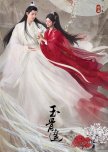
Shi Ying wasn't just a character—he became one of the reasons I fell in love with C-dramas again.
Some dramas entertain you for a few weeks.Some leave you with beautiful memories.
And then there are rare dramas that quietly become part of your journey as a viewer.
For me, The Longest Promise was one of those dramas.
After finishing The Untamed, I honestly wondered if I would ever become that emotionally attached to another Chinese drama again.
Then Shi Ying happened.
And little by little...
I found myself emotionally invested all over again.
Looking back now, after watching more than fifty historical and xianxia dramas, I can confidently say that The Longest Promise remains one of the stories that shaped my standards for this genre.
Not because it was perfect.
But because it made me care.
Deeply.
At first glance, it seems like another xianxia built around destiny, forbidden love, and cultivation.
But beneath its fantasy setting lies a story about responsibility, sacrifice, restraint, and unconditional love.
Those themes stayed with me long after the final episode.
The heart of this drama is undoubtedly Shi Ying.
I've seen countless male leads who are powerful, intelligent, or emotionally distant.
Shi Ying is different.
He never tried to become the strongest person in the room.
He never sought recognition.
He never fought for glory.
Instead, he carried responsibilities that most people would never willingly accept.
Again and again, he chose duty over personal happiness.
Again and again, he sacrificed his own desires to protect the people around him.
What made those sacrifices even more painful was that he never expected anything in return.
He simply believed it was the right thing to do.
That quiet selflessness broke my heart far more than dramatic emotional scenes ever could.
And I think that's exactly why I became so attached to him.
Not because he was powerful.
But because he remained kind despite carrying unbearable burdens.
This is also where Xiao Zhan completely amazed me.
Of course, I've always known he is handsome.
But The Longest Promise reminded me that true acting goes far beyond appearance.
He didn't simply wear Shi Ying's robes.
He became Shi Ying.
His posture.
His calm voice.
His restrained expressions.
The elegance in the way he walked.
Even the silence between his lines carried emotion.
There were moments when he said almost nothing, yet his eyes expressed heartbreak, conflict, compassion, and loneliness all at once.
That's incredibly difficult to achieve as an actor.
Watching him, I eventually stopped seeing Xiao Zhan.
I only saw Shi Ying.
And to me, that's one of the greatest compliments an actor can receive.
As for Zhu Yan...
I have to admit she frustrated me during the first half of the drama.
Her impulsiveness.
Her recklessness.
The way she often acted before thinking.
There were many moments when I wanted to tell her to simply stop and listen.
But looking back, I realized those flaws were intentional.
She wasn't meant to begin the story as the perfect heroine.
She was meant to grow.
And she did.
Her development became one of the most satisfying parts of the drama.
The same impulsive girl slowly matured into someone capable of carrying responsibilities, understanding sacrifice, and making difficult choices.
By the end, she had earned my respect.
The romance itself is another reason this drama stayed with me.
It wasn't loud.
It wasn't built on endless flirting.
It wasn't driven by physical affection.
Instead, it grew through restraint.
Distance.
Silent longing.
Unspoken feelings.
Forbidden love has always been one of my favorite tropes when it's written well, and The
Longest Promise captured both its beauty and its heartbreak.
Some of the most emotional scenes weren't confessions.
They were moments when both characters chose each other's happiness over their own.
That kind of love always hurts the most.
The xianxia world also deserves praise.
Rather than relying on constant magical battles or flashy visual effects, the drama embraced a more spiritual and philosophical atmosphere.
Cultivation wasn't simply about becoming stronger.
It reflected discipline.
Balance.
Responsibility.
And understanding the consequences of one's choices.
That slower, more contemplative approach made the world feel elegant rather than overwhelming.
Visually, this remains one of the most beautiful xianxia dramas I've watched.
The white robes.
The snowy landscapes.
The temples.
The lighting.
Every frame looked almost ethereal.
Shi Ying himself often felt less like a prince and more like an immortal who had quietly descended into the mortal world.
The cinematography complemented that feeling perfectly.
The soundtrack also deserves recognition.
It never tried to overpower the scenes.
Instead, it quietly amplified every emotional moment.
Even now, hearing certain pieces immediately brings back memories of Shi Ying's journey.
The supporting cast added depth to the story as well.
Every important relationship helped shape the emotional weight of the narrative instead of existing solely to support the romance.
Family expectations.
Master-disciple relationships.
Political responsibilities.
Friendships.
Every connection mattered.
If I had one criticism, it would be that the pacing occasionally slowed during the middle portion of the drama, and Zhu Yan's early immaturity sometimes became frustrating before her eventual growth.
Still, those moments became easier to appreciate once I saw how much both characters evolved by the end.
Looking back...
I don't think I remember The Longest Promise because of a single unforgettable battle.
Or one spectacular plot twist.
I remember it because of one man who spent almost the entire story sacrificing pieces of himself for others without asking for recognition.
Shi Ying taught me that strength isn't always measured by power.
Sometimes, true strength is choosing kindness when life continuously asks you to suffer.
Out of all the historical and xianxia dramas I've watched, very few male leads have left such a lasting impression on me.
Shi Ying is one of them.
And perhaps that's why, even after watching more than fifty historical dramas, he still remains one of the characters I find myself thinking about long after the story has ended.
The Longest Promise wasn't simply another xianxia that I enjoyed.
It became one of the dramas that reminded me why I fell in love with Chinese dramas in the first place.
It made me believe that quiet love can be stronger than grand romance.
That sacrifice can speak louder than words.
And that some characters never truly leave your heart.
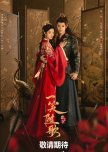
More than romance, this became one of my Top 10 historical C-dramas for all the right reasons.
Some historical romances capture your attention with grand confessions, breathtaking kisses, or endless misunderstandings that keep the leads apart.Then there are stories like Fated Hearts—quietly written, emotionally mature, and powerful enough to remind you that the strongest love stories are often built not through passion alone, but through trust, respect, and choosing each other every single time.
Honestly, I didn't expect this drama to become one of my personal Top 10 historical C-dramas.
I thought I was simply getting another palace romance with political intrigue.
Instead, I found a story that balanced romance, strategy, loyalty, and emotional growth far better than I ever expected.
One of the first things that impressed me was the writing.
The story never rushed itself.
It allowed every relationship, every political conflict, and every emotional decision to develop naturally.
Nothing felt forced.
Nothing happened simply because the plot demanded it.
Every major turning point felt earned.
That alone already made the drama stand out from many historical romances I've watched.
The greatest strength of Fated Hearts, however, wasn't the romance.
It was the partnership.
I've watched enough C-dramas to know that chemistry alone isn't enough to make me emotionally invested anymore.
I want to believe that the two people standing together genuinely deserve each other.
Here...
I did.
Both leads felt like equals.
Neither constantly overshadowed the other.
Neither existed merely to save the other.
Instead, they became each other's greatest source of strength.
That balance made every emotional scene feel far more meaningful.
The male lead immediately became one of my favorite historical protagonists.
He wasn't loud.
He wasn't unnecessarily cold.
He wasn't written to dominate every scene simply because he was the male lead.
Instead, he relied on intelligence, patience, strategy, and emotional restraint.
He knew when to fight.
He knew when to wait.
He knew when silence carried more weight than words.
Watching him slowly lower his emotional walls without ever losing the qualities that made him an excellent leader became one of the most rewarding parts of the drama.
The female lead impressed me just as much.
She wasn't written as someone who constantly needed rescuing.
She had her own intelligence.
Her own convictions.
Her own strengths.
She contributed to solving problems instead of simply reacting to them.
Most importantly, she wasn't fearless because she lacked emotions.
She was brave because she chose to move forward despite them.
That made her incredibly easy to admire.
Together, they created one of the healthiest relationships I've seen in a historical C-drama.
Their love wasn't built through dramatic misunderstandings.
It wasn't sustained by jealousy or unnecessary sacrifices that could have been avoided with one conversation.
Instead, their relationship slowly grew through trust, shared responsibilities, and unwavering support.
They respected each other before they loved each other.
And perhaps that's exactly why their love felt so believable.
Another reason this drama became so memorable for me was its political storyline.
It never tried to become overwhelmingly complicated simply to appear intelligent.
Instead, every political conflict existed to challenge the characters and strengthen the relationships between them.
Court politics.
Power struggles.
Hidden agendas.
Changing alliances.
Everything remained engaging without ever overshadowing the emotional core of the story.
The pacing also deserves recognition.
One thing I appreciated was that the drama always seemed to know when to slow down and let emotional moments breathe, and when to move the political storyline forward.
It never felt rushed.
It never overstayed its welcome.
Every episode left me wanting to continue.
The supporting cast also deserves a great deal of credit.
Too many historical dramas treat supporting characters as simple plot devices.
Fated Hearts didn't.
Every important supporting character had clear motivations, meaningful relationships, and genuine contributions to the story.
Whether they became trusted allies, political rivals, loyal friends, or tragic figures, each of them helped shape the journey of the main couple.
By the second half of the drama, I found myself caring about far more than just the romance.
That, for me, is always a sign of excellent writing.
Visually, the production was consistently beautiful.
The costumes reflected each character's status and personality without becoming unnecessarily extravagant.
The cinematography favored elegance over spectacle, allowing emotional moments to feel intimate while giving political scenes the weight they deserved.
The soundtrack quietly complemented the story instead of trying to manipulate every emotional scene.
As for the performances, I genuinely believed every important relationship.
The leads portrayed their characters with remarkable emotional restraint.
Instead of relying on exaggerated reactions, they trusted subtle expressions, silence, and body language to communicate what their characters truly felt.
That kind of acting always leaves a stronger impression on me than endless dramatic speeches.
If I had one criticism, it would simply be that a few secondary political conflicts could have been explored in greater depth, and some antagonists deserved more layered motivations.
Even so, those were minor issues in a drama that remained remarkably consistent from beginning to end.
Looking back...
I think what stayed with me most wasn't a single romantic scene.
It wasn't a single battle.
It wasn't one shocking plot twist.
It was the feeling this drama left behind.
A feeling that love doesn't always have to be loud to be unforgettable.
That true partnership is built long before two people ever confess their feelings.
And that the strongest relationships are often those where two equally capable people choose to carry life's burdens together instead of asking the other to carry them alone.
That is exactly why Fated Hearts became one of my personal Top 10 historical C-dramas.
Not because it tried to reinvent the genre.
But because it executed everything it set out to do with sincerity, consistency, and genuine emotional depth.
Sometimes, that's more than enough to create a story you'll remember long after the final episode ends.
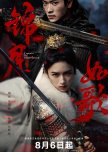
A military masterpiece built on respect, sacrifice, strategy, and one unforgettable partnership.
There are historical dramas that captivate you with breathtaking romance.Others leave you emotionally devastated through tragedy.
Then there are rare dramas that quietly excel in almost every aspect without constantly trying to prove how great they are.
Legend of the Female General is one of those rare dramas.
By the time I finished it, I understood exactly why so many viewers considered it one of the strongest historical releases of the year.
More importantly...
I understood why it earned a place among my personal Top 10 historical C-dramas.
Because this wasn't simply another story about a woman disguising herself as a man.
Nor was it simply another military romance.
It became a story about earning respect, carrying responsibility, surviving impossible odds, and finding someone who chooses to stand beside you—not because you need saving, but because they recognize your worth.
From the very beginning, He Yan completely won me over.
One thing I've noticed after watching dozens of historical dramas is that many writers mistake a "strong female lead" for someone who is simply unbeatable.
Legend of the Female General never falls into that trap.
He Yan isn't respected because the script tells everyone she's extraordinary.
She earns every bit of that respect.
She trains harder than everyone else.
She hides her identity while enduring constant suspicion.
She proves herself through actions instead of speeches.
She loses.
She suffers.
She fails.
She learns.
Every promotion, every achievement, and every victory felt deserved because the drama never took shortcuts in building her character.
Watching her slowly rise through the military ranks became one of the most satisfying journeys I've seen in a historical drama.
That is exactly what made her inspiring.
Not because she was perfect.
But because she earned everything.
Then there's Xiao Jue.
I've seen many cold, powerful male leads throughout historical dramas.
Yet Xiao Jue managed to stand out without trying to become the center of attention.
He never underestimated He Yan.
He never treated her like someone who constantly needed protection.
He observed.
He trusted.
And only then did he fall in love.
That progression made their relationship feel incredibly mature.
Their romance wasn't built on dramatic confessions or endless misunderstandings.
It grew naturally through admiration, mutual respect, and shared experiences on the battlefield.
Perhaps that's why their chemistry felt so believable.
Neither one overshadowed the other.
Neither existed to "complete" the other.
They became partners.
Equals.
And honestly...
I think that's far more romantic than grand declarations of love.
One of the biggest reasons this drama stands out is its military storyline.
As someone who genuinely enjoys military historical dramas, I appreciated how much attention the writers gave to army life instead of treating battles as mere spectacles.
Training.
Military discipline.
Promotions.
Command hierarchy.
Battlefield formations.
Brotherhood.
Leadership.
Responsibility.
Everything felt meaningful.
The soldiers weren't disposable background characters.
The army itself became one of the story's strongest characters.
Every victory came with sacrifice.
Every battle carried consequences.
Because of that, the action scenes never felt empty.
They carried emotional weight.
The political storyline also deserves recognition.
Rather than relying solely on romance, the drama balanced military affairs with court politics, corruption, family conflicts, and power struggles.
The political intrigue never became unnecessarily complicated, yet it remained engaging enough to keep every episode moving.
Every decision inside the court eventually affected the battlefield.
Every military victory influenced political power.
Everything felt connected.
The supporting cast also played a huge role in making the story memorable.
None of them felt like simple background characters.
Each had their own motivations, loyalties, and personal struggles.
Whether they were fellow soldiers, commanders, political allies, or members of the imperial court, every important supporting character contributed meaningfully to He Yan's journey.
That made the world feel complete.
It wasn't simply the story of one heroine.
It became the story of an entire army fighting together.
Visually, this drama was consistently impressive.
The battle sequences were cinematic without becoming chaotic.
The military camps felt lived in.
The armor, costumes, weapons, and production design reflected the harsh reality of military life while still maintaining the elegance expected from a historical production.
Nothing looked overly artificial.
Everything served the story.
The cinematography deserves special praise.
Instead of relying on excessive slow motion or flashy effects, it trusted the performances, landscapes, and choreography to carry the emotional impact.
Many scenes felt like paintings brought to life.
The performances elevated everything even further.
Zhou Ye delivered one of the strongest performances of her career.
She perfectly balanced vulnerability and determination.
Whether she was standing confidently before an entire army or quietly confronting her own emotional struggles, every expression felt genuine.
She never needed exaggerated acting to convince me that she was He Yan.
She simply became the character.
Cheng Lei was equally outstanding.
His portrayal of Xiao Jue relied heavily on subtle expressions rather than dramatic emotional outbursts.
A glance.
A brief smile.
A moment of silence.
Sometimes those moments communicated far more than pages of dialogue ever could.
Together, they created one of the most mature and believable partnerships I've seen in a historical romance.
If I had one criticism, it would be that a few political antagonists could have benefited from deeper development. Some later conflicts also resolved a bit faster than I expected, especially considering how carefully the earlier military arcs had been built.
Still...
those were relatively small issues in an otherwise remarkably consistent drama.
Looking back, I realized something.
Legend of the Female General never relied on shocking plot twists.
It never depended on excessive romance.
It didn't need endless misunderstandings to keep viewers invested.
Instead...
it trusted its characters.
It trusted its storytelling.
And most importantly...
it trusted the audience to appreciate quiet character growth, meaningful relationships, and victories that were earned rather than conveniently handed to the heroes.
That is exactly why this drama became one of my personal Top 10 historical C-dramas.
Not because it tried to be the loudest.
But because almost every element—its characters, military storytelling, political intrigue, performances, cinematography, and emotional journey—worked together with remarkable consistency.
For me, Legend of the Female General is a reminder of why I fell in love with historical C-dramas in the first place.
Stories where courage matters more than power.
Respect matters more than status.
And love is strongest when two people stand beside each other as equal.
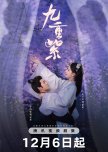
I expected another rebirth drama. I found one of the healthiest romances in historical C-dramas.
There are many rebirth dramas in C-dramas.Some rely too heavily on revenge.
Some become repetitive because the protagonist simply avoids every mistake from their previous life.
Then there's Blossom.
A drama that proved rebirth is not only about changing fate—it is about learning how to trust, love, and live differently.
Honestly, I started Blossom because of the overwhelmingly positive reviews. After reading recommendations from kisskh, Reddit discussions, and countless rankings, my expectations were already high.
Thankfully...
It didn't disappoint.
From the very first episode, the story immediately established its biggest strength.
The rebirth wasn't used as a gimmick.
Instead, it became the foundation for every decision Dou Zhao made.
Unlike many rebirth heroines who become almost invincible because they know the future, Dou Zhao remained human. She still made difficult decisions, questioned herself, and understood that knowing the future didn't necessarily mean controlling it.
That made her journey feel believable.
Dou Zhao quickly became one of my favorite
female leads.
She wasn't loud.
She wasn't reckless.
She didn't constantly need saving.
She relied on intelligence, patience, careful observation, and emotional maturity.
Watching her slowly rebuild her life while protecting the people she cared about was incredibly satisfying.
But what truly made Blossom special for me was Song Mo.
After watching so many historical dramas filled with possessive, emotionally distant, or overly controlling male leads, Song Mo felt like a breath of fresh air.
He never tried to overshadow Dou Zhao.
He respected her decisions.
Trusted her judgment.
Protected her when necessary.
Yet never took away her independence.
Instead of becoming her savior, he became her partner.
And that made all the difference.
Their relationship became one of the healthiest romances I've seen in historical C-dramas.
There were misunderstandings.
There were secrets.
There were political dangers.
But unlike many dramas that drag conflicts simply to create unnecessary angst, Blossom allowed its leads to communicate, grow together, and gradually build genuine trust.
Watching them slowly transform from cautious allies into husband and wife felt incredibly rewarding.
Their marriage wasn't treated as the end goal of the story.
It became the beginning of an even stronger partnership.
That is something I rarely see done this well.
Another aspect I appreciated was the family drama.
Rather than focusing solely on palace politics, Blossom explored family relationships, responsibilities, generational conflicts, and the weight of protecting one's household.
Every family decision carried emotional consequences.
Every political move affected real people.
Because of that, the story always felt grounded despite the rebirth premise.
The political intrigue also struck a perfect balance.
It was engaging without becoming overly complicated.
There were enough conspiracies, shifting alliances, and power struggles to keep the story interesting, yet they never overwhelmed the emotional core of the drama.
Instead, every political conflict strengthened the relationship between the characters rather than distracting from it.
The supporting cast also deserves recognition.
Every important supporting character served a meaningful purpose instead of existing merely to support the main couple.
Whether they became allies, rivals, or family members, they all helped shape Dou Zhao and Song Mo's journey.
That made the world feel complete and believable.
Visually, Blossom was stunning.
The cinematography embraced elegance instead of excessive grandeur.
The costumes reflected each character's status beautifully without feeling overly extravagant.
The color palette perfectly matched the drama's calm yet emotionally rich atmosphere.
The soundtrack blended naturally into every emotional scene.
It wasn't the type of OST that constantly demanded attention, but it quietly strengthened every important moment throughout the story.
The acting exceeded my expectations.
Meng Ziyi delivered one of her strongest performances to date.
She portrayed Dou Zhao with grace, intelligence, vulnerability, and quiet strength without ever making her feel emotionally distant.
Her expressions alone often conveyed more than dialogue ever could.
Li Yunrui completely won me over as Song Mo.
His performance relied on restraint rather than exaggerated emotions.
Every glance.
Every smile.
Every silent act of protection.
Everything felt sincere.
He portrayed a man who loved deeply without constantly needing to say it.
That quiet devotion made Song Mo one of my favorite green-flag male leads.
If I had one criticism, it would simply be that certain political arcs could have been explored more deeply, and a few supporting characters deserved slightly more development toward the latter half of the story.
However, those minor shortcomings never affected my overall enjoyment.
Looking back, Blossom gave me almost everything I wanted in a historical romance.
A smart female lead.
A dependable male lead.
A marriage built on mutual respect.
Political intrigue that remained engaging.
Beautiful cinematography.
Strong performances.
And a romance that grew naturally through trust instead of unnecessary misunderstandings.
More importantly...
It reminded me that the strongest love stories are not always the loudest ones.
Sometimes, the most unforgettable romances are built through quiet companionship, unwavering trust, and choosing each other over and over again despite everything standing in the way.
For me, Blossom wasn't simply another rebirth drama.
It became one of the finest examples of how mature writing, emotionally intelligent characters, and genuine partnership can elevate an entire story.
I expected a light romance. I found a story that quietly stole my heart.
Some dramas impress you with epic battles, tragic endings, or grand political schemes.And then there are dramas like Youthful Glory—stories that quietly win your heart until one day you realize you've become attached to every character.
Honestly, I started this drama with almost no expectations. I only knew that the cast looked good, but I wasn't familiar enough with the actors to have any expectations about their performances. After finishing several emotionally heavy historical dramas, I simply wanted something light before diving into titles known for breaking viewers' hearts.
At first, Youthful Glory was exactly that.
It was charming, funny, and genuinely relaxing to watch. The banter between Jiang Xu and Ming Tan felt playful and natural, and their chemistry never felt forced. Unlike many historical romances that rely on endless misunderstandings to create drama, their relationship developed through shared experiences, mutual respect, and quiet acts of care. It felt refreshingly mature.
Then the Marquis Jing'an case happened.
Watching Marquis Jing'an—General Ming Tingyuan, one of the empire's most respected military commanders and Ming Tan's father, being poisoned, framed, and sentenced to death genuinely broke my heart. I went into this drama expecting nothing more than a comfort watch, so I was completely unprepared for how emotional that storyline would become.
Even though I already suspected there was a larger plan unfolding behind the scenes, Ming Tan knew absolutely nothing. Watching her desperately try to save her father while feeling powerless made me cry far more than I expected. For a drama I thought would remain light from beginning to end, this arc completely changed my perspective and added the emotional weight that elevated the entire story.
Jiang Xu became one of the biggest surprises for me.
As the King of Dingbei, he carried the authority of an imperial prince and the responsibility of one of the empire's most trusted military leaders, yet he never relied on his status to command respect. Instead, he earned it through calm judgment, quiet confidence, unwavering loyalty, and his willingness to protect others without asking for recognition.
He isn't the type of male lead who constantly makes grand declarations of love.
He simply acts.
There were many moments when I wanted him to explain everything to Ming Tan, but as the story progressed, I understood why he couldn't. Every decision he made carried political consequences, and revealing his plans too early could have endangered everyone he was trying to protect.
His love language wasn't words.
It was action.
Watching this respected prince become completely helpless while trying to win back Ming Tan's trust was honestly one of the cutest parts of the drama. For someone so composed on the battlefield and inside the imperial court, seeing him become awkward and almost clueless in love made him even more endearing.
Ming Tan also won me over far more than I expected.
She wasn't written as a perfect heroine who always made the right decisions. She was emotional, stubborn, occasionally impulsive, and sometimes allowed her feelings to cloud her judgment. Yet those imperfections made her feel human. More importantly, she learned from every hardship she experienced. Her growth never felt rushed or forced—it happened naturally, making it easy to root for her until the very end.
One of the drama's greatest strengths was its supporting cast.
Instead of existing solely to support the main couple, every major supporting character had their own personality, purpose, and emotional journey that naturally enriched the story.
I especially loved Zhang Huai Yu (Bai Shu) and Bai Min Min (Dai Lu Wa). At first, they brought warmth, humor, and a refreshing contrast to Jiang Xu and Ming Tan's calmer romance. Their playful banter and constant teasing made many of the lighter moments genuinely entertaining. But beyond the comedy, I appreciated how their relationship quietly evolved through companionship, trust, and unwavering support for one another. They never felt like a couple added simply to provide comic relief. They had their own story, their own struggles, and their own reasons to become memorable.
I also found myself becoming attached to Shu Jing Ran (Quan Yi Lun) and Yun Yi (Ke Ying). Compared to the lively dynamic of Zhang Huai Yu and Bai Min Min, their relationship unfolded much more quietly. Their story was built on loyalty, understanding, and shared hardships rather than dramatic romantic moments. It was subtle, sincere, and beautifully developed alongside the main narrative.
What impressed me most was that neither couple ever felt like filler.
They weren't simply following Jiang Xu and Ming Tan throughout their journey. Whether accompanying the leads during dangerous missions, participating in investigations, helping uncover conspiracies, or standing beside them throughout the Lizhou smuggling investigation, every member of the group had meaningful contributions to the story.
By the time the Lizhou arc unfolded, I realized I was no longer watching the drama solely for Jiang Xu and Ming Tan.
I had become emotionally invested in the entire group.
That is something I always value in historical dramas.
When every supporting character has a meaningful role instead of merely existing around the protagonists, the emotional impact becomes much stronger. Youthful Glory wasn't simply about one couple falling in love—it became the story of a group of people who laughed together, investigated together, fought together, protected one another, and slowly became a family through every challenge they faced.
The balance between romance, political intrigue, investigations, military affairs, and family relationships was another one of the drama's greatest strengths. It never became overwhelmingly political, yet it never abandoned its historical identity either. Every major case—from the Marquis Jing'an conspiracy to the Lizhou smuggling investigation—kept the story moving while naturally strengthening the relationships between the characters.
Visually, the drama was consistently elegant.
The cinematography was beautiful without trying too hard to be grand. The costumes suited each character perfectly and reflected their personalities and status well. The soundtrack blended naturally into the scenes, supporting the emotions without overpowering them. While the OST wasn't particularly unforgettable, it complemented the overall atmosphere beautifully.
As for the performances, I finished this drama genuinely impressed.
Song Weilong portrayed Jiang Xu with remarkable restraint. Instead of relying on exaggerated emotions, he allowed subtle expressions, quiet moments, and body language to carry the character's emotional weight. He made Jiang Xu feel dependable, capable, composed, and deeply sincere.
Bao Shang'en also exceeded my expectations. Her performance matured alongside Ming Tan's character, making every stage of her emotional journey believable. By the second half of the drama, I completely believed in her transformation from a sheltered noble daughter into someone capable of standing beside Jiang Xu through every hardship.
If I had one criticism, it would be that some political conflicts wrapped up a little too conveniently, and a few antagonists lacked the complexity that would have made the stakes even stronger. There were moments when I wished the villains had been written with the same depth as the heroes.
Even so, those minor flaws never overshadowed my overall experience.
Looking back, I'm actually glad I chose Youthful Glory before moving on to emotionally devastating dramas like Nirvana in Fire or Goodbye, My Princess.
It became exactly the emotional break I needed.
It made me laugh.
It unexpectedly made me cry.
It gave me a romance built on trust rather than unnecessary misunderstandings.
It gave me supporting characters I genuinely cared about.
And it reminded me that not every unforgettable historical drama has to leave me emotionally shattered.
Sometimes, a story filled with quiet love, loyal families, meaningful friendships, political conspiracies, and people who slowly grow together through every challenge is more than enough.
Youthful Glory may not be the grandest historical drama I've watched, but it quietly became one of the most heartfelt and unexpectedly memorable
“A Slow Burn Love Story Where Two Enemies Learned That Trust Was the Real Romance”
💚 Green Flag: Slow burn, mature relationship development, strong female lead, political romance💔 Angst Level: ⭐⭐⭐⭐⭐
🔥 Chemistry: 🔥🔥🔥🔥🔥
🧠 Plot & Strategy: ⭐⭐⭐⭐☆
🎭 Acting: ⭐⭐⭐⭐⭐
Prisoner of Beauty is the kind of drama that doesn’t immediately grab you with loud romance or dramatic declarations. Instead, it slowly pulls you in — layer by layer — until you realize you are already emotionally attached to these two people who started as strangers forced into a marriage neither of them wanted.
What I loved about this drama is that their love was not built on instant attraction. It was built on survival, understanding, trust, and choosing each other despite everything around them telling them not to.
Wei Shao and Xiao Qiao’s relationship started with so much uncertainty. They were both carrying their own wounds, pride, responsibilities, and fears. At first, it felt like they were two people constantly testing each other, waiting to see who would break first. But that is exactly what made their journey beautiful.
This was not a romance where the ML simply falls in love and protects the FL. This was a story where both characters had to learn how to trust, compromise, and become each other’s safe place.
Xiao Qiao — The Beauty Who Was Never Weak
One of my favorite things about Xiao Qiao is that she was not written as a helpless woman waiting for someone to save her.
She was intelligent, observant, and knew how to survive in a world where women had very little power. She understood people, politics, and the consequences of every decision she made.
What impressed me was her patience and emotional strength. She knew when to fight and when to step back. She was gentle, but never powerless.
She wasn’t trying to become someone else to fit into Wei Shao’s world. She made him understand her world too.
That is what made their relationship feel balanced.
Wei Shao — The Cold General Who Learned How to Love
Wei Shao is the type of ML that takes time to understand.
At first, he was cold, guarded, and difficult to read. His actions were often controlled by duty, revenge, and the responsibilities placed on his shoulders.
But slowly, we see the man behind the armor.
What I appreciated about him was that his love was shown through actions. He wasn’t perfect. He made mistakes, he struggled with communication, and sometimes his pride became his biggest weakness.
But watching him slowly lower his walls and realize that Xiao Qiao was not his enemy anymore was one of the most satisfying parts of the drama.
The biggest romance in this story was not the grand gestures.
It was the small moments where he started choosing her.
Their Chemistry — The Reason This Drama Worked
The chemistry between Wei Shao and Xiao Qiao carried the entire drama.
Their relationship was not about constant sweetness. It was about tension, misunderstandings, emotional distance, and finally learning each other.
The slow burn was frustrating at times because you just wanted them to talk and stop hurting each other 😭
But when they finally understood each other, every small romantic moment felt earned.
That is what made their love story satisfying.
The Things I Loved
✅️ Strong female lead who uses intelligence instead of just relying on others
✅️ Mature romance built through trust
✅️ Political conflicts that actually affected the characters
✅️ Beautiful character development
✅️ The feeling that both leads needed each other, not because they were incomplete, but because they became stronger together
My Frustrations
Of course, this drama was not perfect.
There were moments when I wanted to shake both characters and say, “Please communicate!” 😭
The misunderstandings and emotional walls sometimes became exhausting because you could see how much easier things would be if they were just honest with each other.
Some parts of the story also required patience because the pacing was more focused on gradual development rather than constant action.
But at the same time, that slow pacing was also the reason the emotional payoff worked.
Final Thoughts
Prisoner of Beauty is not a drama that you watch only for romance. It is a story about two people trapped by circumstances who slowly find freedom through each other.
It is about a woman who refuses to lose herself and a man who learns that strength is not only about winning battles but also about protecting the person who becomes his home.
After finishing this drama, what stayed with me was not just the romance.
It was the journey.
The frustration.
The longing.
The small moments of happiness.
The pain of watching two people who clearly loved each other but had to overcome so much before they could finally choose each other.
A beautiful slow burn that requires patience, but rewards you emotionally.
Definitely one of my memorable costume romance dramas. ❤️
The best dramas break your heart first, then make every happy ending feel earned.
I have to admit, after finishing The Long Ballad, I intentionally lowered my expectations before starting Moonlit Reunion. I didn't want to expect another masterpiece. I simply wanted to enjoy the journey.What I didn't expect was finding a drama that completely reminded me why I fell in love with fantasy C-dramas in the first place.
Moonlit Reunion is not perfect. Like most xianxia dramas, it has familiar tropes—hidden identities, ancient grudges, reincarnation, sacrifices, misunderstandings, and a destiny that seems determined to separate the leads. But what made it work for me was how emotionally invested I became in the characters. Instead of feeling repetitive, every revelation added another layer to the story and made me want to keep watching.
One of the biggest strengths of this drama is that it never relied solely on romance. The mystery surrounding the Cat Master, the Sinister Infant, the events from eighteen years ago, and the true identities of several characters kept me constantly curious. Every time I thought I had figured everything out, another piece of the puzzle appeared.
That balance between romance, mystery, fantasy, and suspense was exactly what kept me engaged from beginning to end.
Xu Kai once again proved why he's one of my favorite actors.
I've watched several of his dramas, and what impresses me most is his ability to portray different versions of the same character without making them feel identical.
As Mei Zhuyu, he wasn't the loud, overprotective male lead who constantly declared his love. Instead, he portrayed someone intelligent, composed, patient, and quietly devoted. He expressed love through actions rather than dramatic speeches.
The more the story unfolded, the more I appreciated his performance.
Whether he was investigating the truth, protecting Wu Zhen from the shadows, or carrying burdens he chose not to reveal, Xu Kai delivered every emotional scene with restraint. He never overacted, yet every expression carried weight.
By the time the final arc arrived, I realized that many of the drama's most heartbreaking moments worked because of how naturally he portrayed sacrifice.
Tian Xiwei completely surprised me.
I've always found her charming in romantic comedies, but Moonlit Reunion allowed her to show a much wider emotional range.
Wu Zhen could be playful, stubborn, mischievous, vulnerable, and incredibly courageous—all within the same episode.
She wasn't a perfect heroine, and that's exactly why I liked her.
She made mistakes.
She doubted herself.
She struggled with her identity as someone caught between the mortal and demon worlds.
Watching her gradually accept who she truly was made her character feel believable and relatable.
Most importantly, the chemistry between Tian Xiwei and Xu Kai never felt forced.
Their relationship grew naturally through trust, shared experiences, and countless sacrifices instead of instant romance.
The chemistry was one of the drama's greatest strengths.
Rather than relying on excessive romantic scenes, Moonlit Reunion focused on emotional intimacy.
Sometimes a simple glance, silent protection, or choosing each other despite impossible circumstances carried far more impact than grand romantic confessions.
Their relationship was built on mutual respect.
Neither character constantly needed saving by the other.
Instead, they repeatedly chose to protect one another, making their partnership feel balanced.
By the final episodes, I genuinely believed they belonged together.
Visually, this is one of the most beautiful fantasy dramas I've watched.
The cinematography deserves enormous praise.
Every location felt magical without looking overly artificial.
The moonlit forests, ancient temples, demon realm, and mountain landscapes all created an immersive fantasy world.
Several scenes genuinely looked like paintings.
The color palette shifted beautifully depending on the emotional tone of each arc.
Soft moonlight during romantic moments.
Cold blue tones during tragedy.
Warm golden lighting during reunion scenes.
Every frame felt carefully composed rather than simply filmed.
The soundtrack elevated every emotional moment.
One thing I always appreciate in a drama is when I can remember its music after finishing it.
Moonlit Reunion accomplished exactly that.
The background score never overpowered the scenes.
Instead, it quietly enhanced every confession, every sacrifice, every farewell, and every reunion.
Several emotional moments became unforgettable because the music knew exactly when to stay subtle and when to soar.
What I appreciated most was the pacing.
Unlike some fantasy dramas that become repetitive in the middle, I rarely felt the urge to skip scenes here.
Every major revelation answered one mystery while introducing another.
The story maintained enough momentum that I always wanted to know what happened next.
Even the numerous twists surrounding identities and the events from eighteen years ago eventually connected in satisfying ways.
The emotional payoff made the journey worthwhile.
I often say that my favorite xianxia dramas are the ones that emotionally destroy me first before rewarding me with a satisfying ending.
Moonlit Reunion delivered exactly that.
It gave me heartbreak.
It gave me sacrifices.
It gave me moments where I genuinely thought happiness was impossible for the characters.
But unlike tragedies that leave you emotionally exhausted, this drama remembered to reward both its characters and its audience.
By the time the final episode ended, I wasn't thinking about how much they suffered.
I was thinking about how much they deserved their happiness.
And that made all the pain worth it.
Final Thoughts
After watching many fantasy C-dramas over the past few months, I've realized that what keeps me invested isn't simply powerful cultivators or beautiful CGI.
It's the emotional journey.
The sacrifices.
The trust.
The quiet acts of love.
The feeling that every happy moment has been earned after everything the characters endured.
Moonlit Reunion reminded me why I enjoy this genre so much.
It isn't just another fantasy romance.
It's a story about destiny, identity, forgiveness, sacrifice, and choosing love despite impossible circumstances.
Xu Kai and Tian Xiwei delivered wonderful performances, supported by stunning cinematography, memorable music, and a world that felt both magical and emotionally grounded.
For me, this became another xianxia that successfully balanced fantasy with heartfelt storytelling.
It made me smile.
It made me anxious.
It made me cry.
And most importantly...
It gave me the emotional recovery I always look for after the heartbreak.


