
 Editorials

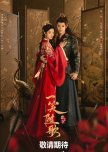
Overall, it was a very good series. I enjoyed watching it. The acting, in particular, was excellent. I congratulate the director. Beautiful filming, beautiful acting, beautiful action scenes. Are there any mistakes? I attribute these to the screenwriter. There were many character flaws. I mean, a person's character is what it is. It doesn't change. Their temperament changes. I can't quite explain it. For example, in this series, the princess chooses the prince she sees over her beloved brother. This prince is trying to kill his brother. Knowing all this, it's impossible for her to insist and say she loves him very much. She regrets it later, which the other person already says. I have no interest in it. You're making these things seem like things, in other words, you're making her choose the older brother. Then you end the series by calling this girl "brother." The older brother, who is at loggerheads with the person she said she loved, ends up killing this man. Which one is correct? I don't agree with that. Such a character doesn't exist. There are flaws in the Emperor's character too. I think he's at fault. He kills his father-in-law, the queen, right before her eyes, with his concubine by his side. And then this woman becomes queen. The king, knowing all this, values the queen. No matter how much trouble his son causes them, he blames his son. Ultimately, this father and daughter kill the emperor too. But before killing the emperor, his son kills his father-in-law. The emperor says, "My revenge has been taken." You didn't do these things while you were in power; you blamed your son, and after all, your son disobeyed you and killed this person. You've come to your senses. I think these characterizations are flawed. If a character hates someone, they do. You can't just say, "I did it today, I forgave you tomorrow, I gave up the next day," and then these characters change their character. And then this emperor is forced to call the woman who killed their mother, who caused it, "mother." That's what the father wants. What is this? It's completely perverse. Such a character doesn't exist. These are flawed. They're wrong. Certain things need to be considered before writing. Also, the eunuch, who was always at the emperor's side, wasn't around when the emperor was killed. A huge mistake. How could such a scenario even exist? He comes back hours later. He went for a walk. He went to the restroom. Look, in the state administration, the person in charge is the emperor's sole aide. He doesn't go anywhere without him. So many things happen. Hours pass. If this person leaves, they leave a replacement. They're notified immediately. Eunuch services aren't just sketchy. It's a no-brainer. If a eunuch leaves, another eunuch takes over. I'm not even counting the watchmen. If something happens to the emperor, they're immediately notified. An emperor doesn't just leave himself out in the meadow, acting like a patron. This is a mistake. The screenwriter didn't pay attention to these matters. He's probably saying it happens when the eunuch isn't there. It's bound to happen. A man won't sleep, eat, go to the bathroom, run an errand. But someone always takes over. It can't be just one eunuch. There are a hundred eunuchs, and as many guards. There's a guard commander. They're soldiers. You send them out on command. But eunuchs definitely take orders from the emperor. The screenwriter should know this better than I do. These things were overlooked. I'm not even going to get into the whole issue of a childhood friend and the person most loyal to the emperor acting as if nothing ever happened and then turning into an enemy. These things can happen. But the way he instilled it in us so deeply, making us submit to the emperor and then turning things into a blood feud, seemed too much to me. It was overdone. The fact that his childhood friend's father prioritized the prince and put it on the back burner, and that the prince was saved and left behind to suffer, and then the prince didn't call them, got ingrained in him for years, and he held it in his heart and became hostile towards the prince. That's possible too. But in this reversal, these children continue to be friends with each other. Doesn't one of them ever ask the other, "Why didn't you call me?" They don't ask. They bottle it up and try to overthrow the emperor. That's too much. Then they'll ask him why you continued the friendship. Why did you continue? You became such a sweetheart. You got closer and closer. Then you went behind his back. Things happen when you're a child. Then you can say, "I'm not talking to you." Your mind might not try to plan, but you could have told him to his face. I think these things are missing. But people can get angry and do certain things. I agree. Everyone can write according to their own ideas. It's up to us to watch. As I said at the beginning, I liked the actors. I liked the acting. Our leads were almost overshadowed by the supporting roles. There were some really good actors. Chen He Yi and Qin Tian Yu delivered some excellent performances, practically surpassing themselves. Edie Cheung, Zhao Bin, Li Yu, Lu Xing Yu, Jiang Kai, Michelle Hu, and Xu Xiao Sa—these veteran actors—acted as if they were giving an acting lesson. I really liked them. They tore themselves apart. I also liked Xia Meng, Wang Zi Teng, Zhang Cheng Lang, Sheng Ying Hao, Ding Jia Wen, and Xia Ming Hao. The harmonies between our leads were good. I found Li Qin more dynamic and relaxed. I think it was the director's influence. He delivered a different role than his usual one. Chen Ze Yuan, despite being younger, was very successful. I recommend it to those who haven't seen it.
Was this review helpful to you?


