
 K-Drama

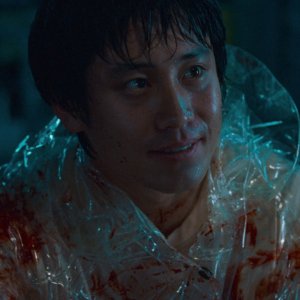


on crime, capitalism, gender oppression, and what it all means for women loving women
duet of shadows is an excellent show written by intelligent, competent creators who demonstrated through their work just how much they value human life and want an end to women's oppression and, more broadly, to human suffering. at every turn, the show surprised me and deftly refused simple explanations; it was full of meaning and complexity and love.
throughout the show, there were three overarching themes through which they explored gender (as performance and oppression) in relation to one's material conditions. these were: 1) crime as a socially-produced phenomenon, 2) capitalism's primary and secondary victims, and 3) how we all strive to preserve our dignity as humans (and how that is our right).
1. crime as a socially-produced phenomenon (with society held responsible)
this show was not a simple mystery thriller with the lead detectives solving the crimes as they come up and sending the perpetrators to jail. all throughout, the show was less interested in who was responsible for the said crimes but more involved in exposing the context in which these crimes took place while humanizing the perpetrators, as they are, after all, just human. a story written through this framework of crime as not an individual moral failing but as socially produced, emerging from gender oppression, humiliation, commodification, victimization, and the absence of institutional protections, helps us, as the viewer, reframe our understanding of criminal activity and forces us to look at the structures causing and maintaining this behaviour. the show understands and instills in us the same understanding of crime as the predictable outcome when systems we have in place withhold protection and lack responsibility, when dignity is only available to those who can afford it, and when our bodies are commodified.
2. capitalism's primary and secondary victims
in portraying how crime is socially produced, another thing the show consistently returned to was portraying the women involved in these crimes as pushed to the edge. it wasn't that these serious crimes of murder, kidnapping, medical malpractice, etc. were being portrayed as inconsequential and neither was there an attempt in the writing to absolve these women of the crimes they, in fact, did commit. what the show does is to expose these web of interactions in an effort to make us aware not only of how this is happening but whom it is hurting the most and how that harm trickles down onto others, possibly leading to more crime.
most of the crime in these cases was a result of profit-seeking and class hierarchy, suggesting capitalism is the root condition that intensifies gender oppression. then, the show's focus was on how gendered and sexual hierarchies shape lived experiences of oppression and how these are intensified and maintained through economic structures. across the show's arcs, we see how these systems of oppression, capitalism and patriarchy, generate, even outside of the actual victims, both primary victims (perpetrators directly engaging in harm) and secondary victims (their families, children, communities).
i appreciated this framework because it rejects the understanding of crime as something that is committed by people who are evil, lazy, or simply antisocial and pushes for one where we can recognize people's humanity in order to acknowledge their shortcomings and faults as it stands true that if we do not understand people's material conditions, we also cannot help them and the point has to be to help them. injustice and tragedy lead people to dissociate from the social order and there were examples of this in every arc. for example, the mother in the human trafficking arc ended up kidnapping the child of the kidnapper to use him as leverage because she had been pushed to the edge in years due to the harm she was suffering from not being addressed and amended. this arc in particular, as well as the ending of the show, were great examples of how the show does not intend to depress the viewers or leave us with these tragedies. in the end, they left us on a hopeful note by showing it's possible to choose care and empathy even after being hurt. because, if injustice and tragedy lead people to dissociate from the social order, "justice" needs to involve rebuilding social relations.
3. we all strive to preserve our dignity as humans (and that is our right)
in line with the previous themes, loss of dignity and humiliation were very much front and center in these criminal cases to the point that /dignity/ is practically the moral axis of the entire show. poor people are structurally denied dignity, protection, and fairness and gender only intensifies this experience of humiliation and the resulting resentment because women’s labour is already undervalued and their bodies are commodified. in fact, we all seek power, especially when disenfranchised. then, the show makes this point over and over again: when one's survival depends on money, their dignity is compromised and this is what pushes people to the edge, creating primary and secondary victims through socially-produced crime.
the final arc of the show brings everything together in a culmination of the kinds of violence they’ve explored: finally, they say, capital (power) corrupts, loss of dignity victimizes people and can push them into violence, and without structural protections in place, as well as reeducation, we have no way of preventing any of it. in line with this, an important note the writing often ended on was the importance of community and care. they have treated equality as something produced and achieved through shared struggle. similarly, the struggle for people to preserve their dignity is a shared one as this is what capitalism, patriarchy, white supremacy, and other forms of systemic oppression steal from us through reducing one's personhood to function, profit, or shame. what we lose is the opportunity to live as respected, fully realized human beings.
4. in conclusion
many chinese dramas, like this one, have the republican era as their setting because it provides a lot of contrast to today and a lot of opportunity to communicate political messaging as this is an era of incomplete capitalist modernization and colonial intrusions (see: the shanghai concessions). the republican era setting allows writers to depict and address exploitation and gender-based oppression (as we are seeing in this show) before people's republic of china made gender equality a state policy. this matters because the show is largely about how women survived before institutional protections existed and how they relied on each other when these structures failed them and denied them agency.
the point is learning from and reiterating history and making women’s pain and material conditions visible while granting them their full humanity through mutual recognition and a competent, empathetic treatment by the lead detectives who are similarly fighting gendered stigma in their profession. on that note, through the aforementioned themes, the show showcases an excellent understanding and analysis of masculinity as a powerful social positioning not just in how it shapes women's gender expression and understanding of womanhood but also in how the performance related to it restricts men and their personhood as well. this show was full of women in men’s spaces who have taken on more masculine appearances and mannerisms in a defensive, intelligent, and historically relevant manner, pushing us to think about how a lot of gender expression is a reaction to the oppressive construction of femininity.
i probably can't even begin to cover just all of the issues they touched on in these short 31 episodes but one last thing that deserves mentioning is opium addiction as woven into the context. there is a reason opium came up often in these cases as in this context, it is a moral issue tied to imperialism, social collapse, and national humiliation (see: chinese century of humiliation), which is why it was treated as both a public health issue and as imperialist exploitation by the communist part of china when they took power.
all in all, duet of shadows was incredibly fulfulling and a joy to experience in how direct it was with its progressive messaging and in just how much they clearly care about the issues they platformed through these cases. they took a strong, courageous stand at a time everyone else is abandoning the necessary work required of screenwriting in pursuit of quick profits and an easily consumable and profitable image. i loved the developing relationship between qin xin and lin lan, who was more avoidant and detached in the beginning but found peace and joy in forgiving, understanding, retaining familial bonds, and being in a community where she loves and is loved and where she can make contributions. apart from the other queer storylines in the show, there was a slowly building intimacy between the leading women. it may not have been the central focus of the show, but it was the underlying background to this story. their queerness was not depicted as something that exists outside of their work; it was embedded in their daily life and it showed in their worry and care and emotional intimacy. it was the show saying, the problem is not queerness, whether in sexuality or gender, but exploitation.
thank you to director li yutong and the screenwriters, actors, and the whole production team involved. this is indeed what art is all about.
throughout the show, there were three overarching themes through which they explored gender (as performance and oppression) in relation to one's material conditions. these were: 1) crime as a socially-produced phenomenon, 2) capitalism's primary and secondary victims, and 3) how we all strive to preserve our dignity as humans (and how that is our right).
1. crime as a socially-produced phenomenon (with society held responsible)
this show was not a simple mystery thriller with the lead detectives solving the crimes as they come up and sending the perpetrators to jail. all throughout, the show was less interested in who was responsible for the said crimes but more involved in exposing the context in which these crimes took place while humanizing the perpetrators, as they are, after all, just human. a story written through this framework of crime as not an individual moral failing but as socially produced, emerging from gender oppression, humiliation, commodification, victimization, and the absence of institutional protections, helps us, as the viewer, reframe our understanding of criminal activity and forces us to look at the structures causing and maintaining this behaviour. the show understands and instills in us the same understanding of crime as the predictable outcome when systems we have in place withhold protection and lack responsibility, when dignity is only available to those who can afford it, and when our bodies are commodified.
2. capitalism's primary and secondary victims
in portraying how crime is socially produced, another thing the show consistently returned to was portraying the women involved in these crimes as pushed to the edge. it wasn't that these serious crimes of murder, kidnapping, medical malpractice, etc. were being portrayed as inconsequential and neither was there an attempt in the writing to absolve these women of the crimes they, in fact, did commit. what the show does is to expose these web of interactions in an effort to make us aware not only of how this is happening but whom it is hurting the most and how that harm trickles down onto others, possibly leading to more crime.
most of the crime in these cases was a result of profit-seeking and class hierarchy, suggesting capitalism is the root condition that intensifies gender oppression. then, the show's focus was on how gendered and sexual hierarchies shape lived experiences of oppression and how these are intensified and maintained through economic structures. across the show's arcs, we see how these systems of oppression, capitalism and patriarchy, generate, even outside of the actual victims, both primary victims (perpetrators directly engaging in harm) and secondary victims (their families, children, communities).
i appreciated this framework because it rejects the understanding of crime as something that is committed by people who are evil, lazy, or simply antisocial and pushes for one where we can recognize people's humanity in order to acknowledge their shortcomings and faults as it stands true that if we do not understand people's material conditions, we also cannot help them and the point has to be to help them. injustice and tragedy lead people to dissociate from the social order and there were examples of this in every arc. for example, the mother in the human trafficking arc ended up kidnapping the child of the kidnapper to use him as leverage because she had been pushed to the edge in years due to the harm she was suffering from not being addressed and amended. this arc in particular, as well as the ending of the show, were great examples of how the show does not intend to depress the viewers or leave us with these tragedies. in the end, they left us on a hopeful note by showing it's possible to choose care and empathy even after being hurt. because, if injustice and tragedy lead people to dissociate from the social order, "justice" needs to involve rebuilding social relations.
3. we all strive to preserve our dignity as humans (and that is our right)
in line with the previous themes, loss of dignity and humiliation were very much front and center in these criminal cases to the point that /dignity/ is practically the moral axis of the entire show. poor people are structurally denied dignity, protection, and fairness and gender only intensifies this experience of humiliation and the resulting resentment because women’s labour is already undervalued and their bodies are commodified. in fact, we all seek power, especially when disenfranchised. then, the show makes this point over and over again: when one's survival depends on money, their dignity is compromised and this is what pushes people to the edge, creating primary and secondary victims through socially-produced crime.
the final arc of the show brings everything together in a culmination of the kinds of violence they’ve explored: finally, they say, capital (power) corrupts, loss of dignity victimizes people and can push them into violence, and without structural protections in place, as well as reeducation, we have no way of preventing any of it. in line with this, an important note the writing often ended on was the importance of community and care. they have treated equality as something produced and achieved through shared struggle. similarly, the struggle for people to preserve their dignity is a shared one as this is what capitalism, patriarchy, white supremacy, and other forms of systemic oppression steal from us through reducing one's personhood to function, profit, or shame. what we lose is the opportunity to live as respected, fully realized human beings.
4. in conclusion
many chinese dramas, like this one, have the republican era as their setting because it provides a lot of contrast to today and a lot of opportunity to communicate political messaging as this is an era of incomplete capitalist modernization and colonial intrusions (see: the shanghai concessions). the republican era setting allows writers to depict and address exploitation and gender-based oppression (as we are seeing in this show) before people's republic of china made gender equality a state policy. this matters because the show is largely about how women survived before institutional protections existed and how they relied on each other when these structures failed them and denied them agency.
the point is learning from and reiterating history and making women’s pain and material conditions visible while granting them their full humanity through mutual recognition and a competent, empathetic treatment by the lead detectives who are similarly fighting gendered stigma in their profession. on that note, through the aforementioned themes, the show showcases an excellent understanding and analysis of masculinity as a powerful social positioning not just in how it shapes women's gender expression and understanding of womanhood but also in how the performance related to it restricts men and their personhood as well. this show was full of women in men’s spaces who have taken on more masculine appearances and mannerisms in a defensive, intelligent, and historically relevant manner, pushing us to think about how a lot of gender expression is a reaction to the oppressive construction of femininity.
i probably can't even begin to cover just all of the issues they touched on in these short 31 episodes but one last thing that deserves mentioning is opium addiction as woven into the context. there is a reason opium came up often in these cases as in this context, it is a moral issue tied to imperialism, social collapse, and national humiliation (see: chinese century of humiliation), which is why it was treated as both a public health issue and as imperialist exploitation by the communist part of china when they took power.
all in all, duet of shadows was incredibly fulfulling and a joy to experience in how direct it was with its progressive messaging and in just how much they clearly care about the issues they platformed through these cases. they took a strong, courageous stand at a time everyone else is abandoning the necessary work required of screenwriting in pursuit of quick profits and an easily consumable and profitable image. i loved the developing relationship between qin xin and lin lan, who was more avoidant and detached in the beginning but found peace and joy in forgiving, understanding, retaining familial bonds, and being in a community where she loves and is loved and where she can make contributions. apart from the other queer storylines in the show, there was a slowly building intimacy between the leading women. it may not have been the central focus of the show, but it was the underlying background to this story. their queerness was not depicted as something that exists outside of their work; it was embedded in their daily life and it showed in their worry and care and emotional intimacy. it was the show saying, the problem is not queerness, whether in sexuality or gender, but exploitation.
thank you to director li yutong and the screenwriters, actors, and the whole production team involved. this is indeed what art is all about.
Was this review helpful to you?


