
 K-Drama

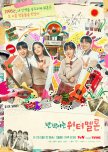
Twinkling Watermelon – A Coming-of-Age Gift Wrapped in Music and Second Chances
I started Twinkling Watermelon expecting a cute time-travel fantasy. What I got was an emotional hug of a drama that made me cry, laugh, and just… sit with my heart full.
The story revolves around Eun-gyeol, a CODA (child of deaf adults) who lives in two worlds—silence and music. He’s a boy torn between being the “perfect son” in his family and following his own rhythm. When he accidentally time-travels to 1995 and meets his teenage dad? That’s when it really begins.
It sounds sci-fi, but Twinkling Watermelon is actually about something much more grounded:
Healing generational wounds, understanding your parents as people, and learning how to forgive—not just others, but also yourself.
And the music! The band scenes gave me chills—the way they used sound and silence, punk rock and soft ballads to carry emotions. You don’t just hear the songs… you feel them.
The father-son bond? Broke me. Rebuilt me. Broke me again.
The friendship, the romance, the little moments of laughter between big emotional waves—all of it was so well done. And the cast? Flawless. Ri-an's character arc especially grew on me so much, it made me rethink first impressions.
What I really appreciated was how it touched disability with sensitivity. It didn’t pity. It empowered. The scenes with sign language were some of the most emotionally powerful I've ever seen in a K-drama. As someone who loves family-centered stories with a heartbeat of music and a splash of fantasy, this felt like a personal gift.
Twinkling Watermelon is a love letter to misunderstood parents, to teenage dreams, to the messy journey of growing up and making peace with what you can’t change.
It’s for anyone who’s ever wished they could go back—not to change the past, but to understand it better.
Rating: 10/10
Perfect For: Dreamers, musicians at heart, emotional softies, and anyone who still carries questions for their younger (or older) self.
The story revolves around Eun-gyeol, a CODA (child of deaf adults) who lives in two worlds—silence and music. He’s a boy torn between being the “perfect son” in his family and following his own rhythm. When he accidentally time-travels to 1995 and meets his teenage dad? That’s when it really begins.
It sounds sci-fi, but Twinkling Watermelon is actually about something much more grounded:
Healing generational wounds, understanding your parents as people, and learning how to forgive—not just others, but also yourself.
And the music! The band scenes gave me chills—the way they used sound and silence, punk rock and soft ballads to carry emotions. You don’t just hear the songs… you feel them.
The father-son bond? Broke me. Rebuilt me. Broke me again.
The friendship, the romance, the little moments of laughter between big emotional waves—all of it was so well done. And the cast? Flawless. Ri-an's character arc especially grew on me so much, it made me rethink first impressions.
What I really appreciated was how it touched disability with sensitivity. It didn’t pity. It empowered. The scenes with sign language were some of the most emotionally powerful I've ever seen in a K-drama. As someone who loves family-centered stories with a heartbeat of music and a splash of fantasy, this felt like a personal gift.
Twinkling Watermelon is a love letter to misunderstood parents, to teenage dreams, to the messy journey of growing up and making peace with what you can’t change.
It’s for anyone who’s ever wished they could go back—not to change the past, but to understand it better.
Rating: 10/10
Perfect For: Dreamers, musicians at heart, emotional softies, and anyone who still carries questions for their younger (or older) self.
Was this review helpful to you?


