
 Editorials

 2
2 1
1 1
1


Me and Thee — When Everything Aligns Perfectly
Sometimes a BL drama works because of the story. Sometimes it works because of the actors. And once in a while, everything aligns perfectly and you get a series where every element supports the others. Me and Thee is exactly that kind of drama for me.First of all, Pond Naravit and Phuwin Tangsakyuen are, in my opinion, one of the most perfect duos in the BL industry right now. They are both incredibly beautiful on screen, but what really makes them special is their chemistry. It’s the kind of connection that feels effortless and natural. Their interactions never look rehearsed or forced. Every look, every small gesture between them feels genuine. Honestly, their chemistry is so strong that sometimes it makes you wonder if there is something real behind it, because that level of connection is extremely difficult to fake.
But the success of this drama is not only because of the actors. The story itself is fantastic. It balances romance, comedy, and emotional drama in a way that keeps the audience engaged from beginning to end. The relationship between Thee and Peach develops naturally through misunderstandings, moments of jealousy, tenderness, and eventually a deeper understanding of each other. Their dynamic feels playful and sincere at the same time, which makes their story both entertaining and emotionally satisfying. One of the funniest moments for me was the small fight between Thee and Peach when Thee misunderstood the flight ticket. Pond Naravit’s performance in that scene was absolutely hilarious. I was laughing so much I almost couldn’t breathe. What made the moment even better was the music used in that scene. It perfectly followed the emotions of each character, almost like it was commenting on the situation itself. It’s actually one of the first times I’ve watched a BL where the music was so cleverly used that it became part of the comedy.
The direction also deserves a lot of praise. X Nuttapong Mongkolsawas once again proves why he is one of the most interesting directors working in BL today. After projects like Vice Versa and Cherry Magic, he clearly understands how to build emotional tension while keeping the story visually engaging. The cinematography by Panpode Boonprasert is also stunning. With works like Khemjira, My Love Mix-Up!, My School President, Cherry Magic, and Vice Versa, you already know that the visual quality will be excellent. And here again, every scene looks polished and carefully framed.
Another aspect I really appreciated is that the side stories actually matter. They are not just there to fill screen time. Tawan and Ran’s relationship, for example, is incredibly interesting even though we never see the beginning of their breakup. Through their performances alone, you can understand the dynamic that destroyed their relationship: a possessive, overly intense boyfriend and a sweet partner who loved him but eventually felt suffocated by the lack of trust. Then we have Mok and Rome, who clearly love each other but cannot fully be together until much later. Their story adds another emotional layer to the drama. As a fan of Est and William, I honestly wanted to see more of them. But at the same time, they are not the main couple, and giving them too much focus would probably have unbalanced the story. Still… a spin-off or another season focusing on them wouldn’t be a bad idea at all.
Final Thought
Me and Thee is one of those rare BL dramas where everything feels carefully crafted: the chemistry between the leads, the direction, the cinematography, and even the music. Pond and Phuwin carry the story beautifully, but the entire production team contributes to making the series feel special. It’s funny, emotional, visually beautiful, and full of memorable moments. For me, it’s easily a perfect score and a drama I would happily watch again.
Was this review helpful to you?

Jack & Joker: U Steal My Heart! (Uncut Ver.)
1 people found this review helpful
This review may contain spoilers
Jack & Joker: U Steal My Heart! — When Fate Refuses to Grant Mercy
I hated the ending. And yet, I cannot deny how powerful it is. This is not a story designed to comfort you. It is designed to break your expectations, and in doing so, force you to feel everything the characters feel: hope, fear, love, forgiveness, and finally loss. It is not a happy ending. But it is a true one.A Story Written Under the Shadow of Death
From the very beginning, this drama warns us. The shrine. The rituals. The Chinese symbolism. The Four Horsemen. Death is everywhere in this story: not as a shock, but as a constant presence. Fate is not something you escape here. It is something you walk toward, step by step, with open eyes. We still hope. Just like they do. That is what makes the fall so painful.
Bad Choices Do Not End Well
Jack and Joker are not innocent. They live outside the law, driven by survival, loyalty, and regret. Stories often redeem such characters with miracle endings. This one refuses. The world they chose does not forgive them and neither does fate. This is not cruelty. It is consequence.
Why the Open Ending Hurts So Much
There is no promise of a second season. No reunion. No final explanation. We wait until the last second, hoping they will meet again. But “Be Happy” confirms what our hearts refuse to accept: he is truly gone. The silence after that moment is the real ending.
Why I Needed to Watch It Twice
The first time, I felt only pain. The second time, I saw the signs. Everything was already telling us how it would end. We just didn’t want to believe it.
Final Thought
I will never like open endings like this. But I will always respect stories brave enough to choose truth over comfort. Jack & Joker didn’t betray me. It prepared me. And I just wasn’t ready.
Was this review helpful to you?

This review may contain spoilers
My Happy Ending — When Reality Breaks From the Inside
This is not a drama you rewatch. It is a drama you survive. My Happy Ending is emotionally heavy, psychologically disorienting, and structurally demanding. It asks the viewer to live inside a fractured mind, not simply observe it. And if you do not watch it in one go, you will be lost , not because the story is bad, but because it is deliberately unstable. This is not entertainment. It is experience.A Performance That Carries the Entire Story
Jang Na-ra delivers one of the most difficult performances of her career as Seo Jae-won. Playing a character with deep psychological trauma and dissociation requires vulnerability, restraint, and courage, and she commits fully. Her fear is not exaggerated. It is internalized. You feel it in her silence, not her tears. Seo Jae-won does not just suffer from phobias. She is trapped inside her own perception, forced to question what is real and what is a defense mechanism. No Heroes, Only Broken People Her husband, Heo Soon-young (Son Ho-jun), is not a villain, but he is not innocent. His betrayal is emotional before it is physical. He seeks comfort instead of responsibility. Kwon Yoon-jin (So Yi-hyun), the best friend, is far more dangerous. Her jealousy is masked as concern, her affection as loyalty. She does not want love — she wants replacement. We are told early that Soon-young dies after begging Yoon-jin to protect his family. Later, we understand that she is the one who killed him. But the truth arrives slowly, distorted through Seo Jae-won’s unstable perspective. We are learning the story as she is remembering it.
A Structure That Mirrors Trauma
The narrative is fragmented by design. Characters appear and disappear. Scenes repeat with different meanings. Some people only exist inside Seo Jae-won’s mind and we discover this only after trusting them. This is not a trick. It is psychological storytelling. You are not meant to feel safe. You are meant to feel uncertain. That is why characters like Theo Harris (Lee Ki-taek) and Detective Oh Soo-jin feel incomplete. They are not underwritten, they are partially perceived. We see only what Seo Jae-won can process.
Why Many Viewers Rejected It
This is not a linear drama. It demands patience, memory, and emotional attention. Many low ratings come from misunderstanding the form, not from judging the story itself. This is not a series you scroll through. It must be followed as a psychological puzzle. But once solved, it cannot surprise you again. That is why it is powerful — and why it is not meant to be rewatched.
Final Thought
My Happy Ending is not about happiness. It is about the moment you realize that your mind built a world to protect you and that protection became a prison. It is painful. It is brave. And it stays with you, even when you don’t return.
Was this review helpful to you?

Your Summer, My Storm — A Beautiful First Love That Forgot to End
Casting Fukada Ryusei and Ukisho Hidaka opposite each other was an obvious and very clever idea. They are both members of ACEes, this was their first acting project together as members of the group, and ACEes even performed the theme song. Of course fans were going to be curious about seeing two members transformed into a romantic pairing on screen, and there is absolutely nothing wrong with using that existing connection to attract an audience. In fact, it gives the actors something useful from the beginning: familiarity. Fukada and Ukisho already know one another, so Natsuki and Sota never suffer from the stiffness that sometimes appears when two actors are suddenly asked to create intimacy in a short Japanese romance. Their interactions feel relaxed, playful and comfortable, which works particularly well for a story about a first love developing almost accidentally. The problem with building a drama around that kind of pairing is that the story eventually has to become more important than the novelty of seeing the two idols together. For most of its ten episodes, "Your Summer, My Storm" manages that very well. Then the ending stops just before it has to make the most important decision.The story itself is simple but charming. Natsuki is a high-school student approaching university entrance exams with terrible results, no clear direction and the emotional damage of recently being dumped by his girlfriend. Sota arrives as his tutor and, supposedly, his sister's boyfriend, making him the worst possible person for Natsuki to fall for. What starts as irritation slowly becomes admiration, attraction and eventually the confusing experience of discovering that his first serious love may be another man. I liked that the drama never needed to turn that discovery into a huge identity crisis. Natsuki is confused because he is falling for Sota, not because the screenplay decides homosexuality must automatically become tragedy. The family story is equally important because Natsuki's future, his parents' expectations, his sister and the increasingly obvious relationship developing under the same roof all become part of the same summer. Even the academic storyline has a purpose: Sota does not simply become someone Natsuki wants romantically; he helps Natsuki discover that he is interested in clouds, weather and meteorology, while Sota himself already has a dream connected to architecture and bridges. Their relationship therefore develops alongside the question every young person eventually faces: what kind of life do I actually want?
Fukada works particularly well because Natsuki needs to feel emotionally transparent. His embarrassment, jealousy and confusion are rarely hidden very successfully, which makes the character cute without turning him into an idiot. Ukisho has the more difficult role because Sota initially appears almost impossibly perfect: attractive, intelligent, patient, good with the family and capable of teaching Natsuki without humiliating him. The script gradually gives him enough uncertainty to stop him becoming merely a fantasy boyfriend, and Ukisho's experience helps. Their chemistry is gentle rather than explosive, but that suits the series. I never needed an explicit scene or even a dramatic kiss to believe that something important had happened between them. What mattered was the accumulation of little things: studying together, attention becoming more personal, the way Natsuki begins looking at Sota differently and the way Sota slowly understands that his own attachment is no longer simply that of a tutor or family friend. The supporting cast also gives the drama warmth because "Your Summer, My Storm" is as much a family comedy as a BL, and that prevents the romance from existing inside an artificial bubble.
Where the drama lost me was the finale. Sota announces that he is leaving for the UK for two years to pursue the future he has always wanted. Natsuki, who has finally begun finding his own direction, moves toward university and meteorology. They remain connected, their feelings are clear, and technically there is nothing tragic about what happens. Yet I finished the episode thinking: is that really it? The ending does not feel like a strong promise of a second season, because nothing dramatic is left hanging enough to make me desperate for another chapter. But it also does not close the first season decisively enough to make the separation itself emotionally meaningful. It sits somewhere in the middle, and that is the least satisfying place an ending can be. An open ending can be beautiful when ambiguity is the point; here, I felt as though the story simply stopped while the relationship was still waiting for its final sentence.
What frustrates me is that either direction could have produced a much stronger conclusion. I would actually have accepted a sad ending. First love does not always become a relationship, and sometimes the love we remember most intensely is precisely the one that never had enough time to become ordinary. Sota could have left, Natsuki could have understood that this summer changed him forever, and the story could have ended with the painful acceptance that some people arrive in our lives mainly to awaken something before disappearing again. That would have hurt, but it would have meant something. The opposite ending could have worked just as well: allow time to pass, let Natsuki's new ambition push him farther academically, and eventually reunite them abroad. Sota helped a boy with no direction discover a future; imagine Natsuki eventually reaching that future partly because loving someone made him want to become more than the student who once needed a tutor. That would have transformed their romance into motivation rather than simply memory. Either ending would have completed the emotional logic already present in the story.
The unfinished feeling is particularly surprising because this was not an inexperienced little web production trying to find its feet. "Your Summer, My Storm" was an original TV Asahi drama produced with Storm Labels and Fine Entertainment, with Yuko Matsuda writing the screenplay and an experienced directing team behind it. Matsuda has worked in Japanese television for decades, including major mainstream dramas, so the light family-comedy structure and accessible emotional rhythm make sense. Fukada was taking on his first solo lead in a continuous drama, while Ukisho already had considerably more acting experience, and the production surrounded them with established adult actors rather than expecting two idols to carry everything alone. Technically, the series looks exactly as competent as that background suggests. The problem is therefore not lack of professionalism. It is a creative decision. The writers seem to have wanted something soft, youthful and hopeful, where first love changes both boys without requiring them to make permanent promises at eighteen and university age. I understand the intention. I simply think softness still requires conclusion.
Final Thoughts
"Your Summer, My Storm" was a warm, attractive and genuinely enjoyable first-love drama, and pairing Fukada Ryusei with fellow ACEes member Ukisho Hidaka proved to be much more than simple fan service. Their existing comfort helped create a believable relationship, while the story connected romance with family, education and the frightening moment when young people have to decide what comes after school. I did not need a kiss, sex or a conventional boyfriend declaration to validate what existed between Natsuki and Sota. I only needed the finale to decide what that love meant when summer ended. A tragic goodbye could have been beautiful. A future reunion could have been beautiful. Instead, the series chose an open door without giving me a strong reason to either walk through it or close it behind them.
Some first loves are meant to last, others are meant to become memories—but the most frustrating ones are those whose story ends before we know which they were.
Was this review helpful to you?

Love Destiny — When Destiny Arrives Before the Story Is Finished
I loved almost everything about Love Destiny. That is what makes the ending so frustrating. For nine episodes, the series looked as though it knew exactly what kind of drama it wanted to be: romantic, historical, funny, visually luxurious and respectful enough of its source material to preserve the world of Bupphesanniwat while rebuilding its central romance around two men. The actors were excellent, the villain worked, the sets and costumes looked far more cinematic than I expected, and the entire production had the confidence of a proper period drama rather than a BL simply borrowing historical clothes. Then the finale arrived and suddenly it felt as though somebody had looked at the remaining story, checked the clock, and decided that most of it no longer mattered. That is particularly strange because this was not a team unfamiliar with the material. Director Phawat Panangkasiri also directed the hugely successful 2018 adaptation of Bupphesanniwat, so he already knew this world, its rhythms and the historical figures surrounding the romance. The original series became a genuine Thai cultural phenomenon, and part of its appeal came from how comfortably it mixed romance, comedy, domestic life and the political atmosphere of King Narai's reign. The 2026 version had an even more polished visual identity and a much more concentrated ten-episode structure, but that concentration eventually became its greatest weakness. The original 2018 drama had fifteen very long episodes; this version had only ten episodes of roughly fifty minutes. That is an enormous amount of historical and character material to compress.The adaptation itself is clever. Great, a modern surgeon, enters Kaew's body and has to repair the reputation of a man almost everyone despises, while Dech gradually discovers that the person in front of him is no longer the same man he once hated. Changing the central relationship from heterosexual to male-male does not destroy the original structure because the real foundation of Bupphesanniwat was always transformation, fate and someone from another time learning how to live inside Ayutthaya society. Great's modern knowledge, his medical skills, his different attitude toward servants and social hierarchy, and his attempts to correct Kaew's past all fit naturally into that framework. The BL element therefore feels integrated rather than forced. August Vachiravit and Leng Thanaphon carry that transition beautifully. Leng has to make Great recognisable even while he is physically living as Kaew, and his mixture of modern reactions and gradual adaptation makes the time-travel premise enjoyable rather than ridiculous. August gives Dech exactly the restraint the character needs. He begins from suspicion and dislike, then slowly allows curiosity, respect and affection to replace them. Their relationship works because the emotional change feels gradual enough to believe. I never felt that Dech suddenly became attracted to Great simply because the story had decided it was time for BL. The rest of the cast also helps the drama feel larger than its central couple. Luke Ishikawa as Constantine Phaulkon was particularly effective because Phaulkon should never feel like a cartoon villain. Historically and dramatically, he represents ambition, foreign influence, court politics and self-interest in a world already becoming unstable. Luke has enough charm to make him believable as someone who could gain enormous influence, but also enough hardness to make that influence feel dangerous. He is the kind of antagonist who works because he can smile while creating problems rather than announcing himself as evil every time he enters a room.
That is why his unfinished ending is so irritating. The original 2018 adaptation did not simply allow Phaulkon to disappear once his political usefulness was exhausted. His final fall was treated as part of the emotional and historical conclusion, including his arrest, his last meeting with his wife and children, and the approach of his execution. That material mattered because Phaulkon had spent so much of the story accumulating power. Watching that power collapse was the completion of his arc. The 2026 version spends considerable time building him as a threat, involving him in court politics and giving him enough screen presence to make viewers expect a proper conclusion. Then the political storyline simply loses momentum at exactly the point where it should explode. The finale reaches the destination of the romance but seems to forget that the series has spent hours telling us that the romance exists inside a much larger historical crisis.
Sriprach suffers even more. His storyline contains tragedy built into the source material and into the historical legend surrounding Si Prat: exile, political vulnerability, accusation and death. Rompaeng deliberately incorporated the Si Prat legend into Bupphesanniwat, even though she herself has explained that parts of that construction belong to legend rather than firmly documented history. In the 2018 drama, Si Prat's death was also not turned into a long execution spectacle, but his fate was given emotional consequence: he returned in a dream to say goodbye to his father, and his loss directly affected the family and the final episodes. In the 2026 adaptation, I felt as though his story was simply cut off. That is the difference between an off-screen death and an unfinished storyline. A character does not have to die in front of the camera for the death to matter. What matters is consequence. Show us the exile, the danger, the accusation, the family's reaction, the political meaning of losing him, or the devastation left behind. Give the character's death enough narrative weight that the audience understands why we spent time with him in the first place. Instead, Sriprach feels as though the series suddenly remembered that history required him to die and checked the box. That is not enough. It is even stranger because the finale's problems were not simply my reaction. Viewers discussing the final episode immediately complained that the political material had been dropped, that several past-timeline characters received little or no resolution, and that the ending felt as though another episode should exist. Some described it as one of the most rushed finales they had seen, while others specifically questioned why so much time had been spent building Phaulkon and the royal conflict if the series was not going to complete those threads. And I agree with them.
Two additional episodes could have changed everything. One episode could have dealt properly with Sriprach, Phaulkon and the collapse of the political world surrounding King Narai. Another could have allowed the romance, the side couples and the modern consequences to settle naturally. The series did not need thirty episodes. It simply needed enough time to finish the story it had already chosen to tell. That is what frustrates me most: the original novel already provided a structure. Rompaeng spent years researching the period before writing Bupphesanniwat, and the historical figures were never random decoration. She specifically chose the final years of King Narai's reign because the period was politically rich and colourful enough to support the romance. The historical material was part of the identity of the story from the beginning. A BL adaptation did not need to preserve every heterosexual relationship or every exact narrative detail. Of course things had to change. Great is not Kadesurang, Kaew is not Karakade, and Dech's romantic arc necessarily becomes different. But changing the gender of the central pairing does not require abandoning the historical spine that made the original story work. In fact, I think the BL version proves how adaptable the novel really was. The basic themes remain intact: fate, identity, redemption, social hierarchy, modern knowledge colliding with the past, family expectations and the question of whether love can alter a life that seems already decided. Great and Dech fit those themes perfectly. The side couples also demonstrate that the same Ayutthaya setting can accommodate several different forms of love without the series feeling modernised beyond recognition. Visually, I may even prefer this version. The 2018 drama has enormous charm, but it is unmistakably a Thai television production of its period. There is a certain theatricality to the lighting, staging, humour and sets that I personally find very Thai and very lovable, but also somewhat kitsch. The 2026 remake looks considerably more expensive and controlled. The costumes, hair, architecture, interiors and outdoor photography have a richer cinematic quality. Contemporary promotion specifically emphasised how much had been invested in the sets, costumes, makeup and overall visual production, and that effort is visible on screen. That polish makes the rushed conclusion even harder to understand.
This is not a drama that looked cheap for nine episodes and then predictably collapsed. It looked like people cared. The cast was strong. The historical world was carefully reconstructed. The romance had time to develop. Secondary characters received attention. Political threads were deliberately introduced. Then the ending behaves as though all that work suddenly became optional. It feels like ninety-five percent of a very good drama and five percent of someone saying, “That will do.” But the final five percent matters enormously. A beginning makes us interested. A middle makes us invested. An ending tells us whether everything we invested in had a purpose. That is why I cannot simply say, “The rest was excellent, so who cares?” I care precisely because the rest was excellent. If the whole drama had been mediocre, I would have shrugged at a mediocre finale. But when a production spends nine episodes convincing me that these characters, political conflicts and historical events matter, I expect the tenth episode to respect that investment. The main romance at least survives the rush. August and Leng created enough emotional foundation that I still cared about Dech and Great even when the surrounding story started collapsing. Their scenes have warmth, humour and attraction without losing the period atmosphere, and the physical intimacy feels like a culmination rather than something inserted because a BL audience expects it. That part works because the actors had already done the emotional work. The historical characters deserved the same consideration.
Final Thought
Love Destiny came extraordinarily close to being one of my favourite large-scale Thai BL adaptations. It took a beloved Thai story, respected its historical identity, gave it a more cinematic visual language and successfully rebuilt the central romance around two men without making the whole thing feel like a novelty remake. August and Leng were excellent together, Luke made Phaulkon memorable, and the surrounding cast gave Ayutthaya enough personality that I genuinely enjoyed living in that world for ten weeks. Then the story reached the finish line before the storytelling did. Sriprach deserved more than being dispatched as an obligation to history. Phaulkon deserved the conclusion that his entire political arc had been building toward. The royal conflict deserved consequences. The secondary couples deserved closure. Even the central romance deserved a little more room to breathe after everything it survived. The frustrating part is that none of this required rewriting the entire series. Much of the work was already done. The source material was there. The original adaptation had already demonstrated how these historical threads could be brought to a conclusion. The 2026 production simply needed enough time to finish what it had started. That is why the finale does not make me dislike Love Destiny. It makes me disappointed in it. There is a difference. A bad drama fails because it never convinces you it could have been great. Love Destiny convinced me for almost its entire run. Then it stopped five minutes before the story was actually finished.
Was this review helpful to you?
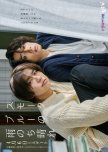
Life in Smokey Blue — A Mature BL Without the Emotional Maturity
I should probably have been the ideal audience for "Life in Smokey Blue". I have been watching Japanese BL for decades, going back to the period when movies were essentially the main option before television BL became what it is today. I also particularly enjoy stories about adults who have already lived enough to carry regrets into a relationship. And Takeda Kouhei is certainly my type: handsome, mature and actually close to my own age. So two men approaching forty, former workplace rivals who slept together once eight years ago and unexpectedly reconnect when both of their lives have changed should have been exactly the kind of BL I love. Unfortunately, something fundamental was missing for me: I never really felt that these two men were in love. That distinction is important because "Life in Smokey Blue" contains all the physical evidence usually used to sell romance. They kiss. They touch. They have sex. They spend increasing amounts of time together and gradually become part of each other's everyday lives. But skinship does not automatically create chemistry, just as a sex scene does not automatically create intimacy. I need to feel attraction before the characters touch, tension when they are trying not to touch, or some emotional change after they finally do. Here, most of those moments remained strangely flat for me. This is particularly surprising because nobody involved can easily be blamed for inexperience. Takeda Kouhei has been acting for years and has already shown how effective he can be in BL through "Old Fashion Cupcake". Shibuya Kento also has a long acting career. Director Takahashi Natsuki worked on "Jack o' Frost" and "When It Rains, It Pours", while she co-wrote "My Personal Weatherman", three BLs where I could absolutely feel complicated attraction between the characters. "Life in Smokey Blue" was also co-directed by Nakada Ere and written by Hiraki Mari and Aoki Erika. This is not a production made by people discovering romance for the first time. In fact, reading Takahashi's own comments helped me understand the result better. She was already a fan of Hamada Kamome's manga and specifically loved how gently it approaches people's lives without forcing itself too deeply into them. She also described the drama as showing different ways to live without reducing everything to simple questions such as whether two people are officially together. I can respect that intention. I simply don't think restraint and emotional distance have to become the same thing.But a quiet romance still needs a pulse. That was where the silences became a problem for me. Japanese drama can use silence beautifully. A pause can reveal embarrassment, attraction, anger or something a character cannot say aloud. But silence only becomes meaningful when the audience understands what exists underneath it. Too often here, I felt I was simply watching people stop talking. Instead of increasing tension, the pauses sometimes made scenes awkward and emotionally empty. The same problem affected many of the potentially strongest storylines. Kuji left a successful pharmaceutical career partly to care for his sick father and eventually built another career as a medical translator. His brother, meanwhile, lives abroad and later returns as the family prepares for the house to pass into his family's future, eventually with the old house being demolished. That situation contains enormous possibilities: resentment, guilt, the unfair distribution of family responsibilities, the question of who sacrificed years of his life and who ultimately benefits from that sacrifice. Yet the drama mostly turns it into a quiet discussion about the brothers having mutual complexes about each other. I understand that this is deliberate. I just wanted more.
There is a difference between manufacturing melodrama and allowing an existing conflict to have consequences. Kuji gave up part of his career to care for their father. The brother who was elsewhere will effectively inherit the future of that family space. Even if Kuji genuinely does not want a dramatic fight, there should be complicated emotions surrounding that. Instead of opening that wound, the drama gently touches it and moves away. The same applies to sexuality and family. These are two gay men approaching forty, which should already make this more interesting than another school BL where coming out means telling a best friend that you like the boy sitting beside you. At this age, sexuality is connected to decades of family history: what you have told your parents, what you have hidden, what assumptions relatives have made about marriage, and which parts of your life you have learned to keep separate. The story raises some of those questions but rarely develops them into the kind of family confrontation or evolution I expected.
Even Sakutaro's psychological collapse feels strangely light. The official premise describes a former elite salesman who watched his performance decline while people around him married, transferred and moved forward with their lives, until he finally reached his mental and physical limits and suddenly quit. That is extremely relatable material for someone approaching forty. Feeling that everyone else has somehow progressed while your own life has stalled can destroy confidence. Yet this potentially difficult subject becomes another element the series introduces, observes and then quietly allows to drift past. The death of Tajimi frustrated me for similar reasons. He collapses and dies, leaving Sakutaro grieving while life around him continues. I understand what the drama is trying to say: death does not always produce a spectacular cinematic transformation. Sometimes someone disappears and everyone still has to wake up, work, eat and continue the next day. There are viewers who found that understatement extremely moving, and I can understand why. For me, however, it crossed from understatement into underdevelopment.
Death does not have to create screaming, breakdowns and hospital corridors to change a person. It can change tiny things: how someone talks about the future, whether he suddenly becomes afraid of losing another person, whether he calls his mother more often, whether he finally says something he had been postponing. Tajimi's death could have changed how Sakutaro understood his own relationship with Kuji. Instead, what should have been a life-changing reminder of how suddenly somebody can disappear often feels like another philosophical note added to a series already full of them. That difference became particularly obvious to me after watching "A Winter Sun Wakes the Wind in Spring Hills' Dream". That Chinese BL also dealt with adult love, family expectations, death, grief, closeted relationships and the difficulty of building a life while other people interfere with it. But those themes actually transformed the characters and their relationship. Here, many equally interesting ideas remain atmosphere rather than drama.
I don't therefore think Japanese BL as a whole is somehow incapable of evolving. That would make no sense when "My Personal Weatherman", "Jack o' Frost", "When It Rains, It Pours" and many other Japanese productions have already shown me exactly the opposite. What disappointed me is that "Life in Smokey Blue" sometimes feels conservative beside what BL from several countries is now willing to do with adult characters. Quiet storytelling can be sophisticated, but quiet should not become an excuse to avoid emotional confrontation. The visual language contributed to that feeling. So much of the relationship happens inside houses, rooms and enclosed spaces that I eventually started finding the drama claustrophobic. At the beginning this makes perfect sense. These men have lived privately, their relationship is uncertain, and Kuji's house becomes a protected environment where they can slowly reconnect. But I expected the visual world to expand as they did. Imagine how effective that could have been. As their lives opened, the camera could gradually have followed them outside more often. Private rooms could have given way to streets, parks, travel, family gatherings or simply ordinary public spaces where being together carries a different meaning. The physical expansion of their world could have mirrored the emotional expansion of their relationship. Instead, the brief moments outside rarely felt important enough to create that progression. There is an irony here because Takahashi explained that she deliberately used extremely close, restricted framing for the sex scenes because she did not want the audience observing the characters objectively from outside. She wanted us inside their private relationship. I like that idea very much. But across the entire series, I sometimes felt the opposite effect: instead of bringing me emotionally closer, all that enclosure made me increasingly aware that I was watching two people contained inside a carefully constructed little world.
And then there was Yamamoto Ryuto. He plays Sakutaro's teenage nephew Tamaki, and somehow the youngest character repeatedly became the person who woke the drama up for me. He is cute, certainly, but that isn't really why he stood out. His presence changes the rhythm of scenes. He brings curiosity, energy and a more immediate emotional reaction to everything around him. When he enters one of those very restrained domestic scenes, suddenly I pay more attention. That is quite an achievement for a supporting actor surrounded by performers with significantly more experience. He never needs to aggressively steal a scene; he simply makes the scene feel more alive. I genuinely hope someone eventually gives Yamamoto Ryuto a substantial BL lead because I would like to see what he can do when he is responsible for carrying the relationship rather than briefly disturbing the calm of someone else's.
What makes this review difficult is that I completely understand why other people loved "Life in Smokey Blue". It currently has many positive viewer reactions, and some people specifically praise exactly what didn't work for me: the ordinary domesticity, the slow rhythm, the feeling that these men are simply learning to exist beside someone else instead of experiencing a grand romance. The original manga is also highly successful, with hundreds of thousands of copies in circulation, so clearly this approach connects strongly with an audience. And chemistry is subjective. Someone else may look at Takeda Kouhei and Shibuya Kento sitting silently together and see two men so comfortable that words are no longer necessary. I looked at the same scene and frequently wondered where the desire had gone. Neither response is objectively wrong. But after watching BL for roughly thirty years, including a very long history with Japanese BL itself, I know the difference between a slow romance that makes me ache for two characters to move one centimetre closer and a slow romance where I simply notice that they have not moved for a while. For me, "Life in Smokey Blue" was the latter.
Final Thought
The frustrating part is that I don't think "Life in Smokey Blue" is a bad story at all. Two gay men approaching forty reconnecting eight years after a one-night stand is actually a fantastic starting point. They are no longer young enough to pretend that love exists separately from careers, aging parents, money, family responsibilities, grief and the uncomfortable realization that there may be fewer chances ahead than there were behind them. That could have produced one of the strongest adult BLs of the year. The actors were capable. The directors were capable. The writers were capable. The source material was popular. There were kisses, sex, family problems, burnout, death, career changes and two men slowly constructing a shared life. Yet somehow I finished it feeling remarkably little about the central romance. Perhaps that is exactly the kind of gentle, almost anti-dramatic experience Takahashi wanted to create. Her own explanation suggests that it was. But intention does not automatically determine how a work affects every viewer. I can recognise the sophistication of an artistic choice and still think the finished result became too emotionally restrained for me. Silence can be incredibly romantic. So can ordinary domestic life. Two men do not need dramatic declarations, jealousy and constant sex to convince me that they love one another. But they do need to make me feel something in the space where all those things are absent. "Life in Smokey Blue" rarely did.
So while I know many viewers consider this a beautiful mature BL, I can only judge it against what I have watched before, including decades of Japanese BL itself. And compared with the best examples of what this genre can do with silence, grief, family and adult desire, I found this mediocre at best. I wish I hadn't, because Takeda Kouhei deserved a romance that made me feel as much as I enjoyed looking at him.
Was this review helpful to you?

Head Over Heels — When the Explanation Comes Too Late for the Emotion
I will admit immediately why I started Head Over Heels: Choo Young-woo. I first fell for him back in 2021 when he played Song Si-on in the Korean BL You Make Me Dance. It was his first leading role, and even in such a small production there was something about him that stayed with me. Since then, watching his career grow has been rather satisfying. School 2021, Once Upon a Small Town, Oasis, The Tale of Lady Ok, The Trauma Code... By the time Head Over Heels arrived, he had even won the Baeksang Best New Actor award for The Tale of Lady Ok. So yes, I came for Choo Young-woo, but thankfully there was considerably more here to enjoy than simply looking at him.The basic idea is actually wonderfully simple. Park Seong-a is an eighteen-year-old student who secretly works as a shaman. When Bae Gyeon-u enters her shrine appearing upside down, she immediately understands what that means: he is going to die. Unfortunately for her, he is also exactly her type, so she decides that fate is going to have to find somebody else. That beginning is funny, romantic and extremely easy to understand. The official description even sells the drama simply as two eighteen-year-olds trying to defy fate together. Somewhere along the way, however, Head Over Heels becomes considerably more complicated than that.
Suddenly I was trying to remember who was spiritually connected to whom, which shaman had done what, who was protecting somebody, who was hurting somebody supposedly because they loved somebody else, which spirit belonged where, and whether the person I was currently watching was actually the person whose face I was looking at. There were several moments when my brain basically went: “Wait... what? ... Haaaaa! Now I understand!” Unfortunately, sometimes that understanding arrived several minutes after the emotion. That was my biggest problem with an otherwise very good drama. If I have to spend an emotional scene trying to reconstruct the supernatural rules, I am not completely feeling what the character is feeling. Once I finally understand what happened, I can appreciate why the scene was sad or important, but the immediate emotional impact has already passed.
And I don't think that was simply me not paying attention. The supernatural relationships genuinely become dense. General Dongcheon is Seong-a's spiritual mother, but she also has a complicated maternal relationship with Yeom-hwa. Yeom-hwa manipulates Bong-su, Bong-su possesses Gyeon-u, Gyeon-u can sometimes re-emerge from within that possession, and eventually the question of whose body contains whom becomes part of the plot itself. By the final episodes, love, possession, sacrifice, guilt and spiritual obligation are all operating simultaneously. Even contemporary viewer reactions repeatedly asked exactly the sort of questions I found myself asking.
Knowing that the source webtoon contains 156 episodes makes this make considerably more sense to me. Twelve television episodes are not necessarily too short, but when you are adapting such a long supernatural story—and changing major elements of it—you need extraordinary clarity. The original webtoon and drama do not even use Bong-su in exactly the same way, and General Dongcheon's fate is different. The adaptation therefore wasn't simply shortening a story; it was rebuilding parts of it. That ambition is admirable. The execution occasionally needed another pass. Thankfully, the actors carry us through much of the confusion. Choo Young-woo was obviously the reason I arrived, and Head Over Heels gave me another reason to stay. Playing Gyeon-u alone would have required enough emotional range: this is a young man whose entire life has been shaped by inexplicable misfortune, loss and an understandable hatred of shamans after years of adults exploiting his family's desperation. But then Choo effectively has to share the same face with Bong-su. And they don't feel like the same person. The posture changes. The expressions change. The confidence changes. Even the way he looks at Seong-a changes. At points I didn't need the drama to explain whether Gyeon-u or Bong-su was present because Choo Young-woo had already told me physically. Considering that the screenplay itself sometimes made identity confusing, the fact that the actor could make it clearer through performance is quite an accomplishment.
Cho Yi-hyun was equally important because Seong-a could very easily have become exhausting. She falls for Gyeon-u almost immediately and spends an enormous part of the series trying to save him, which in weaker hands could have made her feel like a character whose entire existence revolves around a boy. Instead, Cho Yi-hyun gives her enough personality, humour and stubbornness that I believed this girl would genuinely look at destiny telling her “no” and answer, “I don't care.” And there is something amusing about seeing Cho Yi-hyun and Choo Young-woo together again after School 2021. Back then, Choo Young-woo's Young-joo was the other boy in the romantic equation while Cho Yi-hyun's Ji-won ultimately belonged with Kim Yo-han's Ki-joon. Cho Yi-hyun and Kim Yo-han even won a KBS Best Couple Award for it. Four years later, Choo Young-woo finally comes back and gets to be her actual romantic lead. So perhaps Young-joo just needed to wait for another drama. The 2021 award was perfectly deserved for the couple being judged at the time, but retrospectively the reunion makes the history rather funny.
Then there is Kim Mi-kyung, who is one of those actresses whose appearance automatically reassures me. Her filmography is enormous, and she has spent decades playing mothers, mentors and women who can make supporting characters feel essential rather than decorative. General Dongcheon could have been little more than the experienced shaman who explains supernatural things to younger characters, but Kim Mi-kyung gives her genuine maternal weight. The writer even revealed that the performances of Kim Mi-kyung and Choo Ja-hyun during the test shoot were so charismatic that he went back and rewrote the shaman scenes. That does not surprise me at all. Those relationships are actually where Head Over Heels becomes more interesting than its cute premise suggests. Almost everybody is trying to protect someone, but protection continually becomes control. Love becomes sacrifice, sacrifice creates resentment, grief creates obsession, and people start hurting others because they have convinced themselves that what they are doing has a greater purpose.
The problem is that the drama sometimes gives us all of this at once. There is a very good story underneath it about accepting that loving somebody does not give you ownership over their fate. Seong-a begins by wanting to change Gyeon-u's destiny because she loves him. Other characters also interfere with destiny because of love, loss or grief, but gradually we see how differently those motivations can develop. One person protects; another manipulates. One sacrifices herself; another sacrifices somebody else. The distinction between love and possession becomes both figurative and, in this drama, very literally supernatural. I liked that. I just wish I hadn't sometimes needed a diagram. The unusual thing is that despite these problems, I still enjoyed Head Over Heels. It is beautifully produced, often genuinely funny, romantic when it allows the central couple enough space, and filled with actors capable of making complicated supernatural material feel human. I understand why some viewers became frustrated, particularly in the second half when Bong-su occupies so much of a story that originally appeared to be about saving Gyeon-u from his fate. That criticism was common even while the series was airing. But I don't think the drama collapsed. I think it became overcrowded.
Final Thought
Head Over Heels gave me a slightly unusual viewing experience. Usually a drama makes me feel something and I understand immediately why. Here, several times, understanding came first only after I mentally replayed what had just happened.
“Oh... THAT'S why she did that.”
“Oh... so THAT'S who she was protecting.”
“Oh... THAT wasn't actually Gyeon-u.”
And only then did the sadness arrive. That delay stopped the drama from becoming something exceptional for me, because emotional storytelling should ideally allow the audience to understand enough in the moment to simply feel. But when Head Over Heels was clear, it was very good, and its cast repeatedly compensated for a screenplay that occasionally asked us to keep track of one spirit, two bodies, three shamans and several generations of emotional damage at the same time. I came because the BL actor I fell for in You Make Me Dance was starring in it. I stayed because Choo Young-woo has become a considerably better actor than the young man I discovered in 2021 and because Cho Yi-hyun, Kim Mi-kyung and the rest of this cast gave me enough reason to keep chasing the story even when I wasn't entirely sure which ghost I was chasing.
Was this review helpful to you?
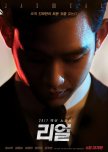
Can We Still Judge the Movie?
I never reviewed Real when it came out in 2017. Back then, I simply accepted it for what it was: an unusual psychological film that wouldn't appeal to everyone. Nearly ten years later, with everything surrounding Kim Soo Hyun and after reading countless comments describing it as "the worst Korean movie ever made," I decided to watch it again.What surprised me the most wasn't the movie itself. It was the reviews.
I spent some time reading opinions from different years before rewatching it. The reviews from 2017 were already divided, but most people talked about the cinematography, the confusing narrative, the symbolism, or the performances. As the years passed, especially after 2025, the discussion seemed to shift. Instead of talking about the film, many reviews focused almost entirely on Kim Soo Hyun, Sulli, or the explicit scenes. It made me wonder how many people were actually reviewing Real, and how many were reviewing the people in it.
Then I watched the movie again.
Honestly... I expected something much more explicit.
For years I had heard people describe Real as if it were one of the most shocking Korean films ever made. After finally revisiting it, I couldn't help comparing it to American and European productions I've watched over the years. Series like Queer as Folk contain scenes that are considerably more explicit, yet they rarely generated the same level of outrage. Real is certainly intended for adults, but the controversy surrounding those scenes feels far bigger than the scenes themselves.
Looking back, I still don't think Sulli deserved the criticism she received simply for accepting this role. Whether someone enjoys the film or not, actors shouldn't become the target of public anger for performing scenes that are part of the director's artistic vision.
That doesn't mean Real is a misunderstood masterpiece.
Far from it.
The film is ambitious, sometimes to its own detriment. Director Lee Sa Rang clearly wanted to create something where reality, identity and memory constantly overlap, leaving the audience unsure of what is actually happening. I appreciate films that trust viewers to think for themselves, but Real occasionally mistakes confusion for complexity. There were moments where I felt intrigued, and others where I simply wished the story would communicate its ideas more clearly.
Visually, however, I think the film deserves far more credit than it usually receives.
The neon lighting, the carefully designed sets and the dreamlike atmosphere create an identity that immediately separates Real from more conventional Korean crime films. Even when the narrative loses me, I never felt the production became lazy. Every frame looks intentional. Whether you enjoy the story or not, it's difficult to deny the amount of work that went into creating its visual style.
Kim Soo Hyun was also, in my opinion, a good casting choice.
His role demands constant shifts between confidence, vulnerability and psychological instability, and I think he handles those changes well. Ironically, after everything that's happened over the past few years, I found myself paying less attention to him than I expected.
Instead, Lee Sung Min completely stole the film.
I've admired him for years, and Real reminded me once again why. He has an incredible ability to dominate every scene without raising his voice or overacting. He isn't the kind of actor people usually describe as glamorous, yet his presence is genuinely intimidating. Every time he appeared on screen, I found myself watching him more than anyone else.
Maybe that's what makes revisiting Real in 2026 so interesting.
The film itself hasn't changed.
What has changed is the audience.
Whether consciously or not, many people now seem to approach Real carrying opinions about its actors before the opening scene even begins. I don't think that's unique to Korea, but I do think it's particularly visible here. We often separate artists from their work in Western cinema, while in Korea the public image of an actor can dramatically reshape how older projects are perceived.
Final Thought
I don't think Real deserves the reputation it has today, but I don't think it deserves to be called a masterpiece either. It's an ambitious psychological thriller with impressive visuals, solid performances and a story that sometimes becomes too complicated for its own good.
If you decide to watch it, my only advice is this: try to judge the film itself, not the headlines you've read over the past few years. Whether you end up loving it or hating it, I think that's the fairest way to experience one of Korea's most controversial films.
Was this review helpful to you?

Oh No! Here Comes Trouble — A Great Drama That Felt Like It Was Afraid of Its Own Romance
Oh No! Here Comes Trouble is simply a very good drama. It mixes supernatural mystery, comedy, emotion, and character development with remarkable confidence, creating a story that constantly surprised me. Every case reveals something meaningful about the characters, making the series much more than a collection of paranormal investigations.The strongest part of the drama is undoubtedly the relationship between Pu Yiyong and Cao Guangyan.
Their friendship develops so naturally that, at times, I genuinely wondered why the series insisted on presenting them as nothing more than close friends. Their trust, loyalty, emotional dependence, and willingness to sacrifice everything for one another constantly pushed their relationship beyond what I usually expect from a simple bromance. I honestly think the story would have worked even better if it had embraced that emotional connection instead of avoiding it.
The only character I never managed to appreciate was the police officer.
Rather than helping the story, I often found her frustrating. Many of her decisions felt unnecessarily selfish or surprisingly naïve, especially considering her profession. Instead of balancing the two male leads, she often slowed the story down for me.
The cast, however, is exceptional. Every performance feels sincere, and the emotional scenes are handled with remarkable subtlety. Combined with an outstanding soundtrack and beautiful cinematography, the production constantly succeeds in making both the supernatural and the human moments equally believable.
Final Thought
Oh No! Here Comes Trouble is an excellent supernatural drama with outstanding performances and unforgettable emotional moments. I only wish it had been brave enough to let its two main characters become what they already felt like throughout the entire story. For me, they were much more than friends.
Was this review helpful to you?

My Romance Scammer — Great Cast, Completely Wrong Pairings
The biggest disappointment of My Romance Scammer isn't the story. It's the way the story is told.On paper, a romance built around deception, wealthy families, and redemption could have become an entertaining drama. Instead, everything is exaggerated to the point where it almost feels like a sitcom. Every episode follows the same rhythm: a revelation, a shocked reaction, an over-the-top confrontation, then almost immediate forgiveness before moving on to the next problem. After a while, I stopped taking the conflicts seriously because nobody seemed to learn anything from them.
The writing asks the audience to believe things that I simply couldn't accept.
As a scammer, I honestly couldn't imagine crawling back to the person I manipulated and expecting love to erase everything. Even less when the victims forgive so quickly. The series puts so much faith in the power of love that it sometimes feels like it belongs in a Disney fairy tale rather than a drama about fraud and betrayal. Rich people making one unbelievable decision after another, getting married almost immediately without even discussing a prenuptial agreement... I honestly wouldn't trust any of these characters to run the companies they're supposedly inheriting.
Ironically, I really liked the cast.
Mark Jiruntanin is incredibly handsome and has the presence of a fashion model. Unfortunately, he keeps falling into the same acting pattern I've noticed in his previous work. He constantly looks stressed, as though he's an introvert being forced to speak in front of hundreds of people. It suits certain scenes, but after a while it becomes repetitive.
Junior tries hard to sell every emotional moment, but for me something is still missing. His background in comedy is obvious, and while his comic timing works well, the more dramatic scenes never fully reached me emotionally. I understood what the character was supposed to feel, but I rarely felt it myself.
Poon Mitpakdee is naturally funny and incredibly likeable. He brings warmth to almost every scene he's in. My problem wasn't with him—it was with the pairing. With Ohm Thitiwat, I never felt the connection I was expecting. I kept thinking back to Ohm's work with Fluke Natouch, where everything felt effortless and emotionally natural. Here, something always seemed to be missing. Ironically, I've also found Ohm more relaxed and convincing in several of his heterosexual dramas than in this particular pairing.
That brings me to another thought I had while watching the series. As BL continues to evolve and more openly LGBTQ+ actors begin taking leading roles, I personally find myself paying much more attention to authenticity. That's simply my own impression, but in this drama I never completely believed either couple. They felt like actors performing a romance rather than two people genuinely falling in love, and that made it much harder for me to become emotionally invested.
The production itself is perfectly respectable. The pacing is energetic, the visuals are polished, and the comedy is clearly intentional. My issue is that the emotional side of the story never reaches the same level, making the entire drama feel much lighter than its premise suggests.
Final Thought
My Romance Scammer had a cast I genuinely enjoyed watching, but I never believed the relationships they were trying to sell. Between a script that asks for too many unrealistic decisions and pairings that never fully convinced me, I finished the drama feeling that the actors deserved a much stronger story than the one they were given.
Was this review helpful to you?

Duang with You — A Love Story About Never Giving Up
What I loved most about Duang with You is that it isn't simply a romance. At its heart, it's a story about perseverance. It's about refusing to give up on someone you genuinely care about, even when things don't go the way you hoped. That message gives the drama much more depth than the average university BL and makes the romance feel earned instead of rushed.The story is simple, but it knows exactly what it wants to tell. Rather than relying on endless misunderstandings or unnecessary drama, it focuses on the small moments that slowly bring two people closer together. Every setback only makes the relationship stronger, and that's what kept me emotionally invested until the very end.
The cast is absolutely adorable.
TeeTee has the kind of smile that could melt almost anyone. His enthusiasm and sincerity make Duang impossible not to love, and he carries the optimism of the story perfectly. Por, on the other hand, has an incredibly youthful face. Even though both actors are in their early twenties, they look so young that some of the more intimate scenes almost make you forget they're adults. Their innocence becomes part of their charm and gives the romance a sweetness that feels completely natural.
What I also liked is that their relationship never feels locked into traditional expectations. Their personalities complement each other so well that I could easily imagine them as a truly versatile couple, with neither one defined by a fixed role in their relationship. That balance fits the way their romance develops throughout the series and makes them feel like genuine equals.
The production is equally charming. The university setting is colourful without becoming unrealistic, the cinematography matches the warm atmosphere, and the soundtrack quietly supports the emotional scenes. Nothing tries to steal the spotlight from the characters themselves, which is exactly the right decision.
Final Thought
Duang with You reminded me that sometimes the simplest stories are also the most touching. It's a drama about patience, determination, and believing that love is worth fighting for. Add an incredibly likeable cast and a relationship that's easy to believe in, and you get one of the sweetest BLs I've watched this year.
Was this review helpful to you?
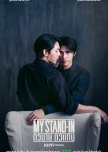
My Stand-In — An Incredible Story That Deserved Stronger Chemistry
The moment I learned that Professional Body Double was being adapted, I couldn't wait to watch it. The novel is one of those stories that constantly plays with identity, obsession, love, and guilt, creating characters who are often difficult to like yet impossible to forget. Thankfully, the adaptation stays remarkably faithful to that emotional complexity. As a story, My Stand-In is everything I hoped it would be.What fascinated me most is how morally complicated everyone is. Nobody is completely innocent, nobody is completely evil, and every decision has consequences. The idea of living as someone else's replacement could easily have become melodrama, but instead it develops into a surprisingly emotional reflection on identity and self-worth. Even when I disagreed with the characters, I always understood why they made their choices. That's exactly the kind of writing I enjoy.
Unfortunately, my biggest problem has nothing to do with the script.
I've tried several times to connect with Up Poompat as an actor, and this drama confirmed the same feeling I already had before. I never doubt his professionalism or his commitment, but I constantly feel as though he's acting rather than becoming the character. His movements often seem calculated, his emotional reactions restrained, and many scenes leave me with the impression that he's uncomfortable instead of naturally expressing what his character is feeling. That's entirely my personal impression, but it prevents me from fully believing the romance.
The contrast with Poom Phuripan makes that feeling even stronger.
Poom gives absolutely everything to his performance. Every emotional scene feels genuine, whether he's expressing heartbreak, anger, hope, or vulnerability. I never had to wonder what his character was feeling because he communicates it so naturally. Watching the two leads together, I often felt as though one actor was carrying the emotional weight of the relationship while the other remained more distant. Since a romance depends on both performances, that imbalance constantly pulled me out of the story.
Ironically, that's what frustrates me the most because almost everything else is excellent.
The production is polished, the cinematography beautifully supports the darker tone, and the adaptation successfully captures the emotional atmosphere of the novel without losing its own identity. The supporting cast also delivers consistently strong performances, making the world feel believable from beginning to end.
Final Thought
My Stand-In tells one of the best stories I've seen in a BL. The writing is intelligent, emotionally challenging, and remarkably faithful to the spirit of the original novel. That's exactly why I finished the drama with mixed feelings. I loved almost everything about the story, yet I never fully believed the central romance because I couldn't connect with one of its two leads. Had both performances reached the same emotional level, this would simply have been a much better BL.
Was this review helpful to you?
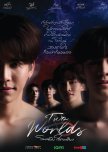
Two Worlds — Great Ideas That Never Reach Their Full Potential
When I saw the premise of Two Worlds, I expected something much bigger than what I ultimately received. Parallel worlds, alternate realities, and the possibility of changing fate are exactly the kind of concepts I usually love. The story had everything it needed to become one of the most memorable BLs of the year. Instead, I finished it feeling that too much potential had been left unexplored.The concept itself is genuinely interesting. Moving between two different realities creates countless possibilities for mystery, romance, and emotional conflict. Unfortunately, the script often chooses the simplest path instead of fully exploring the consequences of its own ideas. Rather than becoming increasingly complex, the story sometimes feels surprisingly straightforward, leaving me wishing it had pushed the fantasy elements much further.
Max Kornthas and Nat Natasit remain a comfortable pairing to watch. After working together since Why R U?, it's obvious they understand each other's rhythm on screen. Their chemistry is natural, and despite the ten-year age difference between them, they complement each other well as actors. I never questioned their relationship while watching the series. If anything, I simply wanted stronger material for them to work with.
The actor who impressed me the most, however, was Gun Thapanawat. I honestly think he deserves far more recognition than he currently receives. Because he isn't part of an established ship, he sometimes feels overlooked compared to other actors in the industry. That's a shame because his performance here is one of the strongest parts of the drama. At 26 during the airing of the series, he already shows a confidence and emotional presence that deserve bigger opportunities. I genuinely hope his agency gives him more substantial roles because he clearly has much more to offer.
Perhaps that's why the writing became my biggest disappointment. Knowing that the screenplay was written by Pratchaya Thavornthummarut naturally raised my expectations. This is the same writer connected to dramas such as 2gether, Bad Buddy, My School President, and My Love Mix-Up!—all stories that understand how to balance emotion, humour, and character development. Here, however, I never felt that same magic. The dialogue is perfectly serviceable, but the overall structure never fully develops the fascinating premise. Rather than surprising me, the story often plays things much safer than I expected.
The production itself is solid. The fantasy elements are handled well enough, the cinematography is attractive, and the overall atmosphere remains engaging throughout. From a technical perspective, I have very few complaints. My frustration comes almost entirely from the feeling that the series could have been so much more.
Final Thought
Two Worlds isn't a bad drama. In fact, it contains many elements I usually enjoy: parallel worlds, an experienced lead pairing, and a talented supporting cast. My disappointment comes from seeing so much unrealised potential. With a stronger script that fully embraced its own concept, this could easily have become one of the standout BLs of 2024. Instead, it's a good series that never quite reaches the level I know everyone involved was capable of delivering.
Was this review helpful to you?
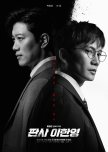
The Judge Returns — Ji Sung Never Disappoints, Even When the Story Does
I'll admit it immediately: I'm an easy audience when Ji Sung is involved.I've followed his career for more than twenty years, ever since The Hidden Princess in 2002. Since then, he's given us unforgettable performances in dramas like Kill Me, Heal Me, Doctor John, and The Devil Judge. At this point, I almost start every new project expecting excellence because that's exactly what he has delivered throughout his career. Even at 49, he remains one of the most charismatic Korean actors on television. He has aged like a fine French wine, gaining elegance and presence with every role. Lee Bo Young is a very lucky woman.
The premise immediately appealed to me because I have exactly the same weakness for redemption stories in regular dramas that I have for reincarnation and time-travel stories in BL. Watching someone return to the past to correct mistakes or save lives is a concept I'll probably never grow tired of. It creates endless emotional possibilities, and I was excited to see what this drama would do with it.
Unfortunately, the story never surprised me.
That's probably my biggest disappointment. The writing constantly reminded me of other Korean dramas I've already seen. Every major twist felt familiar, every revelation was easy to predict, and by the second half I already had a good idea of how everything would end. The drama isn't badly written, but it rarely finds its own identity. Instead, it often feels like a collection of ideas borrowed from stronger series.
Ji Sung once again does everything he possibly can to elevate the material.
His greatest strength has always been his ability to make emotionally complex characters feel believable, and that's exactly what he does here. Even when I wasn't particularly invested in the plot, I remained invested in him. He has an incredible talent for expressing regret, determination, and vulnerability with the smallest facial expressions. Very few actors can carry a familiar story as effortlessly as he can.
The supporting cast is equally solid, and the production itself leaves very little to criticise. The direction is polished, the pacing remains consistent, and visually the drama looks exactly as good as a major Korean production should. Technically, it succeeds almost everywhere.
The problem is simply that I never felt excited.
For a drama built around redemption and second chances, I expected more emotional surprises and more difficult choices. Instead, I often felt like I was watching a very well-made version of stories I'd already experienced before. It kept my attention, but it rarely exceeded my expectations.
Final Thought
The Judge Returns is another reminder of why Ji Sung remains one of my favourite Korean actors. His performance is excellent, his screen presence is undeniable, and he once again proves he can make almost any character compelling. I only wish the story had been as exceptional as the man leading it. Instead of creating something truly memorable, it settles for being a good drama that never quite escapes the shadow of everything that came before it.
Was this review helpful to you?

Shark: The Beginning — One of the Best Webtoon Adaptations I've Seen
As someone who already loved the webtoon, I was both excited and nervous when Shark: The Beginning was announced. Too many webtoon adaptations lose what made the original special. Thankfully, this isn't one of them. From beginning to end, it captures the same determination, pain, and hope that made me love the source material.The story is much more than a simple school bullying drama. It's about someone who has everything taken away from him and has to rebuild himself from nothing. Every setback makes Cha Woo Sol stronger, not because he suddenly becomes invincible, but because he slowly learns that surviving sometimes means changing completely. That progression feels believable, and I found myself rooting for him during every fight.
Kim Min Seok is absolutely fantastic.
I've always thought he has something unique as an actor. No matter how physically strong his characters become, he keeps this innocent look that immediately makes you want to protect him. That quality is perfect for Woo Sol. Even while learning how to fight, he never loses the vulnerability that defines the character. It makes every victory feel earned instead of inevitable.
It's also impressive to see the physical work he put into the role after returning from military service. The training sequences look convincing because he clearly committed to becoming this character rather than simply acting the part.
The supporting cast is equally strong, especially Wi Ha Joon. His presence completely changes the atmosphere whenever he appears on screen. Rather than becoming a stereotypical mentor, he creates a relationship with Woo Sol that is built on respect, discipline, and mutual understanding. Watching their dynamic develop became one of my favourite parts of the film.
The action scenes deserve special praise. They're brutal without becoming unrealistic, and every punch has consequences. Instead of trying to create flashy martial arts choreography, the film focuses on survival, making every fight feel dangerous.
Final Thought
Shark: The Beginning proves that a great webtoon adaptation doesn't need to reinvent the source material. It simply needs to understand why readers fell in love with it in the first place. Kim Min Seok delivers one of my favourite performances of his career, and I honestly hope this isn't the last time we see Woo Sol's story continue.
Was this review helpful to you?


