
 News
News 




Revenant is an absolute masterclass in K-horror, so comparing anything to it sets a high bar.San-young can see the shadow of the evil spirit possessing her, and she teams up with Hae-sang, a folklore professor who has been able to see ghosts since he was a child. More scarier .?

The driving plot of both shows is sparked by an entity violently targeting the royal family. In both cases, a desperate King realizes standard human security won't save his throne, forcing him to secretly enlist these supernatural outcasts to stop the slaughter.
In The Haunted Palace, they are hunting down Palcheok-gwi (the Eight-Foot Spirit), a vengeful ghost trying to wipe out the royal bloodline.
In The Haunted Palace, they are hunting down Palcheok-gwi (the Eight-Foot Spirit), a vengeful ghost trying to wipe out the royal bloodline.
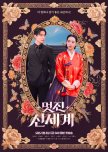
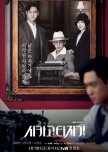
At the core of both dramas is a supernatural connection to a past life that directly interferes with a character's current modern-day reality: chicago typewriter 's past lives is more emotional and have well build up story. And chicago typewriter characters are well written.
While My Royal Nemesis (2026) leans more into a snappy, modern romantic comedy framework and the 2017 classic Chicago Typewriter is a deeply emotional, poetic fantasy melodrama.
Celebrated author Han Se-joo is drawn into a past life through a mysterious typewriter, uncovering his past incarnation as a resistance fighter during the 1930s Japanese occupation of Korea. The trio must remember their past traumas to fix their present-day relationships.
While My Royal Nemesis (2026) leans more into a snappy, modern romantic comedy framework and the 2017 classic Chicago Typewriter is a deeply emotional, poetic fantasy melodrama.
Celebrated author Han Se-joo is drawn into a past life through a mysterious typewriter, uncovering his past incarnation as a resistance fighter during the 1930s Japanese occupation of Korea. The trio must remember their past traumas to fix their present-day relationships.


In Melancholia, Baek Seung-yoo (Lee Do-hyun) is a former math prodigy who entered MIT at age 10 but became traumatized and voluntarily dropped out, completely withdrawing from the mathematical world.
Melancholia, math teacher Ji Yoon-soo (Im Soo-jung) notices Seung-yoo's hidden genius and helps him overcome his severe trauma to look at math with joy again.
Melancholia centers its entire tragic midsection on a false, malicious scandal involving a teacher-student relationship cooked up by corrupt school board members to ruin Yoon-soo and Seung-yoo.
Absolute Value of Romance (2026) is a lively, fast-paced romantic comedy and tvN’s Melancholia (2021) is a poetic, intense melodrama,If you look past the differences in tone, the two dramas are deeply intertwined by a highly specific subject matter: the world of mathematics
Melancholia, math teacher Ji Yoon-soo (Im Soo-jung) notices Seung-yoo's hidden genius and helps him overcome his severe trauma to look at math with joy again.
Melancholia centers its entire tragic midsection on a false, malicious scandal involving a teacher-student relationship cooked up by corrupt school board members to ruin Yoon-soo and Seung-yoo.
Absolute Value of Romance (2026) is a lively, fast-paced romantic comedy and tvN’s Melancholia (2021) is a poetic, intense melodrama,If you look past the differences in tone, the two dramas are deeply intertwined by a highly specific subject matter: the world of mathematics

Both dramas are fundamentally propelled by a main character who must navigate a normal high school environment while desperately hiding a mind-blowing, impossible secret from everyone around them

The Clumsy, Fast-Paced Humor of Youth
Because both female leads are essentially dealing with things completely outside of normal high school life (fictional romance writing vs. literally learning how to be a human), they are incredibly clumsy and naive. This setup fuels a specific brand of lighthearted, fast-paced high school comedy—filled with dramatic misunderstandings, dramatic near-exposures in the hallways, and the endearing awkwardness of first love.
Because both female leads are essentially dealing with things completely outside of normal high school life (fictional romance writing vs. literally learning how to be a human), they are incredibly clumsy and naive. This setup fuels a specific brand of lighthearted, fast-paced high school comedy—filled with dramatic misunderstandings, dramatic near-exposures in the hallways, and the endearing awkwardness of first love.

both dramas belong to the classic coming-of-age tradition.
School 2015, revolves around a massive identity swap—a bullied twin sister (Lee Eun-bi) steps into her missing sister’s (Go Eun-byul) life who had totally different persanility from her, constantly living on the edge of exposure.
School 2015 gave viewers one of the most intense second-lead syndromes in K-drama history,
School 2015, revolves around a massive identity swap—a bullied twin sister (Lee Eun-bi) steps into her missing sister’s (Go Eun-byul) life who had totally different persanility from her, constantly living on the edge of exposure.
School 2015 gave viewers one of the most intense second-lead syndromes in K-drama history,
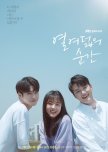
same actress plays the central female protagonist in both series.
Moment at Eighteen, she stars as Yoo Soo-bin, a high school student living under the intense, suffocating academic expectations of her mother, who longs to find her own independence.
While Absolute Value of Romance starts off with a much more eccentric, comedic premise (a girl writing viral web novels about her handsome teachers), both dramas ultimately conclude as healthy, harmless, and heartwarming records of youth.
Moment at Eighteen, she stars as Yoo Soo-bin, a high school student living under the intense, suffocating academic expectations of her mother, who longs to find her own independence.
While Absolute Value of Romance starts off with a much more eccentric, comedic premise (a girl writing viral web novels about her handsome teachers), both dramas ultimately conclude as healthy, harmless, and heartwarming records of youth.
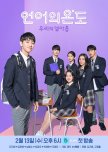
The Temperature of Language) is an insecure student living in her sister's shadow who secretly creates a pseudonymous social media "textagram" account to vent her feelings. Her raw, emotional writing becomes a runaway viral hit at her school.
In both shows, the viral success of the leads' anonymous writing creates an intense environment of suspense within the school gates.
Absolute value OR leans into romantic comedy while the other leans into the slice-of-life pressures of high school—they share an identical core concept of light hearted drama.

Same actress is main character Ho Goo-hee, a sweet, quiet girl. But she have good hair cut here.
Both shows perfectly capture the lighthearted, Fun, comedic and main protagonist is naturally cute.
Bith series she have secret. Here secretly the user of a mysterious mobile app that allows her to grant wish to take revange on school bullies just by typing their names.
surrounds her with the school's most popular boy (played by Lomon), her protective brother, and a famous idol (played by Astro's Cha Eun-woo).
Both shows perfectly capture the lighthearted, Fun, comedic and main protagonist is naturally cute.
Bith series she have secret. Here secretly the user of a mysterious mobile app that allows her to grant wish to take revange on school bullies just by typing their names.
surrounds her with the school's most popular boy (played by Lomon), her protective brother, and a famous idol (played by Astro's Cha Eun-woo).

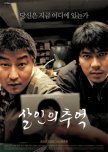
they are both directly inspired by the infamous Lee Choon-jae serial murder case, which haunted South Korea for decades.

Same actors as main leads with solving again cold case happened 35 years ago.
Therir chemistry is better here.
murders that mirror a notorious serial killer case from 1984, originally dubbed the "Chimera Case"—named after the fire-breathing mythological beast.
Together, they unravel a complex web of cover-ups, botched police work, and deep-seated systemic corruption spanning 35 years to uncover the true identity of the mastermind.
Therir chemistry is better here.
murders that mirror a notorious serial killer case from 1984, originally dubbed the "Chimera Case"—named after the fire-breathing mythological beast.
Together, they unravel a complex web of cover-ups, botched police work, and deep-seated systemic corruption spanning 35 years to uncover the true identity of the mastermind.


