



The Best Series On Netflix (at time of writing)
From the series description here on MDL and on Netflix you might think that this series is just another tepid or, perhaps, melodramatic slice-of-life from the third rate drama-producing nation, Japan. Instead, this series is an innovative, uplifting look at one woman's life from her early teens through her 20s, and is a stunningly beautiful depiction of her interesting family in Kobe.
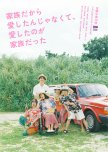
My Family is a slightly fictionalized version of the active essayist and humorist Kishida Nami and is based on her writings about her family. (She posts her essays at https://note.kishidanami.com/, and the website ALLWRITE in the series is clearly based on note.com. Most of her old posts are paywalled, but the most recent is generally available for free for a week or two and Google translate works on them reasonably well at this point.) The series was directed and co-written by Ohku Akiko who won Best Director for this series at the Japanese Television Drama Academy Awards.
Here Nami is called Nanami and is portrayed in a revelatory performance by Kawai Yuumi. The series explores how and why Nanami became a writer through a somewhat nonlinear but highly satisfying narration of various challenges that her family has had to face over the years. This series goes deep, and Kawai's performance masterfully exhibits a huge range. And we get two naked scenes of Kawai that will have women-kissers grabbing tissues ... well, along with everyone else: to dab their tears.
Sakai Maki delivers an equally amazing performance as Nanami's mother, Hitomi. She has the most physically demanding role in the piece and has to hit several emotional lows throughout the series which she does with complete commitment.
But beyond the leads, the depth of the acting bench is in this series, frankly, astounding. What does it say about the writing, directing and acting in a series when one of my favorite characters is simply the personal assistant (to the head of ALLWRITE) Saito played by 16th on the MDL call-sheet, Kabashima Hikari?
And, of course, there is Nanami's bff Multi played by Fukuchi Momoko. What can I say: she is delightful and fay.
The key, of course, is that all of the various characters in this series have their own stories that we get flashes of, and often interlock in unexpected but believable ways. They are all living their own lives over the years, and all have their own goals that often support and intersect Nanami's along her way.
And it cannot be said loudly enough: this is the kind of casual representation of differently-abled diversity that is sorely lacking in ALL media throughout the world. It's not just that there are at least 9 actors in this series with Down Syndrome. It's that frequently in the background there are wheel chair users, hearing impaired people signing, and a vision-impaired person just going about their lives.
I almost never touch on re-watchability in my reviews. Mostly, it is not relevant to my media consumption. But since this series was fansubbed a couple of years ago, I've watched through it a few times, and gone back to episode 8 in isolation a few time more. Not because that episode addresses an issue that I have faced in my family, but because the episode is that good. I will state that it still holds up on the Netflix version even though they did not fork out the dough for The Rolling Stones' She's A Rainbow which is the only change I could detect throughout the series from the original broadcast version. The score by Takano Masaki is otherwise excellent throughout.
Oh, and can we talk art direction for once? Look, I'm not sure exactly what blue and orange are supposed to represent here. The blue is clearly linked to the ocean and perhaps the subconscious (thanks, Jung). And maybe the orange is the activity in the world that Nanami represents. (It's certainly her color throughout the series.) But I do know that those two colors feature in many if not most shots, and that the series is visually intriguing throughout with Ohku often putting her camera in unusual places that are clearly chosen to make a point.
My Family is an extremely interesting and rewarding series to watch. Yes: there will occasionally be moments in the edit that you will not understand until later in the episode or the series as whole, but all the questions raised are resoundingly addressed and answered in ways that are often funny, moving, or tearful and quite often all three at the same time. The quintessential question of the series is: is Nanami okay? Watch the series and find out.
My Family is a slightly fictionalized version of the active essayist and humorist Kishida Nami and is based on her writings about her family. (She posts her essays at https://note.kishidanami.com/, and the website ALLWRITE in the series is clearly based on note.com. Most of her old posts are paywalled, but the most recent is generally available for free for a week or two and Google translate works on them reasonably well at this point.) The series was directed and co-written by Ohku Akiko who won Best Director for this series at the Japanese Television Drama Academy Awards.
Here Nami is called Nanami and is portrayed in a revelatory performance by Kawai Yuumi. The series explores how and why Nanami became a writer through a somewhat nonlinear but highly satisfying narration of various challenges that her family has had to face over the years. This series goes deep, and Kawai's performance masterfully exhibits a huge range. And we get two naked scenes of Kawai that will have women-kissers grabbing tissues ... well, along with everyone else: to dab their tears.
Sakai Maki delivers an equally amazing performance as Nanami's mother, Hitomi. She has the most physically demanding role in the piece and has to hit several emotional lows throughout the series which she does with complete commitment.
But beyond the leads, the depth of the acting bench is in this series, frankly, astounding. What does it say about the writing, directing and acting in a series when one of my favorite characters is simply the personal assistant (to the head of ALLWRITE) Saito played by 16th on the MDL call-sheet, Kabashima Hikari?
And, of course, there is Nanami's bff Multi played by Fukuchi Momoko. What can I say: she is delightful and fay.
The key, of course, is that all of the various characters in this series have their own stories that we get flashes of, and often interlock in unexpected but believable ways. They are all living their own lives over the years, and all have their own goals that often support and intersect Nanami's along her way.
And it cannot be said loudly enough: this is the kind of casual representation of differently-abled diversity that is sorely lacking in ALL media throughout the world. It's not just that there are at least 9 actors in this series with Down Syndrome. It's that frequently in the background there are wheel chair users, hearing impaired people signing, and a vision-impaired person just going about their lives.
I almost never touch on re-watchability in my reviews. Mostly, it is not relevant to my media consumption. But since this series was fansubbed a couple of years ago, I've watched through it a few times, and gone back to episode 8 in isolation a few time more. Not because that episode addresses an issue that I have faced in my family, but because the episode is that good. I will state that it still holds up on the Netflix version even though they did not fork out the dough for The Rolling Stones' She's A Rainbow which is the only change I could detect throughout the series from the original broadcast version. The score by Takano Masaki is otherwise excellent throughout.
Oh, and can we talk art direction for once? Look, I'm not sure exactly what blue and orange are supposed to represent here. The blue is clearly linked to the ocean and perhaps the subconscious (thanks, Jung). And maybe the orange is the activity in the world that Nanami represents. (It's certainly her color throughout the series.) But I do know that those two colors feature in many if not most shots, and that the series is visually intriguing throughout with Ohku often putting her camera in unusual places that are clearly chosen to make a point.
My Family is an extremely interesting and rewarding series to watch. Yes: there will occasionally be moments in the edit that you will not understand until later in the episode or the series as whole, but all the questions raised are resoundingly addressed and answered in ways that are often funny, moving, or tearful and quite often all three at the same time. The quintessential question of the series is: is Nanami okay? Watch the series and find out.
Was this review helpful to you?


