
 K-Drama





A Beautiful Escape with a Heartfelt Romance
The setting alone got me. A small island off Taipei, surfer-hippie atmosphere, a family ice cream shop, a father's airbnb — the kind of place my mind drifts to when I think about disappearing somewhere and starting over. The series understood exactly what it had in that location and used it well.What makes it genuinely strong for me are the characters. Everyone here was given room to actually be someone — layered, contradictory, real in the way people are real — and because of that you understand the pull between them without being told to feel it. The intimate scenes landed harder than I expected, warm and familiar in a way that suggested two people who actually like each other. That's rarer than it should be.
My personal sticking point is with the wish as a narrative engine. It drew me in at the start and I appreciated what it made possible — there's a conversation between a son and his father at a fish market that I found quietly beautiful. But somewhere along the way it started to feel more like a constraint than a gift, and there were moments where my patience with it frayed. For me it would have worked better treated like a fever dream that shakes something loose rather than the central mechanism driving everything forward.
A little Groundhog Day, a little Taiwanese indie film, and a lot of genuine warmth. The heart of it is real.
Was this review helpful to you?

One of the most genuinely relevant things I've watched in this genre — and OffGun deliver
This series opens with a conversation that stopped me immediately. A man in burnout being told by his "girl"friend to take a break, go to therapy — and him answering that he can barely afford rent, so how exactly is he supposed to afford therapy. That exchange alone signals what kind of show this is going to be: one that's actually paying attention to the world it exists in.The burnout bar as a concept is inspired — a place where customers therapeutise each other because professional help is out of reach for most of them. It's absurd and completely believable at the same time, and it sets up a story about art, AI, labour, and the very specific exhaustion of trying to be creative in a system that doesn't support it. These are not themes I expected to find handled this thoughtfully in a BL series, and I found it genuinely exciting.
OffGun carry it fully. The chemistry is there, the performances are strong, and the three-way dynamic at the center of the story is genuinely compelling — chaotic and messy in the way real human entanglements are. What I found most interesting is that the main character isn't positioned as a victim of circumstance but as someone who is himself flawed, himself capable of toxicity. That honesty gives the series a texture that most shows in this genre don't attempt.
In terms of story and acting, one of the strongest series I've seen. The kind of show that makes me wish more BL trusted its audience this much.
Was this review helpful to you?

A Frustrating Miss for Me
In all honesty, the popular guy falls for the socially awkward loner dynamic isn’t really my thing. But the idea that the loner secretly writes BL novels and that the popular guy is his unwitting protagonist genuinely intrigued me.I thought this self-aware, meta twist could make a familiar setup feel fresh.
Unfortunately, in my opinion, the series doesn't make nearly enough of that concept.
I just couldn't connect with Hajime Suzuki as a character. I understand that his insecurity and difficulty believing someone like Serizawa could genuinely be interested in him are central to his character. And I don't expect someone who has struggled socially to suddenly become confident just because a popular guy likes him. But the constant overthinking and misunderstandings eventually wore me down.
What frustrated me most was the irony of his character. Here is someone who reads and writes BL, yet I kept wondering what he had actually been writing about all this time and where those stories came from, if he seemed to have so little awareness of his own romantic feelings. That question lingered for me, and I wish the series had done more with this aspect of his character.
Serizawa didn't help matters much either. So many misunderstandings could have been avoided with a little more honest communication. I don't mind misunderstandings in a rom-com when they reveal something meaningful about the characters or help their relationship develop, but here they often felt like a way to keep the two apart for longer rather than something that added much to their dynamic.
Eventually, I stopped feeling invested. I found myself skipping through episodes to see whether anything interesting would happen, and I eventually dropped the series after episode nine. I can't say whether the remaining episodes address any of these issues, but by that point, the cute moments were no longer enough to make up for my frustration.
Perhaps this was simply the wrong kind of comedy for me, but Popular Serizawa Acts Weird Around Me ended up being much more exhausting than enjoyable for me.
Was this review helpful to you?
When Tenderness Becomes a Lifeline
Boy, with Caution is the kind of series that makes it difficult to separate understanding a character from agreeing with their choices. It is dark, uncomfortable and, at times, deeply frustrating in the best way.Both Gi-woo and Hyeon-jae are trapped by what their surroundings expect of them, though in very different ways. Gi-woo has spent years constructing a version of himself that gives no one grounds for criticism. His life is built around managing how he appears rather than how he actually feels. Hyeon-jae’s situation is more openly brutal: he lives in an environment where power determines whose suffering matters and whose voice can safely be ignored. The people who should protect him either look away or become part of the problem.
What makes their dynamic so uncomfortable and so compelling is precisely this asymmetry. When someone has been deprived of genuine care for long enough, even a small gesture of attention can begin to feel essential. That doesn’t make Hyeon-jae’s feelings any less real. But it does make them painful to watch, because it raises the question of whether what he is reaching for is love or simply the relief of being seen.
I want to be careful here, because I think the series earns nuance. Hyeon-jae is an adult. But the teacher-student dynamic and the significant gap in age, life experience and authority between them remain relevant, especially when Gi-woo becomes one of the very few people in Hyeon-jae’s life who treats him as though he matters. That kind of dependency can develop not because of manipulation, but simply because some people have so few safe relationships that one person’s kindness fills a space that should be occupied by many.
This is where the series broader social dimension becomes most interesting to me. The cruelty Hyeon-jae experiences isn’t confined to one person making terrible choices. It’s sustained by a wider pattern of institutional silence: adults who know and do nothing, hierarchies that protect the powerful at the expense of the vulnerable, and social expectations that place reputation and appearances above honesty and accountability. No single fictional series can represent an entire society, but these dynamics feel disturbingly recognisable and they raise real questions about who gets to be protected and who is quietly expected to endure.
Boy, with Caution doesn’t ask us to approve of every choice its characters make. It asks us to understand how people arrive at those choices when tenderness is scarce and the systems that should intervene consistently fail them. That, for me, is where the series is most honest and most affecting.
Tenderness can remind someone that a different life might be possible. But it cannot undo years of harm. And being someone’s refuge is not the same as being able to save them.
Was this review helpful to you?

After Moving Seats, the Boy Behind Me Has a Crush on Me
1 people found this review helpful
That Kiss Actually Landed
After Moving Seats is sweet, funny, and surprisingly good at not wasting your time — which, for a Japanese high school BL, is already more than I expected. It's sweet, funny, the misunderstandings actually make sense, and most importantly, I genuinely enjoyed watching Hare and Kosei fall for each other.But I'll be honest: what surprised me most was the kiss.
Japanese BLs can sometimes be very good at building romantic tension and then become strangely cautious when it comes to physical intimacy. And maybe that's a personal thing, but when a series spends all that time convincing me that two characters are falling for each other, only to give me a kiss that feels like two people briefly pressing their lips together, it can completely kill the emotional payoff for me.
So when Hare and Kosei finally got there — and the kiss actually landed — I genuinely giggled. And then they gave me another one.
It sounds like a small thing, but it made a huge difference. The physical intimacy actually felt like a continuation of everything the series had been building rather than something the show suddenly became afraid of.
I also really liked how the series handled their misunderstandings. They were never so dramatic that I wanted to shake the characters, but they also weren't resolved instantly just to move the plot along. They felt believable for who Hare and Kosei are, which made the relationship much easier to invest in.
And I especially appreciated the conversation near the end about whether they should tell their friends. For a moment, I was fully prepared for the usual final-episode secret relationship drama. Instead, Kosei simply doesn't want to pressure Hare, while Hare is able to clearly express what he wants for himself. It was a surprisingly mature little moment in an otherwise very fluffy show.
Is Kosei's reason for falling for Hare a little superficial? Absolutely. “You're the first person who saw me rather than my looks” isn't exactly the most complicated character motivation. I did briefly wonder why none of his male friends apparently managed that before Hare. But honestly, I knew what kind of romance I was watching, and I was perfectly happy to go along with it.
My only real complaint is that, like so many good Japanese school BLs, the series ends exactly where I wanted it to continue. Seeing them fall for each other was lovely. I just wanted to see what happened once they actually had a relationship.
Still, this was ridiculously cute — and, for once, the kiss gave me exactly the payoff I was hoping for.
Was this review helpful to you?

Chemistry Without a Script to Match
Let's just say isn't going to be a series that stays in my memory for very long.I finished Kiss or Kill and my first thought was honestly: What did I just watch? And what was this actually about?
And to be clear, I don't need a series to explain everything to me. I actually like stories that leave me with questions, make me confused or force me to figure things out myself. I don't even necessarily have to "like" that kind of storytelling.
But with Kiss or Kill, by the end, I simply... didn't care enough to look for the answers.
The premise had potential. Undercover investigations, a criminal organisation, secret identities, betrayal and two people with a complicated history could have made for a pretty entertaining thriller. And Nie Chuan and Lin Yan have enough chemistry to make their relationship work despite the rather messy writing.
Unfortunately, the further the series went, the more disconnected everything felt. The later episodes become increasingly rushed, some plot points seem to exist without ever becoming particularly relevant, and the constant flashbacks — especially the artificial-looking ones — repeatedly pulled me out of the story instead of adding to it.
There were definitely moments where I could see the potential. I just never felt like the series actually made much of it.
So no, I wouldn't say I particularly enjoyed Kiss or Kill. But it did at least manage to keep me watching until the end, which is probably the nicest thing I can say about it.
I finished it. I moved on. And honestly, I already feel like I'm forgetting what happened.
Was this review helpful to you?

Drop In. Keep Up. Figure It Out.
Unfold doesn't hold your hand. There's no careful exposition, no gentle introduction to the world or its characters , you're simply dropped in and expected to watch.The series seems to be doing this deliberately, positioning the audience as observers rather than participants. We see, but we aren't guided. Personally, I don't mind that at all. I'd rather piece things together myself than have everything spelled out for me.
The story itself is dark and genuinely compelling: a death-scene cleanup worker, a mysterious death, organ trafficking rings, hidden identities. It has the bones of a proper crime thriller and, at times, almost feels like the Chinese counterpart to The Prosecutor's Proposal. Not because the stories are the same, but because they scratch a similar itch: crime, conspiracies, morally grey characters, and relationships developing quietly alongside the investigation.
What makes it stand out most, though, is its dual-couple dynamic. The two pairings work as near-perfect counterweights to each other. One built around grief and quiet hurt/comfort, the other around an openly toxic relationship that never really asks for your approval.
The secondary couple fascinated me for exactly that reason. Their relationship is deeply unhealthy: absolute loyalty bordering on self-destruction, punishments accepted without resistance, power constantly shifting between devotion and control. Yet the series never feels compelled to justify or soften that dynamic. It simply lets them exist as they are. They aren't presented as a fantasy to aspire to, nor does the story search for convenient excuses. Their dynamic simply exists, and whether you find it compelling or disturbing is left entirely up to you.
My one genuine complaint has nothing to do with the writing: the runtime management is baffling. A twenty-minute episode with a two-minute intro and seven minutes of ending credits means you're getting roughly eleven minutes of actual content. I have genuinely never seen ending credits that long on any series. Ever.
But if you can make peace with that, Unfold is quietly one of the more interesting crime BLs I've watched recently.
Was this review helpful to you?

Two Idiots and One Ridiculous Bet
Ryo and Zen have been competing since high school over absolutely everything, so when they end up working at the same company, their rivalry picks up right where it left off. One drunken conversation later, they somehow decide that turning romance into a competition is a perfectly reasonable life choice.Spoiler: it is not.
What makes this so fun is that neither of them realises they're already halfway in love before the game even starts. Watching two otherwise competent adults completely fail at understanding their own feelings is surprisingly entertaining.
The chemistry is great, the banter is even better, and for once the romantic progression actually feels natural. Also, thank you to this drama for remembering that adult men are capable of kissing like they actually want to be there.
My only real complaint is the late-arriving love rival, who feels less like a character and more like an obstacle someone forgot to remove from the script.
Overall, Fake Fact Lips is funny, sweet, slightly ridiculous, and very easy to binge. If you enjoy rivals-to-lovers stories, mutual pining, and two stubborn idiots accidentally falling in love while trying to win a competition, this one is definitely worth checking out.
Was this review helpful to you?
This review may contain spoilers
Less a BL series, more a moral thriller that happens to have a love story
If you approach Spare Me Your Mercy primarily as a BL, you will probably see a very different series than I did.For me, this was first and foremost a crime drama and a moral exploration of autonomy, assisted dying, and the question of whether legality and morality always lead to the same answer.
From the very first episode, the series completely drew me in. It avoids many of the exaggerated clichés I often associate with other Thai productions and instead approaches its subject matter with a surprising level of seriousness and restraint.
What impressed me most was the portrayal of Dr. Kan.
One of the most common criticisms I have seen is that Kan appoints himself judge over life and death. That is not the reading I came away with.
The more the story reveals, the harder that interpretation becomes to maintain. Rather than acting according to his own judgment, Kan is repeatedly shown responding to the wishes of his patients.
Whether one agrees with his actions or not is a separate question, but the series consistently presents him as someone trying to respect autonomy rather than impose his own beliefs.
That is what makes the story so compelling to me. Spare Me Your Mercy is not asking whether Kan committed a crime. It is asking whether understanding someone's actions is the same thing as condoning them.
One of the things I appreciated most is that the series refuses to reduce this debate to simple answers. Kan is clearly guilty under the law, yet the story continually asks whether something can be illegal and still be morally understandable.
Thiu's role is particularly tragic in this regard. For me, the central question was never whether he would uncover the truth. The real question was whether he would be able to understand it.
Kan falls in love with a man who represents the very law that condemns him, while knowing that everything he has done will be viewed as criminal through Thiu's eyes. That conflict gave their story an emotional weight that went far beyond the romance itself.
Perhaps my perspective was also influenced by my own cultural background.
I live in a country where the right to a self-determined death and assistance from others is legally recognized under certain circumstances. Because of that, the series never felt like a justification of murder to me.
Instead, it felt like an exploration of suffering, mercy, personal autonomy, and the difficult gray area between law and morality.
Strangely enough, my biggest criticism is the romance itself.
I liked Kan and Thiu very much, and the chemistry between them was undeniable. Yet I often felt as though important stages of their relationship were missing. The series shows me that they care about each other, but not always why they fall in love. Important moments of emotional development seem to happen between episodes rather than on screen, which made some of the later romantic milestones feel less impactful than they could have been.
In the end, I was far more invested in the characters' moral and emotional journeys than in the romance.
Perhaps that is both the greatest strength and the greatest weakness of Spare Me Your Mercy. It chooses to focus on its ethical questions and criminal investigation, resulting in an unusually thoughtful and intelligent thriller.
The love story never fully reaches its potential, but the questions the series asks stayed with me long after it ended. And that is exactly why I believe it will remain memorable long after many more traditionally romantic BLs have faded from memory.
Was this review helpful to you?
This review may contain spoilers
The series was too short to do anything with it
I actually appreciate being dropped into a relationship that already exists but that only works when the series gives you enough in the first few minutes to feel why these two people belong together. The current between them has to be strong enough to pull you in immediately. Here it wasn't, and that's the root of almost every problem that follows.The emotional logic of Yu Jun's position is genuinely interesting. Fifteen years of friendship turned love, a partner who is attentive and seemingly perfect, who anticipates every need without asking for anything in return — and slowly that devotion starts to feel less like love and more like pity. The fear of being someone's charity case rather than their equal is a painful and completely understandable place to arrive at after that long. I could follow that thread.
The problem is that the series barely had time to lay it out before it needed to move on. The breakup arrived before I was emotionally invested enough for it to land, which made it feel less like an inevitable tragedy and more like an overreaction to a situation the series hadn't fully built. Baek Hyeon Seo stepping into that gap didn't help — his presence read more as convenient plot mechanism than genuine threat, and I spent most of his screentime wondering what exactly he thought he was doing and why he had so much energy for someone else's relationship.
The resolution follows a pattern I find frustrating: misunderstanding arises, partner apologises without fully understanding what went wrong, they reunite, nothing has actually changed. The underlying dynamic that created the problem in the first place is still there.
Was this review helpful to you?

A parallel world that pulls you in — but doesn't quite make you feel the weight of leaving it
The concept genuinely works for me. A man who wanders into a shrine under a full moon, makes a wish, and wakes up in a version of his life where things came easier — warmer colleagues, a closer dynamic with the person he's been measuring himself against. It reminded me a little of Fringe in the best way: not science fiction exactly, but that particular uncanny feeling of a world that looks like yours and isn't quite. I found that premise more compelling than I expected.The tension between the two leads translated for me too. I believed the pull between Akihito and Ookami, the admiration layered over something more complicated, the way proximity in the parallel world shifts what can't be said in the original one. Akihito's reluctance to return made complete sense to me — I think I would have struggled to leave too.
Where the series loses me a little is in the clarity of what exactly Akihito loves about Ookami specifically. I didn't get enough of that — the particular reason this person, this dynamic. What I would have wanted is exactly what you're describing: small but meaningful differences between the two worlds, things that exist in one and not the other, that quietly reveal what the real world actually cost him and what the parallel world quietly took away. That kind of detail would have made the eventual choice — to go back, to rebuild something real rather than inhabit something already finished — land with much more weight.
The idea was there. The execution just didn't go quite far enough with it.
Was this review helpful to you?
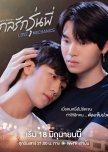
Morally messy, genuinely human — and better than the first episode suggests
I'll be honest: the opening is hard to sit with. Two people drunk, a case of mistaken identity that Vee recognises and doesn't correct, and then behaviour afterwards that edges into victim blaming. Watched today it lands as more problematic than it probably was intended, and it set a tone that made me want to proceed with caution.But Love Mechanics earned its way back — gradually, and mostly through Yin and War. There's something naturally likeable about them as a pairing, a chemistry that makes you invest even when the characters themselves are making decisions you can't fully get behind. And that tension turned out to be exactly what makes the series interesting.
What I found genuinely refreshing is that Vee isn't written as a good person who makes one mistake. He cheats, he's evasive, he's often selfish, and the series doesn't constantly reach for excuses on his behalf. That moral ambiguity is rare in BL, where protagonists tend toward a kind of studied goodness that can feel limiting. Characters who actually do the wrong thing and carry the consequences of it — even imperfectly — feel more human, and that humanity is what kept me watching past the difficult start.
Not a comfort series, not a clean romance. But precisely because of that, one that stays with you a little differently than most.
Was this review helpful to you?

The steppe is the story — and that's more than enough
I'll be honest: the plot itself is simple to the point of being almost secondary. A young doctor finds an injured stranger on the steppe, takes him in, and something slow and warm develops between them. That's more or less it. And yet I found myself genuinely absorbed, which tells you something about where the real substance of this series lives.What I had no reference point for before watching this was the world it puts on screen. Mongolian grasslands, open skies, traditional nomadic culture, the particular stillness of a life lived far from any city — BL as a genre almost never goes here, and the series seems to know that its setting is its most original asset. It leans into that fully. The landscape isn't backdrop, it's atmosphere, and the slow burn romance feels completely native to it. You couldn't tell this story in a Seoul apartment or a Bangkok university and have it mean the same thing.
It left me a little turned around in places — the storytelling isn't always as clear as it could be — but cinematically and culturally it gave me something genuinely new. Sometimes that's reason enough.
Was this review helpful to you?

This review may contain spoilers
I finished it. I wish I could say it was worth it.
I went into this as a FortPeat fan — genuinely invested in their dynamic, their chemistry, the particular way they work together. Yesterday was announced as darker, Peat's character described as a black flag. I was open to that. The first three episodes gave me reason to stay.Then the kidnapping arc happened, and something shifted that I couldn't shift back.
There's a line for me between dark romance and something else. A toxic dynamic where both people have psychological agency, mutual pull, even obsession — I can engage with that. What I can't frame as romance is one character imprisoned, distressed, stripped of choice, while the other brings in a therapist not to get help but because surely something must be wrong with someone who stopped loving him. That's not darkness I find compelling. That's a portrait of abuse dressed in the language of devotion.
What makes it worse is the narrative decision to explain Kelvin's behaviour through mental illness. I want to be careful here because I think the intention may have been to add complexity — and Kelvin being the first toxic BL character to actually go to therapy is, on paper, interesting. But the execution does something I find genuinely harmful: it uses BPD and depression as a reason for his actions, which both stigmatises those diagnoses and quietly absolves him. The implication becomes he couldn't help it, and he can be fixed. Neither of those things is true to how these illnesses actually work, and neither should be used to explain away abuse. If you're going to bring mental illness into a story this seriously, you owe it the honesty of showing it as an ongoing process — not a plot device that gets resolved by a time jump.
The ending felt like a bad joke to me. Veir's forgiveness is framed as emotional maturity, as living in the present. Maybe there's something philosophically interesting in that framing. But the series didn't earn it — not with this story, not with what Kelvin actually did, and not with a resolution that skips the hard part entirely.
FortPeat still perform. That part I won't take away from them. But something recalibrated after this, and I'm still sitting with what that means.
Was this review helpful to you?

DaouOffroad have something — the series took it somewhere I couldn't follow
I want to be clear about where I stand on toxic dynamics in fiction: seduction, manipulation, tension that cuts both ways — I can engage with all of that. Morally complicated relationships have their place in storytelling and I don't need everything to be clean. But there are lines I've stopped defending, and this series crosses a few of them in ways that put it near the top of my personal list of couples who probably shouldn't be together by any reasonable measure. Mutual attempted murder is not a love language I can get behind.Which makes it genuinely frustrating that DaouOffroad are actually good together when the series lets them be. Their quieter moments land, the chemistry is real, and I believe they've found something in each other as a pairing that works. The warmth breaking through the cold exterior, the bodyguard dynamic, the loneliness underneath — there's a version of this story I would have stayed for.
The version I got just went places I personally couldn't follow. That's not a moral judgment on anyone who loved it — people are absolutely entitled to enjoy what they enjoy, and I understand the appeal. It simply wasn't for me, and I'd rather say that honestly than pretend otherwise.
Was this review helpful to you?


