
 K-Drama




The series that opened the door — I'm just not sure it holds up the same way anymore
This was one of my entry points into BL — manga first, then the animated version, and then the genuine surprise of discovering a live action adaptation existed. SeoHam and JaeChan carry it well, and the rivals-to-lovers dynamic actually works: a rule-obsessed computer science student and a charismatic design star who collide by accident and can't quite untangle themselves from each other afterwards. It's still sweet, and I mean that sincerely.What I notice more now, watching it with different eyes, are the lines along the lines of I'm not gay, I don't like men, I just want you. I understand the context. I know what queerness looks like in Korea and I'm not asking a BL series to carry the weight of political commentary. But when a show touches that territory, I personally find myself wanting either genuine engagement with it or none at all. The half-distancing — acknowledging the feeling while quietly disclaiming the identity — is something I've grown less patient with the more BL I've watched.
I think I need to rewatch it. I came to it early, before I had much of a reference point, and I'm genuinely curious whether it still lands the same way now that I do. The fondness is still there. The questions are just louder than they used to be.
Was this review helpful to you?
Darker than expected, better than expected — and Yoon Ji-sung deserves his flowers
I came in cautious. The source material had already put me through it — a toxic dynamic between two people who call themselves cousins without actually being related is complicated territory, and I wasn't sure the series would handle it in a way I could get behind.
It surprised me. What clicked for me personally was the moment I genuinely believed that the taboo element was something one of them actively wants — a conscious tension he seeks out rather than stumbles into. That reframing changed everything about how I read the dynamic, and I don't think I expected to feel that way going in.
What the series does really well is the aftermath. The one who was the problem in the relationship falling apart when it ends, recognising what he did wrong and actually doing the work — that arc from emotionally closed off and performatively masculine to flustered, uncertain, and learning how to communicate is exactly the kind of character development I find deeply satisfying to watch.
And then there's Yoon Ji-sung. Former leader of Wanna One, shaped by an industry that simultaneously sexualises male closeness and treats homosexuality as something to hide — choosing to lead a BL series that doesn't shy away from explicit content feels significant to me personally, whatever his own reasons were. I find that kind of choice worth acknowledging.
Was this review helpful to you?
Sweet, tender, and handled with a care I didn't expect
I could have watched these two for a lot longer than the series allowed. That's probably the most honest thing I can say about it.What stayed with me most wasn't the romance itself — though the chemistry between the leads is genuinely lovely — but how the series treats Shao Peng's deafness. Not as tragedy, not as a plot device to generate sympathy, but as something that simply belongs to him. The frustration of job searching, the optimistic front that masks real uncertainty — it's handled with a specificity that felt respectful to me personally, even as someone who can't fully assess how accurate it is to lived experience. The fact that this story exists and was told this way matters.
My one personal gripe is the mafia backdrop surrounding Zi Xiang. It could have been almost anything else and the story would have worked just as well — probably better, honestly, since that element always felt slightly out of place against the quieter emotional register of everything else. Fortunately it never takes over, and what the series is actually about — two people, their warmth, the way they move around each other — remains front and center throughout.
Sometimes the story around the couple is the weakest part, and the couple is more than enough. This is one of those times.
Was this review helpful to you?
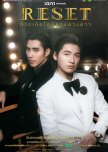
My Stand-In vibes — but it never quite got there for me
The premise has something — a famous actor who dies on the night of his greatest success, betrayed by the person closest to him, and then gets to go back. Time resets, a mysterious fan enters the picture, and the road to the top begins again. There's emotional potential in that setup, and the intimate scenes actually delivered.But the series never pulled me in the way I needed it to. It reminded me of My Stand-In in its basic DNA — the second chance, the identity questions, the love complicated by circumstances that shouldn't exist — but where that series at least held me through its messier moments, this one lost me early and didn't find me again. By the end very little had stayed, and I wouldn't go back for the pairing alone.
Was this review helpful to you?
This review may contain spoilers
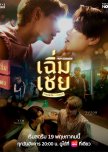
Did I Accidentally Watch the PG-13 Cut?
My social media feed was full of clips of these two long before I started watching, and the chemistry between them was impossible to miss. The sexual tension was practically doing the marketing itself, which was reason enough for me to give the show a chance.The plot? Basic. Predictable. Occasionally bordering on boring. But honestly, I didn't come here expecting a masterpiece.
What I wasn't expecting was to constantly feel like I had somehow stumbled onto a heavily censored version of the show. These two spend half their screentime looking like they want to jump each other, yet every time things are about to get interesting: cut, next scene. The kisses are surprisingly rare and, if I'm being honest, not particularly memorable either. Which is odd, because the entire premise seems determined to convince me these two are hopelessly obsessed with each other.
One thing I genuinely appreciated, though, was Akkhara's character. It's refreshing to see a BL acknowledge that not every man who wants affection, reassurance, or to be treated like a princess has to fit the usual petite, feminine stereotype. The fact that the series also touches on sexual role flexibility instead of locking both characters into the usual BL top/bottom clichés was a pleasant surprise. Thai BLs don't do that nearly often enough.
That said, Akkhara often comes across less as charmingly sassy and more as a slightly spoiled child. As a result, Intha frequently feels less like his boyfriend and more like his personal life manager. The dynamic works sometimes, but not often enough for me to fully buy into them as equals.
And then there's the bar. Intha basically jumps in, starts financially supporting Akkhara, becomes a co-owner, and invests himself in the business almost immediately. Which made me wonder: didn't you two meet about five minutes ago?
The funniest part is that I never really understood Akkhara's business model in the first place, so the bar struggling financially never came as much of a surprise.
The series is still ongoing, but for now I think I've seen enough. Maybe I'll come back later. At the moment, though, ChermChey feels like a show built almost entirely on chemistry and vibes — and once those stopped being enough, there wasn't much left to keep me invested.
Was this review helpful to you?
This review may contain spoilers
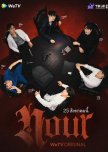
Immortal Concept, Mortal Script
I’ve seen enough vampire stories to know that a compelling concept alone isn’t enough. Nour initially felt like it might have something genuinely different to offer. Its immortals aren’t quite vampires, and the idea of someone who wants to die falling in love with someone who desperately wants them to live has real emotional potential. The dark atmosphere and the mystery surrounding the Nours made for a compelling start.Unfortunately, the more the series revealed about its world, the less convinced I became that it fully understood its own rules.
The mythology is full of inconsistencies and unanswered questions. Nours heal instantly in some scenes and need blood in others. Their supernatural strength seems to depend on what a particular moment requires rather than any established logic. Major plot points — including James’s father’s death and Ken’s backstory — feel underdeveloped given the significance the series places on them. And the finale, rather than resolving these gaps, adds more questions to an already crowded pile.
My biggest disappointment, though, was the romance between James and Ken. Their relationship is supposed to be the emotional heart of the story, yet it develops so quickly that I never really got to experience them falling in love. We’re shown glimpses of their time together instead of being given the space to understand what makes their connection so powerful. Meanwhile the second couple receives considerably more screentime and more room for intimacy — a difficult imbalance to ignore when both pairings are supposedly central.
The ending left me with genuinely complicated feelings. The second couple’s resolution worked for me. James and Ken’s didn’t if Ken remains trapped in immortality, what the series frames as a hopeful ending reads more like a quiet tragedy.
Nour isn’t a bad series. Its premise is compelling, its atmosphere works, and the ambition behind it is clear. There are moments where I could see how powerful this story might have been with more room to breathe. It just never quite became that story.
A fascinating concept that deserved a more confident script.
Was this review helpful to you?

Still Don’t Know What the Oath Was…
As a huge The Last of Us fan, I was always going to be interested in a BL set during a zombie apocalypse. And The Last Oath certainly knows how to appeal to that particular weakness. The atmosphere, the immune protagonist, the fight for survival and the relationship at the centre of it all reminded me of The Last of Us, while the combination of zombies and romance also brought Warm Bodies to mind.But the more I watched, the more I felt that someone had looked at the idea of The Last of Us, thought it would make a great BL, and then struggled to bring that vision to life. Even the title made me wonder how much inspiration was involved. And after 24 episodes, I was still left wondering which oath we were actually supposed to remember.
The most noticeable problem is the production itself. The AI use or what looks to me like AI-generated or AI-altered material is difficult to ignore, particularly in the intro, the music, the aerial shots and parts of the world surrounding the characters. Instead of making the apocalypse feel vast, desolate and threatening, some of these elements pulled me out of the story. The result often felt less like a fully realised post-apocalyptic world and more like a rough approximation of one.
Could the series have been better? Absolutely. Could more creative choices have produced a stronger result without leaning so heavily on AI? I think so.
But I also don't want to pretend that production budgets and industry pressures don't matter. BL is a competitive market, with new titles constantly fighting for attention. Building a convincing zombie apocalypse is expensive, and I can understand why a production with limited resources might look for shortcuts. Understanding that pressure, however, doesn't mean I have to accept the result without criticism.
AI is not just another harmless production tool. Its use raises serious questions about creative jobs, copyright, the value of human artistic work and environmental costs. We are already incorporating AI into so many parts of our everyday lives that it's becoming increasingly easy to stop questioning where and how it is used. I don't want that to happen with entertainment, either.
I can understand why a production might use AI without believing that we should simply accept it. A limited budget can explain a compromise, but it doesn't automatically make that compromise a good creative decision. And if we, as viewers, stop pointing out the difference, what incentive is there to do better?
That said, The Last Oath isn't a complete failure for me. Its biggest strength is also what makes its weaknesses so obvious: the two leads. Chen Liang and Chen Ming Hao carry so much of the series that almost everything else starts to feel secondary. The supporting characters, the side plots and even the wider conflict often seem to exist simply to give the main couple something to react to. The chemistry and dynamic between the leads were what kept me invested, and I genuinely think they could have carried a much more focused story.
The second couple, on the other hand, felt unnecessary. I would have preferred the two characters to be actual brothers, rather than adopted brothers whose relationship also takes a romantic turn. Their bond, their loyalty and the lengths one of them is willing to go to in order to save the other would have been just as understandable perhaps even more affecting without the romantic angle. For me, that storyline added very little to the series and distracted from what was already its strongest relationship.
The plot itself is full of holes, and the writing rarely makes the most of its premise. A zombie apocalypse, an immunity that makes someone a target, corrupt pharmaceutical companies and a relationship built around conflicting loyalties could have offered so much more than this. I never needed The Last Oath to reinvent the genre, but I did want it to do something more interesting with the ideas it had.
And yet, here's the inconvenient truth: I had fun.
For zombie-apocalypse fans, this series is practically catnip myself very much included. I watched it as a kind of scrappy, fan-made BL take on a genre I love, rather than as a serious attempt at prestige television. Once I stopped expecting the world-building and storytelling to live up to the ambition of the premise, I could enjoy the parts that worked for me.
That doesn't make the problems disappear, and it doesn't mean I think the production choices should go unquestioned. I can criticise the AI use, the writing, the unnecessary subplot and the missed potential while still appreciating the two actors who made the central relationship work.
The Last Oath is not a particularly strong series, nor is it a cinematic achievement. But it entertained me, it gave me a main couple I enjoyed watching, and it scratched a very specific zombie-apocalypse BL itch.
Sometimes a series can be a mess and still be fun. I just wish this one had given its own ideas and its actors — a better world to live in.
Was this review helpful to you?
This review may contain spoilers
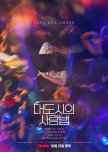
A Beautifully Human Kind of Heartbreak
I came back to Love in the Big City after finishing the novel first, and I think that order made all the difference.I'll be honest: book adaptations often disappoint me, but this one didn't. What the series manages to carry over from the novel is harder to define than plot or character. It's something closer to atmosphere and emotional honesty, the feeling of accompanying someone through years of their life without the story asking you to judge them or fix them. Ko Yeong makes mistakes, hurts people, gets hurt himself, and keeps going. The series trusts that to be enough, and it is.
One difference I noticed is how much closer the novel brings us to Yeongs inner world. Written in the first person, it lets us experience the gap between what he says and what he actually thinks. Sometimes his words reveal very little about what is going on inside him. The series can't recreate that in quite the same way, and as a result, Yeong in the series comes across as more direct than he did on the page. But I also think this is one of the inherent challenges of adapting a story like this, and the series finds other ways to convey its emotional depth.
What matters most is still there: the texture of his life. The way humour and grief don't take turns but exist side by side, sometimes in the same sentence. The friendship with Mi-ae, which changes as their lives move in different directions, without becoming any less meaningful for it. The complicated relationship with his mother, his experiences with other men, his HIV diagnosis and his struggles with mental health. These aren't just themes the story touches on; they're all part of the life Yeong is trying to navigate.
What makes Yeong and Gyu-ho's relationship so heartbreaking is how real it feels. It's not just a sweet, rosy romance where everything revolves around the beautiful moments. It's a relationship between two people who share an everyday life, misunderstand each other, and sometimes struggle to give each other what they need. And knowing why Yeong behaves the way he does, why he pushes Gyu-ho away despite loving him, makes it all the more painful. He doesn't want the person he loves to get hurt by a relationship when his own circumstances and health struggles make it difficult for them to build the life they want together. It's beautiful and painful at once, and neither the book nor the series offers an easy way out of that heartbreak.
Nam Yoon-su is exceptional. He doesn't make Yeong feel like a character being performed; he simply inhabits him. Having already started the series before reading the novel, I also realised how much his portrayal had shaped the way I imagined Yeong while reading. Returning to the series afterwards felt less like revisiting a story and more like seeing someone familiar from a different angle.
I would recommend reading the novel before watching the series, if you can. Not because the series has no emotional impact on its own, but because the book gives you access to parts of Yeong that are harder to convey on screen. With that context, the series became even richer for me.
It's a story about what it means to love, lose and keep going and about all the relationships, experiences and contradictions that make up a life. It's funny, painful, deeply human, and it broke my heart in the most beautiful way.
That's rarer than it should be.
Was this review helpful to you?
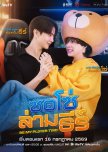
MaxkyBas were great. I just wasn't the audience for this particular kind of show.
I think Maxky and Bas are genuinely one of the funniest Thai BL pairings I've come across, and they also have a chemistry that feels incredibly natural to me. They already stood out to me in Fourever You, so when they were announced as the leads of their own series, I was really excited.I also really liked how different their characters are from the ones they played in Fourever You. It almost feels like their personalities have been completely flipped. Bas, who was so cheeky and confident there, plays a much more shy and nerdy character here, while Maxky goes from the cool and mysterious type to someone loud, chaotic and completely over the top. I thought that was really fun to watch, especially because both of them pull off the switch so well.
I was also genuinely interested in the gaming setting, especially because I'm at least somewhat familiar with gaming myself. I had hoped the series would make the competitive side exciting even for someone who isn't deeply involved in esports. Unfortunately, I often felt like the gaming storyline was aimed more at people who already enjoy that world, and it never managed to pull me in emotionally the way I had hoped.
So this isn't really a case of Be My Player Two being a bad fit for MaxkyBas. Quite the opposite — I think the series uses their strengths very well. I just realised that their particular brand of comedy and the way the gaming story is told aren't quite my thing.
Was this review helpful to you?
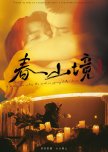
A Winter Sun Wakes the Wind in Spring Hills' Dream
1 people found this review helpful
There are series you watch, and then there are series you inhabit.
A Winter Sun Wakes the Wind in Spring Hills' Dream belongs firmly in the second category.Maybe that's also why I watched it in portions, waiting until new episodes were out, and taking several days at the end to finally finish it.
Not because it hadn't completely pulled me in. Quite the opposite.
I think I was simply trying to postpone the moment when I would have to admit that it was really over. Because that would mean accepting that there may never be another series like A Winter Sun.
I can say with certainty that the story itself isn't even the main reason this series moved me so deeply. It's the way it's told.
The story begins with Feng Qinglang, a celebrated actor at the height of his career who wants to escape the pressure of the entertainment industry. He retreats to the mountains of Yunnan and ends up with Xu Changyang, a young tea farmer living a life that couldn't be further from Qinglang's world.
And the mountains of Yunnan aren't a backdrop here. They're almost a character in their own right. They create a world where two people can briefly exist outside of everything that otherwise defines them. Qinglang isn't a star there. Changyang isn't living in anyone's shadow. They're simply two people getting to know each other and the series is patient enough to let that feel real.
The tea plantations, the dense forests, the search for termite mushrooms together, roasting tea over an open fire, sharing food, sitting in a silence that nobody needs to fill — A Winter Sun understands that intimacy doesn't always need words. Sometimes it's simply the way someone notices what you need before you ask.
And that is exactly the kind of love language I find most beautiful.
Qinglang and Changyang speak to each other in a language that nobody else seems to understand. There is something almost dance-like about the way they move around one another.
The series constantly works with hidden layers of meaning, lines that carry meaning beyond their words, numbers that carry significance, colours, light, camera positioning. Everything plays a role. Everything means something.
There are so many moments. Too many to list. And I don't think a list would explain why they work anyway.
There are very few series that make me feel something without telling me what I'm supposed to feel. A Winter Sun does this constantly. It does this by focusing on images, gestures, silence, landscapes and the smallest changes in facial expression. Sometimes a line of dialogue lands — but just as often it's something nobody says at all.
For me, this series feels like a painting that draws you in before you understand why. Or like a song in a language you don't fully speak and yet you feel that ache in your chest, that rising of tears, without being able to name exactly what those tears are for.
I think the loudest reason for my tears came from Feng Qing Tian — Qinglang's younger brother.
His story unfolds in fragments, quietly devastating from the beginning. The weight of the guilt he carries. The smile he keeps putting back on his face. The series shows us a person who has become so good at surviving that he has almost forgotten he's allowed to want more than that. It shows us a person living with depression, without reducing him to it.
And then comes episode thirteen. That episode shook me in a way I still don't have the right words for.
Qing Tian's story makes the central love story even more painful in a strange way. Qinglang and Changyang find a place where they can be honest with each other. Qing Tian keeps searching for that same freedom, while carrying the expectations, the guilt and the consequences of everyone around him.
Their stories are different, but they're asking the same question: how much of yourself are you allowed to keep when the world keeps telling you who you're supposed to be?
But A Winter Sun is telling more than a love story in the mountains.
It's also a surprisingly sharp portrait of the Chinese entertainment industry — CPs manufactured for profit, fanservice sold as authenticity, relationships used as tools and discarded the moment they become inconvenient. Qinglang's history with another actor shows what happens when an industry turns intimacy into a product and what it costs to finally step outside of that. His decision to leave the industry and publicly stand by the person he loves isn't simply romantic.
It's a rejection of a system that spent years deciding which version of him was acceptable.
I know this series isn't for everyone. I understand if the dialogue is sometimes difficult to follow, if the time jumps are confusing, if you find plot holes or struggle to keep up with everything happening around the film industry. Some transitions are too abrupt, some storylines ask for more patience than they give back and toward the end I occasionally wished the series trusted itself enough to simply stop and breathe in certain moments.
And yet — I recommend this series. Especially in a time when we increasingly encounter AI-generated imagery and CGI in films and series, A Winter Sun reminded me of the beauty of simply capturing something real. Almost every frame could be printed and hung on a wall — that's how cinematic this series is.
And perhaps that's exactly why, despite being far from perfect, it feels so unmistakably alive. It is painful and beautiful and messy. People make wrong decisions, get lost and find their way back. Love sometimes isn't enough to stop something devastating from happening — and yet the series keeps returning to the same quiet insistence:
Life continues.
The mountains remain.
The tea grows.
Someone waits.
Someone comes home.
Was this review helpful to you?
This review may contain spoilers
Logic Optional, Feelings Mandatory
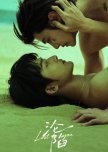
Chinese BLs have quietly become one of my favorite corners of the genre, and Lost to You is a good example of why. There's almost always something heavy underneath the surface. Sometimes that's the last thing I need. But when I actually want to feel something, this is exactly where I go.Visually, the series looks like it was filmed in a different decade entirely. Low budget, slightly faded, somewhere between a school drama and an old TV melodrama. Whether that's intentional or not, it ends up being part of its charm.
The premise is dramatic from the start: a teenager with terminal brain cancer returns to the village where he was once happy, meets the local "jinx," and what starts as a hostile first encounter becomes one of the more believable enemies-to-lovers arcs I've seen in a while. The feelings develop slowly and naturally on both sides, and it shows.
The second couple is more complicated. I understood the chemistry, but a former school doctor and a student is a dynamic I can never quite get comfortable with — and the series doesn't really try to address it. What I did appreciate was the older brother's backstory: beaten deaf by his own father after being outed, then losing his partner in an accident. The emotional shutdown makes complete sense. My issue is that even with someone new, he barely lets the wall crack. At some point, a little warmth would've gone a long way.
Then comes the father reveal. He was secretly gay all along, and the years of abuse were apparently internalized homophobia. I didn't buy it. Not every abusive parent needs an explanation. Some people are just cruel, and forcing a redemption arc onto that felt like the writers trying to tidy up something that didn't need to be tidy. Also — this man spent decades hiding his sexuality while keeping a framed photo of himself and his ex casually displayed in the house. Bold move.
The ending is... certainly something. Two boys standing on a cliff watching fragments of a comet fall from the sky, somehow choosing to stay there together.
My interpretation is that when Xu Yuan writes the infinity symbol and follows the monk's instructions, the comet becomes the beginning of an endless loop. That's why we see them together again afterwards, riding their scooter as if everything is starting over. Instead of a conventional happy ending, it felt more like two souls destined to keep finding each other.
Lost to You is full of clichés, plot holes and more than a few questionable writing decisions. Yet despite all of that, it still managed to touch me. Maybe because beneath all the melodrama is a sincere story about loneliness, grief, first love and trying to find happiness when you already know your time is running out. Sometimes that's enough.
Was this review helpful to you?
Blink and You'll Miss It
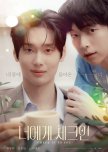
Check in to You is one of those series that left me feeling more frustrated than disappointed.Not because it's bad.
The premise immediately reminded me of stories like Freaky Friday or It's a Boy Girl Thing: two complete opposites forced to live each other's lives after an unexpected body swap. One is cold, distant and perfectionistic, the other warm, romantic and endlessly patient. It's a familiar setup.
I devoured the first five episodes in one sitting.
What I didn't realise was that episode six would also be the last.
That was a frustrating discovery.
The series only runs for six episodes of roughly ten to fifteen minutes each, and while that makes it easy to binge, it also means the story barely has time to breathe. The body-swapping premise is cute, the actors do a good job, and there are moments where you can see the potential for something genuinely charming. But just as I started becoming invested, the series was already over.
That's ultimately my biggest issue with Check in to You. I don't think the concept is the problem, and I don't think the performances are the problem either. I simply don't think there was enough time.
The relationship develops, conflicts appear, emotions are explored, and before any of it can leave a lasting impression, the credits roll. Instead of feeling satisfied, I was left wishing the series had been given room to become more than a sketch of a good idea.
Maybe that's a personal preference. I've realised that this ultra-short format often just isn't for me. Some of these productions have genuinely creative concepts and surprisingly strong performances, but more often than not I walk away feeling like I've watched the outline of a story rather than the story itself.
And yet, I don't want to complain too much. I'm still glad these kinds of projects exist. I'd rather have creators experimenting with smaller productions and unusual ideas than not have these stories told at all.
Was this review helpful to you?

Quiet tension that almost sticks the landing
Short but not without substance — that's how I'd describe this one. The premise drew me in: two roommates, one hiding his identity, one who sees through it immediately and uses that knowledge to start a silent power struggle that gradually becomes something else entirely. There's a restraint to the early episodes that I genuinely appreciated, and the pair work well together. The intimate scenes deliver too.What tripped it up for me personally was the shift towards the end. Ha Jin's sudden departure and the very public confession felt out of place in a story that had been living in quiet, understated moments up until that point. It's not that the conflict itself is wrong, it just landed with a different energy than everything that came before it — and that disconnect left me with mixed feelings overall.
I liked the pair, the setup, and a lot of what came in between. I'm just not sure I'd go back for it. A series that gets more right than wrong, but doesn't quite pull everything together in the end.
Was this review helpful to you?
This review may contain spoilers
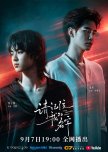
A Missing Piece in an Otherwise Compelling Story
I went into The Missing Piece expecting something darker and more toxic, along the lines of Double Helix.So I was honestly relieved when it turned out to be something quite different.
A story about buried memories, trauma, miscommunication and two people who can’t quite find their way to each other, even when everything suggests they should.
The Chinese title, Please Remember My Name, takes on a quietly bittersweet meaning when Shen Mo cannot even remember Ji Ming Xuan’s name, repeatedly mistaking him for his ex. It feels less like a general theme and more like a plea at the heart of their relationship.
Rao Zi Hao is the reason I stayed invested. He brings a real vulnerability to Shen Mo, and I liked that the series doesn’t let his trauma conveniently disappear, his PTSD stays with him, and watching him decide to pursue painting with his other hand felt like genuine forward motion rather than a neat resolution.
The chemistry between the two leads works overall, but I found Ji Ming Xuan harder to connect with. I understood his hurt and his fear of losing someone again, I just didn’t find the series quite as forgiving of how he directs that pain at Shen Mo as it seemed to want me to be. Being hurt doesn’t make it okay to punish someone for something they have no memory of.
One thing that didn’t work for me was the intimacy. Some scenes clearly wanted to be intense, but they didn’t quite know how to get there, the result felt to me more awkward than charged. A better camera work or more confident framing could have made a real difference, especially for a series that clearly wasn’t shy about wanting those scenes to land.
The plot also piles on complications until they start working against each other. Individually, many of the twists might have landed. Together, they occasionally tipped into feeling contrived.
Still, the premise, the gradual reveals and Rao Zi Hao kept me watching. A flawed but genuinely enjoyable watch.
Was this review helpful to you?
The Complicated Search for Belonging
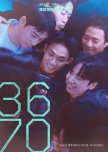
I had the opportunity to see 3670 at a film festival, and I'm glad I did.Park Joon-ho's debut feature brings together two communities that rarely share the screen: North Korean defectors and Seoul's queer community. What makes this combination so powerful is that the film never treats either identity as the only story that matters. Cheol-jun is navigating two worlds, each with its own expectations, unspoken rules and ideas of belonging, without feeling entirely at home in either.
What I found particularly compelling was the way the film explores how deeply we are shaped by the environments we grow up in. Our experiences influence how we understand other people, how we express ourselves and what we feel comfortable leaving unsaid. Moving to a new country and finding a new community doesn't simply erase those formative experiences. Cheol-jun may be building a new life in South Korea, but he cannot leave everything that shaped him behind. And when people with very different backgrounds meet, even when they want similar things, they don't necessarily know how to reach each other.
The title itself captures something of this search. 3670 refers to a code used to arrange gatherings within Seoul's gay community. It isn't a name or a place in itself, but a way in an opportunity to find people and perhaps a place to belong.
Cho You-hyun carries the film with an incredibly expressive performance. Cheol-jun isn't particularly talkative, so much of his emotional world has to come through his face and his silences. I think one of the clearest signs of a good actor is the ability to communicate complex emotions without having to spell them out, and Cho is extraordinary at this.
What stayed with me most, though, was the film's understanding of communication. People can want the same things and still hurt each other because they've learned to express their feelings in different ways — or to keep them to themselves. Even a conversation meant to clear things up doesn't guarantee that the whole truth will come to the surface. Sometimes things remain unsaid not because someone wants to cause harm, but because being honest can make an already difficult situation even more complicated.
Finding community doesn't automatically mean finding safety or understanding. Every social environment has its own dynamics, expectations and limitations, and learning to navigate them takes time. 3670 recognises this without becoming cynical about human connection.
For a low-budget debut, this film has a remarkable amount to say about how we are shaped by our past, how difficult it can be to truly understand one another, and what it means to want to find a place where we belong.
Was this review helpful to you?


