

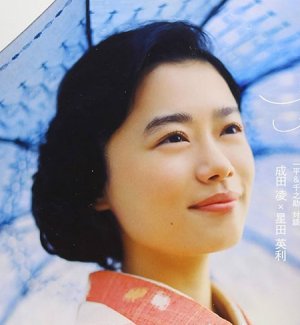



Charming and sweet romance
Liza Soberano and Enrique Gil are a charming pair. The pair perform better here than their slightly problematic "Just the Way You Are" though they're still relatively green here. However, they easily coast through the movie on their undeniable chemistry. It's no surprise that these two are a couple in real life. Gerald Anderson has a stand-out performance, despite being in a coma for the majority of the movie.The story and characterization feel weak at times in the movie. We're told a lot of details about the characters but not shown. Enrique's character in particular is not fully fleshed out. I think the film shined in its portrayal of Audrey's (Soberano) and Tristan's (Anderson) relationship. Some of their scenes towards the latter half were definite stand-outs.
Overall, this film was not my favorite from the Liza-Enrique pair. However, it's still worth a watch for fans as are all of their films. Their performances in "My Ex and Whys" were quite good, though the story was a bit iffy for me. "Alone Together" is their best film to date and would recommend it to anyone.
Was this review helpful to you?

Short and enjoyable
I enjoyed this so much. It was light and fluffy, making me smile the whole time. I picked up this series since I'm becoming more interested in GMMTV and its actors (I really liked Jan. I'll probably look for more of her). Since it's a web series, "Youniverse" I felt had a very different look from the ones they broadcast on TV. It felt more raw and the actors seemed as if they were really just regular high school students. As for the story, it was really simple but enjoyable. I liked watching the two couples form. The ending had a bit of twist, but I'm still hopeful.Anyway, this is a short review since I just wanted to put a few thoughts on it out there. I would recommend this series to anyway who has forty minutes to spare. Trust me, you'll enjoy it!
Was this review helpful to you?

An interesting rom-com
First, I want to say that I liked this movie even though the student-teacher relationship kind of bothered me at first. Thankfully, they are not student and teacher for that much of the movie. The plot is simple, Ginny is an architecture student in love with her professor, Marco. They end up splitting up after three years together and Ginny moves to Barcelona. Four years later, Ginny receives an email from Marco that he originally sent after they broke up. Cue the tears T_T Ginny moves back to the Philippines and ends up working with Marco on converting a house into a restaurant. However, Marco now has a girlfriend, Patty.My favorite part of the film was that their whole past was not revealed at the beginning. Instead, more is revealed as Ginny and Marco remembered certain things. Also, the flashbacks are shown from both of their POVs so it's completely fair. These parts ended up being my favorite. The film kind of became problematic for me towards the end, but I'm trying to keep this spoiler-free. I ended up giving this a 7.5 since I liked *most* of it. However, by the end I was unsure how I really wanted it to end. Did I want Marco to end up with Ginny or Patty. Still not sure...
Anyway, I recommend this to anyone who likes rom-coms with interesting twists. Also, this movie reminded me of the American movies, "My Best Friend's Wedding" and "Little Black Book," both of which I also liked.
Was this review helpful to you?
Now on to the story! The movie covers the first seven volumes (Fun fact: only nine volumes of the series had been released at the time). Unfortunately, this also means it covers some of my least favorite parts of the manga, the Shizuka Arc and Rui Tries to Steal Domyoji's Girl Arc. I can forgive it though since they only had so much material to work with. My biggest complaint about the story is the rearranging of events (maybe only manga fans will notice), it makes some things not make any sense. And Tsukasa nearly assaults Tsukushi and it's all hunky dory, let's go to the beach time now?! (Atleast in the manga she is noticeably scared to be alone with Tsukasa for some time) That part really should have been left out, instead of Tsukushi and Tsukasa's first 'date'.
I'm not going to comment much on the acting. They were all newcomers at the time with many making their film debut in it. Honestly, the over-the-top acting kind of suits the manga vibes. On another note, the actors playing Akira and Sojiro aren't given hardly any lines! So sad. If you're interested check out the late Koichi Hashizume in Picnic (1996), he really shows off his acting chops in it. And did anyone else notice Shizuka's accent?
Lastly, my personal feelings on this movie. I waited a long time to watch it. It wasn't available online for years. Now it's conveniently located on YouTube. Since then, I've seen it atleast three or four times. I just never get tired of the wacky story and acting or the soundtrack, "Baby's Growing Up," or laughing at Tsukasa's missing shirt. Not the best version of Hana Yori Dango by far, but still entertaining. I recommend to veteran fans of the manga or the other adaptations.
Was this review helpful to you?
The strongest story in the film I felt was "Self Immolator". It had moving characters and was the most informative, discussing several points in Hong Kong's recent history. "Extras" and "Dialect" were also food-for-thought, both dealing with political themes. "Season of the End" was probably the weakest as I'm still not quite sure what it was about. The final story "Local Egg" was a good closer, giving the viewers hope for the future.
According to Wikipedia, any reports of Ten Years was censored by China and the Hong Kong Film Awards was barred because the film was nominated for Best Picture (and won). Ten Years was also a surprising box office success, which I think tells you a lot about Hongkongers feel right now.
Was this review helpful to you?

This version probably has the most care put into it. Angie Chai, who also produced the original 'Meteor Garden', was very careful about adapting it to a millennial audience while staying true to the manga. It shows. 'Meteor Garden' (2018) by far covers the manga's plot better than all of the others. This is both a good and bad thing. It allows the character's to fully develop, but feels kinda draggy towards the end (the manga has the same effect). It is 49 episodes long after all.
I loved the chemistry between the leads, Dylan Wang and Shen Yue. All of the supporting characters were enjoyable, though some were better than others (>_< ugh Caina). Like the other adaptations before it, this version has its good points and bad points. It's inevitable that 'Meteor Garden' (2018) will be ruthlessly compared to the other versions. I suggest to all fans to check it out since you'll probably like it if you give it a shot.
Was this review helpful to you?

Overall, the film follows the book very well. It even covers the second half of the book, which I've noticed many "Wuthering Heights" adaptations skip. However, I thought it was just a little too long and it was startlingly dark at times.
Was this review helpful to you?

Run-of-the-mill horror flick
I enjoyed this movie primarily for Kathniel (Kathryn Bernardo and Daniel Padilla). As a couple, they are to die for and I will watch any movie with them in it. I believe fans of these two will also enjoy this movie. Otherwise, it is just a typical ghost kills everyone one-by-one movie that every has seen at least once.The one thing that was interesting about it was learning Filipino superstitions regarding wakes, such as not going home directly after a wake. I've never been to one so I don't if there are any such traditions in the US. The story became slightly more interesting after learning the ghost's motivations wasn't just because said teenagers violated a bunch of superstitions.
Was it scary? Eh, no. Lol but I don't believe in ghosts or spirits so these kind of movies rarely scare me. To conclude, horror fans will find this movie basic or forgettable but Kathniel fans like me will be happy to see their favorite pair in something different from their usual rom-coms.
Was this review helpful to you?

This review may contain spoilers
"Why were you born? How will you live your life?"
"Anpan" is my 38th asadora watched. I want to extend my sincere thanks to Irozukusubs for subbing this asadora. "Anpan" was a fun watch. The first two thirds of it is really solid, but I think it loses its charm/momentum in the third act. Let me explain... P.S. some major spoilers follow!"Anpan" is inspired by the lives of "Anpanman" creator Yanase Takashi (played by Kitamura Takumi) and his wife Komatsu Nobu (Imada Mio). For this retelling, their last names are changed to Yanai and Asada in order for NHK to take liberties with the story. The one major example being that Takashi and Nobu are portrayed as childhood friends, when they actually met as adults in real life. It's a mix of fact and fiction.
The first two thirds of the drama focus more on Nobu and her development as a character. She's very engaging and interesting. Starting off the series as a tomboy and then becoming a hardcore militarist during the War. Asadoras rarely show heroines being on the "wrong side" of history, so I liked this element even if Nobu was somewhat frustrating during this part. Takashi, if we're being honest, isn't given that much character development. He starts as a pure-hearted softie and ends that way. However, for that reason, it's hard to watch him going through his adolescent struggles and then the War.
It's strange to call World War II the highlight of this asadora, when it's usually the part I get tired of the most in asadoras. It's when Nobu is at her most interesting and tragic watching her come to terms her complicity as a grade school teacher. Takashi also really shines in this part with several episodes being dedicated solely to him as he goes through army training and then he's shipped off to China. Those episodes showing him starving on the battlefield are incredibly poignant and heartbreaking.
Following the War, Nobu and Takashi are reunited at a newspaper office. She then departs for Tokyo to work with a politician as shes searching for a "justice that can't be overturned." Takashi eventually follows and the pair marry. This is where the asadora falls victim like most "couple asadoras." Less is focused on Nobu's career and she really just becomes his support system as Takashi takes the main stage. This reminded me a bit of "GeGeGe no Nyobo" but it's frustrating since Nobu was such a strong character beforehand. Additionally, because Takashi doesn't actually start "Anpanman" until 1973, it feels like there's a lot of meandering as we watch him struggle to become a manga artist. He also had such a varied career that the focus seems to go everywhere to be honest.
Though the main characters are charming themselves, I had a lot of favorites among the supporting cast. I particularly loved Nanako Matsushima as Tomiko, Takashi's mother who abandons him. She plays the complicated woman so well, making her equally likable and unlikable. A special shout-out to Ninomiya Kazunari for playing Takashi's father for two poignant scenes. Kawai Yuumi is also amazing as Ranko, Nobu's middle sister. She's so good that I hope she gets her own asadora eventually. Hare Nanoka is adorable as the youngest sister Meiko, though the character becomes less interesting in the third act. As there are two many characters to talk about, I mention just a couple more. I also particularly loved Takashi's uncle (Takenouchi Yutaka), the absolute best; Takashi's friend and Army superior Yagi (Tsumabuki Satoshi); and lastly the newspaperman Shoji (TsudaKenjiro). There's lots more.
Rare for an asadora, the heroine is actually married twice which is actually true to life. Nobu marries Wakamatsu Jiro (Nakajima Ayumu) through an arranged marriage. Jiro is quite sweet, and though I wasn't a fan of the age gap, I felt quite sad when he passed away. Surprisingly, I wasn't that annoyed that Nobu and Takashi didn't get together until the last third of the asadora. I felt natural and their cuteness as a couple was worth the wait. I liked the other couples of the asadora, Ranko and Go (Hosoda Kanata), Ranko and Yagi, and Meiko and Kentaro (Takashashi Fumiya).
As a tribute to "Anpanman," it's a tad disappointing that it isn't focused on until the last five weeks or so of the asadora. I suppose it can't be helped, considering the real life circumstances. However, it significantly contributes to the unevenness of the last third of the asadora. At some point, you're just waiting for "Anpanman" to happen and it feels like a long wait. Despite this, "Anpan" is a good asadora with lots to love and enjoy. I waffled a bit between rating it 8.5 or 9, and settled on 9 because the first two thirds are really good. It won't go down as the best asadora, but I'm sure it'll bring many smiles and tears to those who watched it. I'm glad I watched it.
My Asadora Ranking: https://kisskh.at/list/LAlqpp21
Was this review helpful to you?

This review may contain spoilers
Life is the most precious thing
"Churasan" is the 34th asadora that I've finished. I confess that I was bit disappointed in this one, though I would still say that it's good. I just expected more from an asadora that was at one time extremely popular in Japan and also online among asadora fans. Anyway, expect big spoilers in this review!Kuninaka Ryoko plays the heroine, Kohagura Eri. Even though I find Eri frustrating at times, Ryoko really plays her perfectly. There's not a second I wasn't convinced by her performance. My main issue with Eri is her excessive airheadness (or what they call her a "fool"). By the end, we're supposed to believe that she's competent nurse but she somehow thinks a pain in her stomach was a "premonition" of her father's accident? I would've fell to the floor if I hadn't been sitting. On top of that, Eri never really struggles. Don't get me wrong, she has problems but she doesn't struggle. She's just always smiling like an idiot and there's like a million people there for her fall back on when something does happen. It's not that I want the asadora heroines to struggle, but without that it feels like this series has no stakes.
Now on to the romance, which I actually really liked in the latter half but the first half is a different story... Eri and Fumiya (Kohashi Kenji) first meet when his family comes to the island she lives on in Okinawa. Before his brother Kazuya (Endo Yuya) dies, he has the pair promise to marry in the future. Eri holds on this promise tightly, eventually deciding to go to Tokyo. [Btw, it takes entirely too long for her to decide to become a nurse.] They meet again, but Fumiya appears to have forgotten the promise. Eri reveals her feelings after they work at the same hospital for some time. Out of the blue, Fumiya decides later that they should get married after all. In my opinion, this is too much. This asadora is always talking about "destiny" or whatever, so why make us wait so long for something they claim is inevitable? It takes too long while also being rushed at the same time. And don't get me started with Fumiya's ambiguous relationship with fellow doctor Nishinomiya Haruka (Konishi Manami). Were they dating? Were they not? If they were, why wasn't she more angry about this situation?
"Churasan" does have some really solid supporting characters, which is a hallmark of asadoras and makes or breaks it in my opinion. Eri's grandmother Hana (Taira Tomi; also narrator) and mother Katsuko (Tanaka Yoshiko; who was great in "Oshin" too) are both outstanding. Her father Keibun (Sakai Masaaki) and older brother Keisho (Gori) have some great comedic moments, but are also really annoying. Keisho, at least, sorta redeems himself. Her younger brother Keitatsu (Yamada Takayuki) feels like a missed opportunity to me. His journey to becoming a rock star could've been a really good story, but ended up being so surface level. His relationship with Eri's friend Shoko (Yamaguchi Ayumi) is cute though. Then there's all the people who live at the boardinghouse in Tokyo, which are like family to Eri. Of these, I think Mariya (Kanno Miho) is the obvious stand-out. Her personality, comedy, and backstory are perfectly crafted. Yoko-san (Yo Kimiko) is also a solid comedic force.
Speaking of the boardinghouse... What I really disliked is that Eri didn't leave the boardinghouse after marriage or having her son Kazuya (Suzuki Shogo). I think it's really unrealistic that she wouldn't leave in either case, considering that she and Fumiya were just renting one small room... Over time, I also started to get tired of the residents there, especially Shibata (Murata Takehiro). I thought it was weird that this grown man had a crush on eighteen/nineteen-year-old Eri anyway, but then he starts to live vicariously through her son. And THEN the asadora randomly pairs Shibata with Yoko-san, which might've not been so random but I didn't care for it anyway. Finally, in the final episode, Eri and Fumiya move to Okinawa. This is another gripe of mine as I've seen people say it's the best Okinawa asadora [There's only two others, Jun to Ai and Chimudondon, so it isn't really much of a contest...], but I'd say only 40% of it takes place in Okinawa. And those are mostly scenes of Eri's parents and grandmother sitting around at home, which was probably filmed on a sound stage. This is, in actuality, a Tokyo asadora, and I just wanted more Okinawa!
These are my complicated thoughts on "Churasan." I think it's a good asadora, but focuses on comedy too much. It particularly shines in the emotional, heavy moments. Fumiya's mother Shizuko (Maya Kyoko) has some really poignant scenes from start to finish. I also love the storyline with Eri's and Fumiya's son Kazuya and the final callback to Fumiya's brother. I cried, of course. I would've preferred the asadora focus on emotion instead of the overuse of comedy. The comedy really wasn't to my taste either. I laughed at maybe half of the jokes. Anyway, I struggled with my final rating and finally decided on 8.5. It's a good score, but I can't make it any higher because of all my complaints. I will be watching the sequels because I'm too curious, but wish me luck.
My Asadora Ranking: https://kisskh.at/list/LAlqpp21
Was this review helpful to you?

This review may contain spoilers
"One step at a time"
"Teppan" is the 33rd asadora that I've completed. It's another "modern" asadora, which means that it takes place around the time that it aired. [I guess contemporary is a better term, maybe?] I've watched a lot of modern asadoras lately and this is definitely one of the best ones so far. However, as with all modern asadoras, I have some complaints though they're are mostly nit-picks.First, the premise of "Teppan" is the heroine Akari (played by Takimoto Miori) learning that she is adopted after meeting her biological grandmother Hatsune (Fuji Sumiko). The two are initially at odds, but eventually connect as grandmother and granddaughter over the course of the drama. Their relationship ended up being my favorite part of the asadora. Hatsune reminded me of my own grandmother. I ended up crying so much during the last episode after learning that they have the same age difference as me and my grandmother. I was kinda generous with my overall rating because of Akari's and Hatsune's relationship. I miss my grandma so much T_T
At the beginning of the asadora, I didn't like the attitude towards adoption but I think it has more to do with cultural differences with thoughts and speech. For example, I didn't like how people kept saying things like Akari wasn't a daughter of the Murakami (her adoptive parents) family. I think saying things like this contributed to her major identity crisis that followed... Thankfully, the drama gets away from language like that for the most part. The other aspects of adoption felt really well acted and portrayed, such as Akari feeling that she should be "grateful" to her parents for choosing her and learning more about her biological parents. The way Akari processed every bit of new information also felt very true to her as a character. Someone who wants everyone to get along and is scared of hurting others or having things change drastically.
As for the side characters, Hatsune is obviously the most important. She's a very stubborn woman whom doesn't like to show her emotions, but gradually opens up to Akari. Hatsune is hands down the best character in the whole asadora and I couldn't praise her enough. I also really love Akari's adoptive family. They are all very supportive of her and wanted to protect her, though I don't always agree with their actions. Her father Jou (Endo Kenichi) and brother Teppei (Morita Naoyuki) have the tendency to overstep. [I was so annoyed when they almost destroyed Akari's birth mother's letter!!] Thankfully, they're balance out by Akari's mother Machiko (Yasuda Narumi) and older brother Kinya (Endo Kaname), whom are more level-headed. They each have their own emotions about Akari's adoption and it's interesting to see them process it as well.
The are many more characters that occupy the world of "Teppan." Despite being set in a big city like Osaka, the asadora does a good job at making it feel like a community through the characters. One of the notable characters is Nozomi (Kyono Kotomi), whose pregnancy becomes central to the storyline in the latter half. She comes off annoying at first, but her contrary personality grows on you. I thought it was funny that two men propose to her in her ninth month of pregnancy. [What about dating first? lol] I won't say who she picks, but the ending was a little too 'happily ever after.' However, I did cry so I guess I'm also very contrary. Then there's the other residents of the boardinghouse that Hatsune runs. I really loved them all and I was so sad when they decided to leave. But, sometimes people have to leave in order to grow.
My biggest complaint about "Teppan" is the romance aspect. I felt that it was kinda rushed in towards the latter half of the asadora. Yes, Takizawa (Osada Seiya) feels like Akari's love interest from the episode he's introduced, but the drama doesn't show much between them until later on. Their relationship could've been better developed/defined. I was majorly disappointed at their ending. How come asadoras rarely show a compromise? They could've had a long-distance relationship or say let's meet again in five years. Something please. I also thought it was kinda creepy that Akari's former boss Hamano (Cho Tamiyasu) fell in love with her, especially after learning he's thirty-one... His love for a nineteen-year-old girl is supposedly pure so we should feel sorry for him. Ew, no. [I'm also so tired of immature men in asadoras, ugh.] At least, Hamano wasn't Akari's love interest and absolutely never stood a chance.
Though "Teppan" doesn't deliver in the romance department, I won't judge it harshly for that. That's not usually what I watch asadoras for anyway. What I loved about this asadora was the family and community aspects and it fully delivered there.
My Asadora Ranking: https://kisskh.at/list/LAlqpp21
Was this review helpful to you?

This review may contain spoilers
"There's always a wind blowing through this town.."
"Kaze no Haruka" marks the 32nd asadora that I've watched. I picked it for no particular reason, just that there are few asadoras with subtitles for me to watch as this journey reaches its end. "Kaze no Haruka" is a more of a "modern" asadora as most of the story takes place in the early 2000s, leading up to the year it aired. For the most part, this asadora attempts to tackle taboo subjects in a sensitive manner. However, it does not always stick the landing with the execution. On top of that, it fumbles the romance element...The asadora follows Haruka (played by Murasaki Maya→Murakawa Eri). When she was a child, her father Yosuke (Watanabe Ikkei) decides to follow his dreams and open a restaurant. He settles in her mother's, Yuko (Maya Miki), hometown of Yufuin. Yuko, however, wants to stay in Osaka to pursue a career, which leads to their divorce. Haruka and younger sister Asuka (Kurokawa Mei) decide to stay with their father. The family struggles for several years and then there's a time-skip. Asuka wants to go to college in Tokyo after winning a contest with her first book. Haruka is reluctant to ask their mother for help, but eventually does. There's a compromise and Haruka comes to Osaka to live with her mother. She begins working for a travel agency to send Asuka money and comes to love the tourism field. That's the basic plot of the beginning. I'll elaborate on some more of the plot later on. For me, this was a very good beginning full of emotion and potential.
Unfortunately, I hate judging an asadora based on the romance plots. There are several asadoras with okay romances but a great overall plot. Sadly, once Haruka is settled in her job, this asadora becomes all focused on the romance so I kinda have to judge it on that. Now I have to address the character I hated the most in this asadora, Haruka's childhood friend Masami (Kikawada Masaya). He's basically a spoiled child in an adult's body who runs from his responsibilities at every opportunity. Masami's also the heir of an traditional inn, which most of his insecurity stems from him. Despite his immaturity, Haruka develops a crush on him early on in the asadora. Maybe, because she's also immature. However, he doesn't feel the same and they part ways for a bit. Watching this is kind of painful for the viewer. Haruka even tries to help him win the heart of his crush Aya (MEGUMI), whom later becomes a good friend of Haruka's. I thought it was done once he rejects her but no...
Haruka never seems to get over Masami, though she dates some other losers. Around the middle of the asadora, Haruka decides to return to Yufuin to put her tourism skills to good use there. Masami had already returned earlier and was trying the whole "fake it til you make it" thing at his family's inn. Now that Haruka is more beautiful and sophisticated, Masami becomes interested in her.... They start dating, despite her initial misgivings, and eventually become engaged. [Imagine me being tortured the whole time I'm watching this btw.] Of course, Masami runs away AGAIN. This is very painful for Haruka. The actress did do a good job portraying these emotions at least. After some time, he returns but Haruka can never trust him again. Later on, he develops feelings for another childhood friend Nanae (Mizukawa Asami) and they start dating. How two girls could fall for this man is news to me. I truly hate this character, but I will say that the writer tries to give him an arc and doesn't just excuse his spoiled, jerky behavior. That doesn't mean I can like him remotely though...
Haruka's real love interest is Sarumaru Keitaro (Matsuoka Mitsuru). He's a little ridiculous, but he quickly grows on you. Unlike Masami, he truly cares for Haruka and wants to see her grow as a person. I don't understand why she couldn't fall for him earlier. It's definitely unfortunate that the asadora waits until the last two weeks of episodes to establish their relationship beyond friendship. However, the moments of them together are worth watching. I love their first kiss and their confessions to each other. And the last episode was great. But why? Why couldn't we have gotten this earlier? I can only think the writer was really trying to drive into the ground that you can have more than one love in life. [Haruka makes a nasty comment to her mother about this early on.] But, why as viewers did we have to be tortured?
On to the "taboo subjects." First, there's divorce. I'm not a complete fan on how the asadora portrays divorce. If they wanted to normalize it, they should've portrayed it as mostly positive. But, if you blink, you could swear divorce was the worse thing to happen to these people or any people for that matter. However, any logical person though can tell that the family would've been miserable had they went on as they were. The other taboo subject is premarital pregnancy. This was handled horribly! Asuka is like twenty-three and everyone is like "How could this have happened?!?" Hmmm... I can think of few ways. Of course, this also leads to her marrying a man at least fifteen to twenty years older than her. [Thanks I hate it.] I wish Asuka had instead raised the child on her own as a single mother. The only good thing about this plot is that she's not forced to quit her job as a successful writer.
I'll talk briefly about the other characters before closing out this review. It's getting a little long. I didn't really like Haruka's parents Yosuke and Yuko at first. He's a little too pathetic and she's a little too career oriented. The drama, thankfully, puts a lot of character development into these two and I ended up really liking them. It's also always nice when an asadora portrays the parents as not perfect but full of flaws along with good traits. Both of their endings are great, though it's dragged out too much in my opinion. I also really liked the townspeople of Yufuin. By the end, I felt warm feelings towards everyone and I understood why Haruka wanted to return to that hick town [lol].
In conclusion, "Kaze no Haruka" is a far from perfect asadora but I really enjoyed the parts that were good. Haruka's first romance with Masami really brings down this asadora. I felt miserable watching these parts. Besides from that, the asadora feels very unfocused when it comes to Haruka's career. She kind of just falls into it, and later on it's just ignored completely. By the end, you're just waiting for everyone's arcs to conclude.
My Asadora Ranking: https://kisskh.at/list/LAlqpp21
Was this review helpful to you?
This review may contain spoilers
"Courage. Love. Trust. Hope."
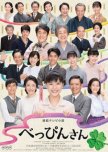
"Beppin-san" is my 25th asadora [Have I really watched that many of these lol]. This is a very solid asadora, though I have some issues with the plot which I will get into later on. "Beppin-san" reminds me of two other asadoras, "Ohisama" and "Carnation." Coincidentally, Nagayama Kento and Kora Kengo both appeared in "Ohisama" but in opposite roles. The lovely Charlotte Kate Fox from "Massan" also has a small role in "Beppin-san."First, let's address the heroine, aka Bando Sumire (played by Yoshine Kyoko). She's a very understated heroine, being quiet and absent-minded. Surprisingly, the attention isn't always on her though this is still very much her story. It's interesting to me because it shows that a "normal" person is the main character of their own story. Sumire, however, can be assertive when she needs to be and becomes self-confident over time. Another interesting part of her character is that she had a relatively sheltered childhood, which makes her a bit of a naive "ojou-sama." I really enjoyed watching her grow as a character.
"Beppin-san" has some wonderful side characters, particularly Sumire's lifelong friends: Akemi (Tanimura Mitsuki), Ryoko (Momota Kanako), and Kimie (Tsuchimura Kaho). Each girl goes through their own character development and I really love the friendship between these girls and Sumire. My next favorite character is Norio-san (Nagayama Kento), Sumire's husband. Their relationship is really sweet, but also shows that marriage isn't all smooth-sailing. You have to make an effort to understand each other. And then the next best character is Eisuke-san (Matsushita Yuya). His arc is surprisingly poignant and made me cry on more than one occasion. Honorable mentions go to Sumire's father (Namase Katsuhisa) and mother (Kanno Miho, also narrator); her older sister Yuri (Renbutsu Misako), her daughter Sakura (Igashira Manami); and Kimie's son Kentaro (Furukawa Yuki). And really there's so many more~
Now on to my issues with the plot. The first three weeks of "Beppin-san" kind of rush through Sumire's childhood, marriage, and then giving birth. It's a bit of a whiplash moment, though I realize it's because they wanted to get to and then through WWII relatively quickly. I liked the pacing of the drama much better after the war. Halfway through, there's a time-skip to focus on Sakura's teenage years. Honestly, I really hated this part of the plot. Mostly because it dragsss on for four weeks worth of episodes. I actually understand Sakura's feelings, having a workaholic mother myself. However, at some point it just becomes too much and it felt like a chore to watch. Thankfully, Sakura becomes a much better character afterwards. She's assertive without being bratty. In the grand scheme of the asadora, I think these are minor complaints and overall it's very good.
I really liked "Beppin-san", despite said minor complaints. It has a really cohesive theme of friendship and parenthood. I love the whole four leaf clover meaning "Courage. Love. Trust. Hope." Sumire and her friends each represent these traits and I think that's why their children's clothing company works so well. On the technical side, it was interesting seeing every step of the company's growth. It's also ironic that Sumire and her friends aren't ambitious and really just go with the flow. If you liked the asadoras "Ohisama," "Carnation," "Gochisosan," or "Toto Nee-chan," I think you'll really like "Beppin-san."
My Asadora Ranking: https://kisskh.at/list/LAlqpp21
Was this review helpful to you?
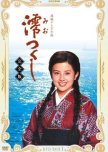
This review may contain spoilers
"Love is a dangerous visitor."
"Mio Tsukushi" is my 21st asadora that I've completed. I started watching it right after the English subtitles were completed over at d-addicts. I really appreciate fansubbers who decide to pick up older asadoras like this one. "Mio Tsukushi" was originally released in 1985 and had very high ratings at the time (next to the very popular "Oshin"). 80s asadoras are similar to modern ones in many ways, though I've noticed that they tend to rely on suspense more often. For example, nearly every episode and especially the last episodes of each week end on a cliff hanger. For this reason, I found myself saying "Just one more episode..." time after time (lol). P. S. Major spoilers follow so stop reading here if you don't want to know anything else!The main theme of "Mio Tsukushi" is love and how it effects not just the lovers but those around them. Sawaguchi Yasuko plays the heroine, Kaoru, in her lead debut. Considering she was a relatively new talent at the time, I was very impressed with her performance. Kaoru is the daughter of a soy shop owner and his mistress. She falls in love with fisherman Yoshitake Sokichi (played by Kawano Taro) at the very beginning of the drama. Unfortunately, fisherman and soy shop workers are like water and oil. Furthermore, her father has finally accepted Kaoru into the family register and will not approve of Sokichi. Kaoru tries to forget about Sokichi at first, but their feelings only grow stronger. This section of the drama is my favorite as we watch their relationship develop and the general conflict that arises from those around them. It has a satisfying conclusion as well with Kaoru, despite being disowned, triumphantly marrying Sokichi as the asadora's insert song plays.
The actual part of Kaoru and Sokichi's marriage is less entertaining in my opinion. The question of whether they were going to get married was better than the reality I guess (lol). Now don't get me wrong, there are still some cute moments between the couple. I especially liked their trip to Itako, which gets referenced several times later on. Their romance is cut short when Sokichi goes missing during a storm. After about two years, Kaoru's parents encourage her to remarry. Her new match is Umeki Kensaku (Shibata Kyohei), the head clerk of her father's shop. I really liked Umeki's earnest love and I think it's easy to see why Kaoru would choose to marry him. His jealousy when Sokichi returns alive is also completely understandable though somewhat grating. Ultimately, I think both men were good matches for Kaoru though first loves are obviously harder to get over.
Kaoru is, of course, the main character but this asadora sometimes feels more like an ensemble. Many characters are given story arcs away from Kaoru. Of these characters my favorite was hands down Ritsuko (Sakurada Junko), Kaoru's half-sister. Her personality is slowly uncovered and developed over the course of the drama. The ending of her character is pretty sad, but I think fits the tone of the final week. Other great characters are Kaoru's parents, Rui (Kaga Mariko) and Kyubei (Tsugawa Masahiko), her brother Eiichiro (Washu Isao), and mother-in-law Tone (Kusabue Mitsuko). The maid, Ami (Takashi Miyuki), also has a nice, heartbreaking arc. I was really surprised that the writer took the time to complete Ami's arc. The only character I really didn't like was Yataro (Akashiya Sanma). He was supposed to be comic relief, but I really only wanted to slap him.
I'm not knocking off any points for the music. It has a simple melody for the opening, which can get repetitive after hearing 162 times (I'm lazy or I would've just skipped it lol). It also has an insert song that is played a few times of the course of the asadora. I really liked this one, and I think the tune and lyrics really fit Kaoru as a character.
"Mio Tsukushi" is another asadora I'd recommend. It has strong characters and strong love stories. The final two weeks are hard to get through, but that's expected since it's covering WWII. I liked the open-ended ending to be honest, though I acknowledge that it's not for everyone. It leaves it up to me to imagine what ultimately happens between Kaoru and Sokichi, and I think that's fun.
My Asadora Ranking: https://kisskh.at/list/LAlqpp21
Was this review helpful to you?

This review may contain spoilers
"Let's send a cheering yell!"
"Yell" is my 20th asadora and it's the third I've completed from this decade. It was also a great way to kick off 2020 and they made a great drama, despite all of the COVID-19 issues."Yell" is what I like to call a "couple asadora." I've seen a few of these couple-focused ones and the problem is normally that they become uneven at some point. For example in "Manpuku," the attention shifts to the husband and the wife becomes less important. In "Yell," the attention feels more equal. Yuichi (played by Kubota Masataka) and Oto (Nikaido Fumi) each have their own childhood weeks and both have dreams. I think Yuichi is obviously the "main" main character, but Oto never vanishes into the background. She remains important to the narrative from start to finish.
I previously watched Kubota Masataka in "Hanako to Anne" and I was delighted to see that he had his own asadora. He plays the composer Yuichi with a lot a nuance. Kubota and Nikaido Fumi have really good chemistry together, which accounts for nearly all of the charm of this asadora. Nikaido, who plays the aspiring singer Oto, also has a really great singing voice. I loved every moment that she was singing. I wish the narrative had let Oto realize her dreams, but I feel that the character has a very fulfilling life nevertheless.
Like most asadoras, "Yell" has a lot of great side characters. However, unlike some, "Yell" gives a lot of these characters arcs and storylines [for the most part] satisfying conclusions. I'll name a few that were stand-outs to me. There's Yuichi's childhood friends, Sato Hisashi (Yamazaki Ikusaburo) and Murano Tetsuo (Nakamura Aoi), an aspiring singer and lyricist. Both are given strong characterization and great storylines, which brought me to tears. Yuichi's and Oto's daughter, Hana (Furukawa Kotone), also sticks out to me. She has a likeable, realistic personality, which makes her one of the few children of asadora characters not to annoy me (lol). Oto's and Yoichi's family have quite a bit of storyline as well with their own fun romances. And there's a lot of reoccurring characters that populate the asadora, which are delightful whenever they're on your screen.
Okay, now on to the very few issues I had while watching. The twelfth week of "Yell" was a very obvious filler week as it consisted only of side stories of characters that we really didn't need to see. [I wonder if this week was made because of COVID?] I disliked seeing Oto's father as a ghost. For an asadora that had so much realism, it was just a weird juxtaposition. Also, after Yoichi is finally successful as a composer, his storyline becomes a bit on the boring side. Thankfully, it does pick up around the WWII weeks. Lastly, I'm tired of asadora heroines giving up their careers because they're pregnant. It's probably true to life [and let's face it, realistic], but it becomes annoying after so many times (lol).
Finally, I want to conclude this review on a positive note. "Yell" is very different from other asadoras. It has a unique opening and ending. The finale is absolutely perfect, honestly. The "last" last episode is technically a special concert episode, which was a really fun way to go out (though not necessary to watch). The last moment of the asadora narrative is such a sweet way to conclude and will remain in my memories for a long time to come. The music is impeccable and the talent of the entire cast is obvious. I definitely recommend "Yell", despite the few narrative flubs.
My Asadora Ranking: https://kisskh.at/list/LAlqpp21
Was this review helpful to you?


