
 Celebrity




This review may contain spoilers
"Courage. Love. Trust. Hope."
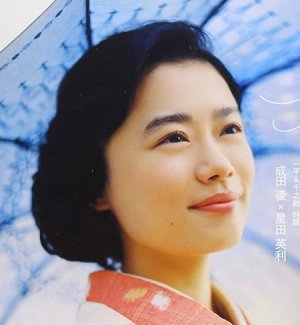
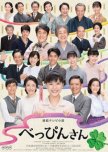
"Beppin-san" is my 25th asadora [Have I really watched that many of these lol]. This is a very solid asadora, though I have some issues with the plot which I will get into later on. "Beppin-san" reminds me of two other asadoras, "Ohisama" and "Carnation." Coincidentally, Nagayama Kento and Kora Kengo both appeared in "Ohisama" but in opposite roles. The lovely Charlotte Kate Fox from "Massan" also has a small role in "Beppin-san."First, let's address the heroine, aka Bando Sumire (played by Yoshine Kyoko). She's a very understated heroine, being quiet and absent-minded. Surprisingly, the attention isn't always on her though this is still very much her story. It's interesting to me because it shows that a "normal" person is the main character of their own story. Sumire, however, can be assertive when she needs to be and becomes self-confident over time. Another interesting part of her character is that she had a relatively sheltered childhood, which makes her a bit of a naive "ojou-sama." I really enjoyed watching her grow as a character.
"Beppin-san" has some wonderful side characters, particularly Sumire's lifelong friends: Akemi (Tanimura Mitsuki), Ryoko (Momota Kanako), and Kimie (Tsuchimura Kaho). Each girl goes through their own character development and I really love the friendship between these girls and Sumire. My next favorite character is Norio-san (Nagayama Kento), Sumire's husband. Their relationship is really sweet, but also shows that marriage isn't all smooth-sailing. You have to make an effort to understand each other. And then the next best character is Eisuke-san (Matsushita Yuya). His arc is surprisingly poignant and made me cry on more than one occasion. Honorable mentions go to Sumire's father (Namase Katsuhisa) and mother (Kanno Miho, also narrator); her older sister Yuri (Renbutsu Misako), her daughter Sakura (Igashira Manami); and Kimie's son Kentaro (Furukawa Yuki). And really there's so many more~
Now on to my issues with the plot. The first three weeks of "Beppin-san" kind of rush through Sumire's childhood, marriage, and then giving birth. It's a bit of a whiplash moment, though I realize it's because they wanted to get to and then through WWII relatively quickly. I liked the pacing of the drama much better after the war. Halfway through, there's a time-skip to focus on Sakura's teenage years. Honestly, I really hated this part of the plot. Mostly because it dragsss on for four weeks worth of episodes. I actually understand Sakura's feelings, having a workaholic mother myself. However, at some point it just becomes too much and it felt like a chore to watch. Thankfully, Sakura becomes a much better character afterwards. She's assertive without being bratty. In the grand scheme of the asadora, I think these are minor complaints and overall it's very good.
I really liked "Beppin-san", despite said minor complaints. It has a really cohesive theme of friendship and parenthood. I love the whole four leaf clover meaning "Courage. Love. Trust. Hope." Sumire and her friends each represent these traits and I think that's why their children's clothing company works so well. On the technical side, it was interesting seeing every step of the company's growth. It's also ironic that Sumire and her friends aren't ambitious and really just go with the flow. If you liked the asadoras "Ohisama," "Carnation," "Gochisosan," or "Toto Nee-chan," I think you'll really like "Beppin-san."
My Asadora Ranking: https://kisskh.at/list/LAlqpp21
Was this review helpful to you?
This review may contain spoilers
"Let's send a cheering yell!"
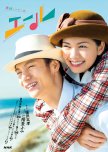
"Yell" is my 20th asadora and it's the third I've completed from this decade. It was also a great way to kick off 2020 and they made a great drama, despite all of the COVID-19 issues."Yell" is what I like to call a "couple asadora." I've seen a few of these couple-focused ones and the problem is normally that they become uneven at some point. For example in "Manpuku," the attention shifts to the husband and the wife becomes less important. In "Yell," the attention feels more equal. Yuichi (played by Kubota Masataka) and Oto (Nikaido Fumi) each have their own childhood weeks and both have dreams. I think Yuichi is obviously the "main" main character, but Oto never vanishes into the background. She remains important to the narrative from start to finish.
I previously watched Kubota Masataka in "Hanako to Anne" and I was delighted to see that he had his own asadora. He plays the composer Yuichi with a lot a nuance. Kubota and Nikaido Fumi have really good chemistry together, which accounts for nearly all of the charm of this asadora. Nikaido, who plays the aspiring singer Oto, also has a really great singing voice. I loved every moment that she was singing. I wish the narrative had let Oto realize her dreams, but I feel that the character has a very fulfilling life nevertheless.
Like most asadoras, "Yell" has a lot of great side characters. However, unlike some, "Yell" gives a lot of these characters arcs and storylines [for the most part] satisfying conclusions. I'll name a few that were stand-outs to me. There's Yuichi's childhood friends, Sato Hisashi (Yamazaki Ikusaburo) and Murano Tetsuo (Nakamura Aoi), an aspiring singer and lyricist. Both are given strong characterization and great storylines, which brought me to tears. Yuichi's and Oto's daughter, Hana (Furukawa Kotone), also sticks out to me. She has a likeable, realistic personality, which makes her one of the few children of asadora characters not to annoy me (lol). Oto's and Yoichi's family have quite a bit of storyline as well with their own fun romances. And there's a lot of reoccurring characters that populate the asadora, which are delightful whenever they're on your screen.
Okay, now on to the very few issues I had while watching. The twelfth week of "Yell" was a very obvious filler week as it consisted only of side stories of characters that we really didn't need to see. [I wonder if this week was made because of COVID?] I disliked seeing Oto's father as a ghost. For an asadora that had so much realism, it was just a weird juxtaposition. Also, after Yoichi is finally successful as a composer, his storyline becomes a bit on the boring side. Thankfully, it does pick up around the WWII weeks. Lastly, I'm tired of asadora heroines giving up their careers because they're pregnant. It's probably true to life [and let's face it, realistic], but it becomes annoying after so many times (lol).
Finally, I want to conclude this review on a positive note. "Yell" is very different from other asadoras. It has a unique opening and ending. The finale is absolutely perfect, honestly. The "last" last episode is technically a special concert episode, which was a really fun way to go out (though not necessary to watch). The last moment of the asadora narrative is such a sweet way to conclude and will remain in my memories for a long time to come. The music is impeccable and the talent of the entire cast is obvious. I definitely recommend "Yell", despite the few narrative flubs.
My Asadora Ranking: https://kisskh.at/list/LAlqpp21
Was this review helpful to you?
This review may contain spoilers
Clothing gives people hope
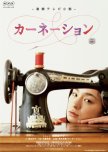
"Carnation" is my 14th asadora. I've wanted to watch it for a while since it kind of gives off the same vibes as my favorite asadora, "Ohisama" (which also aired the same year). I really liked "Carnation" overall, but it hits a stumbling block around week 17 that it never really recovers from. Well, for me, at least. Warning! Major spoilers follow~The heroine, Itoko, is played by Ono Machiko. She really deserves all the praise I've seen her get for this role. Ono was able to play the stubborn, somewhat pigheaded Itoko in such a way that she never becomes insufferable. She stays consistently funny and enjoyable, despite her bad traits. Kuriyama Chiaki playing Otoko's childhood classmate, Natsu, also sticks out in my mind as a stand-out performance. Her relationship with Itoko made me laugh until the very end. I also quite liked Natsuki Mari as an older Itoko. Definitely a great actress. I only wish that they had introduced her a tad sooner as I think the transition from Ono to her was a bit awkward. The rest of the supporting cast I could best describe as comforting. I just loved continuing to see the faces of Itoko's family, friends, and neighbors.
On to the minor things that I didn't like which resulted in me giving "Carnation" a 9.0 instead of a 10. First, her father. I hated him. This has nothing to do with the actor (Kobayashi Kaoru) as I think he acted him really well actually. Even if I sit and think about it, I can relate to the dad's feelings. But... I just find it inexcusable for a man to hit his child so much and just generally act like a tyrant to his family. [He's a father that's not much a provider either by the way...] I was really waiting for him to die, even if he had finally chilled out a bit by then lol. Second, I thought all of Itoko's children were annoying. Tbh this is an ongoing issue with asadoras set around the war. The children that grow up afterwards are almost always intolerable. Yuko is probably the most tolerable, but her fights with Naoko (the most annoying) are so hard to watch. And poor Satoko is just portrayed as an idiot. And the third thing...
Itoko doesn't have a decent love interest. I really liked her husband Masaru (played by Suruga Taro) until he goes off to war and she discovers that he was having an affair! After the war, she gets a new love interest in Suo (Ayano Go) but he has a wife! For me, this is where my interest started to wane. I don't really care that the show wants us to think that their love isn't "dirty." Whatever, he has a wife (who is suffering from the aftereffects of the atomic bomb) and children. They eventually come to their senses and part, but I can't help but think about how painful this affair was for everyone involved. This was around week 17 and I didn't particularly like the weeks that followed since they started to focus on Itoko's daughters. And I said before, I find them annoying.
However, "Carnation" is a pretty solid asadora until week 17. I loved the focus on dressmaking and fashion, and Itoko achieving her dream of owning her own shop. The weeks focusing on the war are also very good and don't focus too much on the tragedy of it all. Following the war, Itoko is able to refocus on her dream and I really liked the 1950s fashions. It was also funny for her to realize that she has a harder time relating to newer fashions now that she's middle aged. Then I also really liked the final four weeks with older Itoko and her storyline with her granddaughter. I was reminded of my own grandmother and definitely cried a lot. It was surprising that they showed Itoko passing away as this is only the second instance of a heroine that I've seen. Even though she died of natural causes, it was still very sad.
Interestingly, I looked it up and the real-life Itoko (her real name was Koshino Ayako) really was a fan of asadora and wanted her life put to screen. It was kind of meta that they actually put this into the plot lol, but I loved it. Especially seeing Natsu watching it at the end. *Cue tears.* That scene makes watching the whole asadora worth watching to the end hands down.
My Asadora Ranking: https://kisskh.at/list/LAlqpp21
Was this review helpful to you?
This review may contain spoilers
"I'm Ume which will blossom even in the cold"
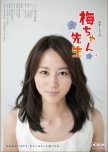
"Umechan Sensei" is my twelfth asadora and what a delight it was. [I've been very lucky with my last three picks; let's hope this continues~.] This asadora is set in Tokyo just after WWII like "Natsuzora," which I had just finished. It follows Umeko (played by Horikita Maki) as the somewhat hapless heroine of the story as she embarks on journey to becoming a doctor. Umeko is just a wonderful heroine. She's kind and warm, and her haplessness allows for some very funny moments. It's fun to watch her gradually develop into a responsible adult and get further in career, though her core character always remains. Her development also mirrors the redevelopment of Tokyo and Japan post-war.Besides Umeko, the other highlight of this asadora is the supporting cast. My personal favorite is Takahashi Katsumi as Umeko's father, Kenzo. He such a grump and a bit scary at first, but you eventually realize that he's just a teddy bear inside. My favorite moment of him is in the very last episode. Then there's Umeko's siblings Takeo (Koide Keisuke) and Matsuko (Mimura Rie), who both have their own arcs in the story. Umeko's mother (Minami Kaho) and grandmother (Baisho Mitsuko) could have had more to do in the story, but I loved them nonetheless. There's a part with Umeko's mother late in the asadora that I especially loved. And, of course, there are Umeko's classmates, colleagues, and neighbors. So many good characters that I can't name them all.
Interestingly, Umeko has two love interests which feels a bit rare for an asadora, especially because I couldn't tell who she was going to pick until it happened. I actually really liked both of them. One of them is fellow doctor Matsuoka Toshio (Takahashi Mitsuomi). He's just a fun character with his analytical way of thinking which often puts him at odds with others. His and Umeko's break-up was sad but I think fits with his character. The "real" love interest is Umeko's neighbor and childhood friend Yasuoka Nobuo (Matsuzaka Tori). He kind of goes under the radar for much of the asadora though he and Umeko have a couple of "moments" early on. Nobu starts to really shine once Matsuoka leaves. There were some really romantic scenes between him and Umeko, such as the proposal scene. Nobu also gets nearly as much character development as Umeko.
"Umechan Sensei" is a great asadora from start to finish. It becomes a little slow near the very end, but the final episode closes out perfectly so I'll forgive it. Some of my few complaints are that Umeko's siblings aren't given much to do once their arcs are finished, Yayoi's and Yamakura's story isn't finished [it appears that it continues in a special episode which I can't find :(], and I wish that the narrator was present more often. These are very minor complaints though. I'd recommend "Umechan Sensei" to anyone as I think this is a very appealing asadora to beginners and veterans alike.
My Asadora Ranking: https://kisskh.at/list/LAlqpp21
Was this review helpful to you?

Impressive adaptation
After hearing that this series was coming out this year, I read the book and then watched the 1980 miniseries before sitting down to watch this. One of favorite things with adaptations of books and ones with multiple adaptations is comparing them. When I do this, I often find that there are things about each that I like and usually there is not one I would deem the "true" adaption. The 1980 and 2024 versions of "Shogun" are a perfect example of this.*The 1980 version I would say is more faithful to the book plot-wise, but the 2024 version I think captures the essence better. Watching the 2024 one, I reminded of why I liked the book so much and what made me keep reading despite it being 900+ pages long.
*One of the biggest differences is that the 2024 version subtitles the Japanese characters, while the 1980 one doesn't. The reasoning was that Anjin-san doesn't understand them so we shouldn't either. I think this was fine to a point, but they should've started subtitling towards the end when Anjin-san understood them. The 2024 version allows more of the Japanese characters to shine because of the subtitles and honestly there's no way they wouldn't have subtitled them anyway in this day and age lol.
*1980 Anjin-san (played by Richard Chamberlain) is stronger than 2024 Anjin-san (Cosmo Jarvis). However, I saw some good potential in the final episode and I have faith in him for season 2. Anna Sawai and Hiroyuki Sanada were just acting rings around him.
*The 1980 version cuts some scenes (possibly for logistics) that I felt should've been kept and 2024 version covered some of the scenes in question while also adding a lot of extra scenes not in the books. Ultimately, I think these scenes will work in favor for season 2 as they helped established lore that could be expanded upon later and show the potential for this series.
*Anjin-san's and Mariko's romance is underdeveloped in the 2024 version. However, as this was my least favorite part of the book and 1980 version, I didn't particularly care that much.
*Also, Tsuji-san didn't seem to play as big a part in the 2024 version. I hope his role is expanded in the next season.
So that was just some of my thoughts, I won't do an in-depth review since there's already plenty on here. Now which was the best? I watched this and the 1980 series with my dad and he preferred the older one. Me, personally, I liked both about equally though I'm slightly inclined to the new version as I liked the visuals better. I'll say that this was the first series I've watched from FX in years and I'm actually looking forward to season 2. I believe that they can pull it off as long as they keep the same standard of quality.
Was this review helpful to you?

This review may contain spoilers
A Fun Ride That Doesn't Stick the Landing
I started watching "Dolce Amore" right after finishing Enrique Gil's and Liza Soberano's previous project "Forevermore." In some ways, I feel like I set up "Dolce Amore" for failure in my mind. It was originally going to be my first Filipino telesyre but then I decided to watch "Forevermore." I anticipated it being better than "Forevermore." And it in some ways it does, but it in other ways it doesn't... For my "Forevermore" review, I mostly just summarized the drama. But for "Dolce Amore", I have more clear negative opinions so I'll skip the complete recap and just give a short one."Dolce Amore" has a great opening set-up that immediately draws you in. It starts by establishing the childhoods of Serena (played by Liza) and Simon "Tenten" (Enrique), both of whom are adopted but under vastly different circumstances, from different economic classes, and living in different places. Serena is from Italy and Simon the Philippines. After the childhood portion (about three episodes), the story falters just a bit when Serena and Simon meet as young adults. It picks up once the two become friends. Nearing the end of "Chapter 1" (first fifty-three episodes), Simon and Serena are now dating. (If I'm being honest, I find it hard to believe that Serena would fall in love with a man who acts so juvenile lol.) Now enter the conflict. Simon's brother, Binggoy (Kean Cipriano) decides to ransom Serena in order to raise money for their father's heart operation. This, of course, ruins Serena's and Simon's relationship. Though, she doesn't remember it, because, of course, she has memory loss.
Now going in "Chapter 2" (eps 54-106). Serena is back in Italy with her adoptive mother, Luciana (Cherie Gil), whom, of course, arranged the whole kidnapping thing. The shock of this revelation put Serena's adoptive father, Roberto (Ruben Maria Soriquez), into a coma. Why? Because Luciana wants her daughter to marry the rich Giancarlo de Luca (Matteo Guidicelli). Giancarlo has mostly been portrayed as a good guy though somewhat jealous so far. But *ding ding ding*, first red flag. Giancarlo goes along with Luciana's plan, and he eventually proposes to Serena after two years. After a woman, named Alice (Sunshine Cruz), claims to be her biological mother, Serena returns to the Philippines and meets her father, Uge (Andrew E.), and sister Angel (Sue Ramirez). Meanwhile, Simon has become a successful composer working with Angel who he has just started dating. Serena's return causes the truth to come out to Simon's parents, Dodoy (Edgar Mortiz) and Taps (Rio Locsin). Soon, everyone knows but Serena.
Finally, Simon admits the truth to Serena. She's mad and returns to Italy to b*tch out Luciana and Giancarlo, before coming back to the Philippines to find herself with Simon's help. Simon and Giancarlo then squabble for Serena's affections. It ends with Serena falling in love with Simon again. Giancarlo seemingly takes it well at first, but soon turns into the most cartoonish, mustache-twirling villain I've seen put to screen. Aided by his evil uncle Favio (Alvin Anson), Giancarlo demands for Serena to marry him instead of Simon. In the process, Binggoy is accidentally killed instead of Simon. His death and funeral, unfortunately, feels so unserious despite becoming the emotional current for the rest of the drama. Serena decides to go with Giancarlo to save everyone else. Fortunately, at the alter, Giancarlo and his evil uncle are murdered. *And the crowd goes wild*
Now time for "Chapter 3" (eps 107-137). It gets even more complicated from here. Simon is now working in business with his "real" mother, Vivian Dubois (Tetchie Agbayani). Serena and Roberto, now awake, are living on a vineyard. Her and Simon's paths cross when he buys her family's previous home. Wanting to preserve it, Serena goes to the Philippines in hopes of negotiating with him. Simon keeps her on the line in order to get what he wants: Luciana returning to the PH so he can prosecute her for Binggoy's death. She does eventually come after reconciling with Roberto. Luciana strangely professes her innocence, only to later reveal the truth to Vivian. She was inadvertently involved in Binggoy's death because she worked with Giancarlo to have Simon killed. However, it turns out that Simon is actually the children she abandoned over twenty years ago. So she had Giancarlo killed and gave all her money to Vivian to give to Simon. Oh my f*cking god, what the hell was that?
Turns out that Giancarlo's evil uncle Favio with a bad Italian accent didn't actually die. Just when Simon and Serena become a couple again, he reveals Luciana's role in Binggoy's death. Of course, this stops the engagement. You know, I really don't understand what Luciana was thinking was going to happen... Anyway, Simon eventually learns that Luciana is his real mother. He doesn't take it particularly well, though his parents encourage him to find it in his heart to forgive her. Simon asks Serena to run away with him, which they do for a while. I think I would've prefer they ended it this way. But no, they had to make it "legal." After the wedding, the drama ends with a stupid comedic scene where Serena finally gets her memories back and gets jealous over Simon and another girl from *way* in the past now. Underwhelming to say the least.
Okay, so perhaps you see a pattern. At the end of the first two "chapters," the drama does something incredibly stupid just to keep the main couple apart for just a little longer. I absolutely hated the plots concerning Serena's kidnapping and Giancarlo becoming an evil, mustache-twirling villain. I cannot understate how bad Giancarlo and his uncle are as villains. The uncle, in particular, has the worse Italian accent I've ever heard. He's two steps away from just adding an -a to every other word. Every time he pulled a gun out or something, I was just laughing my a** off. Giancarlo, on the other hand, was way overacting his role. It was so painful to watch him, though, ironically, he still succeeded in me hating him. Luciana was the only decent villain thanks to her actress, who tried her best to act with nuance because lord knows that the writing wasn't doing her any favors.
As for the good parts, I actually think that the first two chapters are mostly good. Enrique and Liza have a nice, comfortable chemistry though their characters are not always written consistently. The supporting cast consisting of their various family members and some hangers-on friends help to give the drama a lighter tone when it needs. By the end, I was living for all three sets of parents becoming the best of friends. It was so cute. The drama, unfortunately, fell off because of Giancarlo's turn as a villain. It picked up a bit at the beginning of "Chapter 3" but honestly the damage had already been done. They then crammed so much drama into the last ten episodes that the ending just doesn't seem feasible in my opinion. I was happy with "Dolce Amore" for a majority of the time, but it wasn't able to surpass "Forevermore" after all. Personally, I'm giving it a 7.5 for my list but the real score is 6.5 to 7.
Was this review helpful to you?
This review may contain spoilers
"All women are like the sun."
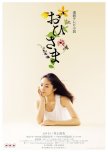
"Ohisama" is the fifth asadora that I have completed. The drama has been on my radar for a long time since it stars Mao Inoue, whom I love from the "Hana Yori Dango" series. However, I was always scared of the length of asadora series. Thankfully, I have gotten over that and quickly put "Ohisama" on my plan to watch list. I was actually surprised by how much I liked "Ohisama." It even rose to become my favorite asadora, beating out my beloved "Hanako to Anne" by a slight margin.The drama uses an interesting framing device similar to "Oshin" (which I was watching concurrently). It opens with a modern-day (2011) housewife, Fusako (Yuki Saito), meeting an elderly woman, Yoko (Ayako Wakao), who asks if she wants to hear her story. The story then frequently returns to present-day Yoko and Fusako as the drama unfolds. Ayako Wakao also provides the narration. I think both devices combined enhanced the story-telling experience, especially for a drama set during World War II. Subtle hints of the fate of characters were given either through the narration or a mention/appearance in the modern day. This helped keep the sometimes sad tone of the series down in my opinion.
Yoko's story starts in 1932 when her family moves to Azumino, a village in Nagano Prefecture. Her mother, Hiroko (Tomoyo Harada; whom I loved in "Hanbun Aoi") has long been sick and has chosen this place to die essentially. [Only the first week and I'm sobbing.] Yoko losing her mother at the young age of ten shapes the entire rest of the story, even to the final seconds. Her mother gives her advice to be "like the sun" (her name uses the character for the word sun). Yoko from then on frequently tries to be the sun for those around her. Older Yoko uses the quote "All women are like the sun" to Fusako much later in the drama and I just thought was such a beautiful thought.
The story then shifts to Yoko's high school days with her best friends, Machiko (Maiko) and Ikuko (Hikari Mitsushima). These two are some of the most important people in her life besides her father, elder brothers, and later on her husband, daughter, and in-laws. Yoko becomes a teacher after graduating (This will be her main ambition for the majority of the series). Unfortunately, it is now 1941, the year Japan bombed Pearl Harbor. If you're familiar with the Japanese retelling of the war, you'll see the typical "Japan cannot lose" rhetoric the common people were fed at the time. Yoko, unlike in the previous asadoras I've seen ("Hanako to Anne" and "Junjo Kirari"), is not even slightly politically inclined one way or the other. She is a little bit disturbed by teaching the children military tactics, but does as she is ordered. Perhaps paradoxically, I found the war easier to watch because of this. I would've been harder to watch Yoko fighting against the tide, really. Yoko represents the common people whom were simply there witnessing all of this.
Now addressing Yoko's husband, Kazunari (Kengo Kora). Their relationship is probably my favorite of the asadoras I've seen so far. These two are so sweet together and seeing them smiling at each other makes me want to smile. Their relationship starts from an "omiai" (arranged marriage meeting), but they feel totally natural with each other. The chemistry was so good. After he comes back from the war, I loved seeing them grow and learn together. Even up to the next to last week, they are becoming better at communicating with each other. I love to see such a healthy relationship in drama land. The way they tease each other is so cute too.
"Ohisama" has a lot of great supporting characters. I honestly loved them all and I can't even single one of them out because then I'll just start listing them all. Yoko's best friends are obvious contenders. The writers kept their lives consistently surprising. I wish Hikari Mitsushima had been given her own asadora; she was so good as Ikuko. Yoko's mother and father-in-law are like real parents to her and I love their constant banter. Likewise, Yoko's banter with her brother Shigeki (Kento Nagayama) never falls to entertain. His relationship with Ikuko was a surprise, but in hindsight, I should've seen it coming. They're perfect for each other. Then there's Yoko's father, brother Haruki, grandmother, Natsuko-sensei, Kayo-san and her husband, and all of her wonderful students. [Haha I did just end up listing them]. On a side note, "Ohisama" also features two future asadora heroines Tao Tsuchiya ("Mare"; also supporting in "Hanako to Anne") and Sakura Ando ("Manpuku").
The ending of "Ohisama" was bittersweet but not because anyone died. It's because I didn't want it to end. I've loved plenty of shows and books before, but there's very few I wish could go on forever. This one I would pick to watch on-and-on until the end of time. The finale, however, was still perfect so if it had to end, I'm happy it ended this way.
My Asadora Ranking: https://kisskh.at/list/LAlqpp21
Was this review helpful to you?
This review may contain spoilers
Half Blue
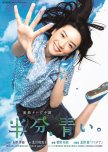
This is only my 3rd asadora. I chose "Hanbun, Aoi" because I was looking for something a little lighter than the previous one I watched. It definitely delivers as the drama is full of comedic, light-hearted moments that I loved. If you've seen the "Reply" series, "Hanbun, Aoi" reminded me of it in several aspects. However, it is an asadora and has plenty of really emotional moments, especially as you get to the end. Some major spoilers follow!Out of the three asadora dramas I've seen thus far, "Hanbun, Aoi" has the weakest story. It starts off a little slow with the childhood and adolescence weeks, but it's easy enough to push through these and they are important in the long run. Suzume (played by Mei Nagano) is the series heroine. As a child, she loses her hearing in her left ear. This will continue to effect her throughout the entire series. "Hanbun, Aoi" picks up when Suzume finds her passion: Becoming a manga artist. These weeks were no doubt my favorite and not only because I'm a manga fanatic. The world of manga, however, is sadly a tough one. Suzume manages to make her debut, but eventually decides that she can go no further in the field. Whether Suzume should've given up or not is up for debate, but I ultimately enjoyed how the storyline was handled.
Now the next half of "Hanbun, Aoi" was completely unrecognizable from the first. I have to say that I went through a bit of shock. I'm going to address Suzume's love interest now. Ritsu (played by Takeru Satoh) was born on the same day as Suzume and has always been on her side until they parted ways. When they reunite, he proposes to Suzume but she mistakenly says "I can't". He marries someone else a few years later. For me, this was very frustrating and only gets worse if we're being honest. On top of that, Takeru is very underutilized as Ritsu and he only gets character development sporadically.
Suzume, depressed by missing her chance to marry Ritsu and giving up her dream, starts working at a 100-yen store. There she meets Ryoji (played by Shotaro Mamiya) and they decide to marry after only knowing each other for a week. It's cute in a way, but they both come off as extremely naive in relationships. Suzume decides to support Ryoji in his dream of becoming a director, but he decides to give it up after failing once and because of Suzume's pregnancy. They are a happy family until Ryoji decides to abandon them to pursue his dream again. I don't know what's worse: Your husband leaving you for another woman or leaving because you're in the way of his dreams. Yikes. Suzume returns home and reunites with Ritsu again.
The story becomes somewhat frustrating at this point. Suzume seems to just jump from one thing to another. I wish the writers had decided on a second dream for her and stuck with it. And worse, she and Ritsu are back in each other's lives but... Ritsu is still married and seemingly doesn't want to leave his wife, despite their problems and obvious incompatibility. I'm not advocating giving up on your marriage so easily, but this was just another excuse for the writers to delay the main couple some more. Another time-skip. Suzume is back in Tokyo so that her daughter can take skating lessons. She's failing at being a start-up businesswoman. Ritsu returns from America and is finally divorced (his wife left him for God's sake!). Suzume and Ritsu partner together on a start-up. Finally, after completing their first project, they decide to be together.
"Hanbun, Aoi" has one of the most frustrating main couples I've seen in a long time in any drama. It's unfortunate because I really like them together and I just wish that we had seen more of them. However, this is by no means a bad drama because of that. Most of the characters are really strong, including Suzume (though her career choices are a bit bizarre). I love her family and her friends. She has absolutely beautiful relationships with her mother, daughter, and best friends. This is definitely the highlight of this drama. "Hanbun, Aoi" translates to "half blue." I think it means something like looking on the bright side. Though bad things will happen to you, there will always be good times. And that's a beautiful message.
My Asadora Ranking: https://kisskh.at/list/LAlqpp21
Was this review helpful to you?
Absolutely loved it!
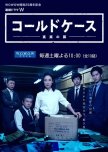
To preface, I'm a fan of the original Cold Case. I watched it when it was airing with my mom. So I have lots of special memories of it. When I learned there was a Japanese version, I was curious but also hesitant to start it. I was so scared I was going to hate it. Thankfully, I was completely wrong!The drama completely captures the vibe of the original from the music to the casting. Yoh Yoshida is particularly great as Yuri Ishikawa (Lilly Rush in the original). I liked that this first season we see glimpses of the personal lives of the main team. Hopefully, they will reveal more in the upcoming seasons. Much like in the original, I liked the dynamic between the main team. One thing I disliked was Yuri's sister, who I also didn't like in the original. I would've been fine if they cut her out.
There's a slight drawback that all of the episodes are based on episodes from seasons 1 to 2 of the original. I would've liked a few new cases. But I still felt engaged during nearly every episode. I will say that I didn't enjoy episodes 4 and the finale that much. This was one of my least favorite storylines from the original. My favorite part of Cold Case is the set-up and pay-off. These two episodes are the only ones where you don't get the usual pay-off.
If you're curious about which episodes correspond with which from the original, I'm including it here. I'll also my thoughts on the Japanese episodes:
Episode 1 = Season 2, Episode 11 - a great episode for the J-drama to start with. Heartbreaking and "Don't Look Back in Anger" has been stuck in my head for several days.
Episode 2 = Season 1, Episode 8 - another gutwrenching episode. I liked that they showed some social issues (such as Japanese Brazilians living in Japan) that you won't see in other dramas.
Episode 3 = Season 2, Episode 10 - we're at a 3 for 3 for great episodes in a row! Keep your tissues handy.
Episode 4 = Season 2, Episode 9 - one of my least favorites tbh, but still a good one. This is one of Cold Case's more memorable original episodes so they sort of had to cover it.
Episode 5 = Season 1, Episode 22 - I cried like a little baby so a good episode. However, it was a little too word-for-word of the original.
Episode 6 = Season 1, Episode 13 - the one instance I think they improved on the original. It covers another social issue (Koreans in Japan) and just feels more impactful than the original. This was the episode I remembered that Japan had a statue of limitations on murder! It was only changed recently and still only cases from after 1994 can be charged.
Episode 7 = Season 2, Episode 6 - like ep 5, this one is very close to the original. That didn't stop me from crying though T_T
Episode 8 = Season 1, Episode 18 - this one was definitely less impactful than the original. I can't really pinpoint what I didn't liked about it.
Episode 9 = Season 1, Episode 14 - another classic, heartbreaking episode. This one was based on the famous "Boy in the Box" case. He was finally identified last year!
Episode 10 = Season 2, Episode 23 - a follow-up to episode 4 that I knew was coming. The ending scene was great, but still one of my least favorites.
Anyway, that's the end of my ramblings! I'm looking forward to watching the next season.
Was this review helpful to you?
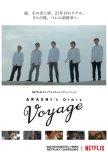
This Is Arashi
In October 2019, Arashi opened a YouTube account. Earlier that year, the band announced their intentions to go on hiatus after December 31, 2020. Honestly, I didn't pay too much attention to the announcement. I'm only a casual Arashi fan because of MatsuJun being in 'Hana Yori Dango.' However, a Johnny's band opening a YouTube account was unprecedented. I HAD to pay attention and discovered some new songs in the process. The following month, they made another surprise move by creating several social media accounts, including Instagram where I followed them voraciously.Next, came this documentary. When I watched the first episode, I thought it was going to be a one-off thing really. I'm surprised that I kept watching something I started on December 31, 2019! Throughout the series, I was most struck by Arashi's dedication to the fans and how they genuinely seem to care about them. These moments touched me so much that I cried. The episodes where Arashi is trying to break in to the US market are particularly poignant to me. It makes me wonder about so many things that would've gone different if coronavirus hadn't happen. I'm sure Arashi's planned concert here would've been amazing.
I recommend watching the first episode, and their respective "diary" episodes the most. I wasn't so interested in some of the behind the scenes stuff, though it's interesting to see just how much MatsuJun was involved with the concerts. Now after twenty-four episodes, I can say I'm a fan of Arashi and all five of its members. I never would've thought I'd connect with Ohno the most tbh. Now that they're on hiatus, I hope they enjoy themselves but I also hope that they remain close friends and will eventually come back to us as Arashi.
Was this review helpful to you?

Not the best from Kathryn and Daniel
My first Filipino movie was "She's Dating the Gangster" followed by "Can't Help Falling in Love." Now I LOVED these movies, though I felt SDtG had a couple plot holes. So I'm obviously going to have high hopes for any Kathryn Bernardo & Daniel Padilla movie. Unfortunately, "Crazy Beautiful You" did not live up to my hopes. Don't get me wrong, I thought it was enjoyable but it did not have any sort of brilliance that the other two films I mentioned had. This is just another run-of-the-mill rom-com full of plot inconsistencies.First, Kathryn and Daniel were great. Chemistry top-notch as always and I'm still looking forward to watching their other movies. However, the plot of "Crazy Beautiful You" is just all over the place. Kathryn's character Jackie has an about-face too soon into the movie. They should have played her being a rebellious brat more. Kiko's (Daniel) family dynamics are interesting, but handled too haphazardly. Once his annoying brother Marcus is introduced, Kathryn's character development in thrown out in order to focus on a pseudo-love triangle.
I think the overall message about the importance of family is great though the delivery is somewhat muddled. Additionally, I liked the way they handled being selfish/selfless. Selfishness is bad of course, for the most part others' feelings should be considered. However, being selfless is also bad but in different ways. No one should try to take everything on by themselves. This message I think was just as important in the movie. I recommend "Crazy Beautiful You" to all Kathryn & Daniel fans since I think they're great no matter what. But if this is your first Filipino movie, I suggest watching the two I mentioned up top first.
Was this review helpful to you?
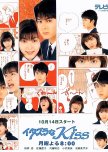
A meh adaptation.
Since I'm watching all the Itazura na Kiss adaptations, I guess I'll review them all as well. Note: I've read part of the manga and seen the anime, so they are the only thing I can compare this drama too. Another note: my favorite part of this drama was probably the ending theme, which paid homage to the manga (so adorable!).I didn't hate this drama, only it left me disappointed at certain points that I felt the manga/anime did better. For some reason, Kotoko never annoyed me as in the manga/anime as much as she did in this drama. No offense to Sato Aiko, who was a bit screechy at times. I think it was mostly a writing issue. There is never a moment when Kotoko becomes just fed up with Naoki (God, I really wanted this moment). It's incredibly frustrating. On the other hand, I rather liked Kashiwabara Takashi as Naoki. I felt more sympathetic to him than Kotoko tbh. She really seemed like an "ordeal" to him and I kept telepathically telling him to run away.
As for the rest of the cast, I thought Asada Miyoko and Akashi Ryotaro were perfect as Naoki's mom and Yuki. I really enjoyed his voice-overs in the episodes. The majority of the other characters were good/okay but no stand-outs. I was disappointed in Kinnosuke's character. Though Aoki Shinsuke resembles him really well, they reduced his character to pure comic relief and he becomes a lot more annoying because of it. And lastly, I thoroughly disliked Ozawa Maju as Reiko (Yuko in the manga/anime). She was portrayed so evil in this drama with absolutely no sympathy at all. Ugh I really hated it.
The ending of this drama left me with mixed feelings, which I still cannot put my finger on. I've given it a rating of 7, only because I didn't absolutely hate it. If I was a professional reviewer, I would likely give it a 5 or 6. I think only die-hard fans should watch this (and even then y'all might not like it). Casual fans should beware, unless you're the type to skip scenes (alas, I'm not). Well, on from this meh adaptation to the next.
Was this review helpful to you?
This review may contain spoilers
"Wonderful everyday moments"
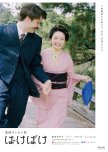
"Bakebake" is my 39th asadora watched. I've been highly anticipating this asadora since it was announced due to my love for "Massan" which has a similar cross cultural romance. In my anticipation, I decided to read a biography on Lafcadio Hearn (renamed Lefkada Heavin for this asadora) titled "The Outsider: The Life and Work of Lafcadio Hearn." This way I was able to relive my first asadora experience with "Hanako to Anne," for which I read the biography on which it was based. Of course, "Bakebake" is more based on the life of Lafcadio's wife Koizumi Setsuko (renamed Matsuno Toki) so I consider the biography to be background reading since a majority of it focuses on Lafcadio's life before Japan.As an asadora, "Bakebake" is unique in many aspects. Firstly, it is set roughly from 1875 to 1905. Very few asadoras are set entirely pre-WWII. [The majority of the storyline also takes place in 1890-91.] Secondly, "Bakebake" is able to maintain a light-hearted vibe despite also dealing with heavy topics like poverty, death, and sickness. Sad episodes are often punctuated with a joke or two, causing me to laugh through my tears. Thirdly, the asadora is more of a slice of life story in the same vein as "Hiyokko." Simple day to day life and the residents of Matsue are given the focus instead of a goal/career like in other asadoras.
"Bakebake" is also what I call a "couple asadora," meaning that it focuses on a couple as the leads. Though this isn't unique, it's been since 2014's "Massan" that a non-Japanese person was the co-lead. And really we were truly blessed with Toki (Takaishi Akari) and Heavin-san (Tommy Bastow). Their easygoing chemistry makes for one of the best asadora couples put to screen. Personally I'd put "Bakebake" slightly above the other best couple asadoras, "Massan" and "Yell," while also having the romance on par with my favorite in "Asa ga Kita." Toki and Heavin's romance is the ultimate slow burn romance full of anticipation and sweet, heartwarming moments. Several moments made my heart flutter.
Toki is an endearing heroine because of her loyalty towards her family and her love for ghost stories. Unlike other heroines, she is not pursuing a career instead being motivated to work to pay off her family's debt. Despite her circumstances, Toki finds the joy in little things like eating dinner with her family or sleep paralysis(?). It's truly a joy to just watch Toki smile. As for Heavin, Tommy Bastow plays him wonderfully but I feel the writers do him a disservice. I wish the story had shown more of Heavin before Japan instead of just the brief snippets. His personality and motivations could've been explained and fleshed out more. (Fun fact: Lafcadio's volatile personality is heavily sanitized for this asadora.) I wanted more scenes like the ones with the maid Ume (Nouchi Maru), in which he was insistent on going to the eye doctor since he was self-conscious of his.
A few more grips with the story. I feel like the flashback with his first wife, Martha (Meisha Brooks), could've been handled differently. Something about it didn't set well with me. Also, I was highly disappointed with the character of Eliza Belsland, played by my beloved Charlotte Kate Fox from "Massan." I wasn't a fan of her dialogue most of the time nor that she was in love with Heavin. However, the clincher was her yelling at Toki in the final episodes. It was completely unnecessary. For those curious, Eliza was based on Lafcadio's real-life friend journalist Elizabeth Bisland, whom doesn't appear to have had any romantic feelings towards him.
Now for the section where I praise all of the side characters. My personal favorite was Sawa (Marui Wan), Toki's best friend whom wants to lift her family out of poverty on her own. Her romance with Shoda (Hama Shogo) was sweet. Nami (Sato Honami), a prostitute in the red light district, also had a cute friendship with Toki and Sawa. As for Toki's family, they're all lovable even Toki's father Tsukasanosuke (Okabe Takashi) and grandfather Kaneimon (Kohinata Fumiyo) who cause her troubles while they hold on to a bygone way of life. Kitagawa Keiko plays Toki's aunt/birth mother Ushimizu Tae with an understated gracefulness. Lastly, I can't move on from this section without mentioning Nishikori-san (Yoshizawa Ryo), the unofficial third main character for much of the story. Yoshizawa is truly a great actor because his characters always leave a lasting impact. I still remember him so clearly as Tenyo in "Natsuzora."
Lafcadio's best known book "Kwaidan" was written shortly before he died, a fact I had forgotten as I waited in anticipation for it to be covered. The homage paid to the book was very much worth it. I particularly loved the reference to "Hoichi the Earless." I'd highly recommend watching the 1964 film "Kwaidan" if you're curious about Lafcadio's stories.
In the last episode of the asadora, Toki's mother Fumi (Ikewaki Chizuru) uses this phrase "Simple truly simple, wonderful everyday moments" while talking about Toki and Heavin's life together. For me, this phrase perfectly encapsulates this asadora. It is made up entirely of the simple moments in life that make it worth living. I'll miss "Bakebake" so much though I'll continue to hold it in my heart.
My Asadora Ranking: https://kisskh.at/list/LAlqpp21
Was this review helpful to you?
This review may contain spoilers
"But even so they laugh and live on."
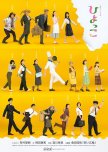
"Hiyokko" is the 36th asadora that I've watched. Early on, this one looked like one I would really like and I eventually chose it to be the last as I got closer to the end of this almost non-stop asadora binge that began in February of last year (2024). I had a good intuition about "Hiyokko" and I can confidently say that it's one of my favorite asadoras.Mineko (played by Arimura Kasumi) gets a lot of flack for not being an "ambitious" heroine. I know asadoras are mostly known for their heroines chasing a career path, but the "unambitious" ones have just as much charm in my opinion. [I'm using quotes because I think Mineko is ambitious in her way.] There's also nothing wrong with just having a job you like instead of having a career path you pursue. Anyway, Mineko is a very giving, hard-working, and family oriented person, which are pretty common traits in most heroines. In that way, she's kind of a low-key heroine like Jun-chan in "Jun-chan no Ouenka. This, however, does not make her any less fun to watch. I truly loved Mineko every step of the way.
In "Hiyokko," Mineko has two love interests which is a bit rare. Her first love interest is a rich college student Shimatani-san (Takeuchi Ryoma). He's very sweet but blunt at times. The couple come from different social circles, which ultimately leads to their break-up. While this was predictable, the writer was smart in how it was written and I still cried. All in all, I consider them a couple I liked and was sad to see end. Mineko's second love interest is Hide-san (Isomura Hayato), a chef who works at the same restaurant as her. Their relationship starts as a friendship and develops slowly over time into romance. Though we only see them together for a short time, I think this couple has become one of my favorite asadora couples. Hide-san is definitely one of the sweetest and most caring love interests.
As with most asadoras, the side characters are the real highlight of this series. Miyamoto Nobuko (from asadoras "Dondo Hare" and "Amachan) once again steals every scene that she's in playing the restaurant owner Suzuko. I also particularly loved Aiko-san (Wakui Emi from "Chiritotechin"), Setsuko (Kanno Miho from "Churasan"), and Saori (Ito Sairi, whom went on to lead "Tora ni Tsubasa"). From the previous sentence, you can guess that the asadora is populated by a lot of familiar faces and veteran actors. One thing I really loved about the supporting characters that new ones are introduced with every phase of Mineko's life. Many have their own arcs like Tokiko (Sakuma Yui) and Mitsuo (Izumisawa Yuuki), whom both come to Tokyo with her. Then there's the girls' dorm friends, Mineko's coworkers at the restaurant, and the residents of her apartment. There's so many characters to get attached to that I could go on and on.
Normally, I don't pay attention the crew behind asadoras... But, here I noticed that the writer Okada Yoshikazu also wrote "Churasan" and "Ohisama." While I didn't completely like "Churasan," "Ohisama" is one of my favorite asadoras. "Hiyokko" has my favorite elements of both of these asadoras, such as the close-knit community from "Churasan" and the easy, slice-of-life vibe from "Ohisama" among others. For "Hiyokko," Okada added a new element that being the mystery behind Mineko's father's (Sawamura Ikki) disappearance, which is the main storyline of the entire asadora. I'd like to thank Okada for writing these three asadoras and improving with each one.
"Hiyokko" only takes place over four years from 1964 to 1968, which is unique for an asadora. The series feels very firmly planted in the 60s and there's so many wonderful references like with The Beatles and Twiggy. My favorite reference is San Francisco being referred to by the song title "Be Sure to Wear Flowers in Your Hair." After finishing "Hiyokko," I realized that 156 episodes can feel so short. I very much wanted to stay in the world of "Hiyokko," which is why I immediately watched "Hiyokko 2" after.
My Asadora Ranking: https://kisskh.at/list/LAlqpp21
Was this review helpful to you?
This review may contain spoilers
"The life we have now, that's all there is."
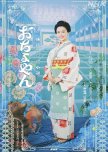
"Ochoyan" is the 27th asadora that I've completed. Before I was really even aware of asadora as a format, I wanted to watch this because I'm a huge fan of Sugisaki Hana. As such, I was really happy when Hpriest announced that they were subbing it. [Thanks again to Hpriest to subbing this asadora in its entirety.] For this reason, I feel that I'm very biased towards this asadora in particular and I think I was just destined to love it. Haha.Sugisaki Hana is really lovely in the lead role of Takei Chiyo, loosely based on the actress Naniwa Chieko. Her facial expressions tell a thousand words and she's able to communicate effectively through her body movements as well. I'd also like to praise Maida Nono for playing child Chiyo. Her delivery of "You're not abandoning me. I'm abandoning you!" has stuck with me particularly. I was happy that they brought her back to play Chiyo's niece. She's also good in "Tora ni Tsubasa". The entire cast deserves praise, including Tortoise Matsumoto, the dad everyone loves to hate lol. There's so many great performances here that I could be here all day. Just know that there's some great nuanced characters and many get their own fleshed-out stories. A special shout-out to Shigeyama Motohiko and Katsura Kichiya [narrator], whom I also really loved in the underrated "Chiritotechin."
To address some elephants in the room, this asadora might not be for everyone due to the parental abuse and infidelity storylines. I, myself, didn't really mind these storylines as they appear to be taken from Naniwa's life itself. I also thought it was kind of bold for NHK to portray terrible parents and infidelity in an asadora. These are topics they seem to steer clear from. Chiyo's father Teruo (played by Matsumoto) and stepmother Kuriko (Miyazawa Emma) are played to perfection and both are a great example about the power of forgiveness. Forgiveness is ultimately for yourself. Once Chiyo is able to let go of the things these two people had done to her, she is able to really live her life. It is also important to understand people and meet them where they are [but don't let yourself get walked all over].
As for the infidelity, I might've preferred the storyline be left out but it was ultimately important to include it to continue the asadora's message. The storyline probably elicited the most emotion out of the entire drama. I felt angry and devastated, and cried the most during those five episodes than any other asadora. It was just so horrible. After the storyline, I do wish that the drama had just dropped Ippei (Narita Ryo) as a character, though I acknowledge that they ultimately needed him for the conclusion. I just found his face annoying after that [lol].
"Ochoyan" shows many forms of entertainment from before and after WWII, including silent films, kigeki stage acting, and radio dramas. If the drama had been able to go on longer, it could've shown Naniwa's film career in the 50s and 60s which would've been interesting. It's too bad that the asadora was cut short by COVID-19. Anyway, in conclusion, I really loved "Ochoyan" and its themes of forgiveness, found family, and moving forward. I highly recommend this asadora.
My Asadora Ranking: https://kisskh.at/list/LAlqpp21
Was this review helpful to you?


