
 K-Drama

Enjoyable
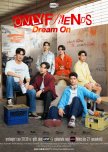
If Only Friends: Dream On only existed to showcase how insanely talented Mix is as an actor, then honestly, it was already worth making.That one-shot scene from the bathroom to the stage? Absolutely incredible. Easily one of the standout moments of the entire series. I also really loved Boston and Nick’s scene, which hit surprisingly hard emotionally and wrapped up their storyline from the original series well. Overall, the acting across the cast was genuinely strong, especially from Mix, Boom, and Earth.
But that’s also kind of where my praise stops.
I don’t think this is a bad series at all. In fact, it’s still entertaining and easy to binge. But there’s just something missing that keeps it from fully landing for me emotionally. Maybe my expectations were simply too high after the original Only Friends, or maybe the series never fully reached the emotional depth and intensity it felt like it was building toward.
I can’t fully explain it, but by the end, I was left feeling more impressed by individual performances and scenes than by the story as a whole.
Still, I’d definitely recommend it to people who are curious. It’s an enjoyable watch, and the cast alone makes it worth checking out.
Was this review helpful to you?
This review may contain spoilers
What was the point?
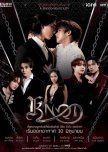
Literally, what was the point of all of this? Why make an omegaverse series when you're not committed to showing what it's actually about? Why give us this half-assed plot when there's literally SO MUCH you can do with a universe like this? I even like the main question this series is asking: Can real love grow between an alpha and omega, or is it just instinct and fate? But even when you're asking an interesting question like that, the rules of the universe don't just vanish.And don't even get me started on the pacing. Why does it take three episodes with barely any progression to resolve such a non-interesting storyline? I don't care about Nakhun's family and what they did to Sangnua's. They didn't even show Sangnua's family except for his brother, not even in flashbacks. But it's also just not interesting in a series about the omegaverse. Give me storylines that have something interesting to do with the universe!
I can't believe ABO Desire was better than this. The writing in that one was bad as well, but at least they showed us some interesting things about the universe. This show doesn't do anything interesting. Not with the characters, not with the story, not with the cinematography, and not with the performances.
There are characters that barely show up in the series, like Amintra. I wanted to know and see more of Ongsa and his relationship with Nahkin. They were the couple I found most interesting. Why even pair up Naphitch and Sangnua when you don't do anything with it?
So much wasted potential. And I really try to make my reviews as fair and constructive as possible, but it's hard to do so when there's such little care thrown into this series. Still, I watched until the end, so that's at least something. When a series bores me too much, I don't hesitate to drop it. So, I guess some parts are kind of entertaining. But yeah, I don't recommend this one to anyone. And I hope there will be at least one good omegaverse adaptation.
Was this review helpful to you?
This review may contain spoilers
Tonal Whiplash: The Series
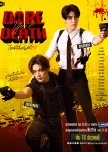
I love JoongDunk. They’re one of my favorite pairings at GMMTV, and I became a huge fan of them after watching The Heart Killers. I’ve especially enjoyed seeing Dunk improve with every project, so the low score I gave Dare You to Death has absolutely nothing to do with them or the cast. I wanted to make that clear first.But… this series is bad. Not even “so bad it’s good.” Just plain bad.
What makes it frustrating is that I can see a version of this show that actually works. There’s real potential here. I like the concept of a seemingly perfect friend group hiding horrifying secrets. I like that one of them is the brother of Joong’s character, which adds emotional complexity even if the show barely explores it. I genuinely loved the first half of the final episode, especially Pufai and the doctor’s dynamic while forcing Champ and Chereen into that brutal fight. Those were the moments where the series finally leaned into its darker ideas. I even like the officer's romance and dynamic, even though it kept changing the tone of the series.
Pufai, in particular, was compelling. We didn't see much of her in the present, but I liked how her trauma shaped her and how she ultimately became the mastermind behind everything. That psychological element had a lot of promise.
My biggest issue is the tone. This should not have been a romantic comedy.
This story would have worked far better as a full horror-thriller, with the JoongDunk romance as a side plot rather than the central focus. I know that’s controversial since this was meant to be their series, and I understand they were likely following the novel (though I haven’t read it, so I can’t compare). But it felt like the writers didn’t know what kind of show they wanted to make, and instead of choosing, they tried to do everything at once.
The tonal whiplash was exhausting. One moment, we’re in dark psychological manipulation, with characters being brutally murdered; the next, we’re back in rom-com territory. I truly believe these elements could have been blended successfully, but that requires careful writing and tonal control. Either the writers didn’t know how to balance it, or they didn’t put in the effort to make it cohesive. And that’s what makes it such a shame.
I didn’t hate the series. But it should have been so much better. If you loved this show, that’s great. I’m genuinely glad it worked for you. It just didn’t work for me. I’ll still support JoongDunk, and I hope their next series has stronger, more focused writing. I’ve heard the novel is quite good, so I have hope for what’s next.
Was this review helpful to you?
This review may contain spoilers
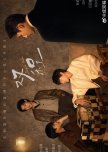
I can't tell if this is a good series or not. I did enjoy it, and was waiting for the next episode every Friday and Saturday, but it's an incredibly frustrating series as well. I guess that's the point? I do like the overall messaging in how homophobia, from society as well as the people around you, can completely damage you and your relationships. I think that's why I have empathy for Xiao Chen as well as for Lu Feng. And I like the way that all the circumstances turned Lu Feng into a completely different person. But I'm of the opinion that even dark and toxic storylines should not include depictions of rape, especially when you want the main couple to have a happy/hopeful ending. That's something that, in my opinion, you can't come back from. There were scenes during Xiao Chen's kidnapping that I just had to skip because they made me very uncomfortable. And all of it could just have been avoided if they had ONE good conversation. One person I couldn't stand was the little brother. God, he made everything so much more difficult.
That being said, I did like the ending. I think Lu Fen's bipolar diagnoses make sense, although it always gives me the ick when a mental disorder is depicted as if it makes someone dangerous. That's not the case at all. But I like that he got help in the end.
I guess this series is kind of like a gay Romeo and Juliet, but a lot darker and more toxic. I think that if that's up your alley, you're going to like this series. But do proceed with caution.
Was this review helpful to you?

I already had high expectations after watching the pilot trailer, but now that the full series has aired, I can confidently say that it exceeded them. This is the kind of series that has been amazing from beginning to end, and every part of it, from the directing to the writing to the acting, works together beautifully.
I don’t give out 10/10 ratings easily. Even when I personally enjoy a series, I still try to be fair in my ratings because storytelling quality matters a lot to me. So the fact that this series ended up being a 10 for me really says something.
What impressed me the most was the directing.
P'Dome did a phenomenal job bringing this story to life. Every creative decision felt intentional. From the camera work to the color grading to the visual framing of the flashback scenes, the series constantly showed a clear artistic vision. There are so many moments that stood out visually, but one of my favorites was the scene where the camera moves together with the fan. It’s such a small detail, but it reflects how carefully thought-out the direction is throughout the entire series.
It’s honestly rare to watch a BL series where the director’s identity and vision feel this clear, and it made me an even bigger fan of his work.
The writing is just as strong.
I’ve heard that the original novel is excellent as well, which makes sense, but adapting a novel into a series is never easy. A lot of adaptations either rush through important moments or spend too much time on unnecessary scenes. This series manages to find an almost perfect balance with its pacing. The emotional moments are given room to breathe without the story ever feeling slow.
Last, but not least, is the acting.
Perth and Santa have incredible chemistry together, but what really impressed me is how believable they felt as a couple who had already been together for seven years. That’s actually much harder to portray than a new relationship, but their dynamic felt completely natural from the start.
Santa especially stood out to me because he essentially had to play two roles at once: Sun and Solar. That’s a difficult challenge for any actor, especially during scenes where the switches between the two happen rapidly, but he handled it perfectly. You could genuinely feel the anxiety, confusion, and emotional exhaustion right alongside the characters.
I honestly feel like I could keep talking about this series forever, but this is one of those shows that people really need to experience for themselves.
I can’t recommend this series enough. If you’ve been thinking about watching it, do it. I truly don’t think it’ll disappoint.
Was this review helpful to you?

This review may contain spoilers
Great concepts, could've been a great show
The Next Prince has all the ingredients for a gripping royal drama. I love the modern royal setting, and there’s a great cast of characters with the potential for real depth. While the series shines in visuals and moments of strong storytelling, the writing doesn’t quite deliver on its promise.What stands out most is the cinematography. The show looks absolutely gorgeous, with stunning sets, locations, costumes, and props. The pilot introduced Khanin’s character well and set up some great stakes. Most of the acting is solid, too. Story-wise, one of the strongest moments for me was the reveal of Wasin’s betrayal and his reasoning behind it. It was a little predictable, but it made sense and added layers to why every region was complicit in the events, making his actions more understandable. I also enjoyed the political side of the series, which gave Emmaly more realism and complexity.
The most powerful scene for me came during Ramil and Paitay’s NC moment, where Ramil, whip in hand, is about to strike but stops as he remembers his father’s abuse. That hesitation spoke volumes about his character without a single line of dialogue. That was proof for me that the series is capable of incredible storytelling.
Unfortunately, much of the writing doesn’t give its characters or conflicts the weight they deserve. For a story that’s supposed to follow Khanin, we get surprisingly little of his personal journey. After the pilot—where he meets Charan, learns the man who raised him isn’t his biological father, survives an assassination attempt, and watches his father “die”—a few episodes later, he’s dancing like none of it happened. We rarely see how these events affect him or how he struggles to adapt to his life in the palace.
Instead, the series leans heavily on Charan and Khanin’s relationship. While that focus makes sense given the popularity of the pairing, it could have been balanced with Khanin’s inner journey. Once he’s in the palace, the stakes all but vanish. He’s not fighting for his own title, but for his biological father’s. Even if he fails, nothing will really happen to him. Ironically, Ramil has more at stake than the main character.
Performance-wise, Nunew stood out as Khanin, and Zee did well with the material he was given, though I wish Charan had a bigger personal storyline. Jimmy and Ohm delivered solid performances, and I enjoyed Net and JJ despite their underdeveloped characters.
Many storylines feel rushed, underdeveloped, or abandoned entirely, but despite these flaws, I still enjoyed the series. For its production value, strong performances, and flashes of excellent storytelling, I’m giving The Next Prince a 6/10. I understand why it didn’t work for some viewers, but if you’re curious, it’s worth a try. Just don’t expect all the potential to be fulfilled.
Was this review helpful to you?
This review may contain spoilers
They (mostly) stuck the landing!
Khemjira just wrapped up its final episode yesterday, and honestly, I think it’s one of the best shows Domundi has put out. Unlike many of their previous productions, Khemjira stands out for its strong writing and clear storytelling focus. Instead of trying to cater to fan service or BL shippers, the show prioritizes its narrative and characters—and that makes all the difference. It doesn’t feel like a “typical” BL show; it feels like a show that knew exactly what it wanted to say and how to get there.I don’t want to make this about comparing it to The Next Prince, even though they share the same director, but the contrast is undeniable. The Next Prince felt grand and polished, but its main characters were too flawless to be interesting. Khemjira, on the other hand, invests deeply in its characters and story rather than surface-level aesthetics. That’s the key to what makes it so good—it’s grounded, emotionally resonant, and character-driven. It's not perfect. There are some flaws here and there with the pacing, but it's very impressive nonetheless.
It might not be everyone's cup of tea, but it sure is mine. The OST for this show is also stunning, and the cinematography was as beautiful as always. Mandee knows how to make beautiful-looking shows.
If I had to nitpick, I’d say the ending dragged a little and the tone shifted from the rest of the series. I wish it had been shorter, so we could really focus on the aftermath of everything that happened. The climax also felt slightly anticlimactic; I was hoping for a bigger payoff. Especially since the build-up was really good. Still, it did justice to Ramphueng's arc. I really appreciate that the show didn’t go for an easy redemption or simple forgiveness for her. Instead, it acknowledged her pain and grief without erasing her wrongs.
Overall, Khemjira is a refreshing change of pace—a show that proves good storytelling will always outshine fan pandering and flashy production.
Was this review helpful to you?
This review may contain spoilers
A nice effort
Let me start by saying that the production value and cinematography are incredible. Zomvivor looks amazing, and that deserves to be praised. The effects and zombie makeup are also top-notch.The thing with zombie shows is that the zombies themselves aren’t usually the most interesting part. Sure, you can add some twists — as this show tries to do by asking whether the person is still “in there” — but in the end, they still behave like the zombies we’ve all seen before. What makes a zombie story compelling, at least for me, is how the living react: how they handle the situation, their dynamics with one another, and whether they’ll find a way out. Unfortunately, Zomvivor doesn’t spend enough time on those relationships before everything goes to hell, and that’s where it falls short.
It’s the same problem I had with All of Us Are Dead (which I admittedly haven’t finished, so maybe I’m missing something). That show throws you straight into the outbreak and the horrors the students face. People die, and it’s tragic, but not because we care about them. We barely know who they are or how they relate to each other. Zomvivor has that same issue. We’re told that Jean and Poa are like brothers because they grew up in the same orphanage, but the show never shows it. We’re told that San and Ning are dating, yet there’s zero romantic chemistry between them.
The one moment that really worked for me was when Ning looked around the room and saw Lily and Win holding hands, comforting each other; Thi and Thorn sleeping side by side as brothers; and Ning herself holding Non in her lap. That scene captured real warmth and connection.
I understand why the creators chose to throw us right into the chaos. It’s a refreshing change from the usual zombie formula, where everything starts before the outbreak. But personally, I prefer beginning before the fall. It gives us time to understand who these people are and why we should care when things go wrong.
Now, about the characters. First, all the actors gave strong performances. Whether I liked their characters or not, they did justice to the material. I especially want to praise Jimmy, Nat, Janis, Boss, and Tommy. I don’t have time to discuss everyone, so I’ll focus on the ones that stood out, for better or worse.
Poa is, to me, the most interesting of all of them. He doesn't get a lot of screentime, and his story arc needed a lot more depth, but this is how I interpreted the character. Ever since his whole family died in a tsunami, he's been living with this survivor's guilt that has caused severe depression, which has to medicate. Lately, he had been doing a lot better and had gotten off the medication, until the outbreak happened. Seeing people die right in front of him while he couldn't save them triggered that survivor's guilt and depression again, leading him to slowly lose himself and bring others down with him. He definitely got on my nerves a lot, but his character is fascinating. But this is how I interpret him. The show doesn't actually say this out loud. It doesn't have the time to develop him, which is such a shame.
Nat really surprised me. I wasn’t fully convinced by his acting in past projects, but he was fantastic here. I loved Night’s character and Nat’s performance, even if Night didn’t get enough focus in the main storyline.
As for the cheerleader squad, I found them ridiculous and unnecessary. I adore the actors, but their subplot was too silly to take seriously, though I suppose they’re there to lighten the tone once in a while.
And don’t even get me started on the whole San-Non-Ning situation. That’s a conversation for another day
Overall, I’m genuinely excited for a potential season 2. There are interesting storylines in motion, and I hope the writers take the time to invest in their characters, not necessarily through big arcs for everyone, the cast is too large for that, but through small, meaningful moments like the one I mentioned earlier. Those details go a long way.
Was this review helpful to you?
This review may contain spoilers
Going into Burnout Syndrome, I had high expectations. I loved director Nuchy’s previous series Not Me, which had the same main leads, and that show felt like it had so much to say: socially, politically, and emotionally. In comparison, Burnout Syndrome feels like a quieter, less confident project. Not bad, but definitely underdeveloped.That’s not to say I disliked the story. I actually appreciated the different perspectives the characters had on AI and the very real fear that it could replace artists, people who already struggle to make a living doing what they love. That theme had a lot of potential, but it never quite reached the depth it was aiming for.
Jira is a deeply flawed but understandable protagonist. Most of his questionable decisions stem from insecurity: about his talent, his future, and who he wants to be. He desperately wants to succeed as an artist and be admired for his work, but reality keeps reminding him how unforgiving that path can be. He’s extremely passive, especially in his love life, and there were many moments where I wanted to scream at him to just make a decision already and to get his shit together. Still, that indecisiveness felt very real, with the constant battle between what feels right emotionally and what seems logical or safe.
Koh is one of the most underdeveloped antagonists I’ve seen in a long time, which is a shame because Off gives an absolutely phenomenal performance. This is easily one of his strongest roles. He makes Koh both infuriating and strangely compelling. You can’t help but love and hate him at the same time. Unfortunately, the writing doesn’t always support the performance. The show hints at his upbringing, especially his relationship with his mother, but it’s so vague that it’s hard to understand him, let alone root for him. He remains an asshole for most of the series and doesn’t improve much by the end. Because of this, his relationship with Jira feels unearned, even though you already know that Jira will end up with him anyway. I’m sure the novel fleshes him out far better, but within the series, it doesn't work as it should.
Now, I love Dew, and I really liked Pheem as a character, but I genuinely need people to stop wishing Jira would end up with him. They would never work. That said, Dew is excellent in this role. The lack of chemistry between Jira and Pheem felt intentional, and I found that fascinating. You can clearly see that Jira wants to want Pheem, but his heart just isn’t there. Their dynamic was uncomfortable in a very realistic way, and it's one of the things in this series that I loved the most. The rage room scene, where Pheem finally explodes and smashes everything while yelling at Jira, was toxic, but also raw and emotional.
Ing and Mawin, played by Emi and AJ, were well-acted but painfully uninteresting. I love both actors, which made this even more frustrating. Their characters existed almost solely to give relationship advice and act as emotional outlets for Jira and Pheem. It felt like such a waste, especially since there was clearly potential to do more with them.
On a technical level, the series does well. I really liked the soundtrack, and the cinematography and overall aesthetics were pleasing. Also, kudos to the artist who painted all those paintings. They were amazing. Unfortunately, the story itself felt rushed and underdeveloped, even though it's still a slow-burn. It lacks momentum and emotional payoff. Burnout Syndrome has good ideas and some genuinely strong moments, but it never fully comes together.
It should’ve been better — but I still enjoyed it for what it was.
Was this review helpful to you?


