



This review may contain spoilers
Fortune telling works. In fact, it works all too well. Simply because we choose to believe in it. A bit like merit.
Right from the first episode, we hear a line that, as a true Balzac fan, I simply couldn't help but notice : "But I refuse to be poor. I want to make a lot of money." Trapped first by this necessity, and then by the social pressure to become rich. She will stop at nothing, and where it becomes incredible is seeing her in action : she struggles, she loses all her illusions and only becomes more ruthless, going from one debt to another. Even more interesting is the perspective of the author tasked with transcribing the memories of this seemingly cruel old lady. The whole narrative aims to provide an insight into the Japanese mindset regarding "success" and to allow us to reflect on it in turn.
"Better to deceive than to be deceived", a statement that Vautrin would certainly not disavow. In a world where money is king, we are all its slaves ; we are left with no other choice. We choose to believe that if we want to, we can. And it has always been the other way round. By taking the example of a woman who gets rich through her hard work and the sacrifice of her soul on the altar of the golden calf, it only makes this truth all the more glaring.
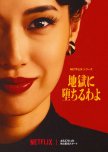
We find ourselves in the company of a rich and powerful celebrity who fantasizes about her memories of poverty and a penniless author forced to work a side job. It might be tempting to dislike a character like Hosoki Kazuko (Erika Toda), but she embodies the values of her time. This isn't about passing judgment. She chases after money, she spends ostentatiously, she brags about her successful bets, she recounts her petty acts of revenge. And the figure of the Buddha reappears in nearly every episode... everything remains an illusion except for the suffering of this life. We're already straight in hell. This character endures abominable things. (the grip of the yakuza… those leeches as violent as they are arrogant and always detestable) But we are confronted with a terrible thing : it is she who tells the story… a little too well to be honest.
The series doesn't depict the real life of this person who actually existed at all : "Hosoki began managing Tokyo clubs and coffee shops while still a teenager, eventually running up debts to members of Japanese organized crime" says Wikipedia. And that's not a problem, because the form matches the content. That is the series' focus, its vocabulary, purpose and reason for being.
"Self-Portrait of a Trompe-l'œil"
The cinematography is simply magnificent. A visual delight. The nightlife, the illusory wealth, the facades, the contrast between extreme poverty and luxury, the dirt-floored rooms and the beautiful apartments. Behind the scenes lies a ruthless exploitation of oneself and others.
Everyone gives a wonderful performance. That's essential when there are so many long takes and short single-take sequences. The director gives plenty of creative freedom to his lead actress, Erika Toda, who delivers a phenomenal performance in this role spanning 60 years of life. Her style, demeanor, and personality traits evolve with the character's supposed age and depending on who tells the story.
"I don't believe in fortune telling."
At the end of Les Illusions Perdues, Vautrin launches into a long monologue in which Balzac has him say the following :
"Success is the ultimate motive behind all actions, whatever they may be. The act itself is therefore nothing in and of itself ; it exists entirely in the idea that others form of it. [...] When, after having legally amassed a fortune, you are rich and a marquis, you will allow yourself the luxury of honor. You will then profess such refinement that no one will dare accuse you of ever having lacked it."
Isn't the parallel with Straight to Hell striking ?
Right from the first episode, we hear a line that, as a true Balzac fan, I simply couldn't help but notice : "But I refuse to be poor. I want to make a lot of money." Trapped first by this necessity, and then by the social pressure to become rich. She will stop at nothing, and where it becomes incredible is seeing her in action : she struggles, she loses all her illusions and only becomes more ruthless, going from one debt to another. Even more interesting is the perspective of the author tasked with transcribing the memories of this seemingly cruel old lady. The whole narrative aims to provide an insight into the Japanese mindset regarding "success" and to allow us to reflect on it in turn.
"Better to deceive than to be deceived", a statement that Vautrin would certainly not disavow. In a world where money is king, we are all its slaves ; we are left with no other choice. We choose to believe that if we want to, we can. And it has always been the other way round. By taking the example of a woman who gets rich through her hard work and the sacrifice of her soul on the altar of the golden calf, it only makes this truth all the more glaring.
We find ourselves in the company of a rich and powerful celebrity who fantasizes about her memories of poverty and a penniless author forced to work a side job. It might be tempting to dislike a character like Hosoki Kazuko (Erika Toda), but she embodies the values of her time. This isn't about passing judgment. She chases after money, she spends ostentatiously, she brags about her successful bets, she recounts her petty acts of revenge. And the figure of the Buddha reappears in nearly every episode... everything remains an illusion except for the suffering of this life. We're already straight in hell. This character endures abominable things. (the grip of the yakuza… those leeches as violent as they are arrogant and always detestable) But we are confronted with a terrible thing : it is she who tells the story… a little too well to be honest.
The series doesn't depict the real life of this person who actually existed at all : "Hosoki began managing Tokyo clubs and coffee shops while still a teenager, eventually running up debts to members of Japanese organized crime" says Wikipedia. And that's not a problem, because the form matches the content. That is the series' focus, its vocabulary, purpose and reason for being.
"Self-Portrait of a Trompe-l'œil"
The cinematography is simply magnificent. A visual delight. The nightlife, the illusory wealth, the facades, the contrast between extreme poverty and luxury, the dirt-floored rooms and the beautiful apartments. Behind the scenes lies a ruthless exploitation of oneself and others.
Everyone gives a wonderful performance. That's essential when there are so many long takes and short single-take sequences. The director gives plenty of creative freedom to his lead actress, Erika Toda, who delivers a phenomenal performance in this role spanning 60 years of life. Her style, demeanor, and personality traits evolve with the character's supposed age and depending on who tells the story.
"I don't believe in fortune telling."
At the end of Les Illusions Perdues, Vautrin launches into a long monologue in which Balzac has him say the following :
"Success is the ultimate motive behind all actions, whatever they may be. The act itself is therefore nothing in and of itself ; it exists entirely in the idea that others form of it. [...] When, after having legally amassed a fortune, you are rich and a marquis, you will allow yourself the luxury of honor. You will then profess such refinement that no one will dare accuse you of ever having lacked it."
Isn't the parallel with Straight to Hell striking ?
Was this review helpful to you?


