
 Celebrity

 77
77 338
338 10
10 1
1 5
5 1
1 13
13 1
1 2
2 3
3 1
1 2
2 1
1 1
1 6
6 12
12 2
2 1
1 2
2 1
1 2
2 1
1 1
1 3
3 2
2 1
1 2
2 2
2 1
1 2
2 1
1 9
9


Unfinished Business.
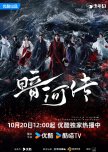
Blood River/暗河传 ushers in a new era for Beili’s mysterious and powerful assassin's guild Anhe/暗河 or Dark River. A spin-off in Zhuo Munan’s shared universe, it peels back the curtain on the legendary shadow force that lurks behind Dashing Youth (少年白马醉春风) and The Blood of Youth (少年歌行). The tale ignites when Anhe’s long-reigning Patriarch is grievously injured and poisoned, unleashing a vicious succession struggle. Two prodigies, Su Muyu and Su Changhe, are thrust into leadership. As they seize the reins and wrestle free of their shadow masters, they discover that “going legit” is a blood-soaked tightrope.
What hooks me hardest is the drumbeat insistence that Anhe must forge its own fate, not remain someone else’s concealed sharpest blade. That single theme slices straight to what I dislike most about Zhuo Munan—and the whole crop of self-styled “new wuxia” authors—stamping their seal on the genre. Real jianghu, the martial world at its molten core, is anti-establishment: outlaws and exiles who swear by their own code, patriotic yet allergic to any throne. In Zhuo’s realm, however, these legendary warriors morph into palace guard dogs for a dynasty that’s rotten, amoral, and utterly undeserving of their spilled blood. Blood River is the lone exception where the author finally gets it; it’s the only one of his works I’ll crown true wuxia in the classic sense.
The opening succession arc is pure lightning. Su Muyu clings to his oath to shield the fading Patriarch, pitting him against sworn brother Su Changhe’s hunger for a quick, clean coup. Changhe’s ambition burns naked; Muyu’s conscience is the thin leash. The script keeps spotlighting their clashing creeds yet repeatedly yanks the rug before the inevitable clash, letting plot contrivances dodge the showdown. Still, every sidestep plants seeds that bloom in The Blood of Youth, leaving a ghost of unfinished business between them. They’re magnetic characters shackled by a writer who chose to avoid conflict to tell the safe, crowd-pleasing story. That is all well and good but as a result, their character stories are not fully realised; the tension and conflict in their values never comes to a head.
I adore the pitch-black premise, but the drama starves its leads of the crackling personality and bromance that turned The Blood of Youth into legend. Writing Su Muyu as a stoic and boring slab is a fatal misstep; it’s a role that doesn't leave much for anyone to work with, let alone Gong Jun, whose acting is still a work in progress. He does not share a natural rapport with Chang Huasen and their bromance never establishes solid footing because of Muyu's vapid, and forced romance with Bai Hehuai. Romance is already not this writer's forte and it is made worse by the casting of an actress with the screen presence of Muyu's limp, overcooked noodles. Gong Jun’s voice work is serviceable whereas Chang Huasen is elevated by a stellar dubber and gains a depth and menace that Gong Jun's flat delivery can’t match. The saving grace? Supporting firecrackers—Li Daikun’s diabolical yet weirdly sympathetic Mu Ciling (my ride-or-die), plus the grizzled Patriarch, cunning Su Zhe, steadfast Lord Langya, and Spiderwoman Mu Yumu.
The drama could have told a much tighter story had it bowed out after the power struggle or the Swordless City arc. At that point, it is a natural parting of ways as it is clear that Muyu and Changhe are on different paths. Stretching further turns Muyu into a rudderless ghost; his dream to reclaim his name and rebuild Swordless City evaporates without a whisper. He becomes everyone else’s errand boy—doctor's assistant, failed chef, Changhe’s glorified wingman to ferry Anhe to the “Other Shore.” In a gut-punch twist, Changhe goes solo with his own hidden agenda and is never held accountable by Muyu for abandoning Anhe at its darkest hour. It mirrors Lord Langya surrendering the throne to an unworthy heir, then looking over his shoulder to keep catastrophe at bay instead of living the life of adventure in jianghu with the love of his life that he gave up the throne for. In a similar vein, Muyu is tied to Changhe and his vision and ambitions for Anhe.
The finale lands realistic, bittersweet, hopeful—yet screams that the villains quietly won. Like the story itself, the jaw-dropping fight choreography peaks in the first half and the sequences feel repetitive in the latter arcs. The writer’s boast that Muyu and Changhe wield true agency is as laughable as the handy twelve-year antidote to puppet poison.
Verdict: A damn fine wuxia that still feels half-told. 8.5/10.
What hooks me hardest is the drumbeat insistence that Anhe must forge its own fate, not remain someone else’s concealed sharpest blade. That single theme slices straight to what I dislike most about Zhuo Munan—and the whole crop of self-styled “new wuxia” authors—stamping their seal on the genre. Real jianghu, the martial world at its molten core, is anti-establishment: outlaws and exiles who swear by their own code, patriotic yet allergic to any throne. In Zhuo’s realm, however, these legendary warriors morph into palace guard dogs for a dynasty that’s rotten, amoral, and utterly undeserving of their spilled blood. Blood River is the lone exception where the author finally gets it; it’s the only one of his works I’ll crown true wuxia in the classic sense.
The opening succession arc is pure lightning. Su Muyu clings to his oath to shield the fading Patriarch, pitting him against sworn brother Su Changhe’s hunger for a quick, clean coup. Changhe’s ambition burns naked; Muyu’s conscience is the thin leash. The script keeps spotlighting their clashing creeds yet repeatedly yanks the rug before the inevitable clash, letting plot contrivances dodge the showdown. Still, every sidestep plants seeds that bloom in The Blood of Youth, leaving a ghost of unfinished business between them. They’re magnetic characters shackled by a writer who chose to avoid conflict to tell the safe, crowd-pleasing story. That is all well and good but as a result, their character stories are not fully realised; the tension and conflict in their values never comes to a head.
I adore the pitch-black premise, but the drama starves its leads of the crackling personality and bromance that turned The Blood of Youth into legend. Writing Su Muyu as a stoic and boring slab is a fatal misstep; it’s a role that doesn't leave much for anyone to work with, let alone Gong Jun, whose acting is still a work in progress. He does not share a natural rapport with Chang Huasen and their bromance never establishes solid footing because of Muyu's vapid, and forced romance with Bai Hehuai. Romance is already not this writer's forte and it is made worse by the casting of an actress with the screen presence of Muyu's limp, overcooked noodles. Gong Jun’s voice work is serviceable whereas Chang Huasen is elevated by a stellar dubber and gains a depth and menace that Gong Jun's flat delivery can’t match. The saving grace? Supporting firecrackers—Li Daikun’s diabolical yet weirdly sympathetic Mu Ciling (my ride-or-die), plus the grizzled Patriarch, cunning Su Zhe, steadfast Lord Langya, and Spiderwoman Mu Yumu.
The drama could have told a much tighter story had it bowed out after the power struggle or the Swordless City arc. At that point, it is a natural parting of ways as it is clear that Muyu and Changhe are on different paths. Stretching further turns Muyu into a rudderless ghost; his dream to reclaim his name and rebuild Swordless City evaporates without a whisper. He becomes everyone else’s errand boy—doctor's assistant, failed chef, Changhe’s glorified wingman to ferry Anhe to the “Other Shore.” In a gut-punch twist, Changhe goes solo with his own hidden agenda and is never held accountable by Muyu for abandoning Anhe at its darkest hour. It mirrors Lord Langya surrendering the throne to an unworthy heir, then looking over his shoulder to keep catastrophe at bay instead of living the life of adventure in jianghu with the love of his life that he gave up the throne for. In a similar vein, Muyu is tied to Changhe and his vision and ambitions for Anhe.
The finale lands realistic, bittersweet, hopeful—yet screams that the villains quietly won. Like the story itself, the jaw-dropping fight choreography peaks in the first half and the sequences feel repetitive in the latter arcs. The writer’s boast that Muyu and Changhe wield true agency is as laughable as the handy twelve-year antidote to puppet poison.
Verdict: A damn fine wuxia that still feels half-told. 8.5/10.
Was this review helpful to you?


