

 3
3 3
3 3
3


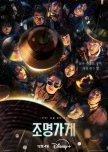
Light Shop – Horror, Heartbreak, and the Light That Never Dies
There are ghost stories, and then there are stories about ghosts—tales that don’t just try to scare you but burrow under your skin, whispering truths about grief, loss, and the things that refuse to let go. Light Shop belongs to the latter. It isn’t just a horror drama; it’s a quiet, haunting meditation on pain and redemption, where ghosts are not mere specters but wounds that refuse to heal. Wrapped in dreamlike cinematography, masterful performances, and a script that thrives on restraint, this eight-episode drama isn’t long, but every frame lingers. Like light bending through glass, it fractures and refracts, showing grief from all angles—beautiful, tragic, and inescapable.
At the heart of Light Shop is Park Bo-young, who plays an ICU nurse with the ability to see ghosts. She is the flickering warmth in this story, a lone candle against the dark. If you’ve seen her in Daily Dose of Sunshine, you’ll recognize the same quiet tenderness, but here, it’s tempered with exhaustion—a woman who has seen too much, felt too much, yet still stands. Park Bo-young doesn’t just act; she breathes life into every weary glance, every hesitant step between fear and compassion. Her character isn’t fearless—she’s just tired of running from things only she can see.
And then there’s Seolhyun, playing a vengeful ghost who drifts between sorrow and wrath. A woman wronged, she moves like a shadow, her presence both ethereal and unsettling. Yet, much like Kim Tae-ri in Revenant, there’s something almost too luminous about her rage—too tragically beautiful to be terrifying. It’s as if her grief is so overwhelming, so consuming, that it strips her of the ability to be monstrous. Instead, she is a porcelain figure with fractures spreading across the surface, on the verge of shattering but never quite breaking. It’s haunting in its own way, not because she is terrifying, but because she is achingly human, even in death.
Shin Eun-soo, the young high school girl unknowingly entangled in supernatural forces, brings a layer of innocence and fragility to the story. Her performance is subtle but effective—she is the unwitting participant in a fate she never asked for, drawn into the Light Shop’s orbit without realizing its gravity. And then there’s Lee Jung-eun, playing her mother with a depth that only she can bring. There’s a moment—wordless, agonizing—where her grief is so thick it suffocates the air itself. She doesn’t need to speak. Her face carries the weight of a thousand unsaid things, and in that moment, time seems to stand still. That’s the power of an actress who doesn’t perform emotions but inhabits them.
Holding it all together is Ju Ji-hoon as the enigmatic owner of the Light Shop. He is both guide and prisoner, the keeper of secrets wrapped in the quiet melancholy of a man who has seen too much. His presence looms over the drama, not through action, but through the sheer weight of his silence. The Light Shop itself is more than a location—it’s a liminal space between life and death, a place where memories linger and unfinished business demands resolution. And when his past unfolds in the penultimate episode, it’s a revelation that lands like a whispered tragedy, quiet yet devastating.
Visually, Light Shop is a masterpiece in contrasts. Shadows stretch long, light flickers in the periphery, and every frame feels deliberately composed, like a painting where every brushstroke matters. One of the most unforgettable scenes is when Seolhyun’s character attempts to piece her lover’s body back together, her sorrow playing out against the flickering lines of an ECG monitor. It’s more than just imagery; it’s a desperate attempt to rewind time, to hold onto love even as death has already made its claim. This is what Light Shop does so well—it doesn’t just show grief, it makes you feel its weight in every detail.
But for all its brilliance, Light Shop is not without its drawbacks. Its brevity is both a strength and a limitation. At only eight episodes, it doesn’t waste time with filler, but it also doesn’t leave much room for deeper character backstories. Some relationships feel like fragments of a larger painting, glimpsed but not fully explored. There’s an almost frustrating beauty in its restraint, like being given a glimpse of something profound but never the full picture.
And yet, Light Shop knows exactly what it wants to be. It doesn’t overstay its welcome, nor does it dilute its themes with unnecessary detours. Every element serves a purpose, and what it lacks in extended storytelling, it makes up for in emotional impact. And that impact hits hardest in the final episodes. The plot twist isn’t just a surprise; it’s a shift in emotional weight, an unraveling that pulls everything into focus. The destination changes just when you think you understand where the story is leading, and the heartbreak it delivers is as unexpected as it is inevitable.
This isn’t just a ghost story. It’s a story about people haunted by the living, by the past, by the weight of things left unsaid. It’s about the love that lingers, the wounds that never quite close, and the flickering hope that, even in death, something remains. Light Shop may be short, but it leaves an imprint that lingers far beyond its final frame.
Final Score: 8.5/10
Not just a horror drama, but an elegy for the grieving. A hauntingly beautiful experience that reminds us that even in darkness, light persists.
At the heart of Light Shop is Park Bo-young, who plays an ICU nurse with the ability to see ghosts. She is the flickering warmth in this story, a lone candle against the dark. If you’ve seen her in Daily Dose of Sunshine, you’ll recognize the same quiet tenderness, but here, it’s tempered with exhaustion—a woman who has seen too much, felt too much, yet still stands. Park Bo-young doesn’t just act; she breathes life into every weary glance, every hesitant step between fear and compassion. Her character isn’t fearless—she’s just tired of running from things only she can see.
And then there’s Seolhyun, playing a vengeful ghost who drifts between sorrow and wrath. A woman wronged, she moves like a shadow, her presence both ethereal and unsettling. Yet, much like Kim Tae-ri in Revenant, there’s something almost too luminous about her rage—too tragically beautiful to be terrifying. It’s as if her grief is so overwhelming, so consuming, that it strips her of the ability to be monstrous. Instead, she is a porcelain figure with fractures spreading across the surface, on the verge of shattering but never quite breaking. It’s haunting in its own way, not because she is terrifying, but because she is achingly human, even in death.
Shin Eun-soo, the young high school girl unknowingly entangled in supernatural forces, brings a layer of innocence and fragility to the story. Her performance is subtle but effective—she is the unwitting participant in a fate she never asked for, drawn into the Light Shop’s orbit without realizing its gravity. And then there’s Lee Jung-eun, playing her mother with a depth that only she can bring. There’s a moment—wordless, agonizing—where her grief is so thick it suffocates the air itself. She doesn’t need to speak. Her face carries the weight of a thousand unsaid things, and in that moment, time seems to stand still. That’s the power of an actress who doesn’t perform emotions but inhabits them.
Holding it all together is Ju Ji-hoon as the enigmatic owner of the Light Shop. He is both guide and prisoner, the keeper of secrets wrapped in the quiet melancholy of a man who has seen too much. His presence looms over the drama, not through action, but through the sheer weight of his silence. The Light Shop itself is more than a location—it’s a liminal space between life and death, a place where memories linger and unfinished business demands resolution. And when his past unfolds in the penultimate episode, it’s a revelation that lands like a whispered tragedy, quiet yet devastating.
Visually, Light Shop is a masterpiece in contrasts. Shadows stretch long, light flickers in the periphery, and every frame feels deliberately composed, like a painting where every brushstroke matters. One of the most unforgettable scenes is when Seolhyun’s character attempts to piece her lover’s body back together, her sorrow playing out against the flickering lines of an ECG monitor. It’s more than just imagery; it’s a desperate attempt to rewind time, to hold onto love even as death has already made its claim. This is what Light Shop does so well—it doesn’t just show grief, it makes you feel its weight in every detail.
But for all its brilliance, Light Shop is not without its drawbacks. Its brevity is both a strength and a limitation. At only eight episodes, it doesn’t waste time with filler, but it also doesn’t leave much room for deeper character backstories. Some relationships feel like fragments of a larger painting, glimpsed but not fully explored. There’s an almost frustrating beauty in its restraint, like being given a glimpse of something profound but never the full picture.
And yet, Light Shop knows exactly what it wants to be. It doesn’t overstay its welcome, nor does it dilute its themes with unnecessary detours. Every element serves a purpose, and what it lacks in extended storytelling, it makes up for in emotional impact. And that impact hits hardest in the final episodes. The plot twist isn’t just a surprise; it’s a shift in emotional weight, an unraveling that pulls everything into focus. The destination changes just when you think you understand where the story is leading, and the heartbreak it delivers is as unexpected as it is inevitable.
This isn’t just a ghost story. It’s a story about people haunted by the living, by the past, by the weight of things left unsaid. It’s about the love that lingers, the wounds that never quite close, and the flickering hope that, even in death, something remains. Light Shop may be short, but it leaves an imprint that lingers far beyond its final frame.
Final Score: 8.5/10
Not just a horror drama, but an elegy for the grieving. A hauntingly beautiful experience that reminds us that even in darkness, light persists.
Was this review helpful to you?


