


 3
3 3
3 3
3


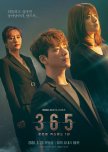
365: Repeat The Year — The Time Loop That Could Have Been Timeless
Some dramas are like finely tuned clocks, where every narrative cog clicks into place with satisfying precision. Others are more like IKEA furniture built without instructions—there’s potential, there’s effort, but somewhere around hour six you’re screaming into the void, holding a drawer handle that doesn’t fit.
365: Repeat The Year is both.
This time travel thriller, based on a Japanese novel, opens with a premise that’s crackling with intrigue: ten individuals are offered the chance to reset their lives by one year. They accept. But soon after, they begin to die—one by one.
At first, it feels like we’re stepping into a tightly-wound mystery where cause and effect are more important than whodunnit. And honestly? I was hooked. But somewhere in the middle, the drama itself hits reset… into chaos. Let’s break this down.
365: Repeat The Year starts with a premise sharp enough to cut through my “I’ve seen this before” skepticism. Ten people are given the chance to reset their lives by going back exactly one year, memories intact. Sounds simple, right? Wrong. With each reset comes a ripple—a butterfly effect that begins to unravel reality itself. And in the middle of this chaos, two unlikely partners emerge: Shin Ga-hyun, a brooding webtoon artist played by Nam Ji-hyun, and Ji Hyung-joo, an easy-going detective portrayed by Lee Jun-hyuk.
As someone who thrives on a well-crafted time travel narrative, I was instantly drawn in. At least, for the first 10 episodes or so.
Watching Nam Ji-hyun evolve from the literal sunshine of Shopping King Louis to the tenacious and emotionally scarred Ga-hyun was a revelation. Her micro-expressions hit like emotional nukes, and her ability to embody such a starkly different role proves she’s a powerhouse in any genre.
Nam Ji-hyun plays Shin Ga-hyun, a disabled webtoon artist whose life has been defined by trauma, solitude, and an eerie perceptiveness that borders on psychic. If you’re coming straight from Shopping King Louis, you’re in for a shock. Gone is the chirpy mountain girl energy—in its place is a brooding, hyper-aware woman whose emotional range is stunningly restrained but razor-sharp.
Watching her in this role is like watching a volcano pretend to be a mountain. She simmers constantly, and when she finally erupts, it’s devastating. Her quiet moments hit harder than most screaming matches in other dramas.
Then there’s Lee Jun-hyuk, who plays detective Ji Hyung-joo—initially a carefree cop with an uncanny sense of justice. He enters the reset with a personal mission, but slowly and painfully morphs into a man haunted by reality bending out of shape around him. If Ga-hyun is the cold logic of this drama, Hyung-joo is its unraveling heart.
And when I say unravel, I mean it.
By the time episode 20 hits, his psyche is fraying at the edges in a way that’s almost poetic. Lee Jun-hyuk plays it with such nuance that I found myself more invested in watching him fall apart than solving the murder mystery at hand. The pain of remembering a timeline no one else does is rendered with subtle, aching precision.
Together, Ji-hyun and Jun-hyuk share a chemistry that feels organic and unforced. It’s refreshing to see a male-female partnership where romantic tension simmers just beneath the surface without ever boiling over unnecessarily. I would happily watch them lead a buddy-cop romcom spinoff—preferably one where no one resets time and ruins everything.
At first, 365 feels like it understands the delicate art of time travel storytelling. It sets up its rules carefully, like a watchmaker assembling intricate gears, and it teases out consequences in a way that makes you lean in closer. The butterfly effect here isn’t just a gimmick; it feels ominous, inevitable—like a ripple turning into a tsunami.
But then… somewhere around the halfway mark, the butterfly doesn’t just flap its wings. It gets run over by a dump truck.
Instead of exploring the consequences of tiny changes with nuance, the drama starts lobbing random chaos into the timeline like a toddler throwing blocks. Cause-and-effect stops being thoughtful and starts feeling like a plot lottery: “What if this happens? No? Okay, how about this? Still not exciting enough? Quick—somebody reset the writer’s brain!”
It’s like watching a chef start a meal with the precision of a Michelin star contender, only to panic halfway and dump ketchup and marshmallows into the stew because they think it’ll keep you on your toes. The resulting “flavor” is more confusing than thrilling.
At its best, 365 hints at the terrifying weight of choices and how even well-meaning actions can spiral into tragedy. But during the middle stretch, it loses faith in that subtle power and trades it for shock tactics. Instead of logical ripples, we get narrative tsunamis with no clear cause—and by then, even the characters seem exhausted trying to keep up with their own reality.
What makes it so frustrating is that you can see the potential. The bones of an elegant, mind-bending thriller are there. But they’re buried under layers of narrative overreach, last-minute twists, and a desperation to keep viewers guessing. Instead of letting its butterfly effect bloom naturally, 365 smashes its wings flat, tapes them to a firecracker, and lights the fuse.
The middle arc of 365 isn’t just bad—it’s an active crime scene. It’s as if the writers had their own personal reset button and used it liberally, hoping we wouldn’t notice their narrative whiplash as they scrambled to “keep things fresh.” Spoiler: we noticed.
What started as a lean, intelligent time-travel thriller suddenly swerved into a Madlib horror story, where logic was sacrificed on the altar of cheap tension. The once-tight writing began tossing out developments that felt less like plot twists and more like random words pulled from a hat:
“Okay guys… this week let’s make Professor Lee Shin secretly evil! And next week… how about she’s redeemable again? No continuity? Eh, the audience won’t care.”
But I do care.
It’s not that I demand realism from a show about time resets—but I do demand narrative integrity. If a drama establishes its own rules, the bare minimum is to follow them. Instead, 365 seemed to repeatedly break the very systems it had spent episodes painstakingly constructing.
By episode 12, my suspension of disbelief was on life support.
And then there’s Professor Lee Shin. Initially, she was written as this enigmatic figure—a possible mastermind operating in the shadows, someone whose true intentions kept me guessing. But in a wild pivot worthy of Saturday morning cartoons, she suddenly became a scenery-chewing villainess. She started spouting monologues that felt ripped straight out of the Batman rogues gallery, and just as abruptly, the writers tried to redeem her in the finale.
You can’t just yo-yo a character’s morality like this and expect me to still be emotionally invested. By the time her redemption arc rolled around, I felt nothing but irritation.
In any story—especially one as intricate as time travel—narrative integrity isn’t just important. It’s oxygen. Narrative integrity means this: once a writer sets up the rules of their universe, they honor those rules consistently, no matter how wild or fantastical the premise is. It’s the invisible contract between storyteller and audience. I, the viewer, agree to suspend my disbelief—to believe in your unicorns, time resets, or alien body swaps—as long as you play fair with the logic of your world.
Here’s the thing: you can absolutely tell me the female lead rides a magical unicorn to work every morning. I’ll nod, smile, and follow along. But you have to show me how she got it. Maybe she rescued it from a shady back-alley stable. Maybe she conjured it during a blood moon ritual. Fine, I’m with you.
But don’t wait until episode 15 to suddenly reveal that this sweet, mystical unicorn can fire tank shells from its mouth and single-handedly win a war. That isn’t a plot twist. That’s narrative betrayal. And that’s the flavor of whiplash 365 serves up during its wobbly middle arc.
The writers set up their own house rules for time travel early on—clear, promising, and grounded enough to keep me hooked. But midway through, it’s as if they tossed those carefully laid rules into a shredder. Cause and effect? Shattered. Character logic? Gone. Basic realism in the way police or hospitals operate? Tossed out like expired milk.
The result is maddening. For a story built on temporal cause-and-effect, watching the writers reset their own narrative consistency feels like trying to solve a puzzle where half the pieces are swapped for random Lego bricks.
This isn’t about nitpicking realism in a sci-fi premise—it’s about respecting the world you created as a storyteller. If you don’t, why should I invest? By the midpoint of 365, I found myself less immersed in the mystery and more distracted by glaring inconsistencies, my brain spinning in the background like a Windows error screen.
A great time travel drama feels like a Möbius strip—smooth, seamless, and endlessly fascinating when you trace its loops. 365, at its worst, feels more like a frayed rope you’re clinging to as the strands snap one by one.
365: Repeat The Year is frustrating because it’s so blatantly obvious how brilliant this could have been. The strong start and emotionally charged final act are sandwiched between a messy middle that nearly sinks the entire ship. It’s the narrative equivalent of eating a gourmet meal, suffering food poisoning halfway, and then ending with a surprisingly good dessert—but still wondering if it was worth it.
365: Repeat The Year is like a beautifully plated dessert with a soggy middle. The concept is rich, the performances stellar, and the ending packs an emotional punch most dramas dream of. But to get there, you’ll need to survive a dozen episodes of narrative confusion, character betrayal, and logic gaps wide enough to fall into.
I don’t regret watching it. But I do wish I could reset and skip the parts that made me question whether anyone in this universe has ever heard of backup, gloves, or common sense.
Still, that last time loop? That one was worth it.
If you’re patient enough to survive the mind-rotting middle, there’s a lot to enjoy here. But don’t expect narrative consistency or logical character development. Bring your suspension of disbelief and maybe some coffee-flavored Kopiko candies (because you’re going to need them).
Find the full review of this drama and other titles on byrei.ink
365: Repeat The Year is both.
This time travel thriller, based on a Japanese novel, opens with a premise that’s crackling with intrigue: ten individuals are offered the chance to reset their lives by one year. They accept. But soon after, they begin to die—one by one.
At first, it feels like we’re stepping into a tightly-wound mystery where cause and effect are more important than whodunnit. And honestly? I was hooked. But somewhere in the middle, the drama itself hits reset… into chaos. Let’s break this down.
365: Repeat The Year starts with a premise sharp enough to cut through my “I’ve seen this before” skepticism. Ten people are given the chance to reset their lives by going back exactly one year, memories intact. Sounds simple, right? Wrong. With each reset comes a ripple—a butterfly effect that begins to unravel reality itself. And in the middle of this chaos, two unlikely partners emerge: Shin Ga-hyun, a brooding webtoon artist played by Nam Ji-hyun, and Ji Hyung-joo, an easy-going detective portrayed by Lee Jun-hyuk.
As someone who thrives on a well-crafted time travel narrative, I was instantly drawn in. At least, for the first 10 episodes or so.
Watching Nam Ji-hyun evolve from the literal sunshine of Shopping King Louis to the tenacious and emotionally scarred Ga-hyun was a revelation. Her micro-expressions hit like emotional nukes, and her ability to embody such a starkly different role proves she’s a powerhouse in any genre.
Nam Ji-hyun plays Shin Ga-hyun, a disabled webtoon artist whose life has been defined by trauma, solitude, and an eerie perceptiveness that borders on psychic. If you’re coming straight from Shopping King Louis, you’re in for a shock. Gone is the chirpy mountain girl energy—in its place is a brooding, hyper-aware woman whose emotional range is stunningly restrained but razor-sharp.
Watching her in this role is like watching a volcano pretend to be a mountain. She simmers constantly, and when she finally erupts, it’s devastating. Her quiet moments hit harder than most screaming matches in other dramas.
Then there’s Lee Jun-hyuk, who plays detective Ji Hyung-joo—initially a carefree cop with an uncanny sense of justice. He enters the reset with a personal mission, but slowly and painfully morphs into a man haunted by reality bending out of shape around him. If Ga-hyun is the cold logic of this drama, Hyung-joo is its unraveling heart.
And when I say unravel, I mean it.
By the time episode 20 hits, his psyche is fraying at the edges in a way that’s almost poetic. Lee Jun-hyuk plays it with such nuance that I found myself more invested in watching him fall apart than solving the murder mystery at hand. The pain of remembering a timeline no one else does is rendered with subtle, aching precision.
Together, Ji-hyun and Jun-hyuk share a chemistry that feels organic and unforced. It’s refreshing to see a male-female partnership where romantic tension simmers just beneath the surface without ever boiling over unnecessarily. I would happily watch them lead a buddy-cop romcom spinoff—preferably one where no one resets time and ruins everything.
At first, 365 feels like it understands the delicate art of time travel storytelling. It sets up its rules carefully, like a watchmaker assembling intricate gears, and it teases out consequences in a way that makes you lean in closer. The butterfly effect here isn’t just a gimmick; it feels ominous, inevitable—like a ripple turning into a tsunami.
But then… somewhere around the halfway mark, the butterfly doesn’t just flap its wings. It gets run over by a dump truck.
Instead of exploring the consequences of tiny changes with nuance, the drama starts lobbing random chaos into the timeline like a toddler throwing blocks. Cause-and-effect stops being thoughtful and starts feeling like a plot lottery: “What if this happens? No? Okay, how about this? Still not exciting enough? Quick—somebody reset the writer’s brain!”
It’s like watching a chef start a meal with the precision of a Michelin star contender, only to panic halfway and dump ketchup and marshmallows into the stew because they think it’ll keep you on your toes. The resulting “flavor” is more confusing than thrilling.
At its best, 365 hints at the terrifying weight of choices and how even well-meaning actions can spiral into tragedy. But during the middle stretch, it loses faith in that subtle power and trades it for shock tactics. Instead of logical ripples, we get narrative tsunamis with no clear cause—and by then, even the characters seem exhausted trying to keep up with their own reality.
What makes it so frustrating is that you can see the potential. The bones of an elegant, mind-bending thriller are there. But they’re buried under layers of narrative overreach, last-minute twists, and a desperation to keep viewers guessing. Instead of letting its butterfly effect bloom naturally, 365 smashes its wings flat, tapes them to a firecracker, and lights the fuse.
The middle arc of 365 isn’t just bad—it’s an active crime scene. It’s as if the writers had their own personal reset button and used it liberally, hoping we wouldn’t notice their narrative whiplash as they scrambled to “keep things fresh.” Spoiler: we noticed.
What started as a lean, intelligent time-travel thriller suddenly swerved into a Madlib horror story, where logic was sacrificed on the altar of cheap tension. The once-tight writing began tossing out developments that felt less like plot twists and more like random words pulled from a hat:
“Okay guys… this week let’s make Professor Lee Shin secretly evil! And next week… how about she’s redeemable again? No continuity? Eh, the audience won’t care.”
But I do care.
It’s not that I demand realism from a show about time resets—but I do demand narrative integrity. If a drama establishes its own rules, the bare minimum is to follow them. Instead, 365 seemed to repeatedly break the very systems it had spent episodes painstakingly constructing.
By episode 12, my suspension of disbelief was on life support.
And then there’s Professor Lee Shin. Initially, she was written as this enigmatic figure—a possible mastermind operating in the shadows, someone whose true intentions kept me guessing. But in a wild pivot worthy of Saturday morning cartoons, she suddenly became a scenery-chewing villainess. She started spouting monologues that felt ripped straight out of the Batman rogues gallery, and just as abruptly, the writers tried to redeem her in the finale.
You can’t just yo-yo a character’s morality like this and expect me to still be emotionally invested. By the time her redemption arc rolled around, I felt nothing but irritation.
In any story—especially one as intricate as time travel—narrative integrity isn’t just important. It’s oxygen. Narrative integrity means this: once a writer sets up the rules of their universe, they honor those rules consistently, no matter how wild or fantastical the premise is. It’s the invisible contract between storyteller and audience. I, the viewer, agree to suspend my disbelief—to believe in your unicorns, time resets, or alien body swaps—as long as you play fair with the logic of your world.
Here’s the thing: you can absolutely tell me the female lead rides a magical unicorn to work every morning. I’ll nod, smile, and follow along. But you have to show me how she got it. Maybe she rescued it from a shady back-alley stable. Maybe she conjured it during a blood moon ritual. Fine, I’m with you.
But don’t wait until episode 15 to suddenly reveal that this sweet, mystical unicorn can fire tank shells from its mouth and single-handedly win a war. That isn’t a plot twist. That’s narrative betrayal. And that’s the flavor of whiplash 365 serves up during its wobbly middle arc.
The writers set up their own house rules for time travel early on—clear, promising, and grounded enough to keep me hooked. But midway through, it’s as if they tossed those carefully laid rules into a shredder. Cause and effect? Shattered. Character logic? Gone. Basic realism in the way police or hospitals operate? Tossed out like expired milk.
The result is maddening. For a story built on temporal cause-and-effect, watching the writers reset their own narrative consistency feels like trying to solve a puzzle where half the pieces are swapped for random Lego bricks.
This isn’t about nitpicking realism in a sci-fi premise—it’s about respecting the world you created as a storyteller. If you don’t, why should I invest? By the midpoint of 365, I found myself less immersed in the mystery and more distracted by glaring inconsistencies, my brain spinning in the background like a Windows error screen.
A great time travel drama feels like a Möbius strip—smooth, seamless, and endlessly fascinating when you trace its loops. 365, at its worst, feels more like a frayed rope you’re clinging to as the strands snap one by one.
365: Repeat The Year is frustrating because it’s so blatantly obvious how brilliant this could have been. The strong start and emotionally charged final act are sandwiched between a messy middle that nearly sinks the entire ship. It’s the narrative equivalent of eating a gourmet meal, suffering food poisoning halfway, and then ending with a surprisingly good dessert—but still wondering if it was worth it.
365: Repeat The Year is like a beautifully plated dessert with a soggy middle. The concept is rich, the performances stellar, and the ending packs an emotional punch most dramas dream of. But to get there, you’ll need to survive a dozen episodes of narrative confusion, character betrayal, and logic gaps wide enough to fall into.
I don’t regret watching it. But I do wish I could reset and skip the parts that made me question whether anyone in this universe has ever heard of backup, gloves, or common sense.
Still, that last time loop? That one was worth it.
If you’re patient enough to survive the mind-rotting middle, there’s a lot to enjoy here. But don’t expect narrative consistency or logical character development. Bring your suspension of disbelief and maybe some coffee-flavored Kopiko candies (because you’re going to need them).
Find the full review of this drama and other titles on byrei.ink
Was this review helpful to you?


