


 3
3 3
3 3
3


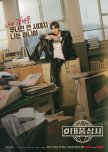
Typhoon Family Hurts in All the Right Places
Typhoon Family blindsided me.
I went in thinking this would be a lighter, slightly nostalgic “IMF-era but make it comedic” kind of watch. You know the type, scrappy underdogs, a few financial mishaps, lots of shouting over contracts, maybe some inspirational background music swelling at the right moments. I even half-jokingly thought it might be a toned-down Wolf of Wall Street, except with fewer drugs and more fabric.
What I got instead was a drama that looks cheerful on the surface but quietly dismantles you piece by piece, like a house that seems intact until you realize the foundation has been cracking the entire time.
At the heart of it all is Kang Tae-poong, portrayed with emotional precision by Lee Jun-ho, a character who smiles like someone trying very hard not to sink. His father’s sudden death throws him into the deep end of the trading world during the IMF crisis, and from that point on, the drama becomes less about business mechanics and more about endurance. Not the flashy kind. The quiet, grinding kind. The kind where you don’t collapse because there are too many people depending on you to allow that luxury.
What struck me early wasn’t just the financial stakes, but the emotional ones. Tae-pong doesn’t mourn loudly. He doesn’t get a dramatic breakdown or a cinematic cry in the rain. Instead, grief lodges itself somewhere behind his eyes while he takes on the role of head of the family, provider, decision-maker, emotional firewall. When a friend asks him why he hasn’t cried yet, his answer: “I don’t know if I’m sad or angry”, feels painfully real. Anyone who’s ever had to stay functional while breaking internally will recognize that emotional limbo immediately.
The drama excels when it focuses on this kind of emotional subtext, the things characters don’t say, but live with.
The workplace dynamics are another area where Typhoon Family quietly shines. Watching Tae-pong’s employees show up in the middle of a rainstorm to protect rolls of Italian fabric felt foreign and oddly moving at the same time. In a world where work-life boundaries are (rightfully) guarded, this level of devotion can feel uncomfortable to witness. But the drama doesn’t romanticize it blindly. The line “This is our livelihood too” grounds the moment in shared survival rather than blind loyalty. It’s not corporate propaganda; it’s collective desperation during a national crisis.
And that’s the key word here: grounded.
When the drama sticks to realism, failed deals, unpaid deposits, warehouses that leak, partners who collapse under IMF pressure, it’s devastating in the best way. Tae-pong keeps doing the right things, and life keeps knocking him sideways anyway. There’s a particular cruelty in watching someone be earnest, hardworking, and careful… and still lose. That’s where Typhoon Family hurts the most, because it refuses to reward virtue immediately.
But this isn’t a drama about wall-to-wall tragedy. What makes Typhoon Family genuinely compelling is how every emotional beat is anchored in lived-in human rhythms. Tae-poong’s mother, Jung Jeong-mi, played with weathered warmth by Kim Ji-young, becomes his emotional anchor in a world that constantly demands him be strong. Her unconditional support, even when she struggles to accept how their lives have changed, offers the first real emotional release for Tae-poong, and eventually for us.
The moment where Tae-pong finally admits to his mother, “I’m having a hard time,” after losing money on a deal that fell apart? That’s five episodes of silent pressure finally releasing. It’s not melodramatic. It’s not loud. It’s just devastating. And yes, I wept.
Then there’s Oh Mi-seon, brought to life by Kim Min-ha, whose presence in Typhoon Family is quietly magnetic. As the diligent bookkeeper who keeps the company afloat more often than Tae-poong does, she’s hardworking, earnest, and deeply human. The show uses her rooted realism to ground its more sweeping emotional arcs.
Now… we need to talk about the romance. Because this is where Typhoon Family stumbles, not catastrophically, but noticeably.
The main romance never worked for me. Not because it was offensive or toxic, but because it felt unnecessary and oddly misplaced. Tae-pong and Min-ho function beautifully as platonic partners, emotionally, narratively, and tonally. Their shared resilience, mutual respect, and alignment in goals were already compelling. Adding romance didn’t deepen that bond; it diluted it.
Worse, the attempts to make their relationship “cute” often veered into cringeworthy territory. Episode 14’s beach scenes, in particular, had me fast-forwarding, not out of impatience, but because they actively pulled me out of a drama I otherwise cared deeply about. That’s rare for me. I don’t fast-forward lightly.
What makes this flaw more frustrating is that the drama knows how to write romance. The secondary romance between Wang Nam-mo and Oh Mi-ho is proof of that. It’s layered, earned, and deeply human. Nam-mo’s growth from a carefree rich kid into a responsible adult, especially after his mother’s financial collapse, is one of the most satisfying arcs in the show. Their relationship unfolds naturally, without hijacking the narrative or undermining character integrity. Which is why the main romance feels like a miscalculation rather than a lack of skill.
Ironically, this flaw also highlights one of Typhoon Family’s greatest strengths: it almost achieved something rare, a story where the male and female leads could have remained best friends, united by shared purpose rather than romantic obligation. That choice would have been refreshing, even radical, in a genre that often defaults to romance as narrative glue. The fact that the drama comes so close to that kind of perfection makes the stumble more noticeable… and more painful.
Still, despite this misstep, I stayed. I stayed because the world felt lived-in. Because the characters felt resilient without being invincible. Because the pain was earned and never weaponized for shock value. Because even when I knew things would eventually be okay, this isn’t torture porn, the journey still hurt in ways that mattered.
Typhoon Family is not a perfect drama. But it’s an honest one. It’s about people who keep going when the math doesn’t work, when the contracts fall through, when grief doesn’t give them time to process itself. It’s about families, biological and chosen, holding together with threadbare hope and stubborn warmth. And sometimes, that’s enough.
This drama didn’t just entertain me. It sat with me. Quietly. Relentlessly. Like a storm you don’t notice until you’re soaked through.
And honestly? I wouldn’t have it any other way.
I went in thinking this would be a lighter, slightly nostalgic “IMF-era but make it comedic” kind of watch. You know the type, scrappy underdogs, a few financial mishaps, lots of shouting over contracts, maybe some inspirational background music swelling at the right moments. I even half-jokingly thought it might be a toned-down Wolf of Wall Street, except with fewer drugs and more fabric.
What I got instead was a drama that looks cheerful on the surface but quietly dismantles you piece by piece, like a house that seems intact until you realize the foundation has been cracking the entire time.
At the heart of it all is Kang Tae-poong, portrayed with emotional precision by Lee Jun-ho, a character who smiles like someone trying very hard not to sink. His father’s sudden death throws him into the deep end of the trading world during the IMF crisis, and from that point on, the drama becomes less about business mechanics and more about endurance. Not the flashy kind. The quiet, grinding kind. The kind where you don’t collapse because there are too many people depending on you to allow that luxury.
What struck me early wasn’t just the financial stakes, but the emotional ones. Tae-pong doesn’t mourn loudly. He doesn’t get a dramatic breakdown or a cinematic cry in the rain. Instead, grief lodges itself somewhere behind his eyes while he takes on the role of head of the family, provider, decision-maker, emotional firewall. When a friend asks him why he hasn’t cried yet, his answer: “I don’t know if I’m sad or angry”, feels painfully real. Anyone who’s ever had to stay functional while breaking internally will recognize that emotional limbo immediately.
The drama excels when it focuses on this kind of emotional subtext, the things characters don’t say, but live with.
The workplace dynamics are another area where Typhoon Family quietly shines. Watching Tae-pong’s employees show up in the middle of a rainstorm to protect rolls of Italian fabric felt foreign and oddly moving at the same time. In a world where work-life boundaries are (rightfully) guarded, this level of devotion can feel uncomfortable to witness. But the drama doesn’t romanticize it blindly. The line “This is our livelihood too” grounds the moment in shared survival rather than blind loyalty. It’s not corporate propaganda; it’s collective desperation during a national crisis.
And that’s the key word here: grounded.
When the drama sticks to realism, failed deals, unpaid deposits, warehouses that leak, partners who collapse under IMF pressure, it’s devastating in the best way. Tae-pong keeps doing the right things, and life keeps knocking him sideways anyway. There’s a particular cruelty in watching someone be earnest, hardworking, and careful… and still lose. That’s where Typhoon Family hurts the most, because it refuses to reward virtue immediately.
But this isn’t a drama about wall-to-wall tragedy. What makes Typhoon Family genuinely compelling is how every emotional beat is anchored in lived-in human rhythms. Tae-poong’s mother, Jung Jeong-mi, played with weathered warmth by Kim Ji-young, becomes his emotional anchor in a world that constantly demands him be strong. Her unconditional support, even when she struggles to accept how their lives have changed, offers the first real emotional release for Tae-poong, and eventually for us.
The moment where Tae-pong finally admits to his mother, “I’m having a hard time,” after losing money on a deal that fell apart? That’s five episodes of silent pressure finally releasing. It’s not melodramatic. It’s not loud. It’s just devastating. And yes, I wept.
Then there’s Oh Mi-seon, brought to life by Kim Min-ha, whose presence in Typhoon Family is quietly magnetic. As the diligent bookkeeper who keeps the company afloat more often than Tae-poong does, she’s hardworking, earnest, and deeply human. The show uses her rooted realism to ground its more sweeping emotional arcs.
Now… we need to talk about the romance. Because this is where Typhoon Family stumbles, not catastrophically, but noticeably.
The main romance never worked for me. Not because it was offensive or toxic, but because it felt unnecessary and oddly misplaced. Tae-pong and Min-ho function beautifully as platonic partners, emotionally, narratively, and tonally. Their shared resilience, mutual respect, and alignment in goals were already compelling. Adding romance didn’t deepen that bond; it diluted it.
Worse, the attempts to make their relationship “cute” often veered into cringeworthy territory. Episode 14’s beach scenes, in particular, had me fast-forwarding, not out of impatience, but because they actively pulled me out of a drama I otherwise cared deeply about. That’s rare for me. I don’t fast-forward lightly.
What makes this flaw more frustrating is that the drama knows how to write romance. The secondary romance between Wang Nam-mo and Oh Mi-ho is proof of that. It’s layered, earned, and deeply human. Nam-mo’s growth from a carefree rich kid into a responsible adult, especially after his mother’s financial collapse, is one of the most satisfying arcs in the show. Their relationship unfolds naturally, without hijacking the narrative or undermining character integrity. Which is why the main romance feels like a miscalculation rather than a lack of skill.
Ironically, this flaw also highlights one of Typhoon Family’s greatest strengths: it almost achieved something rare, a story where the male and female leads could have remained best friends, united by shared purpose rather than romantic obligation. That choice would have been refreshing, even radical, in a genre that often defaults to romance as narrative glue. The fact that the drama comes so close to that kind of perfection makes the stumble more noticeable… and more painful.
Still, despite this misstep, I stayed. I stayed because the world felt lived-in. Because the characters felt resilient without being invincible. Because the pain was earned and never weaponized for shock value. Because even when I knew things would eventually be okay, this isn’t torture porn, the journey still hurt in ways that mattered.
Typhoon Family is not a perfect drama. But it’s an honest one. It’s about people who keep going when the math doesn’t work, when the contracts fall through, when grief doesn’t give them time to process itself. It’s about families, biological and chosen, holding together with threadbare hope and stubborn warmth. And sometimes, that’s enough.
This drama didn’t just entertain me. It sat with me. Quietly. Relentlessly. Like a storm you don’t notice until you’re soaked through.
And honestly? I wouldn’t have it any other way.
Was this review helpful to you?


