
 Editorials

 3
3 3
3 3
3


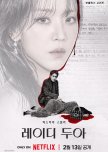
Eight Episodes Were Not Enough
I finished The Art of Sarah with two feelings living side by side. One was frustration. The other was gratitude. Frustration because this story clearly wanted more room to breathe than Netflix allowed it. Gratitude because even inside those constraints, I was given one of the most astonishing acting performances I have seen in years.
I wanted to do my usual dissections for this kdrama, but instead I opted for a mini-review. Not because the drama lacks ambition, but because the writing itself does not sustain that kind of structural scrutiny. What it does sustain, and what it commands attention for almost the entire runtime, is a performance so commanding that it recalibrates how I experienced the show minute by minute.
Let’s get this out of the way early. This drama lives and dies on Shin Hae-sun. If you are here for airtight plotting, ensemble balance, or narrative elegance all the way to the finish line, you will feel the cracks by the end. If you are here to watch an actor bend time, identity, and emotional gravity around herself, you will be glued to the screen.
And I was.
She plays Sarah Kim, our titular character, while also inhabiting Kim Eun-jae across different points of her life, and at times slipping seamlessly into Mok Ga-hui. On paper, this already sounds demanding. On screen, it becomes something far more unsettling and immersive because of how she approaches it. She does not rely on loud transformations or obvious markers to distinguish these identities. Instead, she works in micro shifts. A change in breathing before a sentence. A slight adjustment in posture. The way her voice settles lower or softens at the edges. Even the way she occupies silence feels different depending on who she is in that moment.
What impressed me most is how completely she erased her own acting fingerprints. Most actors, even excellent ones, carry signatures that resurface under pressure. You recognize the cadence, the emotional posture, the familiar rhythm when scenes demand intensity. Shin Hae-sun does not do that. Each character feels built from a different internal logic, and because that internal engine changes, everything else follows naturally. By the time the drama reached its final stretch, I genuinely found myself unsure who the real Sarah Kim even was anymore. That confusion did not feel like a flaw. It felt intentional, almost inevitable, as if the illusion had grown strong enough to take on a life of its own.
I do not say this lightly. This might be her strongest performance yet. Not because it chases spectacle, but because it remains emotionally coherent even when the writing around it begins to compress and strain. When the story rushes, she steadies it. When structure tightens too quickly, she absorbs the impact. She does not fix the script. She makes it survivable, and there is a meaningful difference there.
Opposite her is Lee Joon-hyuk as Park Mu-gyeong, the detective trying to unravel Sarah Kim. This casting matters more than it might seem at first glance.
Here is the hill I will always kill-on, Shin Hae sun is a supernova level talent. More often than not, I barely notice her co leads because she redefines the gravitational field. Everything around her is pulled inward. Co leads who cannot rise to her level simply disappear in comparison. There are very few male actors who can stand next to her without being devoured. Ji Chang-wook managed it in Welcome to Samdalri. Kim Jung-hyun did it memorably in Mr. Queen. Lee Joon-hyuk now earns his place in that quiet pantheon with his work here.
His Park Mu gyeong is calm, controlled, observant. A sharp contrast to his work in Stranger, and proof of his range when given room. He does not try to overpower her scenes. He listens. He reacts. He lets tension sit in silence.
The last two episodes make the smartest decision this drama ever makes. They narrow their focus. They put these two in a room and let them trade dialogue, breath, and micro expressions. Those interrogation scenes are some of the strongest acting exchanges I have seen in a long time. No music cues screaming at you. No camera gimmicks doing the emotional labor. Just two actors holding eye contact and daring the other to blink first. There is no romance here, yet the chemistry is electric. Not attraction, but friction. Curiosity. Mutual recognition. Lee Joon-hyuk matches her beat for beat, and that is no small achievement. Perfect co lead casting.
From a production standpoint, the audio and OST are functional and unremarkable. They do not distract, but they do not linger either. The visuals, however, do far more heavy lifting. The drama makes effective use of negative space, framing characters against empty rooms, glass walls, and long corridors. Luxury is often captured in slow motion, not to glorify it, but to emphasize its artificial stillness. These visual choices align well with the story’s fixation on surfaces, wealth, and constructed identity, and they trust the actors to carry the emotional weight within the frame.
The camera often pulls back when you expect it to push in, letting silence stretch. It trusts the actors to fill the frame. When you have Shin Hae-sun and Lee Joon-hyuk, that trust is well placed.
Narratively, The Art of Sarah begins with confidence. The present day murder of Sarah Kim anchors the story, while the past unfolds through Park Mu-gyeong’s interviews and investigations. The structure invites you to piece things together. It withholds answers. It respects your attention. For a while, the mystery holds. And then the format starts to bite.
Eight episodes. Thirty to forty five minutes each. That is not enough time for what this story wants to do. As the final acts approach, the plot tightens correctly on paper, but emotionally it feels rushed. Revelations arrive before they have time to land. Key moments appear as snippets and flashbacks rather than fully embodied scenes. This is a drama that deserved a full sixteen episode, one hour treatment. I wanted to see those final turns actually acted by all the players, not summarized through edits. The ending reaches closure, but the road there feels compressed, and that compression introduces inconsistencies. They are not catastrophic. But they are noticeable. And yes, they bothered me.
There is another irony here. The two leads are so strong together that they eclipse everyone else.
This is not a knock on the supporting cast. Names like Bae Jong-ok, Kim Jong-tae, Lee Yi-dam, and Park Bo-kyung are more than capable. They serve their roles well. They do what the script asks of them.
The problem is scale. Next to Shin Hae-sun and Lee Joon-hyuk, their stories fade. Not because they are weak, but because the drama itself pulls focus so aggressively toward its center. If you asked me now to recount specific supporting arcs, I would struggle. Ask me about the interrogation room scenes, and I can replay them shot for shot.
That imbalance is another casualty of the short format. With more time, those characters could have breathed. Here, they exist largely to reflect light back onto Sarah Kim.
I am famously intolerant of inconsistencies, whether in narrative logic, character behavior, or plot twists that confuse chaos with cleverness. I have eviscerated dramas for far less. So why did this one still work for me. Because when the structure wavered, the emotional anchor never did. Shin Hae sun remained constant throughout. She felt like a lighthouse in rough waters, steady and unflinching, guiding me through the storm even when the sea grew messy.
Verdict: Compared to my other hyped 2026 watches, Dear X and Can This Love Be Translated, The Art of Sarah is the first drama this year that truly lived up to its anticipation for me. Not because it was perfect, but because it delivered honesty in its ambition and excellence in its craft. It should have been bigger. Longer. More patient. The narrative needed that space, the two leads deserved it, and I, as the audience, wanted to stay in that world far longer than the format allowed.
What we got instead was still a deeply satisfying watch, carried squarely by a tour de force performance from Shin Hae-sun and scaffolded beautifully by Lee Joon-hyuk. Their presence together is so magnetic, so precisely calibrated, that I found myself already hoping for their next project the moment the screen faded to black. They are, quite frankly, terrifyingly perfect together.
Recommended, with asterisks.
I wanted to do my usual dissections for this kdrama, but instead I opted for a mini-review. Not because the drama lacks ambition, but because the writing itself does not sustain that kind of structural scrutiny. What it does sustain, and what it commands attention for almost the entire runtime, is a performance so commanding that it recalibrates how I experienced the show minute by minute.
Let’s get this out of the way early. This drama lives and dies on Shin Hae-sun. If you are here for airtight plotting, ensemble balance, or narrative elegance all the way to the finish line, you will feel the cracks by the end. If you are here to watch an actor bend time, identity, and emotional gravity around herself, you will be glued to the screen.
And I was.
She plays Sarah Kim, our titular character, while also inhabiting Kim Eun-jae across different points of her life, and at times slipping seamlessly into Mok Ga-hui. On paper, this already sounds demanding. On screen, it becomes something far more unsettling and immersive because of how she approaches it. She does not rely on loud transformations or obvious markers to distinguish these identities. Instead, she works in micro shifts. A change in breathing before a sentence. A slight adjustment in posture. The way her voice settles lower or softens at the edges. Even the way she occupies silence feels different depending on who she is in that moment.
What impressed me most is how completely she erased her own acting fingerprints. Most actors, even excellent ones, carry signatures that resurface under pressure. You recognize the cadence, the emotional posture, the familiar rhythm when scenes demand intensity. Shin Hae-sun does not do that. Each character feels built from a different internal logic, and because that internal engine changes, everything else follows naturally. By the time the drama reached its final stretch, I genuinely found myself unsure who the real Sarah Kim even was anymore. That confusion did not feel like a flaw. It felt intentional, almost inevitable, as if the illusion had grown strong enough to take on a life of its own.
I do not say this lightly. This might be her strongest performance yet. Not because it chases spectacle, but because it remains emotionally coherent even when the writing around it begins to compress and strain. When the story rushes, she steadies it. When structure tightens too quickly, she absorbs the impact. She does not fix the script. She makes it survivable, and there is a meaningful difference there.
Opposite her is Lee Joon-hyuk as Park Mu-gyeong, the detective trying to unravel Sarah Kim. This casting matters more than it might seem at first glance.
Here is the hill I will always kill-on, Shin Hae sun is a supernova level talent. More often than not, I barely notice her co leads because she redefines the gravitational field. Everything around her is pulled inward. Co leads who cannot rise to her level simply disappear in comparison. There are very few male actors who can stand next to her without being devoured. Ji Chang-wook managed it in Welcome to Samdalri. Kim Jung-hyun did it memorably in Mr. Queen. Lee Joon-hyuk now earns his place in that quiet pantheon with his work here.
His Park Mu gyeong is calm, controlled, observant. A sharp contrast to his work in Stranger, and proof of his range when given room. He does not try to overpower her scenes. He listens. He reacts. He lets tension sit in silence.
The last two episodes make the smartest decision this drama ever makes. They narrow their focus. They put these two in a room and let them trade dialogue, breath, and micro expressions. Those interrogation scenes are some of the strongest acting exchanges I have seen in a long time. No music cues screaming at you. No camera gimmicks doing the emotional labor. Just two actors holding eye contact and daring the other to blink first. There is no romance here, yet the chemistry is electric. Not attraction, but friction. Curiosity. Mutual recognition. Lee Joon-hyuk matches her beat for beat, and that is no small achievement. Perfect co lead casting.
From a production standpoint, the audio and OST are functional and unremarkable. They do not distract, but they do not linger either. The visuals, however, do far more heavy lifting. The drama makes effective use of negative space, framing characters against empty rooms, glass walls, and long corridors. Luxury is often captured in slow motion, not to glorify it, but to emphasize its artificial stillness. These visual choices align well with the story’s fixation on surfaces, wealth, and constructed identity, and they trust the actors to carry the emotional weight within the frame.
The camera often pulls back when you expect it to push in, letting silence stretch. It trusts the actors to fill the frame. When you have Shin Hae-sun and Lee Joon-hyuk, that trust is well placed.
Narratively, The Art of Sarah begins with confidence. The present day murder of Sarah Kim anchors the story, while the past unfolds through Park Mu-gyeong’s interviews and investigations. The structure invites you to piece things together. It withholds answers. It respects your attention. For a while, the mystery holds. And then the format starts to bite.
Eight episodes. Thirty to forty five minutes each. That is not enough time for what this story wants to do. As the final acts approach, the plot tightens correctly on paper, but emotionally it feels rushed. Revelations arrive before they have time to land. Key moments appear as snippets and flashbacks rather than fully embodied scenes. This is a drama that deserved a full sixteen episode, one hour treatment. I wanted to see those final turns actually acted by all the players, not summarized through edits. The ending reaches closure, but the road there feels compressed, and that compression introduces inconsistencies. They are not catastrophic. But they are noticeable. And yes, they bothered me.
There is another irony here. The two leads are so strong together that they eclipse everyone else.
This is not a knock on the supporting cast. Names like Bae Jong-ok, Kim Jong-tae, Lee Yi-dam, and Park Bo-kyung are more than capable. They serve their roles well. They do what the script asks of them.
The problem is scale. Next to Shin Hae-sun and Lee Joon-hyuk, their stories fade. Not because they are weak, but because the drama itself pulls focus so aggressively toward its center. If you asked me now to recount specific supporting arcs, I would struggle. Ask me about the interrogation room scenes, and I can replay them shot for shot.
That imbalance is another casualty of the short format. With more time, those characters could have breathed. Here, they exist largely to reflect light back onto Sarah Kim.
I am famously intolerant of inconsistencies, whether in narrative logic, character behavior, or plot twists that confuse chaos with cleverness. I have eviscerated dramas for far less. So why did this one still work for me. Because when the structure wavered, the emotional anchor never did. Shin Hae sun remained constant throughout. She felt like a lighthouse in rough waters, steady and unflinching, guiding me through the storm even when the sea grew messy.
Verdict: Compared to my other hyped 2026 watches, Dear X and Can This Love Be Translated, The Art of Sarah is the first drama this year that truly lived up to its anticipation for me. Not because it was perfect, but because it delivered honesty in its ambition and excellence in its craft. It should have been bigger. Longer. More patient. The narrative needed that space, the two leads deserved it, and I, as the audience, wanted to stay in that world far longer than the format allowed.
What we got instead was still a deeply satisfying watch, carried squarely by a tour de force performance from Shin Hae-sun and scaffolded beautifully by Lee Joon-hyuk. Their presence together is so magnetic, so precisely calibrated, that I found myself already hoping for their next project the moment the screen faded to black. They are, quite frankly, terrifyingly perfect together.
Recommended, with asterisks.
Was this review helpful to you?


