


 3
3 3
3 3
3


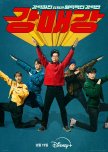
Came For The Comedy, Stayed For The Humans.
Seoul Busters arrived at exactly the right moment. After back-to-back emotionally exhausting watches, I came to this drama needing something lighter, a comedy cop K-drama with a high ceiling of absurdity and a squad of loveable disasters to make me laugh without demanding my entire chest as collateral. What I expected was something in the vein of Brooklyn 99, warm ensemble energy with a safety net firmly in place underneath every emotional beat. What I got instead was Scrubs, and I mean that as the highest possible praise. Because Seoul Busters understands the same thing Scrubs understood at its best: that laughter and devastation are not opposites. They are each other's permission slip. Your guard comes down, your chest opens, and then the drama walks quietly through that door.
The premise sets up its comedic credentials immediately. Violent Crime Team 2 at Songwon Police Station holds the distinguished honor of being the worst performing violent crime unit in the country, and the arrival of a brilliant new captain does nothing to immediately dignify their operation. The squad gets relocated to Wish-it-Well Daycare Centre while their office undergoes renovation, and what follows is twenty episodes of South Korea's most chaotic detectives conducting murder investigations surrounded by finger-painted butterflies, child-sized furniture, and a toy magic wand that doubles as a briefing pointer. The absurdity is worn as a badge of pride, and it is genuinely, consistently hilarious.
But Seoul Busters is playing a much longer and much more sophisticated game than its comedy packaging suggests. Behind the daycare centre backdrop and the wedding buffet heists and the fake gang named after a police captain, this drama is quietly delivering some of the most grounded, most human, most emotionally honest storytelling I have encountered in recent K-drama memory. Each case the squad investigates is not a simple good versus evil procedural. These are stories about people, cornered and desperate and human in the most complicated ways, and Seoul Busters refuses to hand you a clean moral verdict. It hands you context instead, and trusts you to sit with the discomfort of understanding without excusing.
The drama's masterstroke is how deliberately it ties each case to the personal wound of a specific detective. Joong-ryeok cannot be objective about a mentor from his boxing past. Jeong-hwan cannot separate himself from a kidnapped child the same age as his own daughters. Min-seo cannot investigate romantic betrayal without her own unhealed history surfacing. Each detective is handed the case that finds their thinnest armor, and each one has to do their job anyway. This creates a system of involuntary character excavation that drives complete, earned, genuinely moving arcs for all five members of the ensemble. Some dramas struggle to deliver meaningful growth for even one or two characters. Seoul Busters does it for five, without a single arc feeling shortchanged.
The performances across the board are exceptional. Kim Dong-wook carries Captain Yoo-bin's multiple emotional layers with extraordinary control, the composed surface and the hidden room full of grief and red threads beneath it, never showing his hand before the drama is ready. Park Se-wan is a revelation across two consecutive personal arcs, moving between fierce comedic energy and devastating emotional vulnerability with the ease of someone who has always known how to hold both things at once. Seo Hyun-woo brings a quiet, grounded dignity to Jeong-hwan that makes the tired father detective's story land with a weight that sneaks up on you. Park Ji-hwan surprised me most, delivering Joong-ryeok's heavier emotional beats with a precision I did not anticipate, particularly in a boxing ring scene that made me weep harder than I care to admit. And Lee Seung-woo as Tan-sik, the squad's golden retriever and accidental chaebol heir, is simply irresistible. He is a leading man in the making, and I will be watching his career trajectory very closely from here.
Visually, the drama is as intentional as everything else about it. The bright primary colours of the daycare centre backdrop maintain the comedy contract with the audience consistently, while the heavier scenes are shot with a completely different visual register, muted tones, quieter light, and in one particular Joong-ryeok sequence toward the finale, a gritty kinetic energy that would not feel out of place in a John Woo Hong Kong crime film. The audio does its most impressive work not through its OST, which is serviceable and occasionally lovely but not particularly memorable outside of the main theme's various arrangements, but through its use of silence. Min-seo's prison visiting room scene arrives with almost no musical scaffolding, and Park Se-wan carries the entire emotional weight of that silence on her own. I was crying before I had consciously decided to.
If I am being balanced, the flaws are negligible. Tan-sik's personal arc runs lighter than those of his squadmates, the physical comedy's illogical absurdity will not be everyone's frequency, and some of the Hangul wordplay is subtitle-dependent in ways that may not translate equally for every viewer. These are hairline cracks in an otherwise exceptional twenty episodes of television. And the absence of a confirmed second season is a grievance I am registering directly with the universe, because the finale closes every arc with clean earned satisfaction while leaving the door open so elegantly that the silence around a renewal announcement is immediately and acutely painful.
I came to Seoul Busters needing a laugh and left with something I did not know I was missing: a reminder of what this medium is capable of when it commits fully to both the comedy and the humanity underneath it. It is chaotic and tender and genuinely devastating, often within the same episode, sometimes within the same scene. It told five complete human stories, built a world colorful enough to make you laugh and honest enough to make you feel, and delivered it all with the quiet confidence of a drama that knew exactly what it was from the very first frame.
The premise sets up its comedic credentials immediately. Violent Crime Team 2 at Songwon Police Station holds the distinguished honor of being the worst performing violent crime unit in the country, and the arrival of a brilliant new captain does nothing to immediately dignify their operation. The squad gets relocated to Wish-it-Well Daycare Centre while their office undergoes renovation, and what follows is twenty episodes of South Korea's most chaotic detectives conducting murder investigations surrounded by finger-painted butterflies, child-sized furniture, and a toy magic wand that doubles as a briefing pointer. The absurdity is worn as a badge of pride, and it is genuinely, consistently hilarious.
But Seoul Busters is playing a much longer and much more sophisticated game than its comedy packaging suggests. Behind the daycare centre backdrop and the wedding buffet heists and the fake gang named after a police captain, this drama is quietly delivering some of the most grounded, most human, most emotionally honest storytelling I have encountered in recent K-drama memory. Each case the squad investigates is not a simple good versus evil procedural. These are stories about people, cornered and desperate and human in the most complicated ways, and Seoul Busters refuses to hand you a clean moral verdict. It hands you context instead, and trusts you to sit with the discomfort of understanding without excusing.
The drama's masterstroke is how deliberately it ties each case to the personal wound of a specific detective. Joong-ryeok cannot be objective about a mentor from his boxing past. Jeong-hwan cannot separate himself from a kidnapped child the same age as his own daughters. Min-seo cannot investigate romantic betrayal without her own unhealed history surfacing. Each detective is handed the case that finds their thinnest armor, and each one has to do their job anyway. This creates a system of involuntary character excavation that drives complete, earned, genuinely moving arcs for all five members of the ensemble. Some dramas struggle to deliver meaningful growth for even one or two characters. Seoul Busters does it for five, without a single arc feeling shortchanged.
The performances across the board are exceptional. Kim Dong-wook carries Captain Yoo-bin's multiple emotional layers with extraordinary control, the composed surface and the hidden room full of grief and red threads beneath it, never showing his hand before the drama is ready. Park Se-wan is a revelation across two consecutive personal arcs, moving between fierce comedic energy and devastating emotional vulnerability with the ease of someone who has always known how to hold both things at once. Seo Hyun-woo brings a quiet, grounded dignity to Jeong-hwan that makes the tired father detective's story land with a weight that sneaks up on you. Park Ji-hwan surprised me most, delivering Joong-ryeok's heavier emotional beats with a precision I did not anticipate, particularly in a boxing ring scene that made me weep harder than I care to admit. And Lee Seung-woo as Tan-sik, the squad's golden retriever and accidental chaebol heir, is simply irresistible. He is a leading man in the making, and I will be watching his career trajectory very closely from here.
Visually, the drama is as intentional as everything else about it. The bright primary colours of the daycare centre backdrop maintain the comedy contract with the audience consistently, while the heavier scenes are shot with a completely different visual register, muted tones, quieter light, and in one particular Joong-ryeok sequence toward the finale, a gritty kinetic energy that would not feel out of place in a John Woo Hong Kong crime film. The audio does its most impressive work not through its OST, which is serviceable and occasionally lovely but not particularly memorable outside of the main theme's various arrangements, but through its use of silence. Min-seo's prison visiting room scene arrives with almost no musical scaffolding, and Park Se-wan carries the entire emotional weight of that silence on her own. I was crying before I had consciously decided to.
If I am being balanced, the flaws are negligible. Tan-sik's personal arc runs lighter than those of his squadmates, the physical comedy's illogical absurdity will not be everyone's frequency, and some of the Hangul wordplay is subtitle-dependent in ways that may not translate equally for every viewer. These are hairline cracks in an otherwise exceptional twenty episodes of television. And the absence of a confirmed second season is a grievance I am registering directly with the universe, because the finale closes every arc with clean earned satisfaction while leaving the door open so elegantly that the silence around a renewal announcement is immediately and acutely painful.
I came to Seoul Busters needing a laugh and left with something I did not know I was missing: a reminder of what this medium is capable of when it commits fully to both the comedy and the humanity underneath it. It is chaotic and tender and genuinely devastating, often within the same episode, sometimes within the same scene. It told five complete human stories, built a world colorful enough to make you laugh and honest enough to make you feel, and delivered it all with the quiet confidence of a drama that knew exactly what it was from the very first frame.
Was this review helpful to you?


