

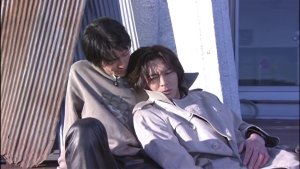


Finally, an AroAce drama
I’ve been into Asian dramas for years now, with a particular fondness for J-dramas. Only recently, however, did I discover this little Japanese gem: Koi Senu Futari, a series that delicately explores the themes of aromanticism and asexuality — two identities still rarely represented on screen, yet portrayed here with respect, simplicity, and sincerity.
Perhaps Koi Senu Futari isn’t the most polished or complex drama ever made on this topic, but personally, I believe it comes very close. Representing the entire AroAce spectrum in a single story is almost impossible, yet this series succeeds in doing so with natural grace — avoiding exaggeration and stereotypes, and honestly portraying what it means to live in a society that often assumes “to love” must mean “to fall in love.”
As one of the first dramas to openly explore aromanticism and asexuality, it stands out as both an important and courageous work.
An interesting detail worth mentioning is that the series is based on a novel by Yoshida Erika, which, unfortunately, has never been translated into other languages. It would be wonderful to read it someday, as the drama leaves you wanting to delve even deeper into the inner worlds of its characters.
A small yet precious gem that teaches us to respect every form of love — and reminds us how essential it is to understand ourselves beyond social conventions.
Perhaps Koi Senu Futari isn’t the most polished or complex drama ever made on this topic, but personally, I believe it comes very close. Representing the entire AroAce spectrum in a single story is almost impossible, yet this series succeeds in doing so with natural grace — avoiding exaggeration and stereotypes, and honestly portraying what it means to live in a society that often assumes “to love” must mean “to fall in love.”
As one of the first dramas to openly explore aromanticism and asexuality, it stands out as both an important and courageous work.
An interesting detail worth mentioning is that the series is based on a novel by Yoshida Erika, which, unfortunately, has never been translated into other languages. It would be wonderful to read it someday, as the drama leaves you wanting to delve even deeper into the inner worlds of its characters.
A small yet precious gem that teaches us to respect every form of love — and reminds us how essential it is to understand ourselves beyond social conventions.
Was this review helpful to you?


