



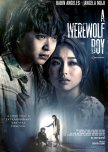
Original Korean storytelling set in a unique Filipino setting
I've watched both the original and our very own adaptation, and I must (and sorry) say, I liked this version more than the original Korean version.
In this adaptation, the storyline is switched to the rural Philippines during 1976 which falls under the Martial Law Era of the Marcos Regime. Compared to the original Korean version which is more simpler, the Filipino version is much more colorful and lively with scenes filmed in Greece and Batangas, Philippines, particularly the countryside house and the market scene which was filmed in Taal Heritage Town. The barn and other props in which were not originally part of the countryside house were carefully and wisely designed and created by the production team.
The two main leads had great chemistry together. Rabin and Angela perfectly nailed the roles originally played by Song Joong Ki and Park Bo Young. They both gave justice to the original actors and their roles. Candy Pangilinan was a great comic relief, and Albie Casiño played Yoo Yeon Seok's villainous role very well. I also find this adaptation more humane and emotional than the original version. I loved how they portrayed the older Sara (played by veteran actress Lorna Tolentino) in her current self upon reuniting with Boy (played by Rabin Angeles) without switching back to her younger self unlike in the original version. I also loved the Acacia tree scene which wasn't in the original film. The film also has 2 theme songs: the Tagalized version of "My Prince" by Angela Muji and "Mahal Kita, Walang Iba" by RabGel. Love both songs, but loved MKWI the most. The ending scene was also touching and meaningful.
Recommended for fans of both K-Drama and Filipino Drama. The adaptation remained faithful to the original storyline while blending in with unique traditional Filipino cultural elements. Already watched it a few times, and I enjoyed it very well. Hope you enjoy it too, even if you're not Filipino. Kudos to the director and production crew for this wonderful adaptation of a Korean classic hit. More power to RabGel💪❤️
In this adaptation, the storyline is switched to the rural Philippines during 1976 which falls under the Martial Law Era of the Marcos Regime. Compared to the original Korean version which is more simpler, the Filipino version is much more colorful and lively with scenes filmed in Greece and Batangas, Philippines, particularly the countryside house and the market scene which was filmed in Taal Heritage Town. The barn and other props in which were not originally part of the countryside house were carefully and wisely designed and created by the production team.
The two main leads had great chemistry together. Rabin and Angela perfectly nailed the roles originally played by Song Joong Ki and Park Bo Young. They both gave justice to the original actors and their roles. Candy Pangilinan was a great comic relief, and Albie Casiño played Yoo Yeon Seok's villainous role very well. I also find this adaptation more humane and emotional than the original version. I loved how they portrayed the older Sara (played by veteran actress Lorna Tolentino) in her current self upon reuniting with Boy (played by Rabin Angeles) without switching back to her younger self unlike in the original version. I also loved the Acacia tree scene which wasn't in the original film. The film also has 2 theme songs: the Tagalized version of "My Prince" by Angela Muji and "Mahal Kita, Walang Iba" by RabGel. Love both songs, but loved MKWI the most. The ending scene was also touching and meaningful.
Recommended for fans of both K-Drama and Filipino Drama. The adaptation remained faithful to the original storyline while blending in with unique traditional Filipino cultural elements. Already watched it a few times, and I enjoyed it very well. Hope you enjoy it too, even if you're not Filipino. Kudos to the director and production crew for this wonderful adaptation of a Korean classic hit. More power to RabGel💪❤️
Was this review helpful to you?


