



A Wuxia Gem That Holds Up
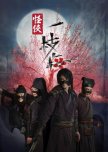
The Vigilantes in Masks (also known as Strange Hero Yi Zhi Mei) aired in 2010–2011. For a wuxia drama that that revolves around solving mysteries and upholding justice, 30 episodes is considered lean. But it's packed and never drags, while also managing to pull at your emotions. It holds a strong 8.5 on Douban (from over 83,000 users) and has earned a reputation as a cult classic. I have watched it twice, and want to explain why it deserves a 9.5/10 from me.
Li Ge Xiao was once a brilliant captain of the Imperial Secret Guard. After being framed by the corrupt Grand Secretary Yan Song, his wife was killed and his entire squad massacred. Broken with guilt, he became a wandering drunkard.
He is pulled back into action to recover stolen disaster relief gold. To pull off the heist, Li Ge Xiao assembles a team of three outcasts: Yan San Niang, a quick-fingered thief who trusts no one; Chai Hu, a hot-tempered brawler; and He Xiao Mei, a refined opera singer skilled in disguise and medicine. After they succeed, they are betrayed and framed. Clearing their names, the four decide to stay together, becoming a Robin Hood-style vigilante group known as "One Plum Blossom."
The drama is structured as episodic "cases" (each lasting 2–4 episodes), ranging from a plague village to family curse, all while building toward the final confrontation with his archenemies: Yan Song and Gexiao’s jealous former colleague, Ying Wu Qiu.
Character Analysis: The Four Protagonists – A True Ensemble
One of the drama's greatest strengths is that no one feels like a sidekick. Each of the four leads gets dedicated backstory episodes, distinct fighting styles, and meaningful character arcs.
Li Ge Xiao (Wallace Huo) is the broken strategist. Once a celebrated captain, he blames himself entirely for his wife Jing Ru's death. His genius never leaves him, but his emotional arc is about learning to trust again and accepting that he could not have saved everyone. Wallace Huo delivers a restrained, internal performance where pain is carried in silences.
Yan San Niang (Liu Shishi) is a breath of fresh air. Introduced as a loner thief, she is competent, emotionally guarded, and fiercely independent. Crucially, she is never reduced to a love interest. She forms a deep, platonic bond with Li Ge Xiao based on mutual respect. Liu Shishi's dance background brings grace to her acrobatic fighting style.
He Xiao Mei (Ma Tianyu) is the team's most refined member. An opera singer by training, he is a master of disguise, hidden weapons, and medicine. Beneath his calm exterior lies a tragic past. Ma Tianyu brings genuine vulnerability to the character.
Chai Hu (Shi Yan Neng) is the comic relief but also the heart. A food-loving, fist-first brawler, his loyalty is absolute. Shi Yan Neng, a former Shaolin monk and professional martial artist, brings authentic physicality to the role.
Together, they form a "found family" that grows from reluctant allies to genuine comrades. The drama resists forcing romance between Li Ge Xiao and Yan San Niang, which feels refreshingly restrained for the genre.
The Villains
Yan Song (the Prime Minister) is a real historical figure, portrayed as the embodiment of systemic corruption – calm, methodical, and unreachable.
Ying Wu Qiu is the drama's most complex and heartbreaking character. He was Li Ge Xiao's colleague, always living in his shadow. But his resentment was personal. He is not evil for power's sake – he is a man destroyed by unrequited love and helplessness. His tragic arc elevates the drama beyond simple good-versus-evil storytelling.
Visual & Production Style
For a drama produced on a modest budget, The Vigilantes in Masks made bold stylistic choices that still feel distinctive. The comic-book-style panels during action sequences – complete with on-screen text like "SWISH" and "TOO SLOW" – turn budgetary limitations into signature flair. (Despite common assumptions, the drama is not adapted from a manhua; these panels were original artwork commissioned for the production.)
The fight choreography is both character-specific – Li Ge Xiao fights with strategy, Yan San Niang with acrobatic grace, He Xiao Mei with operatic deception, and Chai Hu with brute force – and remarkably authentic. Unlike many modern wuxia dramas that rely on rapid editing and tight close-ups, The Vigilantes in Masks favors long, mid-range shots where you can actually see the actors' full bodies performing complete long move sequences, which is very rare in the current wuxia dramas.
Themes
Beneath its action-adventure surface, the drama presents mature themes. At its core, it is a study in grief and survivor's guilt. Li Ge Xiao's arc is about learning that he could not have saved his wife – and that accepting this is not failure, but survival. His final voiceover reframes grief beautifully.
This is complemented by the theme of found family: four broken individuals who become a family through shared danger. The drama also draws a line between justice and revenge. The vigilantes operate outside a corrupt law but follow rules: they save innocents rather than pursue grudges. Ying Wu Qiu serves as the dark mirror – his path of revenge aligns him with corruption.
The closing message is not about defeating evil, but about continuing to live. This wisdom elevates the drama above typical wuxia fare.
The One Flaw
If there is one technical flaw, it is the plum blossom grove scenes. Whenever the squad gathers under the tree, the backdrop is painfully artificial–the blossoms bloom with impossible perfection, the lighting never matches, and the falling petals are clearly animated. Thematically, these scenes are essential (the plum blossom symbolizes resilience). But technically, they are the drama's weakest link. Fortunately, this is the only significant flaw.
Final Verdict
The Vigilantes in Masks is not perfect. The plum blossom grove scenes are distractingly fake, and the final arc feels slightly rushed. But what it gets right – character writing, ensemble chemistry, authentic fight choreography, a tragically human villain, and a mature emotional core – outweighs its flaws by a wide margin.
I have watched it twice. I will probably watch it again, though I will cringe at the fake petals :). But I know I will immediately forget them when I see the gang's dynamic and their resilience to uphold justice and survive.
Score: 9.5/10
A small-scale, character-driven wuxia classic that proves less can be more.
Li Ge Xiao was once a brilliant captain of the Imperial Secret Guard. After being framed by the corrupt Grand Secretary Yan Song, his wife was killed and his entire squad massacred. Broken with guilt, he became a wandering drunkard.
He is pulled back into action to recover stolen disaster relief gold. To pull off the heist, Li Ge Xiao assembles a team of three outcasts: Yan San Niang, a quick-fingered thief who trusts no one; Chai Hu, a hot-tempered brawler; and He Xiao Mei, a refined opera singer skilled in disguise and medicine. After they succeed, they are betrayed and framed. Clearing their names, the four decide to stay together, becoming a Robin Hood-style vigilante group known as "One Plum Blossom."
The drama is structured as episodic "cases" (each lasting 2–4 episodes), ranging from a plague village to family curse, all while building toward the final confrontation with his archenemies: Yan Song and Gexiao’s jealous former colleague, Ying Wu Qiu.
Character Analysis: The Four Protagonists – A True Ensemble
One of the drama's greatest strengths is that no one feels like a sidekick. Each of the four leads gets dedicated backstory episodes, distinct fighting styles, and meaningful character arcs.
Li Ge Xiao (Wallace Huo) is the broken strategist. Once a celebrated captain, he blames himself entirely for his wife Jing Ru's death. His genius never leaves him, but his emotional arc is about learning to trust again and accepting that he could not have saved everyone. Wallace Huo delivers a restrained, internal performance where pain is carried in silences.
Yan San Niang (Liu Shishi) is a breath of fresh air. Introduced as a loner thief, she is competent, emotionally guarded, and fiercely independent. Crucially, she is never reduced to a love interest. She forms a deep, platonic bond with Li Ge Xiao based on mutual respect. Liu Shishi's dance background brings grace to her acrobatic fighting style.
He Xiao Mei (Ma Tianyu) is the team's most refined member. An opera singer by training, he is a master of disguise, hidden weapons, and medicine. Beneath his calm exterior lies a tragic past. Ma Tianyu brings genuine vulnerability to the character.
Chai Hu (Shi Yan Neng) is the comic relief but also the heart. A food-loving, fist-first brawler, his loyalty is absolute. Shi Yan Neng, a former Shaolin monk and professional martial artist, brings authentic physicality to the role.
Together, they form a "found family" that grows from reluctant allies to genuine comrades. The drama resists forcing romance between Li Ge Xiao and Yan San Niang, which feels refreshingly restrained for the genre.
The Villains
Yan Song (the Prime Minister) is a real historical figure, portrayed as the embodiment of systemic corruption – calm, methodical, and unreachable.
Ying Wu Qiu is the drama's most complex and heartbreaking character. He was Li Ge Xiao's colleague, always living in his shadow. But his resentment was personal. He is not evil for power's sake – he is a man destroyed by unrequited love and helplessness. His tragic arc elevates the drama beyond simple good-versus-evil storytelling.
Visual & Production Style
For a drama produced on a modest budget, The Vigilantes in Masks made bold stylistic choices that still feel distinctive. The comic-book-style panels during action sequences – complete with on-screen text like "SWISH" and "TOO SLOW" – turn budgetary limitations into signature flair. (Despite common assumptions, the drama is not adapted from a manhua; these panels were original artwork commissioned for the production.)
The fight choreography is both character-specific – Li Ge Xiao fights with strategy, Yan San Niang with acrobatic grace, He Xiao Mei with operatic deception, and Chai Hu with brute force – and remarkably authentic. Unlike many modern wuxia dramas that rely on rapid editing and tight close-ups, The Vigilantes in Masks favors long, mid-range shots where you can actually see the actors' full bodies performing complete long move sequences, which is very rare in the current wuxia dramas.
Themes
Beneath its action-adventure surface, the drama presents mature themes. At its core, it is a study in grief and survivor's guilt. Li Ge Xiao's arc is about learning that he could not have saved his wife – and that accepting this is not failure, but survival. His final voiceover reframes grief beautifully.
This is complemented by the theme of found family: four broken individuals who become a family through shared danger. The drama also draws a line between justice and revenge. The vigilantes operate outside a corrupt law but follow rules: they save innocents rather than pursue grudges. Ying Wu Qiu serves as the dark mirror – his path of revenge aligns him with corruption.
The closing message is not about defeating evil, but about continuing to live. This wisdom elevates the drama above typical wuxia fare.
The One Flaw
If there is one technical flaw, it is the plum blossom grove scenes. Whenever the squad gathers under the tree, the backdrop is painfully artificial–the blossoms bloom with impossible perfection, the lighting never matches, and the falling petals are clearly animated. Thematically, these scenes are essential (the plum blossom symbolizes resilience). But technically, they are the drama's weakest link. Fortunately, this is the only significant flaw.
Final Verdict
The Vigilantes in Masks is not perfect. The plum blossom grove scenes are distractingly fake, and the final arc feels slightly rushed. But what it gets right – character writing, ensemble chemistry, authentic fight choreography, a tragically human villain, and a mature emotional core – outweighs its flaws by a wide margin.
I have watched it twice. I will probably watch it again, though I will cringe at the fake petals :). But I know I will immediately forget them when I see the gang's dynamic and their resilience to uphold justice and survive.
Score: 9.5/10
A small-scale, character-driven wuxia classic that proves less can be more.
Was this review helpful to you?


