

 1
1


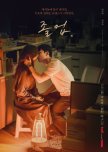
The most interesting thing here is that the word "Midnight" is in the title
Exciting things tend to happen at midnight, right? Full moons come out. Showdowns happen. Interesting creatures of the night emerge to do nefarious things. Partygoers let their better judgments lapse. Sex, drugs & rock & roll![insert air escaping from balloon sound effect] That is most certainly not this show, however.
It is easy to identify the work of director Ahn Pan Seok. He casts a lot of the same actors. He inserts a long musical montage in every episode and uses the same song through an entire drama (not a choice that seems wise, but that's his style). The stories do not shy away from realistic adult relationships and very grounded portrayals of middle to upper middle class characters living middle to upper middle class lives. He really likes outdoor scenes that are barely lit. And his antagonists tend to be very one note, very limited characters.
With his previous two outings, "One Spring Night" and "Something in the Rain", he had relatively compelling main characters and charismatic lead actors. Particularly with "Something in the Rain", the presence of Son Ye Jin as the lead elevated the entire enterprise.
"The Midnight Romance in Hagwon" doesn't merely fail to reach the bar set by these prior productions where they excelled, it fails to register in virtually every element.
Main characters? Wi Ha Joon squeezes every possible atom out of the character of Lee Jun Ho, but it's a wafer thin character. He's a nice guy that's smart and clever and easygoing and things seem to work out for him except his friends who like him want to hang out with him when Jun Ho would rather have private time with his girlfriend. That's pretty much that extent of his woes. Jung Ryeo Won's Hye Jin encounters a bit more troubles but is enough of a Mary Sue that they're merely temporary annoyances rather than measurable tension. The two together are fine. Probably the highlight of the entire show is the romantic inexperience and awkwardness the two share.
Antagonist? Looks like the real life version of Vector from "Despicable Me" but without the brightly colored sweatsuit or the zany threats or the odd weapons or the pet shark or anything of interest really. He is, almost literally, a human stick in the mud.
Support characters? So Ju Yeon's Cheong Mi is legitimately a bright spot to the extent that she is permitted to be a presence. And Seo Jung Yeon's just obliterates anyone else on screen as the hagwon ice queen who perhaps eventually ends up being a more colorful antagonist but through eight episodes is more of a mere morally ambiguous plot fulcrum. The rest are so uninvolved that they fail to make any impression of any sort which is a tragic waste of some fabulous talents like Kim Jung Young and Kil Hae Yeon (who had been sensational as the horrifying, deranged mother of Son Ye Jin's lead in "Something in the Rain").
And it's not like if the material had somehow been amended this ship could have been righted. Sure, if some more time had been spent with the students, maybe there's a beat or two of a pulse in a subplot there. But there's nothing particularly engrossing about the day-to-day inner workings of a hagwon or the competition between two of them. So with very little as far as compelling inhabitants of them, there's just nothing but mild mannered, ordinary people with a not that out of the ordinary romance and...
Uh, and...
[cue the crickets sound effects]
Yeah, there's nothing else.
Not recommended.
Was this review helpful to you?
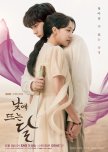
Fumbles the basics
If there is a theme that has trod a well worn path in recent dramas, it is the wronged-in-a-prior-Joseon-era-life-reincarnated-to-seek-revenge setup. Certainly, some of the most recent productions have left room to improve on this plot but "Moon in the Day" never approaches doing anything remotely competently.There's some shoddy special effects during a fire scene.
The flashbacks to Joseon era are tedious and circle over the same plot points repeatedly.
These flashbacks would be more of a distraction if the modern era scenes were any more compelling but, oy, those aren't much better.
The supporting cast is not great. Even the usually reliable Lee Joon Hyuk is cast as a humorless agency fixer and it's not a good fit.
Pyo Ye Jin is somehow supposed to be both an asskicking firefighter and a stereotypical helpless damsel in alternating scenes.
One or two of these flaws aren't fatal. Even all of them together might have made just been annoyances. But there's simply no way that any show can succeed with a lead as badly acted as Kim Young Dae does here. He can certainly crush the petulant, lazy narcissist that present day Han Jun Oh is. But then he's possessed by the spirit of the Joseon era warrior and it is hard to imagine a worse pairing of character and actor than this one. Taciturn? Grizzled? Intense? Nope. Nope. Nope.
So, there's nothing new plot-wise, it's choppily directed, alongside an uninspiring cast and there's not much left that can possibly turn it around for the show. Not recommended.
Was this review helpful to you?

Herlock and "K"oriarty
To the untrained eye, “Inspector Koo” appears to be a gender-swapped, Korean version of Sir Arthur Conan Doyle’s well known creation. The main character is a brilliant investigator plagued by self-destructive tendencies, anti-social behavior and questions about whether they actually want to help people or just enjoy matching wits with like-minded giant intellects. There’s a put-upon sidekick that tries to mitigate the inspector’s vices and acts as an intermediary with the rest of the world. And notably, there’s a genius criminal on the loose.Lee Young Ae plays the Inspector, Koo Kyung Yi, while Kim Hye Joon plays the killer “K”, Song Yi Kyung. At the beginning, Koo is in a deep rut of alcohol and video games and takeout food. K is, outwardly, a failing stage actor. Soon, however, Koo has been pulled into action by Kwak Sun Young’s character, Je Hee, to investigate a suspected life insurance scam. Before too long, the battle of brains between Koo and K begins.
And this is where the path diverges from the one trod by Doyle.
First, Koo might be an oddball, but she is fun and, below the unwashed hair and dilapidated wardrobe, an empathetic person. She is also, at times, not entirely convinced that she is the smartest and most brilliant person around and that she will ultimately prevail. Also, she’s got more than Watson alongside. There’s Jo Hyun Chul’s Kyung Soo who makes a first impression as a stereotypical insurance corporation drone, but has a competitive fire inside. There’s also fellow gamer, Santa, who speaks through a voice app on his phone who, for unexplained reasons, answers Koo when she messages her online compatriots for assistance in real life.
But where Holmes’ nemesis Moriarty has been typically portrayed as a purely diabolical evildoer that functions as a device to move the plot action forward, K is a fascinatingly complex character that merits equal billing to Koo. She is insidiously villainous without question and unwavering in her pursuit of mayhem, but she’s not wholly dark. She’s not seeking power or fame or simply mindlessly targeting victims. And from a purely entertainment perspective, Kim Hye Joon is a sugary delight as K.
Moreover, K has her own cohort in (literal) crime, Lee Hong Nae’s Keon Wook. For those looking for LQBTQ representation, which doesn’t show up in every drama, being the right hand man of serial killer might not seem like the preferred role. And Keon Wook is not a white knight on a white horse in shining armor. Oh but what a sublime character he is. Were a standalone prequel vehicle to be spun off from “Inspector Koo”, Keon Wook would be the ideal choice. The backstory between K and Keon Wook is unclear but that he has some psychological trauma is clear as well as that he does not imagine a life where he has a happy, more domesticated future. To be clear, these two are not at all portrayed as good people or heroes but there is a thread of tragic downfall woven into their arcs that gives them an additional layer and welcome texture.
The cast ensemble is excellent. The soundtrack and score are among the best produced this year. The direction allows the quirkiness of the characters to shine without allowing the show to devolve into kitsch. The finale may not be a blockbuster but it delivers and leaves open fertile ground for what would be a welcome second installment.
Despite an abundance of positive qualities, however, “Inspector Koo” affixes readily emotionally to K and Keon Wook but less effectively to Koo and her cohorts, despite this group having noticeably more time on screen. Not surprisingly, many of the characters have connections in their past but they are inconsistently illuminated. And the storytelling is a tad loose. There is a wide number of players in the build-up to the final confrontation and more than a couple of subplots contribute but not all of them are stitched back into the main thread. While “Inspector Koo” is consistently entertaining, it really only once manages to break out a legitimately shocking and thrilling moment.
Solidly recommended.
Was this review helpful to you?
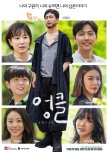
Hits its share of high notes, but it's a highly erratic experience
It may not be for everyone, but a day on the slopes with fresh powder, short lift lines, calm winds, temperatures that aren’t too cold and a bit of sunshine is absolute heaven for fans of snow skiing. The combination of some of the most drop dead gorgeous locations on the planet, the adrenaline from racing down a mountain at the just the edge of comfort and a luxe base for snacks and refreshments is a magical combination. It is also one of the worst returns on investment when purchasing an expensive lift ticket only means a few hours of numb-from-the-cold appendages and long lift lines and icy conditions under foot.“Uncle” is a show that has similar wild swings of enjoyment. It has captivating moments and many excellent characters mixed in with some tremendously dull filler material and a meandering narrative.
As for the positives, it has to start with Jeon Hye Jin who plays Wang Joon Hee, the sister of Oh Jung Se’s Wang Joon Hyuk, and mother to Ji Hoo, the nephew who is Joon Hyuk’s sidekick. It’s more than a bit implausible that Joon Hee would somehow end up married into an abusive conglomerate family, but aside from that, Jeon Hye Jin infuses Joon Hee with warmheartedness, inner strength and moral clarity without also demonstrating her weaknesses. She’s the emotional center and a calming presence and the portrayal by Jeon Hye Jin hits every note perfectly.
The supporting cast mostly carries their own weight as well. It’s a diverse group of characters from a crossdressing bar owner, his daughter who is Joon Hyuk’s irascible ex-girlfriend, his new girlfriend and Ji Hoo’s teacher, a bevy of nosy neighbors, Joon Hee’s dimbulb ex-husband and his new self-centered flame. Two youngsters have really nice performances, Choi Gyu Ri as the daughter of a troublesome Mom’s group leader and Yun Hae Bin as a preteen girl in a single father household.
At times, “Uncle” has some outstanding arcs. Joon Hee tragically has a personal demon resurface and she develops a connection with Choi Gyu Ri’s character. Hwang Woo Seul Hye is a welcome diversion as a mom’s group lieutenant that doesn’t always fall in line with the leader’s demands. And there’s an arc where the malevolent grandmother of Ji Hoo switches modes to charm her way to her goals. All of these are engaging and well-executed storylines.
For Oh Jung Se’s Joon Hyuk, he’s a peaks-and-valleys experience like the show itself. Oh Jung Se is such a talented performer that he takes Joon Hyuk through a gauntlet of troubles and good times and can unload a massive spectrum of moods, tones and expression. And that’s both good and bad. There’s always something new with Joon Hyuk but there’s not enough of a central core to his identity. He’s such a “go with the flow” that there’s nothing to anchor who he really is.
Part of the difficulty is that the show as a whole whips through one subplot after another - the initial reconnection between Joon Hyuk and Joon Hee is followed in short order with conflicts and resolutions between Joon Hyuk and Ji Hoo, several instances of Joon Hyuk and the Mom’s group, Joon Hee and her ex’s family, a group effort with a political figure, a misguided and misinformed ex-boyfriend, a recording company that is not what it seems, Joon Hee’s romance with the single father with his own questionable history and yet the main arc is supposed to be the uncle-nephew-mance between Joon Hyuk and Ji Hoo. But this main storyline is beset by it really being pushed aside at most of the climactic moments and by the fact that Ji Hoo is being played by an extremely young actor, Lee Kyung Hoon, that is being asked to be in a spotlight role that is beyond his capabilities.
The erratic nature of Joon Hyuk’s own character and the show’s plot hold up for a period of time, but it becomes wearisome once the nefarious grandmother’s arc has resolved. And the show needlessly spends time trying to humanize her which is exasperating and the unquestionable nadir.
It’s a show that is an enjoyable watch for a good fraction of its run so it gets a lukewarm recommendation, but nothing more.
Was this review helpful to you?
This review may contain spoilers
Observations and notes rather than the standard form
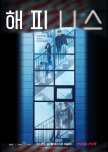
Lots of reviews already thoroughly giving “Happiness” the attention it duly deserves. So rather than rehash the same, simply going to offer a few observations in note form:-Lee Kyu Hyung has guest or support roles in “Hospital Playlist 2”, “Happiness” and “Racket Boys” which is a phenomenal trio of shows to be part of in a single year.
-”Happiness” begins with Yi Hyun inconsolable over the end of his baseball future because of a serious leg injury that meant he couldn’t run. In later episodes, however, we see him sprinting across the complex yard followed by a leap on top of Tae Seok’s SUV. In another episode, he and Sae Bom are running through the parking garage. It’s a decent-sized plot hole. Hypothetically, however, Yi Hyun recovered enough to play again but had already decided to follow Sae Bom into police work.
-Ahn Gil Ho was quietly very clever in his direction. In episode one, the world is totally wide open. The show bounces from one setting to another across what appears to be significant distances. As things start to go wrong, first the setting gets constricted down to the apartment complex. Then our main characters can only barely leave their building. Then quietly, as the episodes tick off, the show features fewer shots outside the building. In almost every episode, there is a scene where the two leads are on the patio or the roof, but with each episode until the conclusion, it gets shorter and shorter. Along with the deaths among the residents and the multiple episode absence of characters like Ji Seong Sil and Kim Hak Je, this ratchets up the claustrophobic vibe slowly but steadily.
-Chemistry is oft-discussed but is really such a difficult and subjective element to evaluate. In theory, two competent actors should simply be able to do their job well without the need for some special personal harmony between them to convince the audience that they have strong feelings for each other. Despite the likelihood that chemistry as commonly used is an illusion convincingly created by very skilled professionals, Park Hyung Sik is inconceivably natural in his on-screen pairings.
-The most challenging role and the best performance, however, was Bae Hae Seon’s building representative. Was she a likable character? That’s a big NO. But that doesn’t mean the actor wasn’t crushing it.
-Tremendous OST work by Joe Layne.
-The last minute fakeout reveal that has been featured way too often this fall (big culprits - they didn’t break up in “Dali and the Cocky Prince”, Hyun Jo didn’t die in “Jirisan” and same with Yi Hyun here) can stop. Immediately. Please give viewers a proper closure by expositing how these things came to be rather than just a cheap “FOOLED YOU! HAHA” gimmick.
-On that note, in general, the second half of the last episode felt rushed. The resolution to the discovery of a serial killer in their midst could have had a longer, slower, bigger buildup and bigger confrontation. Sixteen episodes would have been too much, but “Happiness” could have been easily stretched to fourteen. The bitcoin subplot could have been resolved more clearly. What exactly went down with Tae Seok’s plan? Lots of other fertile ground was there with supporting characters for extended content.
-Baek Hyun Jin played a series of bad guys this year: Chairman Park Yang Jin in “Taxi Driver”, President Heo Jung Se in “The Devil Judge” and Oh Joo Young in “Happiness”. He’s a fabulous creep and it’s difficult to choose which of these characters was the most loathsome. All of them are so colorfully horrible. But it’s Chairman Park by a hair over Dr. Oh.
-The summation: ”Happiness” is an incredible show and should be on every short list of candidates for best drama of 2021. It’s not this reviewer’s top choice, but only by the narrowest of margins.
Was this review helpful to you?


