


 3
3 4
4 1
1


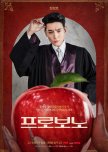
Well written with a social agenda.
This is a drama with an agenda. Like many law dramas the world over, it seeks out underdog stories and features the winning of impossible court cases so that there can be a sense that injustice doesn’t always prevail and sometimes, against the odds, justice is served. The audience, me included, experiences a sense of release and satisfaction at getting our own back against a nebulous, all powerful world that is designed to crush all resistance. In the real world, these triumphs are few and far between, just a small handful in a generation.
And the irony strikes me that the powerful and corrupt are happy for these dramas to be there. Why? Because they allow for the release of some of the dissatisfaction and frustration by giving us all a sense that we can effect change, whilst in fact we are sitting in our armchairs staring at a screen and doing nothing. Otherwise that pent up anger and frustration might get released in more effective and threatening ways. And by heavens, in the current global environment we really need to feel change is possible and work out how to do it. But this is a review of a drama, not a piece of sociopolitical comment, so I will stop there.
As a drama did it work? If you are prepared to wholeheartedly take up the narrative it will carry you along very nicely. I have noted that some people found it too much. Some of the stories are very specific to Korean society and how the law currently stands on a variety of social issues. Other cases highlight minorities and show them in a positive light. This is a way of deliberately encouraging attitudes to change and pressure public opinion. Like I said, it has an agenda.
For me, the jarring note was less the choice of stories/cases and more the standard overly sentimental approach. It relies on a lighthearted tone for most of the time and quickly flips you back up if the storyline dips into too much tragedy. My preference is for something a little less sugar-coated and a little more real. However there were plenty of moments where it packed a punch. This was, in the main, down to an excellent performance by Jung Kyung Ho.
Ever since I saw him in “Cruel City” I’ve rated him as an actor. His character has some depth written into it which he is more than capable of doing justice to. The best episode by far imo, is Ep 10, where his character is called upon to account for himself and JKH steps up to the plate. He is someone who can carry off serious drama and I would love to see him do more of it. Unfortunately, there are not many being written and produced these days. The rest of the cast provided good support and were varied enough to add to the interest.
And the irony strikes me that the powerful and corrupt are happy for these dramas to be there. Why? Because they allow for the release of some of the dissatisfaction and frustration by giving us all a sense that we can effect change, whilst in fact we are sitting in our armchairs staring at a screen and doing nothing. Otherwise that pent up anger and frustration might get released in more effective and threatening ways. And by heavens, in the current global environment we really need to feel change is possible and work out how to do it. But this is a review of a drama, not a piece of sociopolitical comment, so I will stop there.
As a drama did it work? If you are prepared to wholeheartedly take up the narrative it will carry you along very nicely. I have noted that some people found it too much. Some of the stories are very specific to Korean society and how the law currently stands on a variety of social issues. Other cases highlight minorities and show them in a positive light. This is a way of deliberately encouraging attitudes to change and pressure public opinion. Like I said, it has an agenda.
For me, the jarring note was less the choice of stories/cases and more the standard overly sentimental approach. It relies on a lighthearted tone for most of the time and quickly flips you back up if the storyline dips into too much tragedy. My preference is for something a little less sugar-coated and a little more real. However there were plenty of moments where it packed a punch. This was, in the main, down to an excellent performance by Jung Kyung Ho.
Ever since I saw him in “Cruel City” I’ve rated him as an actor. His character has some depth written into it which he is more than capable of doing justice to. The best episode by far imo, is Ep 10, where his character is called upon to account for himself and JKH steps up to the plate. He is someone who can carry off serious drama and I would love to see him do more of it. Unfortunately, there are not many being written and produced these days. The rest of the cast provided good support and were varied enough to add to the interest.
Was this review helpful to you?


