
 K-Drama



 3
 4
 1
 1


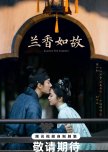
This review may contain spoilers
A powerful drama that undermined itself with over-sentimentality
This is a great drama, and there is so much in there to enjoy, but…
There are decisions to be made when telling a story. Who to focus on and how. What to tell and what not to tell. Although I totally agreed with many of the decisions the director and screenwriter took, there were a bunch of others that, in my opinion, directly undermined all that good work and turned this from an outstanding drama into just a good one. Now before I get stuck in, there’s a debt of gratitude to be acknowledged here, to VIII (Lo_ok) for conversations that helped to clarify my thoughts. Cheers mate!
First let me get the gripes off my chest, then I’ll do the praises and leave you on a high note.
This drama is primarily about the use and abuse of power, and the ways in which it can be counteracted and its worst abuses ameliorated. It is a very modern take set in a historical context to strengthen its impact. In a world where royal and aristocratic power struggles mean life and death to the pawns who are compulsorily involved, it is about how those without visible, worldly power can survive. A story about how only respect, trust and equality can lead to meaningful love. And primarily it is about women.
But these powerful themes are watered down by a too sweet romantic overlay. The female lead, Lan Xiang, is specifically articulated (in the story of the eagle) to rate romantic love as fleeting and insubstantial, and the male lead, Jin Qi, should be the representative of the abuse of power. But his characterisation is dumbed down to accommodate an overly romanticised interpretation. This not only grossly undervalues and disempowers the courage and determination shown by Lan Xiang in the circumstances, but it also minimises the transformation that Jin Qi needs to go through to fulfil the storyline.
Stories which in the past could have been told in a much bolder and more powerful way are now being whitewashed and blandified to accommodate sentimental romance instead of the much more meaningful mature love. Basically they did not have the courage to tell the story effectively. Whether that was because of funding conditions or even worse, decisions made by the director and actors, is unknown.
The negative impact really becomes apparent from the mid-twenties episodes onwards after Jin Qi forces marriage onto Lan Xiang. For instance, when she wakes on the boat after being drugged, the director made the choice to play romantic music over the top of this crucial scene. This moment should have been about delusion and courageous determination, not cutesy cajoling. It was totally misjudged imo.
Also they ruined the final stages of the character development for Jin Qi when he decides to leave the court. Through the previous episodes the ground is thoroughly prepared, but the viewer is catapulted through his transition, not giving time for a satisfying release of the expectation so skilfully built up beforehand. Nor were we party to Lan Xiang’s final decision to go willingly to his bed. Which is critical in terms of the love story and her finally surrendering and allowing herself to trust him. Why you would pass up the opportunity for such satisfying scenes is a puzzle to me.
This fragmentation through time-jumps continues to the end and I feel the last six or so episodes add very little of value and could actually be better used to fill out those missing important steps outlined above.
Okay, gripe over.
The best of the drama is the first half and there is plenty to praise in the nuanced direction and cinematography. You really get a sense of the danger in every move. The suspense is always there, and it manages, like a novel, to have the very distinct point of view of the female lead. For instance, in the scene in episode 8 about 14 mins in, where we see Zhao Tang’s back as she stops walking with Lan Xiang following her. As the audience we, like Lan Xiang, don’t know what Zhao Tang is thinking, but absolutely palpably feel the threat of imminent danger. And I really liked the fight scene choreography where the focus is on Lan Xiang and her visible fear in the midst of the violence.
These days, if plot and characterisation is well constructed and well paced it will almost invariably be taken from a novel. The careful unfolding of Jin Qi and Lan Xiang’s relationship and the self realisations necessary to move the story forward were very well constructed. No papering over deep resentment with a sweet smile. The creating of respect requires so much more than that and this drama shows this beautifully. The scene where they are both honest for the first time is not followed by rapid trust but more self reflection and shouldering of responsibility, which is the solid foundation of trust.
And this was not just the case for the leads, there was some excellent touches in the supporting stories. For instance, the storyline of how Lin Xiu Ru decides to marry is beautifully laid out through a series of close ups that slowly reveal her motive and thought process without specifically telling us what she is thinking.
This was an ensemble piece where all the significant characters had depth and there were some great performances. Tan Song Yun did very well as Lan Xiang. However, I wasn’t so convinced by Liu Xue Yi. He has also played this type of morally grey character in the past, in The Princess’s Gambit. But on both occasions he failed in my opinion to have the grit needed to play these mixed characters. His performance had too much of a romantic lead trying to please in it. Deng Kai however, had all the nerve and conviction to be truly black in Pursuit of Jade, and I think he could have probably brought out the darker side of the character quite successfully.
There is too much that is excellent in this drama not to recommend it.
Was this review helpful to you?


