

This review may contain spoilers
A Proustian Drama with a Searing and Complicated Message
Introduction:
This is an expansive drama that encompasses so much that it is hard to know where to begin. Right from the beginning, China itself is one of its main characters. This remains in a way the distinguishing feature of all C-dramas. Although they may appear superficially similar to K -dramas and J – dramas and T – dramas, they have a unique feature in that China and its fate always features in these dramas but not in any obtrusive way.
The Main Protagonists:
The building Yuanlongli International Garden in Weiyang, Sichuan is the site of this drama. It is a labyrinthine housing complex meant to embody a possible China, a capitalist China? Or is it an illustration of Hong Kong which is being formally integrated back into the mainland on 30th June 1997 (which is when the drama begins as it spans two more years, 2002 and 2015, shuttling shuttles between these three years which mirror each other)? One is not quite clear. This building complex is, however, a world unto itself housing a brothel, apartments for people to live, and myriad small businesses. The extremely wealthy and the not-so-wealthy all seem to be housed in this space. Although it is meant to be a community, it is in fact anything but. It is a scary urban jungle and the principle underlying it is the survival of the fittest. One has to kill here or be killed. The lives of the two main female protagonists, Qiao Suqing and Xu Meng are concrete manifestations of this principle. Qiao Suqing who is suffering at the hands of an extremely abusive employer and bearing with all this misery just because she is getting paid handsomely (Is this again the drama’s reminder of what capitalist relations ultimately are?). The other protagonist, Xu Meng, is suffering at the hands of an extremely abusive father who is forcing her into prostitution and loan sharks to pay for his medical bills. Xu Meng and Qiao Suqing become very close and the ordeals they are facing bring them into an intimate relationship with each other. Xu Meng decides to take the law into her own hands by engineering the murder of Qiao Suqing’s employer. In a scuffle with her sick father, who is forcing her to flee from Weiyang, she pushes him back in self-defence and he ends up hitting the edge of a wall and succumbs to the ensuing head injury. Xu Meng watches him die, calls her friend for help, who pitying her plight decides to help her get rid of the body. It is not quite clear as to why they have to do this. It was not that Xu Meng deliberately killed him. She could call the police and resolved the matter in a civil manner. But she does not. Is it because of the world in which she has lived, where one has to either kill or be killed, where one cannot trust anyone other than themselves, be it even the state authorities? Her profound inability to trust anyone is confirmed later in her own confession to the police. She is as much a victim of this world as she is a protagonist who intentionally murders. Together, Xu Meng and Qiao Suqing dismember the father’s body and decide to stage a disappearance. Xu Meng is supposed to have disappeared with her father as they were being chased by loan sharks. It is this disappearance, which becomes the central case around which the drama revolves. It is “solved” twice, once in 1997, and once again 2002 when the head of the father is found, both times unsuccessfully before being finally solved in 2015.
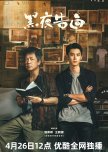
The other main protagonists of this tale are the young police officer, Captain Ran Fang Xu and his mentor He Yuanhang and the mentor’s daughter, He Xiaohe. Captain Ran is an orphan, who is brought up by his grandmother. He is a bright and extremely honest young man. He is a product of another possible China. A China that does not abandon its orphans, that educates them. Captain Ran is a topper in the State Police Exams and this disappearance of Xu Meng and her father is his first case. He cares about everyone around him, is painfully conscientious and whoever comes to know him cannot but help liking him. He and Qiao Suqing fall in love and the drama contemplates the tantalizing possibility of the two getting married before snuffing it out in a gut-wrenching manner with the death of Captain Ran in a car accident engineered by a jealous Xu Meng, who does not want to let go of Qiao Suqing. Ran is particularly fond of his mentor’s daughter and substitutes as her father when her real father is away on business paying very close attention to her studies, making sure she never goes astray, but without suffocating her rebellious nature. Before he was killed, Ran had almost solved the disappearance having zeroed in on Qiao Suqing but does not know of the role of Xu Meng, until just before his death when she stands before the dying Ran. It is He Yuanhang and his daughter, who carry his work forward and bring the case to its true conclusion. In this process, the role of memory, especially of the Proustian memoire involuntaire, is beautifully illustrated in this drama. Be sure to catch those scenes for their cinematographic prowess and their literary texture.
The fate of the protagonists and the that of building complex somehow takes its stroll alongside the fate of China itself, from the return of Hong Kong in 1997 to the entry of the Chinese men’s football team into the 2002 World Cup and more confident, socially developed, infrastructurally sound China of 2015, where even small town police stations, through the initiative of their officers and state budgets are able to have state of art evidentiary archives to facilitate the tracking down of criminals. Indeed, the memory of the protagonists is contrasted to that of the memory of institutions and that of the state. The moral seems to be: without memory no civilization is possible.
In addition to the main protagonists the minor characters are painted equally well and with great sensitivity. The cement factory owner, a former gangster who is imbued with a great sense of responsibility to this workers, who flees the country, returns for personal revenge and for discharging that responsibility, before committing suicide, the photographer from Guangdong who spies on his girlfriend Xu Meng because he is deeply disturbed by her work as a prostitute, a quack healer who devises remedies which he administers on himself and his patients and in the process is poisoning both himself and his patients, all of these are beautiful painted pictures, whose poignancy forces one to stop and reflect.
The Dramatic Structure:
Although the dramatic structure is that of an edge of seat whodunit with detectives trying to uncover traces of wrongdoing in a struggle with murderers who try ingeniously and meticulously to erase every trace of their crimes and with time itself which is the biggest eraser of traces, there is another struggle at the play throughout the drama. This is the struggle between two ideas: the idea of a corrosive Darwinian individualism, where everyone for themselves, where the fittest survive and one kills or one is killed, represented by the building and its main female protagonists, Xu Meng and Qiao Suqing, against the idea of a wholesome socialism where the law serves the people and individual initiative is supported by society and society is in turn strengthened by individual initiative represented by Captain Ran and his mentor. Captain Ran’s initiatives are supported by society, like his becoming a police officer despite being an orphan with not much means and he in turn strengthens society, like his convincing the authorities to finance a state-of-the-art archive in the criminal division of Weiyang. In this struggle between these two ideas, there is no guarantee that socialism will win as evidenced by the murder of Captain Ran by Xu Meng. The drama does not fall for the idea that only individualism can produce geniuses and socialism only rewards mediocrity. Both socialism and individualism can produce genius, Captain Ran and Xu Meng respectively. But only socialism fosters its geniuses towards the good while individualism simply abandons its geniuses to their own devices, which can in many instances turn them into monsters, as shown by Xu Meng’s life.
The Message:
The drama goes to great lengths to show that the circumstances in which we find ourselves determine the way we act to a great extent. But at the same time, it forces us to ask whether those wretched, difficult circumstances should absolve individuals of blame, especially when they resort to crimes like murder. The moralizing that the drama resorts to in the end, when pronouncing judgement of the two female protagonists will sound very vapid to the viewer. And I think the vapidity is the very point. The force of circumstances can be so overwhelming that the law does appear like an ass. Are these two women really deserving of the death penalty and life imprisonment, is something every viewer will ask. The drama complicates its seemingly simplistic answer with the demolition of the building complex in the last episode, which has been announced in a middle episode, and which is a reality against with the father and the daughter are racing in order to find the truth of the disappearance. The demolition seems to suggest that although individuals do have a responsibility towards living a good life, circumstances dictated in large by social structures inevitably shape the actions of individuals. So, without radical social transformation, which the demolition symbolizes, no good is possible.
This is an expansive drama that encompasses so much that it is hard to know where to begin. Right from the beginning, China itself is one of its main characters. This remains in a way the distinguishing feature of all C-dramas. Although they may appear superficially similar to K -dramas and J – dramas and T – dramas, they have a unique feature in that China and its fate always features in these dramas but not in any obtrusive way.
The Main Protagonists:
The building Yuanlongli International Garden in Weiyang, Sichuan is the site of this drama. It is a labyrinthine housing complex meant to embody a possible China, a capitalist China? Or is it an illustration of Hong Kong which is being formally integrated back into the mainland on 30th June 1997 (which is when the drama begins as it spans two more years, 2002 and 2015, shuttling shuttles between these three years which mirror each other)? One is not quite clear. This building complex is, however, a world unto itself housing a brothel, apartments for people to live, and myriad small businesses. The extremely wealthy and the not-so-wealthy all seem to be housed in this space. Although it is meant to be a community, it is in fact anything but. It is a scary urban jungle and the principle underlying it is the survival of the fittest. One has to kill here or be killed. The lives of the two main female protagonists, Qiao Suqing and Xu Meng are concrete manifestations of this principle. Qiao Suqing who is suffering at the hands of an extremely abusive employer and bearing with all this misery just because she is getting paid handsomely (Is this again the drama’s reminder of what capitalist relations ultimately are?). The other protagonist, Xu Meng, is suffering at the hands of an extremely abusive father who is forcing her into prostitution and loan sharks to pay for his medical bills. Xu Meng and Qiao Suqing become very close and the ordeals they are facing bring them into an intimate relationship with each other. Xu Meng decides to take the law into her own hands by engineering the murder of Qiao Suqing’s employer. In a scuffle with her sick father, who is forcing her to flee from Weiyang, she pushes him back in self-defence and he ends up hitting the edge of a wall and succumbs to the ensuing head injury. Xu Meng watches him die, calls her friend for help, who pitying her plight decides to help her get rid of the body. It is not quite clear as to why they have to do this. It was not that Xu Meng deliberately killed him. She could call the police and resolved the matter in a civil manner. But she does not. Is it because of the world in which she has lived, where one has to either kill or be killed, where one cannot trust anyone other than themselves, be it even the state authorities? Her profound inability to trust anyone is confirmed later in her own confession to the police. She is as much a victim of this world as she is a protagonist who intentionally murders. Together, Xu Meng and Qiao Suqing dismember the father’s body and decide to stage a disappearance. Xu Meng is supposed to have disappeared with her father as they were being chased by loan sharks. It is this disappearance, which becomes the central case around which the drama revolves. It is “solved” twice, once in 1997, and once again 2002 when the head of the father is found, both times unsuccessfully before being finally solved in 2015.
The other main protagonists of this tale are the young police officer, Captain Ran Fang Xu and his mentor He Yuanhang and the mentor’s daughter, He Xiaohe. Captain Ran is an orphan, who is brought up by his grandmother. He is a bright and extremely honest young man. He is a product of another possible China. A China that does not abandon its orphans, that educates them. Captain Ran is a topper in the State Police Exams and this disappearance of Xu Meng and her father is his first case. He cares about everyone around him, is painfully conscientious and whoever comes to know him cannot but help liking him. He and Qiao Suqing fall in love and the drama contemplates the tantalizing possibility of the two getting married before snuffing it out in a gut-wrenching manner with the death of Captain Ran in a car accident engineered by a jealous Xu Meng, who does not want to let go of Qiao Suqing. Ran is particularly fond of his mentor’s daughter and substitutes as her father when her real father is away on business paying very close attention to her studies, making sure she never goes astray, but without suffocating her rebellious nature. Before he was killed, Ran had almost solved the disappearance having zeroed in on Qiao Suqing but does not know of the role of Xu Meng, until just before his death when she stands before the dying Ran. It is He Yuanhang and his daughter, who carry his work forward and bring the case to its true conclusion. In this process, the role of memory, especially of the Proustian memoire involuntaire, is beautifully illustrated in this drama. Be sure to catch those scenes for their cinematographic prowess and their literary texture.
The fate of the protagonists and the that of building complex somehow takes its stroll alongside the fate of China itself, from the return of Hong Kong in 1997 to the entry of the Chinese men’s football team into the 2002 World Cup and more confident, socially developed, infrastructurally sound China of 2015, where even small town police stations, through the initiative of their officers and state budgets are able to have state of art evidentiary archives to facilitate the tracking down of criminals. Indeed, the memory of the protagonists is contrasted to that of the memory of institutions and that of the state. The moral seems to be: without memory no civilization is possible.
In addition to the main protagonists the minor characters are painted equally well and with great sensitivity. The cement factory owner, a former gangster who is imbued with a great sense of responsibility to this workers, who flees the country, returns for personal revenge and for discharging that responsibility, before committing suicide, the photographer from Guangdong who spies on his girlfriend Xu Meng because he is deeply disturbed by her work as a prostitute, a quack healer who devises remedies which he administers on himself and his patients and in the process is poisoning both himself and his patients, all of these are beautiful painted pictures, whose poignancy forces one to stop and reflect.
The Dramatic Structure:
Although the dramatic structure is that of an edge of seat whodunit with detectives trying to uncover traces of wrongdoing in a struggle with murderers who try ingeniously and meticulously to erase every trace of their crimes and with time itself which is the biggest eraser of traces, there is another struggle at the play throughout the drama. This is the struggle between two ideas: the idea of a corrosive Darwinian individualism, where everyone for themselves, where the fittest survive and one kills or one is killed, represented by the building and its main female protagonists, Xu Meng and Qiao Suqing, against the idea of a wholesome socialism where the law serves the people and individual initiative is supported by society and society is in turn strengthened by individual initiative represented by Captain Ran and his mentor. Captain Ran’s initiatives are supported by society, like his becoming a police officer despite being an orphan with not much means and he in turn strengthens society, like his convincing the authorities to finance a state-of-the-art archive in the criminal division of Weiyang. In this struggle between these two ideas, there is no guarantee that socialism will win as evidenced by the murder of Captain Ran by Xu Meng. The drama does not fall for the idea that only individualism can produce geniuses and socialism only rewards mediocrity. Both socialism and individualism can produce genius, Captain Ran and Xu Meng respectively. But only socialism fosters its geniuses towards the good while individualism simply abandons its geniuses to their own devices, which can in many instances turn them into monsters, as shown by Xu Meng’s life.
The Message:
The drama goes to great lengths to show that the circumstances in which we find ourselves determine the way we act to a great extent. But at the same time, it forces us to ask whether those wretched, difficult circumstances should absolve individuals of blame, especially when they resort to crimes like murder. The moralizing that the drama resorts to in the end, when pronouncing judgement of the two female protagonists will sound very vapid to the viewer. And I think the vapidity is the very point. The force of circumstances can be so overwhelming that the law does appear like an ass. Are these two women really deserving of the death penalty and life imprisonment, is something every viewer will ask. The drama complicates its seemingly simplistic answer with the demolition of the building complex in the last episode, which has been announced in a middle episode, and which is a reality against with the father and the daughter are racing in order to find the truth of the disappearance. The demolition seems to suggest that although individuals do have a responsibility towards living a good life, circumstances dictated in large by social structures inevitably shape the actions of individuals. So, without radical social transformation, which the demolition symbolizes, no good is possible.
Was this review helpful to you?


