
 K-Drama




This review may contain spoilers
Artistic
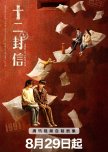
I find that most C-dramas are tailored to be profitable rather than artistic. Tragedy, beauty, and romance are so excessively used that they become meaningless. I am pleased to say that "Twelve Letters" does not fall into that category. There is tragedy, but there is also boundless resilience and hope. There is beauty, but it is not ungrounded. There is romance, but it is neither insecure nor saccharine. "Twelve Letters" is real, and because it is real, it is deeply moving.
It is a slice-of-life, so I'll refrain from overelaborating on the plot. I will say—for those who are sensitive—that there are significant mentions of poverty, abuse, assault, homicide, and suicide. However, the story refrains from being maudlin given its decisively hopeful tone. "Twelve Letters" features moving found-family relationships; the purest of young love stories; and flawed but ultimately good characters whom life dealt bad cards.
While there are plenty of stories with similar concepts, "Twelve Letters" differs in its fantastical element and level of execution. The fantastical element of the story stems from a mailbox which can deliver and receive messages from the past to the present (and vice-versa). Throughout the story, a young couple from 1991 messages their future children (living in 2026) through this mailbox. This messaging—appearing to be somewhat of an authorial afterthought at first—later becomes critical in solving the story's main mystery. Additionally, it introduces questions regarding the cost of trade-offs, sacrifice, and love. This supernatural element meshed well with the slice-of-life premise to create what is one of the only "magical realism" adjacent C-dramas in recent times.
As for the level of execution, few Chinese dramas are on par with "Twelve Letters." The cinematography is breathtaking. Every single shot in the show is beautiful, especially in the 1991 Mei-Wan Zhen (梅湾镇) setting. What I particularly love is how artfully the scenes are shot. Each frame is a masterclass in proportion, and there is a bittersweet green tint applied to the footage. Despite the pursuit of beauty, nothing is overdone. The actors are not wearing jarring amounts of makeup or clothes the characters could not afford, and film is not aesthetic for aestheticism's sake. Here, grittiness is not compromised by misplaced romanticism.
This extends to the actors' portrayal of their characters. Wang Yinglu egolessly blends into every role she plays; Zhou Yiran never sacrifices sincerity for superficiality; and every supporting actor/actress performs with utmost conviction. There is not a single weak link, which is almost unheard of in recent C-dramas.
Finally, "Twelve Letters" musical choices are extremely effective at building both joy and suspense, especially in the first seven episodes. After episode 7, I found the OST to be overused or forced in certain moments (despite its excellence, it was probably unneeded). I was introduced to the band FloruitShow (福禄寿) through this drama, and they are now my absolute favorite (they are also unfortunately barred from performing as a trio now; they now perform as a duo under the name DOUDOU).
To be honest, I initially dropped this drama after the fifth episode and only recently picked it back up. The pacing can be slightly slow at times, but I found the ride to be worth every minute and every tear.
It is a slice-of-life, so I'll refrain from overelaborating on the plot. I will say—for those who are sensitive—that there are significant mentions of poverty, abuse, assault, homicide, and suicide. However, the story refrains from being maudlin given its decisively hopeful tone. "Twelve Letters" features moving found-family relationships; the purest of young love stories; and flawed but ultimately good characters whom life dealt bad cards.
While there are plenty of stories with similar concepts, "Twelve Letters" differs in its fantastical element and level of execution. The fantastical element of the story stems from a mailbox which can deliver and receive messages from the past to the present (and vice-versa). Throughout the story, a young couple from 1991 messages their future children (living in 2026) through this mailbox. This messaging—appearing to be somewhat of an authorial afterthought at first—later becomes critical in solving the story's main mystery. Additionally, it introduces questions regarding the cost of trade-offs, sacrifice, and love. This supernatural element meshed well with the slice-of-life premise to create what is one of the only "magical realism" adjacent C-dramas in recent times.
As for the level of execution, few Chinese dramas are on par with "Twelve Letters." The cinematography is breathtaking. Every single shot in the show is beautiful, especially in the 1991 Mei-Wan Zhen (梅湾镇) setting. What I particularly love is how artfully the scenes are shot. Each frame is a masterclass in proportion, and there is a bittersweet green tint applied to the footage. Despite the pursuit of beauty, nothing is overdone. The actors are not wearing jarring amounts of makeup or clothes the characters could not afford, and film is not aesthetic for aestheticism's sake. Here, grittiness is not compromised by misplaced romanticism.
This extends to the actors' portrayal of their characters. Wang Yinglu egolessly blends into every role she plays; Zhou Yiran never sacrifices sincerity for superficiality; and every supporting actor/actress performs with utmost conviction. There is not a single weak link, which is almost unheard of in recent C-dramas.
Finally, "Twelve Letters" musical choices are extremely effective at building both joy and suspense, especially in the first seven episodes. After episode 7, I found the OST to be overused or forced in certain moments (despite its excellence, it was probably unneeded). I was introduced to the band FloruitShow (福禄寿) through this drama, and they are now my absolute favorite (they are also unfortunately barred from performing as a trio now; they now perform as a duo under the name DOUDOU).
To be honest, I initially dropped this drama after the fifth episode and only recently picked it back up. The pacing can be slightly slow at times, but I found the ride to be worth every minute and every tear.
Was this review helpful to you?


